Portable gold melting furnace for sale
Portable Gold Melting Furnace for Sale – M.MF.01000 / M.MF.02000 / M.MF.03000 Electric Mini Furnace
Quick Answer: The HLQ MF series portable gold melting furnace is an electric resistance melting furnace built for small, controlled batches of gold, silver and other precious metals in jewelry workshops, goldsmith benches, recycling operations and laboratories. Three models are published — M.MF.01000, M.MF.02000 and M.MF.03000 — covering 1 kg, 2 kg and 3 kg batches at 1500 W, 1600 W and 1700 W input on a 220 V, 50/60 Hz supply. Heating is provided by an alloy element with a melting point up to 1900 °C inside a high temp proof ceramic melting chamber, with a published machine maximum of 1150 °C, a digital SSR controller with ±0.5 % FS measurement accuracy, a net weight of 11 kg and net dimensions of L31 × W36 × H37 cm. Four published Option packages define exactly which crucible, ceramic rods, thermocouple, tong, gloves and ingot mold are supplied with each configuration.

Table of Contents
- What is the Portable Gold Melting Furnace?
- Key Applications
- Suitable Materials
- Working Principle
- Technical Specifications
- Recommended Model Selection
- Process Workflow
- Common Problems and Solutions
- Engineering Selection Guide
- Advantages and Limitations
- Why Choose HLQ?
- 6 Core FAQs
What is the Portable Gold Melting Furnace?
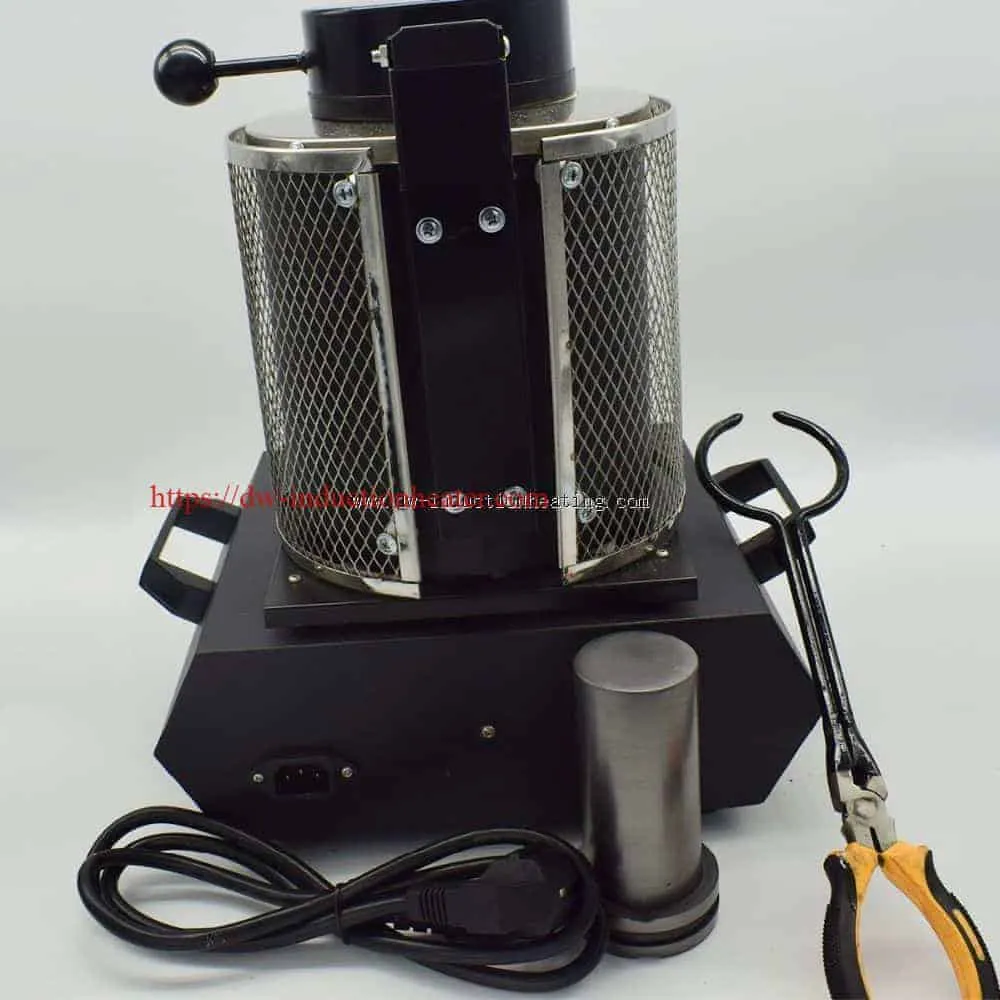
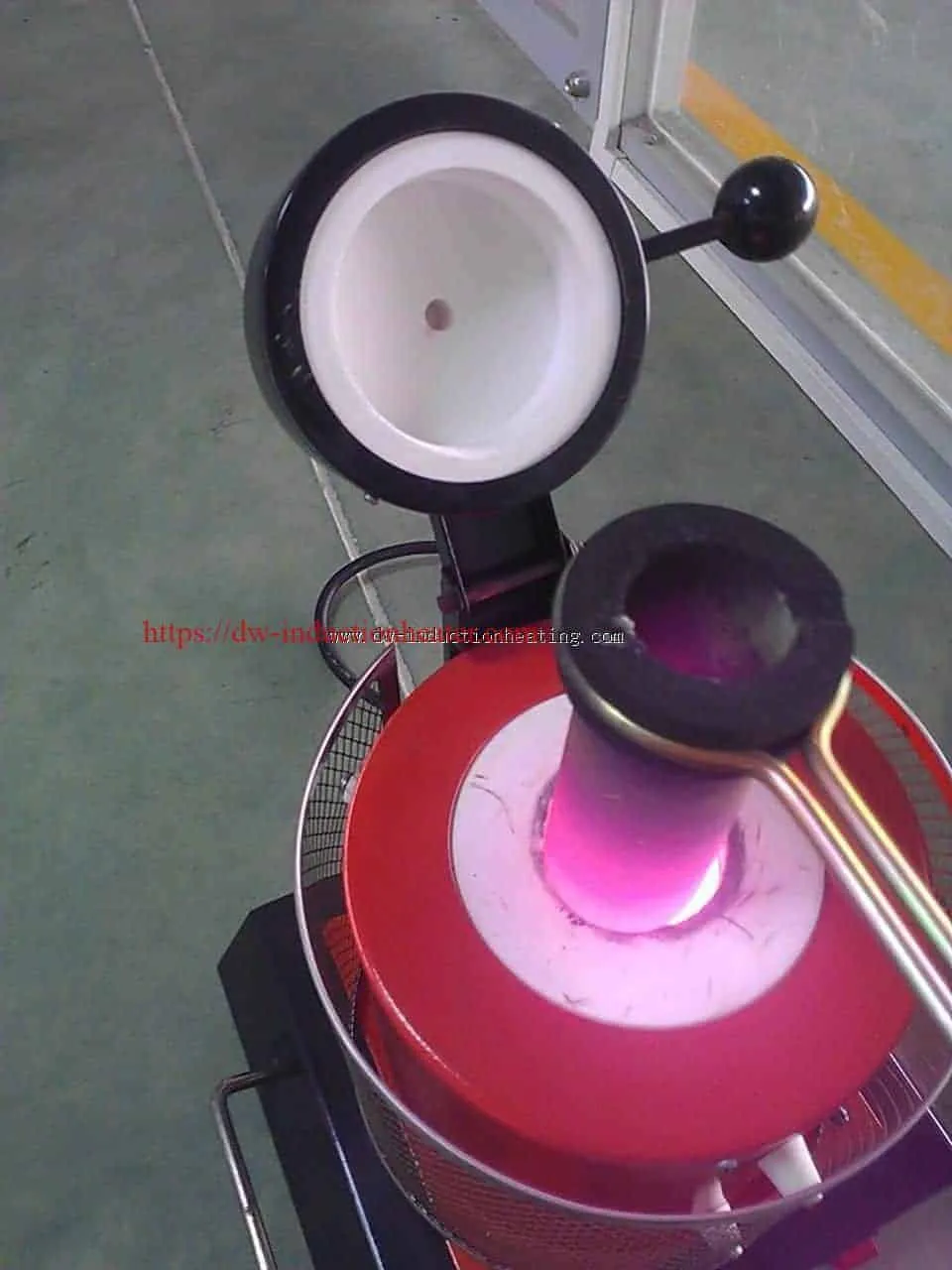
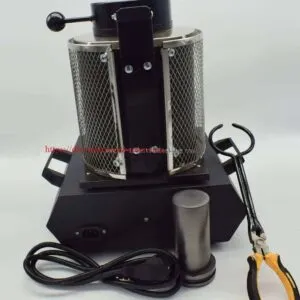
The MF series is a compact, benchtop, electric resistance melting furnace for precious metals. It applies an SSR controller to an alloy-made heating element whose melting point reaches 1900 °C, and the element heats a high temp proof ceramic melting chamber in which the charge is held in a high purity graphite crucible. The published maximum temperature of the machine is 1150 °C.
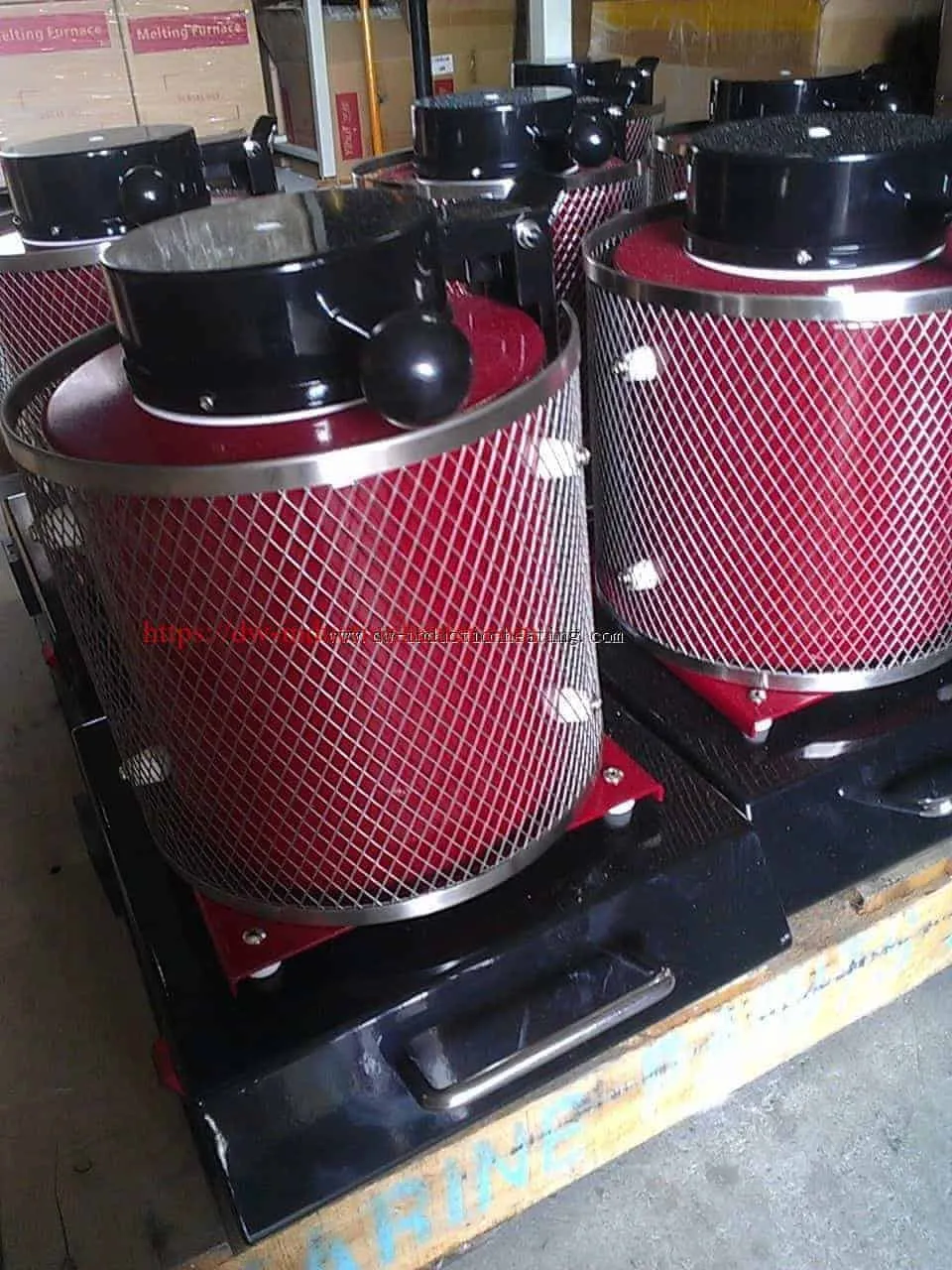
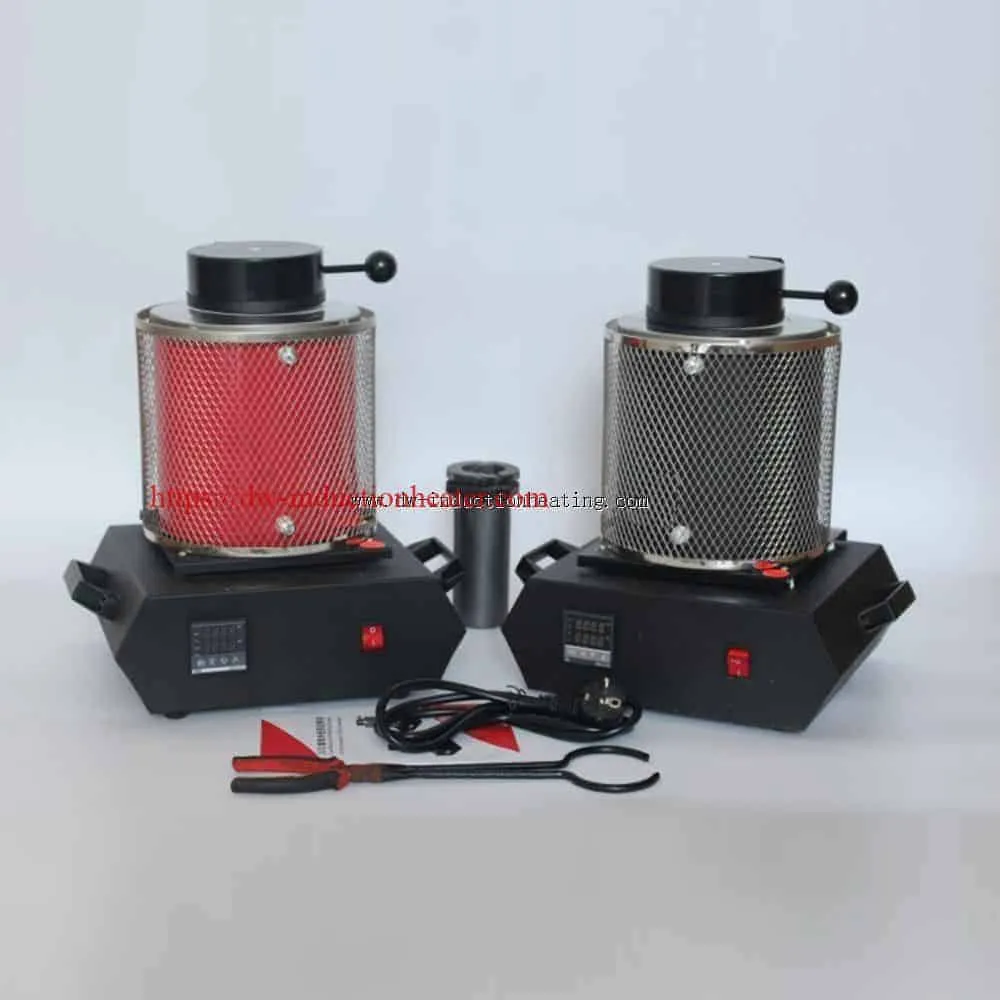
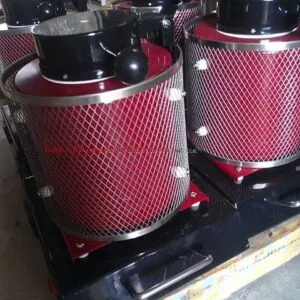
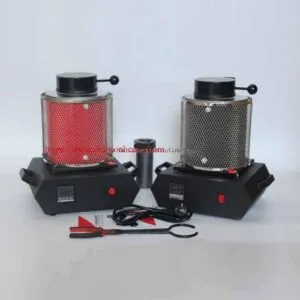
Because the heat is applied electrically rather than by combustion, there is no burner flame at the melt and no combustion products entering the metal. The unique chamber and element design, the high aluminium protection and the top quality components are what the manufacturer credits for the furnace’s durability and working efficiency compared with other furnaces on the market. The casing is published in black and red.
Three models cover the batch sizes most goldsmiths and jewelry workshops actually run: M.MF.01000 at 1 kg, M.MF.02000 at 2 kg and M.MF.03000 at 3 kg. All three share the same published net dimensions of L31 × W36 × H37 cm and the same 11 kg net weight, so moving between batch sizes does not change the footprint of the machine on the bench.
This is an electric SSR furnace, and it is a different product from the induction melting equipment in the HLQ range. If you need induction heating instead — for larger batches, or for a copper or aluminium duty — see the industrial induction melting furnace range and the induction gold smelter guide before choosing a machine.

Key Applications
The published application scope for this furnace class covers bench-scale precious metal work rather than tonnage production.
| Application | Typical Work | Why This Furnace Class Fits |
|---|---|---|
| Jewelry workshops | Melting gold and gold alloy for casting and ingot production | 1-3 kg batches match typical casting and pour weights |
| Goldsmith benches | Small batches of gold, silver and copper for casting and repair | Batch changes are handled by the crucible, not by a new machine |
| Precious metal recycling | Remelting sorted scrap and workshop returns | Small melt sizes suit segregated workshop returns |
| Assay and laboratory work | Sample preparation and repeatable test melts | Digital controller with ±0.5 % FS measurement accuracy |
| Alloy development | Small trial melts from pre-weighed additions | Repeatable 30-60 minute interval between melts |
| Ingot production | Pouring uniform gold bars from refined feedstock | Graphite ingot mold is published in Option 4 |
Two published HLQ pages cover the same family in more depth: the small induction gold melting furnace covers the induction route for the same jewelry-scale work, and the mini gold melting furnace with induction covers the lowest-capacity configuration.

Suitable Materials and Crucible Selection
The furnace is published for melting gold, silver, jewelry materials and platinum. The charge sits in a high purity graphite crucible, supplied as 1 piece in Options 1 and 2 and 5 pieces in Options 3 and 4. Crucible material is what decides how the metal reacts with the vessel, so it is the first thing to check when changing between gold, silver and platinum duties.
| Material | Published Melting Reference | Engineering Consideration |
|---|---|---|
| Pure gold (Au) | About 1064 °C at atmospheric pressure | Published on the HLQ gold melting furnace reference. Machine maximum of 1150 °C sits above this point |
| Pure silver (Ag) | About 962 °C | Below the gold melting point. Silver oxidation and the shorter usable superheat window both matter |
| Gold jewelry alloys | Composition-dependent solidus and liquidus | Alloy datasheet required; karat and composition determine the working temperature |
| Sterling silver | Composition-dependent melting interval | Copper oxide and casting defects; requires alloy-specific practice |
| Platinum (Pt) | Named in the product description | Published as a suitable melt; the higher working temperature must be confirmed against the 1150 °C machine maximum |
| Copper | About 1085 °C for pure copper | Separate working mass and crucible; copper and silver of equal mass occupy different volumes |
| Brass | Composition-dependent | Zinc-bearing fumes; temperature limits and ventilated extraction required |
| Unknown mixed scrap | Not defined | Sort and analyze before charging; reject unsafe material |
A gold-specific capacity rating is not a universal metal rating. The published 1 kg, 2 kg and 3 kg figures are the gold reference; the same mass of silver or copper behaves differently in the same crucible.

Working Principle
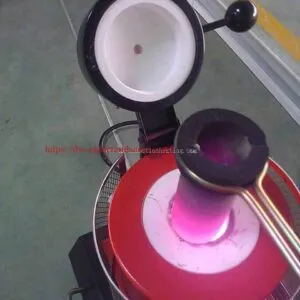
The heating path in the MF series is entirely electrical. The SSR controller delivers a controlled output to the alloy heating element. The element heats the ceramic chamber wall, the chamber heats the crucible, and the crucible heats the charge. Heat therefore reaches the metal from outside the metal but inside the chamber, with no combustion anywhere in the chain.
The thermocouple in the chamber feeds the intelligent temperature controller, which shows the digital furnace temperature and rises slowly. The published measurement accuracy is ±0.5 % FS. The high aluminium protection and the double-shell chamber construction are what keep the operator safe from the radiated heat, and the published working environment is 0-50 °C at 30-85 % RH.
Furnace Anatomy and Component Layout
The drawing below shows how the components relate to each other inside the unit, and every item shown is listed in the published Option packages.
Technical Specifications
| Technical Parameter | 1 kg Melting Furnace | 2 kg Melting Furnace | 3 kg Melting Furnace |
|---|---|---|---|
| Model | M.MF.01000 | M.MF.02000 | M.MF.03000 |
| Power input (W) | 1500 | 1600 | 1700 |
| Power supply (220 V) | 50, 60 Hz / 7 A | 50, 60 Hz / 7.5 A | 50, 60 Hz / 8 A |
| Output power range | 1-10 kW class, SSR controlled | 1-10 kW class, SSR controlled | 1-10 kW class, SSR controlled |
| Measurement accuracy | ±0.5 % FS | ±0.5 % FS | ±0.5 % FS |
| Working environment | 0-50 °C, 30-85 % RH | 0-50 °C, 30-85 % RH | 0-50 °C, 30-85 % RH |
| Net size (cm) | L31 × W36 × H37 | L31 × W36 × H37 | L31 × W36 × H37 |
| Packing size (cm) | L38 × W38 × H42 | L38 × W38 × H42 | L38 × W38 × H42 |
| Net weight (kg) | 11 | 11 | 11 |
| Packing weight (kg) | 13 | 13 | 13 |
| Temperature controller | Intelligent digital controller, SSR | Intelligent digital controller, SSR | Intelligent digital controller, SSR |
| Heating element | Alloy, melting point up to 1900 °C | Alloy, melting point up to 1900 °C | Alloy, melting point up to 1900 °C |
| Melting chamber | High temp proof ceramic | High temp proof ceramic | High temp proof ceramic |
| Protection | High aluminium protection | High aluminium protection | High aluminium protection |
| Machine maximum temperature | 1150 °C | 1150 °C | 1150 °C |
| Published working instruction | Stop work or cool at 1,100 °C | Stop work or cool at 1,100 °C | Stop work or cool at 1,100 °C |
| Crucible | High purity graphite | High purity graphite | High purity graphite |
| Casing colour | Black, red | Black, red | Black, red |
Heating Chamber Versions
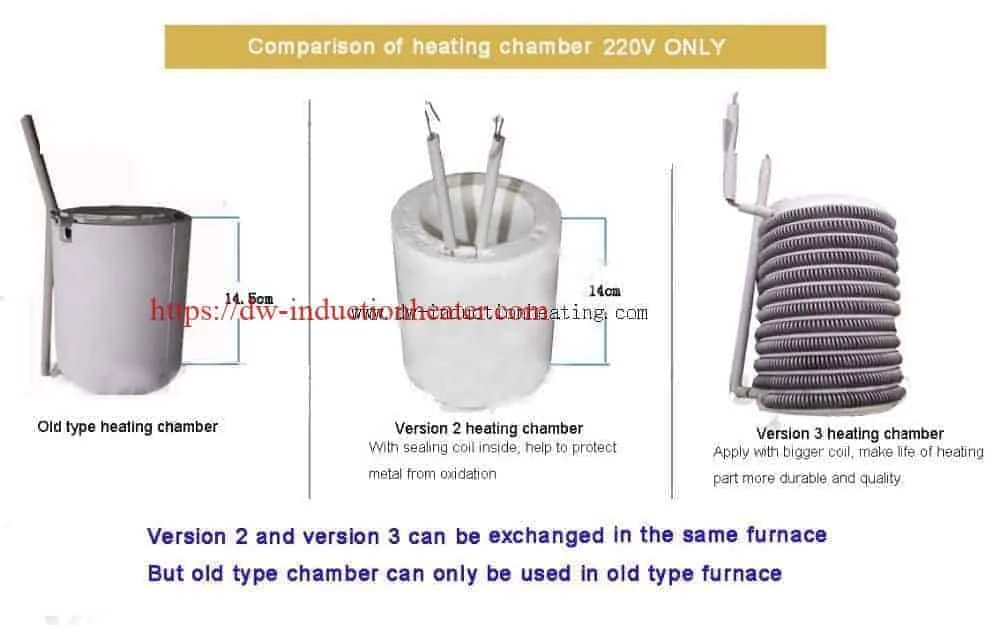
The chamber is the replaceable heart of the machine, and three versions are published. The heating chamber comparison is for 220 V only.
| Chamber Version | Published Size | Published Description |
|---|---|---|
| Old type | 14.5 cm | Fits old type furnaces only |
| Version 2 | 14 cm | Sealing coil inside, to protect the metal from oxidation |
| Version 3 | Not stated | Bigger coil, makes the heating part more durable and higher quality |
Version 2 and Version 3 chambers can be exchanged in the same furnace, but the old type chamber can only be used in an old type furnace. When replacing a chamber, confirm which version the machine takes before ordering.
Published Option Packages
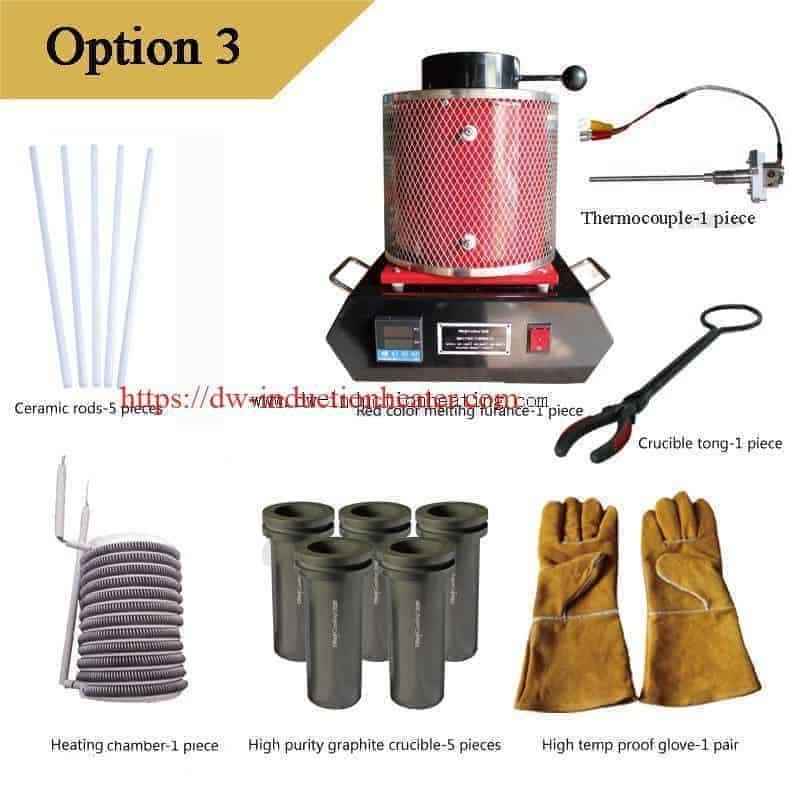
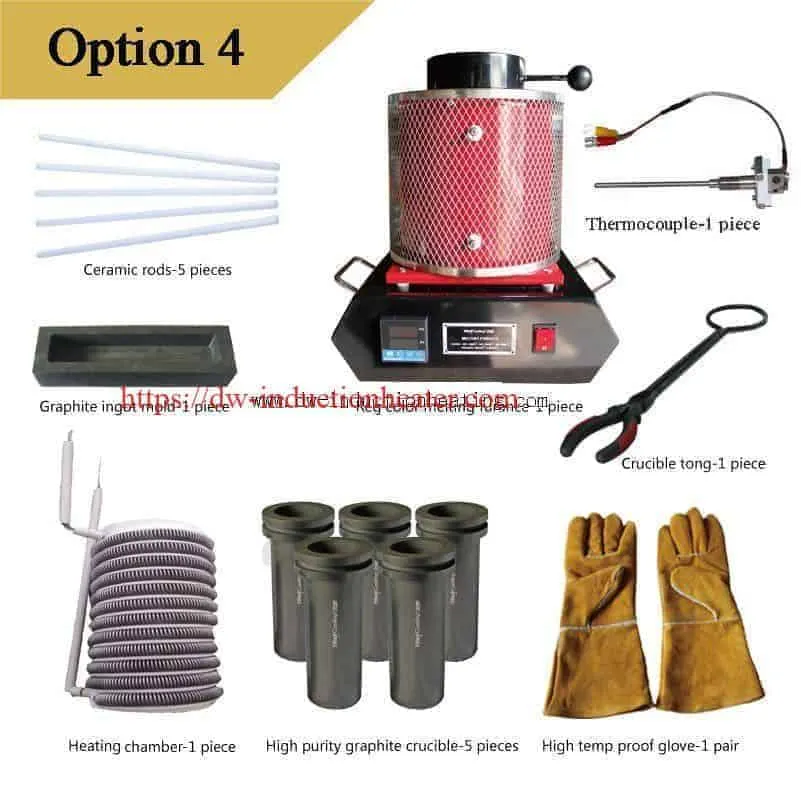
| Component | Option 1 | Option 2 | Option 3 | Option 4 |
|---|---|---|---|---|
| Reg color melting furnace | 1 | 1 | – | 1 |
| Red color melting furnace | – | 1 | 1 | – |
| High purity graphite crucible | 1 | 1 | 5 | 5 |
| Heating chamber | – | – | 1 | 1 |
| Ceramic rods | – | 5 | 5 | 5 |
| Thermocouple | 1 | 1 | 1 | 1 |
| Crucible tong | 1 | 1 | 1 | 1 |
| High temp proof glove | – | – | 1 pair | 1 pair |
| Graphite ingot mold | – | – | – | 1 |
Option 1 is the minimum configuration: one furnace, one graphite crucible, one thermocouple and one pair of tongs. Option 2 adds the ceramic rods and switches the furnace to the red colour. Options 3 and 4 add the Version 2 or Version 3 heating chamber, five crucibles and a pair of high temperature gloves. Option 4 adds the graphite ingot mold for straight bar casting. The published contents are listed in the Option images below.


Recommended Model Selection
Model selection on this furnace is driven by batch size alone. All three models share the same chamber, the same control system, the same accuracy, the same published dimensions and the same 11 kg net weight, so the only real decision is how much metal you melt per cycle.
| Model | Published Batch | Published Power Input | Published Supply Current | Derived Specific Power |
|---|---|---|---|---|
| M.MF.01000 | 1 kg | 1500 W | 50, 60 Hz / 7 A | 1500 W per kg |
| M.MF.02000 | 2 kg | 1600 W | 50, 60 Hz / 7.5 A | 800 W per kg |
| M.MF.03000 | 3 kg | 1700 W | 50, 60 Hz / 8 A | 567 W per kg |
The published power input rises by only 200 W across a threefold increase in capacity, so the specific power falls sharply with batch size. That is why the 3 kg model is not simply the 1 kg model with more power: the larger chamber has proportionally more thermal mass to bring up, and the extra 200 W is spread over a longer working cycle. The 30-60 minute interval between melts published in the operating instructions has to be respected at every batch size.
| If your typical melt is | Select | Because |
|---|---|---|
| Up to about 1 kg | M.MF.01000 | Smallest published power draw at 7 A, lowest thermal load, fastest recovery between melts |
| About 1-2 kg | M.MF.02000 | Handles the extra charge at only 0.5 A more supply current |
| About 2-3 kg | M.MF.03000 | Largest published batch; the same footprint and weight as the smaller models |
| More than 3 kg per melt | Evaluate a larger system | See the MM-F series gold melting furnace, published from 2 kg to 8 kg |
| Continuous or high-throughput duty | Evaluate an induction system | See the induction gold melting furnace and the stationary gold melting furnace DW-SGM |
Process Workflow
The eleven published operating instructions define the working sequence for this furnace. Rearranged as a controlled process, they run as follows.
- Place the furnace. Put the machine smoothly on a stable, level surface.
- Inspect before heating. Examine the product and cover it intact, then open and check that the vessel is intact.
- Connect the supply. Connect the power supply, electricity and light switch.
- Start the ramp. The intelligent temperature controller shows the digital furnace temperature and rises slowly. If there are any complications, stop using the furnace.
- Respect the radiated heat. During operation the furnace radiates heat; staff must not move into it or collide with it, to avoid scalding and damage.
- Hold at the melting point. When the temperature reaches the gold melting point, continue to increase as required. At the maximum temperature of 1,100 °C, stop work or move to the cooling condition.
- Isolate before handling. Be sure to disconnect the power supply first, then use professional pliers to ensure safety.
- Pour and cool down. Take the gold out immediately after moving the machine. Owing to the high temperature it can easily damage internal components and cause burns, so allow 10-20 minutes of cooling to protect the service life of the product.
- Observe the interval. Every interval must be 30-60 minutes; this is very easy to damage the product.
- Keep the original technology. For a precision machine, do not remove the professional technology, in order to ensure accuracy.
- Maintain safe operation. Pay attention to safety and maintain normal use of the furnace.
The published 30-60 minute interval and the 10-20 minute cooling period are not optional: the element and the chamber are the two components that a rushed cycle damages first, and they are also the two most expensive to replace.

Common Problems and Solutions
| Problem | Published Instruction Behind It | Corrective Action |
|---|---|---|
| Component failure after a short run | Every interval must be 30-60 minutes; this is very easy to damage the product | Restore the published interval between melts and keep the 10-20 minute cooling period |
| Burns when handling the metal | Take the gold out immediately after moving the machine; owing to the high temperature it can easily cause burns | Disconnect the power supply first, use professional pliers, and allow 10-20 minutes of cooling |
| Element or chamber damage | Do not remove the professional technology, in order to ensure accuracy | Use the original heating element and chamber versions; do not modify the assembly |
| Surface oxidation of the melt | Version 2 chamber has a sealing coil inside, to protect the metal from oxidation | Fit the Version 2 or Version 3 heating chamber in place of the old type |
| Shortened element life | Version 3 uses a bigger coil, makes the heating part more durable and higher quality | Specify the Version 3 chamber when replacing, if the machine accepts it |
| Measurement drift | Temperature control parameters and programs can be modified during operation; measurement accuracy ±0.5 % FS | Check the thermocouple seating and confirm the controller calibration against the nameplate specification |
| Uneven heating across the charge | Version 3 chamber with the bigger coil | Confirm the chamber version fitted; the old type chamber cannot be used in a new furnace |
| Accidental contact during heating | Do not move into the furnace during operation; avoid scalding and damage | Keep the work zone clear of staff while the furnace is at temperature |
| Melting stalls below the melting point | Check whether the machine is still in the 30-60 minute interval | Allow the full interval before restarting the ramp |
| Overheating past the working limit | At the maximum temperature of 1,100 °C, stop work or cool | Stop the cycle or move to cooling at 1,100 °C; the machine maximum is 1150 °C |
Engineering Selection Guide
Before ordering, work through these six checks. They are the same checks a workshop needs to answer before committing to a furnace.
- Set the batch size. The published 1 kg, 2 kg and 3 kg models are gold reference batch sizes. If your actual melt weight sits between two of them, take the larger model: the published power input differs by only 200 W between adjacent models, but the thermal mass difference is what determines recovery time.
- Confirm the supply. All three models are published on 220 V at 50/60 Hz, drawing 7 A, 7.5 A and 8 A. The heating chambers are published as 220 V only, so a three-phase site cannot use these chambers.
- Check the working environment. The published working environment is 0-50 °C at 30-85 % RH. The machine is not specified outside that envelope.
- Decide the chamber version. Version 2 and Version 3 can be exchanged in the same furnace; the old type chamber cannot. If your machine is an old type furnace, only the old type chamber will fit.
- Choose the Option package to match your duty. Option 1 is the minimum. Options 3 and 4 add five crucibles and gloves, which matters if you run multiple melts without stopping to change vessels. Option 4 adds the graphite ingot mold for bar casting.
- Confirm the installation space. Published net size is L31 × W36 × H37 cm and net weight is 11 kg, with a packing size of L38 × W38 × H42 cm at 13 kg. The unit also needs clearance for the lid handle swing and for the crucible tong when lifting a full vessel.
| Selection Criterion | Published Value or Rule | Engineering Consequence |
|---|---|---|
| Metal and alloy | Gold, silver, jewelry materials and platinum named | Alloy datasheet required; the liquidus differs by karat |
| Maximum mass per melt | 1 kg, 2 kg or 3 kg | Sets the model: M.MF.01000, M.MF.02000 or M.MF.03000 |
| Production target | 30-60 minute interval between melts | Determines whether a 1-3 kg class is enough or a larger system is needed |
| Electrical supply | 220 V, 50/60 Hz, 7-8 A | Defines the circuit, breaker and socket |
| Working environment | 0-50 °C, 30-85 % RH | Confirms the bench location is inside the envelope |
| Crucible | High purity graphite, 1 or 5 pieces | Matches the alloy chemistry and the number of melts per shift |
| Chamber version | Old type 14.5 cm, Version 2 14 cm, Version 3 not stated | Determines the oxidation protection and the element service life |
| Pouring method | Crucible tong supplied; graphite ingot mold in Option 4 | Defines the transfer arrangement and the handling tooling |
| Safety requirement | Power isolation, professional pliers, 10-20 min cooling, 30-60 min interval | Determines the written safe-work procedure and PPE |
| Measurement accuracy | ±0.5 % FS | Confirms the controller is fit for the alloy tolerance |
For a workshop that already runs a different gold melting setup, the small portable gold melting furnace page and the electric mini gold melting furnace page cover the same MF series from different angles. If the duty is heating copper or aluminium instead, see the induction copper melting furnace and the MF small induction melting gold furnace.
Advantages and Limitations
| Advantage | Engineering Benefit |
|---|---|
| Compact and portable | 11 kg net weight and L31 × W36 × H37 cm published dimensions, so it moves between workshop stations |
| No burner flame at the melt | No combustion products contact the metal, and no fuel cylinders to handle on the bench |
| Measurable temperature | Intelligent digital controller with ±0.5 % FS measurement accuracy |
| Published and repeatable model ladder | Three models, three published power figures, three published current figures |
| Identical footprint across models | All three models share the same published net size and net weight |
| Replaceable chamber system | Version 2 adds a sealing coil against oxidation; Version 3 uses a bigger coil for a longer-lasting heating part |
| Complete accessory packages | Four published Options cover everything from the minimum bench set to five crucibles, gloves and an ingot mold |
| Simple, repeatable cycle | A published 30-60 minute interval and 10-20 minute cooling period give a defined, repeatable rhythm |
| Limitation | Engineering Consideration |
|---|---|
| Batch limited to 3 kg | Larger duties need the MM-F series from 2 kg to 8 kg, or an induction system |
| Gold-specific capacity rating | 2 kg of silver is not volumetrically equivalent to 2 kg of gold; specify metal, crucible and fill limit independently |
| 220 V supply only | The heating chambers are published as 220 V only, which excludes three-phase bench installations |
| Working environment limited | Published as 0-50 °C at 30-85 % RH |
| Graphite crucible is a consumable | It wears, it can crack from thermal shock, and it must match the alloy chemistry |
| Element and chamber are life-limited | The 30-60 minute interval and the 10-20 minute cooling period are what protect them |
| Melting does not refine | Impurities remain unless a separate refining process is used; assay and refining are separate steps |
| Molten metal hazards remain | Burns, splashes and metal fumes still require PPE, ventilation and trained operators |
| Platinum needs temperature confirmation | Confirm the alloy working temperature against the 1150 °C published machine maximum |
Why Choose HLQ?
HLQ Induction Equipment Co., Ltd. builds both electric resistance and induction melting furnaces for precious metals, so the recommendation can follow the duty rather than the product line.
- Published specifications, not marketing claims. Model numbers, power input, supply current, measurement accuracy, working environment, net size, packing size and net weight are all published for M.MF.01000, M.MF.02000 and M.MF.03000, so a quotation can be checked line by line.
- Four defined accessory packages. The Option structure tells you exactly which crucible, chamber, ceramic rods, thermocouple, tong, gloves and ingot mold ship with the machine.
- Three heating chamber generations. Old type at 14.5 cm, Version 2 at 14 cm with a sealing coil against oxidation, and Version 3 with a bigger coil for a longer-lasting heating part — and Version 2 and 3 can be exchanged in the same furnace.
- A written operating procedure. The published instructions cover the full cycle from placement to safe pouring, including the isolation, cooling and interval requirements that protect the element.
- An upgrade path within the family. The same MF naming runs from the 1 kg bench unit through the MF small induction melting gold furnace to the MM-F induction gold melting furnace at 2-8 kg and the DW-TGM tilting gold melting furnace for pour-and-return work.
- Precious metals knowledge across the range. HLQ publishes the melting reference points, the crucible materials and the failure modes for gold, silver and platinum work in the induction gold smelter guide, so the same technical language applies whichever melting technology you specify.
6 Core FAQs
1. What is a portable gold melting furnace?
It is a compact, benchtop electric resistance melting furnace that melts gold and other precious metals in a crucible. The HLQ MF series uses an SSR controller to drive an alloy heating element inside a high temp proof ceramic chamber, with a high purity graphite crucible holding the charge. Because the heat is electrical rather than combustion, no burner flame touches the metal and no combustion products enter the melt. The published maximum temperature of the machine is 1150 °C.
2. Which models are available and what are the differences?
Three models are published: M.MF.01000, M.MF.02000 and M.MF.03000, for 1 kg, 2 kg and 3 kg gold batches respectively. Their published power inputs are 1500 W, 1600 W and 1700 W, drawing 7 A, 7.5 A and 8 A from a 220 V, 50/60 Hz supply. All three share the same measurement accuracy of ±0.5 % FS, the same working environment of 0-50 °C at 30-85 % RH, the same net size of L31 × W36 × H37 cm and the same 11 kg net weight, so the choice is decided by batch size alone.
3. Which metals can be melted in it?
Gold, silver, jewelry materials and platinum are named in the product description. The crucible supplied is high purity graphite. Note that the published capacity figures are a gold reference: 2 kg of silver or copper is not volumetrically equivalent to 2 kg of gold, so the working mass for each metal must be confirmed separately. Alloy-specific melting points also differ, so the alloy liquidus should be checked against the 1150 °C machine maximum before running a platinum or high-alloy duty.
4. How long does a melt take, and how often can you run it?
The published operating instructions give the rhythm rather than a melt time: every interval must be 30-60 minutes, and this is stated as very easy to damage the product if not observed. After pouring, the gold should be taken out immediately but the machine must cool for 10-20 minutes to protect the internal components and to prevent burns. The published heating instruction is to stop work or move to the cooling condition at 1,100 °C. The controller itself is described as raising the temperature slowly.
5. What safety steps does the manufacturer specify?
The published instructions set out the sequence: disconnect the power supply before handling the metal, then use professional pliers to ensure safety; do not move into the furnace during operation because it radiates heat, to avoid scalding and damage; cool for 10-20 minutes after pouring; and keep the 30-60 minute interval between melts. The machine also carries high aluminium protection and a double shell construction with a published shell surface temperature below 45 °C, and the working environment is specified as 0-50 °C at 30-85 % RH.
6. What should be checked before ordering?
Confirm the batch size against the published 1 kg, 2 kg and 3 kg models; confirm the 220 V, 50/60 Hz supply and the 7-8 A draw; confirm the working environment falls inside 0-50 °C at 30-85 % RH; confirm which heating chamber version the machine takes, since Version 2 and Version 3 can be exchanged in the same furnace but the old type chamber cannot; and choose the Option package to match the duty, with Option 4 adding the graphite ingot mold for bar casting and Options 3 and 4 adding five crucibles and high temperature gloves.
Related HLQ resources: Gold Melting Furnace category · Small Portable Gold Melting Furnace · Electric Mini Gold Melting Furnace · Melting Gold Furnace with Induction · Small Induction Gold Melting Furnace · Mini Gold Melting Furnace with Induction · Stationary Gold Melting Furnace DW-SGM · Tilting Gold Melting Furnace DW-TGM