Handheld Induction Brazing for Pool Heat Pump Pipes
Induction Brazing Copper Pipes for Pool Heating Systems with the HLQ DWS-20
Quick Answer
The HLQ DWS-20 Handheld Induction Heater can be configured to braze copper tubing to brass fittings in pool heating equipment. The proposed setup uses a 150–350 kHz process frequency band, a custom water-cooled coil and manually fed silver brazing alloy. The target is 20–25 seconds of induction power-on time per joint, to be verified on each tube and fitting combination.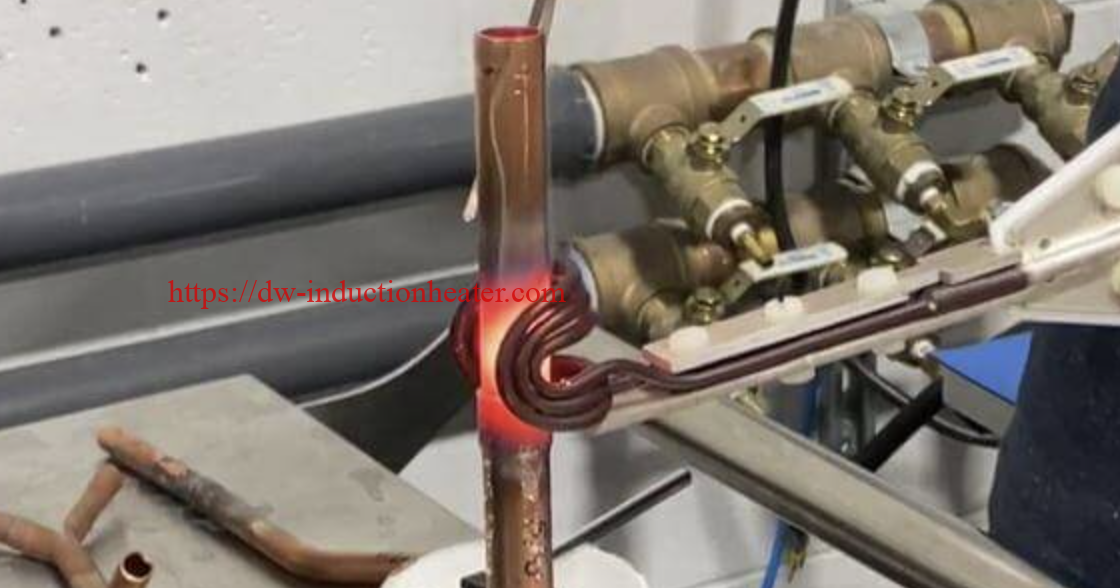
Application Objective
This application evaluates localized induction heating for copper tube connections in pool heat pumps, water chillers and related heat exchanger assemblies. The goal is to heat the tube and the brass socket together so that filler wets both surfaces and flows through the overlap. A repeatable coil position and a locating fixture help keep the heating pattern consistent between assemblies.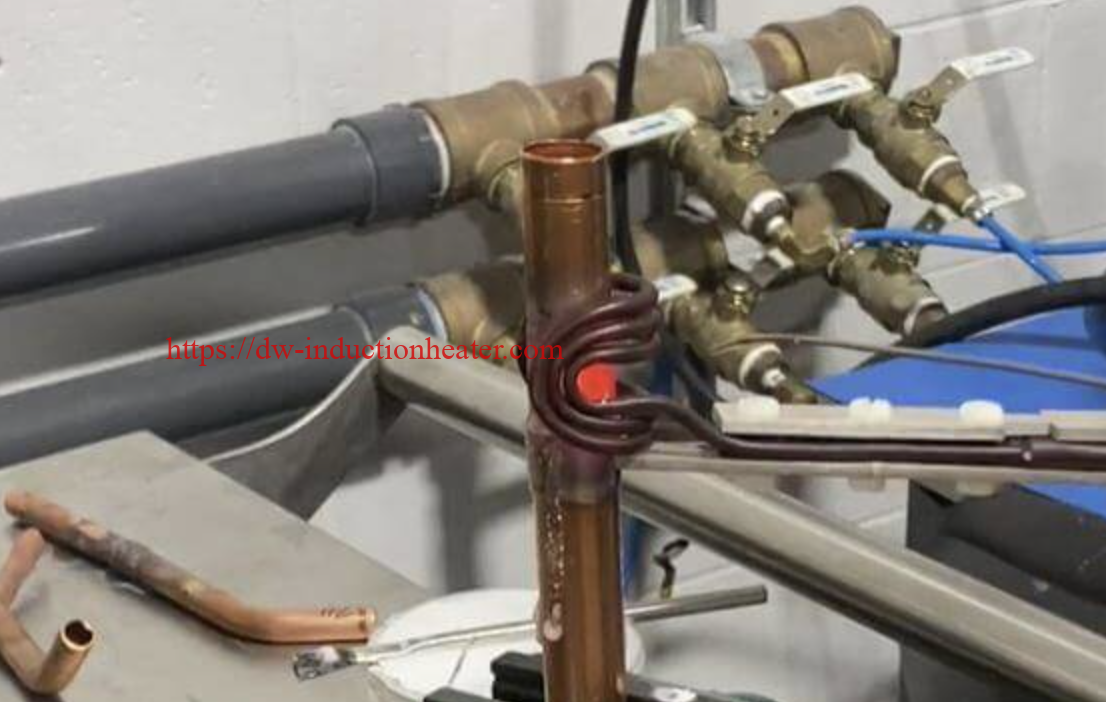
Equipment
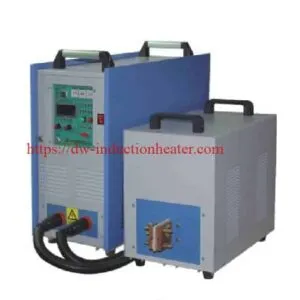
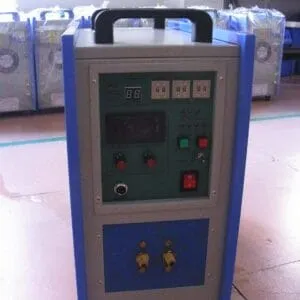
The workstation is built around the HLQ DWS-20 and a remote workhead. The handheld induction brazing heater lets the operator bring the coil to the joint. A locating fixture controls tube insertion depth and alignment, while the coil opening leaves room to feed the filler rod at the socket mouth.
Workpieces and Key Parameters
| Parameter | Application detail |
|---|---|
| Equipment | HLQ DWS-20 Handheld Induction Heater |
| Reference copper tube outside diameters | ¼ in (6.35 mm), ⅜ in (9.52 mm) and 1 in (25.4 mm) |
| Representative joint | Copper tube inserted into a brass fitting socket |
| Proposed process frequency | 150–350 kHz, subject to confirmation with the selected workhead and loaded coil |
| Target heating time | 20–25 seconds of induction power-on time per joint |
| Reference brazing temperature | Approximately 704 °C (1,300 °F) for trial planning. Set the working temperature using the selected filler alloy and joint requirements. |
| Filler delivery | Manually fed silver brazing rod. Select compatible flux where required by the approved procedure. |
Working Principle
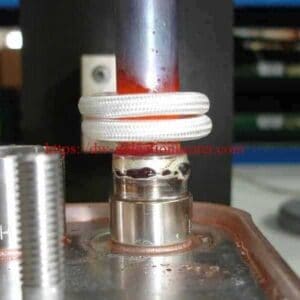
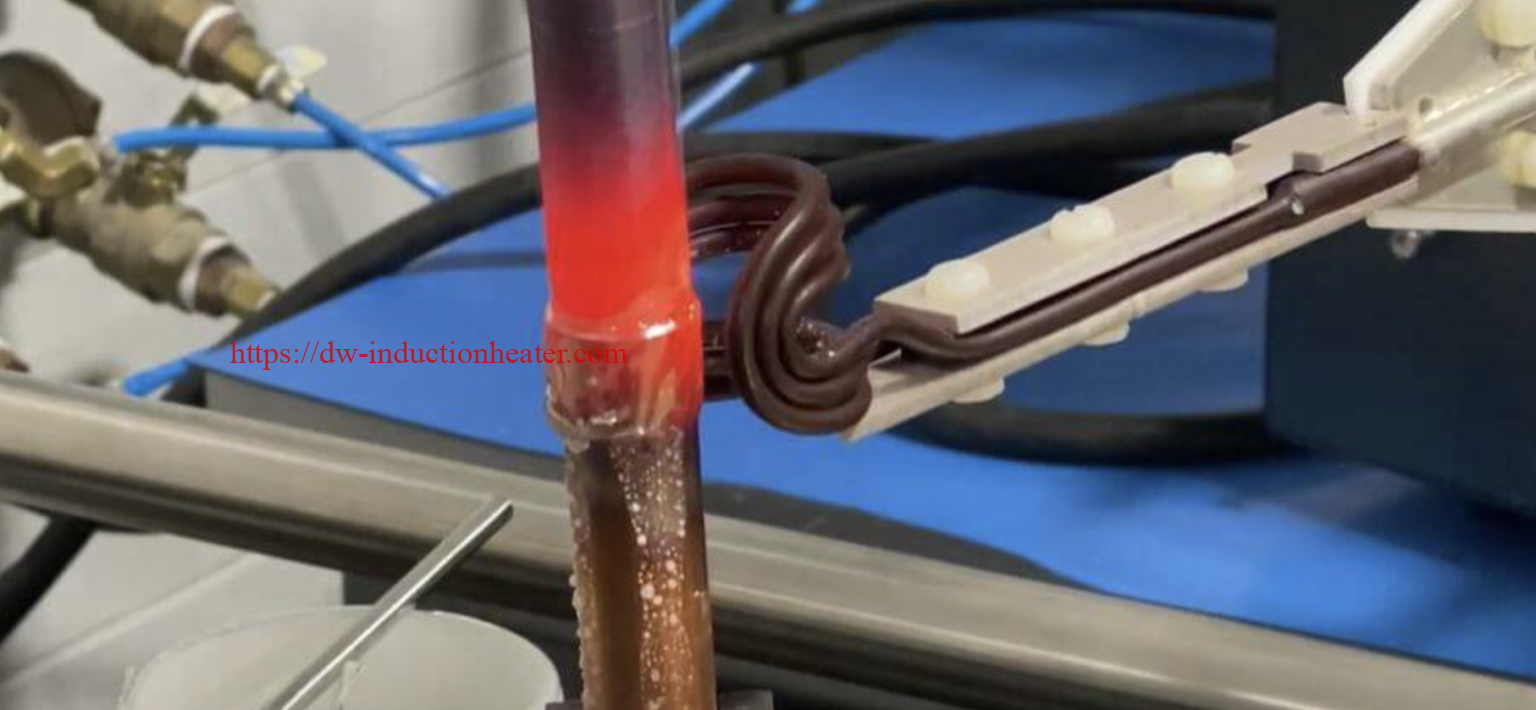
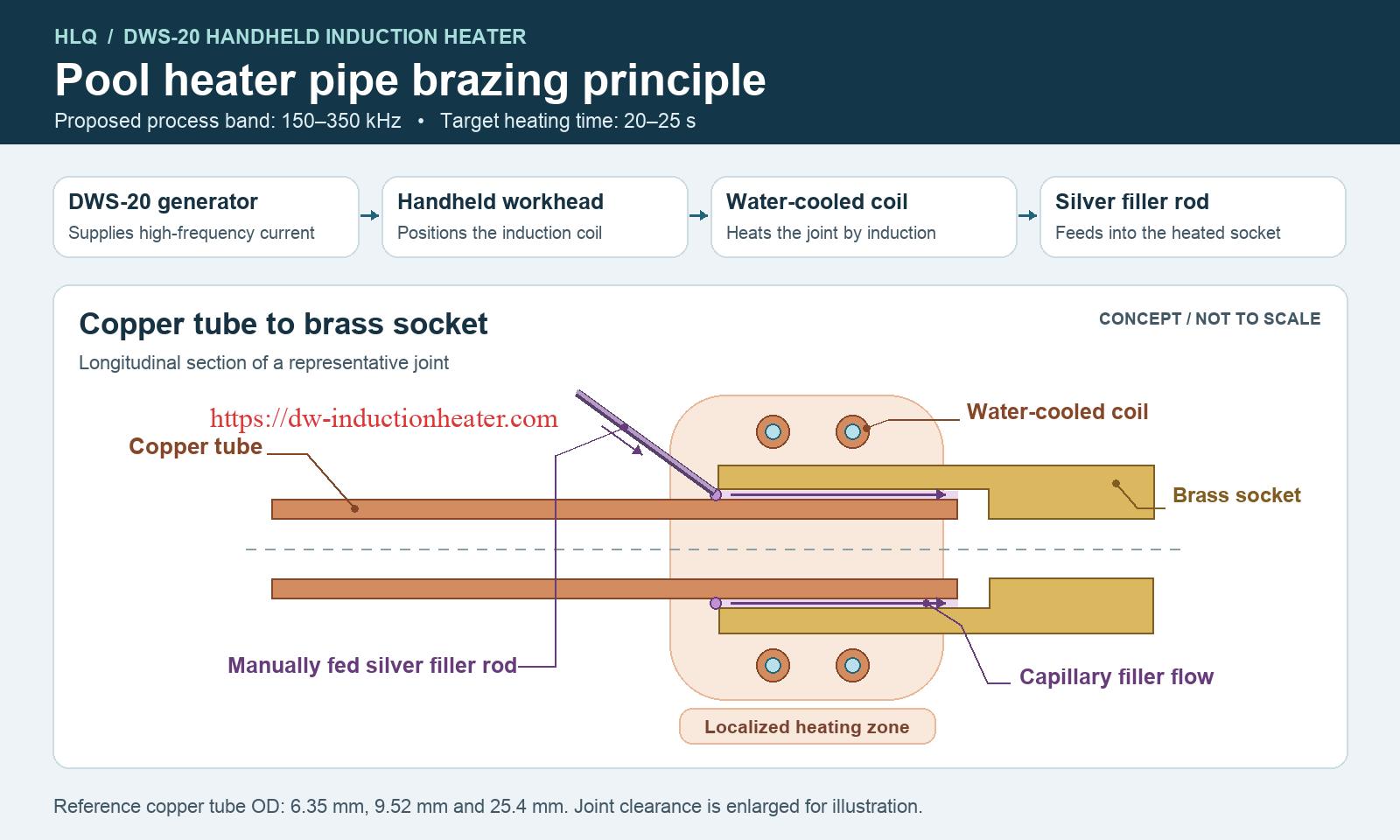
The induction coil generates an alternating magnetic field that induces heating currents in the copper tube and brass socket. As the mating surfaces reach brazing temperature, heat from the joint melts the filler rod at the socket mouth. Capillary action draws the molten filler into the clearance between the tube and fitting.
Brazing Process
- Prepare the joint. Clean the mating surfaces, verify the socket fit and insertion depth, then position the tube and fitting in the fixture. Apply flux as specified for the selected filler and materials.
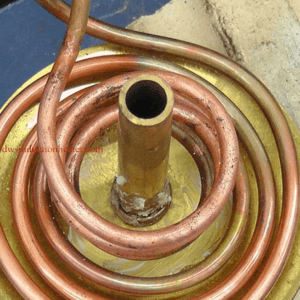
- Match the coil to the fitting. Select custom induction brazing coils based on tube diameter, fitting mass and approach clearance. A side-access coil is an option when the head cannot slide over the end of the tube.
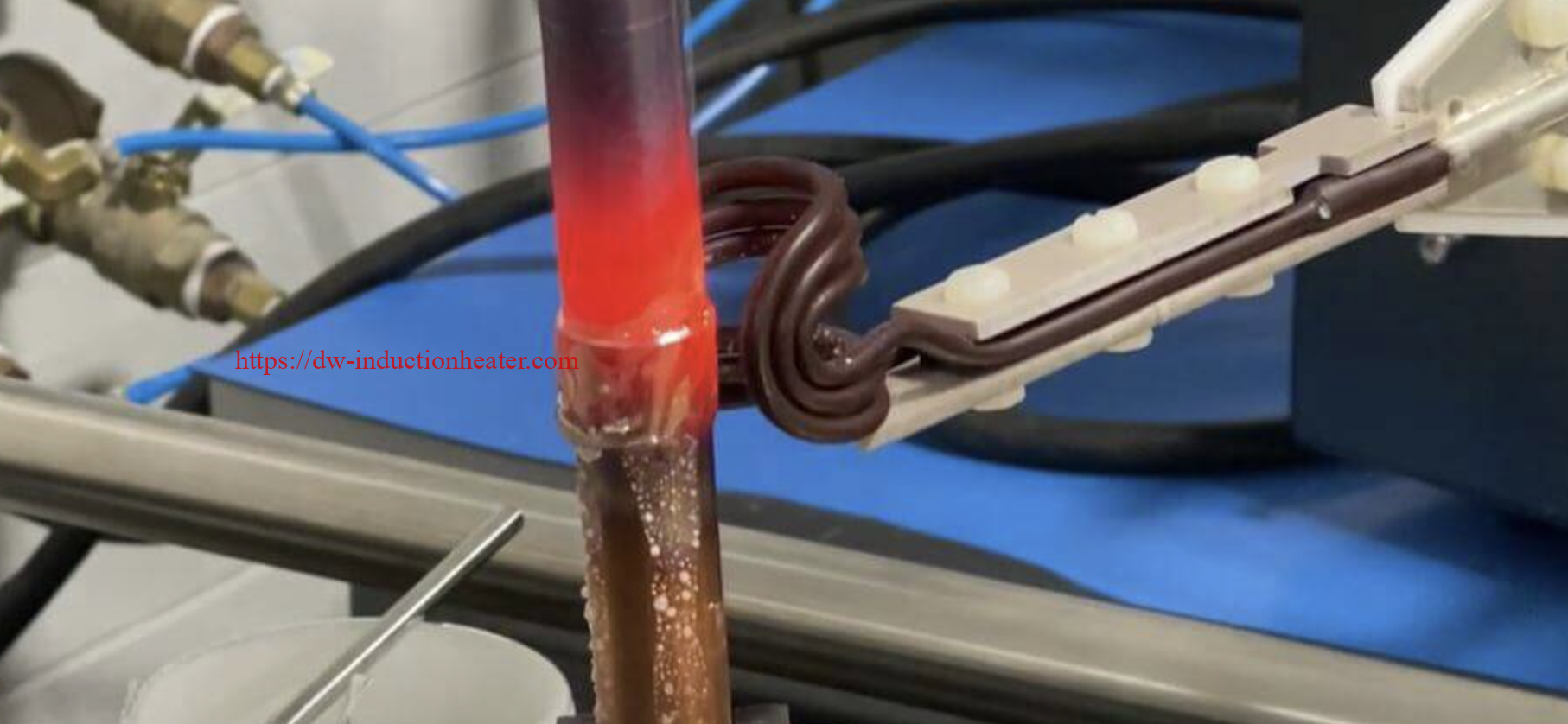
- Heat the assembly and feed the rod. Bring both mating surfaces into the approved brazing temperature range. Feed the silver rod at the socket mouth and observe filler wetting. Record the loaded frequency, power setting and power-on time.
- Allow the filler to solidify. Keep the parts aligned during cooling. Remove any flux residue using the approved cleaning method and inspect the joint before testing.

Trial Acceptance and Production Checks
Evaluate the 20–25 second heating target separately for the ¼-inch, ⅜-inch and 1-inch assemblies. A heavier brass socket or a change in tube wall thickness can change how heat is shared across the joint. Check wetting around the circumference, section representative samples to assess filler penetration, and carry out the leak or pressure test specified for the assembly.
When selecting copper and brass tube brazing equipment, use the production drawing, tube wall thickness, fitting material, available coil access and required production rate. These inputs determine whether the three sizes can share tooling or need separate coil and fixture settings.
Frequently Asked Questions
Does the 20–25 second heating target include loading and cooling?
The target covers induction power-on time for one joint. Measure the full workstation cycle separately, including loading, head positioning, cooling and unloading.
Can a preformed filler ring replace the manually fed silver rod?
A ring can be evaluated if the selected alloy is available in preform form and the joint geometry allows repeatable placement. Validate filler quantity and penetration before changing the production method.
What checks matter for a pool heater connection?
Identify whether the connection belongs to the refrigerant circuit or the water circuit. Use the materials, joint acceptance criteria and leak or pressure test specified for that circuit.