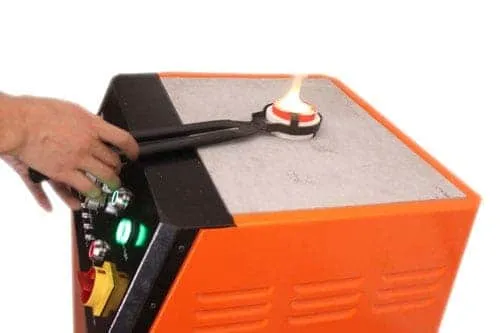


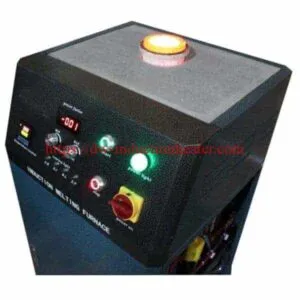


Melting Gold Furnace With Induction
Induction Gold Melting Furnace for Jewelry Casting and Precious Metal Melting
What Is the Induction Gold Melting Furnace?
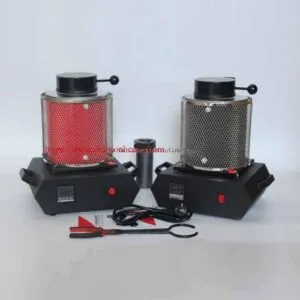
The HLQ MM-F Induction Gold Melting Furnace is a compact IGBT-based induction melting system designed for small, carefully controlled batches of gold, silver and compatible nonferrous alloys. It uses a changing electromagnetic field to heat the metal charge directly or to heat a suitable electrically conductive crucible that transfers heat to the charge. The reviewed HLQ product page advertises 2kg, 3kg, 4kg, 5kg, 6kg and 8kg melting-capacity options, digital temperature indication, adjustable operation and electrical/cooling protection, making the product most relevant to jewelry workshops, precious-metal casting and small-batch alloy preparation. The page does not identify individual MM-F model codes, rated electrical power, supply voltage, operating frequency, crucible volume or measured full-charge cycle time; these must be confirmed for each quotation.
Quick Answer for Technical Buyers
| Buyer Question | Direct Engineering Answer |
|---|---|
| Which series? | MM-F compact IGBT induction melting furnace; individual variant codes are not published. |
| What are the published capacities? | 2, 3, 4, 5, 6 and 8kg; confirm whether each refers to pure gold and which crucible is supplied. |
| Best-fit processes? | Jewelry alloy melting, gold/silver casting preparation, controlled remelting and small-batch metal recovery. |
| What is not established? | Model-specific kW, line voltage, operating kHz, timed performance, water flow and installed dimensions. |
| What defines successful melting? | Correct alloy chemistry, controlled tapping temperature, acceptable loss/recovery, safe pouring and repeatable cycle. |
For a genuinely smaller, separately specified configuration, compare HLQ’s small induction gold melting furnace for 1–2kg batches; that different product’s electrical ratings must not be assigned to the MM-F range.
Key Applications
The purpose of a precious-metal melting system is not simply to reach a high temperature: it must provide a repeatable liquid-metal condition while protecting alloy composition, product quality and recoverable metal value. The appropriate crucible, charge segregation and pouring arrangement are as important as heating speed.
| Application | Typical Charge | Required Result | Acceptance Check |
|---|---|---|---|
| Jewelry casting preparation | Certified gold alloys, clean sprues and returns | Repeatable melt temperature and mold filling | Assay, fluidity, porosity and casting recovery |
| Gold ingot casting | Identified gold bullion or refined feedstock | Uniform liquid charge and controlled pour | Final bar weight, visual finish and assay |
| Silver jewelry production | Pure silver and qualified Ag-based alloys | Controlled melting without unnecessary holding | Oxidation, porosity and retained metal |
| Precious-metal workshop returns | Segregated clean casting returns | Remelt without cross-contamination | Alloy segregation and material-balance record |
| Gold alloy development | Weighed Au/Ag/Cu additions | Consistent small-batch composition | Mixing procedure and chemical analysis |
| Selected nonferrous casting | Compatible copper or brass charges | Controlled pouring and chemistry | Crucible compatibility and local exhaust ventilation |
Melting, Refining and Casting Are Different Operations
| Operation | What It Accomplishes | What It Does Not Guarantee |
|---|---|---|
| Induction melting | Changes an identified solid charge into liquid metal. | Does not automatically increase gold purity. |
| Alloying | Combines verified metal additions using a controlled recipe. | Does not eliminate composition losses without testing. |
| Refining | Removes specified impurities using a separately engineered process. | Is not provided merely by an induction furnace. |
| Casting | Transfers melt into prepared molds or ingot forms. | Requires mold/process control beyond the furnace. |
For a broader treatment of precious-metal process choices, see HLQ’s induction gold smelter and gold furnace engineering guide.
Suitable Materials
Gold and silver are nonferromagnetic conductive metals. Coupling depends on frequency, load geometry and crucible construction—not on the workpiece being attracted to a magnet. Alloy-specific solidus/liquidus temperatures, oxygen exposure and container contamination must govern process selection.
| Material | Melting Reference | Primary Risk | Engineering Check |
|---|---|---|---|
| Pure gold (Au) | About 1064°C at atmospheric pressure | Contamination, excess temperature and precious-metal loss | Clean crucible, correct temperature and mass balance |
| 18K yellow gold | Composition-dependent solidus/liquidus | Inaccurate alloy recipe or volatilization of additives | Supplier alloy datasheet; chemical analysis |
| 14K gold | Composition-dependent melting interval | Excessive superheat and alloy segregation | Approved casting temperature and mixing procedure |
| Pure silver (Ag) | About 962°C | Oxygen uptake, surface oxidation and porosity | Atmosphere, mold and melt management |
| Sterling silver | Composition-dependent melting interval | Copper oxide and casting defects | Correct alloy target and melt protection |
| Copper (Cu) | About 1085°C for pure copper | Oxidation and conductive-crucible matching | Separate charge capacity and crucible trial |
| Brass | Strongly composition-dependent | Zinc-bearing fumes and chemistry changes | Temperature limits and engineered ventilation |
| Unknown mixed scrap | Not defined | Impurities, sealed inclusions and contamination | Sort/analyze before charging; reject unsafe material |
Crucible Compatibility and Metal Recovery
| Crucible Concept | Potential Use | Selection Requirement |
|---|---|---|
| Graphite | Selected gold and silver melting duties | Assess oxidation, alloy chemistry and direct induction coupling. |
| Clay-graphite | Selected precious-metal casting applications | Verify rated temperature, contamination and spout design. |
| Silicon-carbide-containing crucible | Some nonferrous melt systems | Confirm electrical heating behavior and metal compatibility. |
| High-purity ceramic | Specialty contamination-sensitive work | Verify that the generator can heat the charge effectively. |
If the intended charge is predominantly copper rather than gold, evaluate HLQ’s copper scrap induction melting furnace separately, as crucible and capacity requirements differ.
Working Principle
The IGBT inverter supplies alternating current to an induction coil through a tuned matching network. The coil generates a time-varying magnetic field, which induces eddy currents in conductive metal and/or an electromagnetically coupled graphite or other conductive crucible. Resistive losses produce heat. Once the charge is liquid, a measured temperature and controlled pour—not visual color alone—should determine the process endpoint.
Figure 1. MM-F Induction Gold Melting: Functional Diagram
THREE-PHASE OR SINGLE-PHASE SITE SUPPLY
       (MODEL-SPECIFIC; NOT PUBLISHED)
                       |
                       v
                IGBT INVERTER
                       |
                       v
              MATCHING NETWORK
                       |
                       v
           WATER-COOLED COPPER COIL
                       |
                       v
              ALTERNATING FIELD
                       |
          +------------+------------+
          v                         v
  CONDUCTIVE CRUCIBLE          METAL CHARGE
    MAY ABSORB POWER         MAY ABSORB POWER
          +------------+------------+
                       |
                       v
              MELT AND SUPERHEAT
                       |
                       v
              TEMPERATURE CHECK
                       |
                       v
              CONTROLLED POURING

SAFETY: FLOW / TEMPERATURE / ELECTRICAL INTERLOCKS

Heating Path and Frequency Selection
| Parameter | Effect | What to Validate |
|---|---|---|
| Operating frequency | Influences induced-current distribution and loading. | Measured kHz for the chosen crucible/charge. |
| Crucible conductivity | May determine how much heat enters via crucible walls. | Cold-start behavior and crucible temperature rating. |
| Metal geometry | Solid pieces and molten bath present different electrical loads. | Stable heating throughout the melt cycle. |
| Thermal insulation | Reduces unnecessary furnace heat loss. | Safe external temperature and material compatibility. |
| Electromagnetic stirring | May assist mixing, depending on furnace geometry. | Alloy homogeneity; avoid assuming perfect composition uniformity. |
Technical Specifications
Verified-source boundary: The reviewed product page identifies the MM-F series, IGBT technology, the 2/3/4/5/6/8kg capacity options, digital temperature indication, adjustable operation, color choices and a one-year warranty. It does not provide a numeric variant power/frequency/electrical table. Different HLQ gold-melting pages contain different machine specifications and must not be merged into the MM-F datasheet.
| Parameter | Specification | Notes |
|---|---|---|
| Product title | Melting Gold Furnace With Induction | HLQ public page designation. |
| Series reference | MM-F | Individual model suffixes not published. |
| Published nominal melting capacities | 2kg, 3kg, 4kg, 5kg, 6kg, 8kg | Metal basis, crucible volume and safe fill level need confirmation. |
| Semiconductor technology | IGBT described | Actual topology and inverter components to verify. |
| Temperature control | Adjustable with digital indication claimed | Sensor location, accuracy and closed-loop function not given. |
| Claimed protections | Overvoltage, overcurrent, low-water and overheating | Alarm thresholds and protective response must be tested. |
| Rated input electrical power | Not published | Request kW, maximum line current and real-power measurement. |
| Input voltage / phase | Not published | Do not assume 220V or 380V from a different HLQ model. |
| Operating output frequency | Not published | Request tested frequency in kHz at the operating load. |
| Power supply / coil cooling | Water-protection feature described; flow not published | Confirm cooling connections, temperature and pressure limits. |
| Crucible material / volume | Not published | Choose for alloy chemistry and metal mass. |
| Melting time / energy consumption | Not published for this series | Record kWh, mean kW and complete batch time during FAT. |
| Duty rating | 24-hour/100% full-load claim | Not independently tested; confirm cooling and ambient conditions. |
| Color | Blue or orange options described | Confirm current stock. |
| Warranty | One year stated on source | Confirm terms in purchase contract. |
| Machine dimensions / weight | Not published | Request current installation drawing. |
Published Capacity Options Are Not Verified Model Specifications
| Advertised Capacity | Metal Mass | Model Code | Rated Power | Working Frequency |
|---|---|---|---|---|
| 2kg option | 2kg | Not published | Not published | Not published |
| 3kg option | 3kg | Not published | Not published | Not published |
| 4kg option | 4kg | Not published | Not published | Not published |
| 5kg option | 5kg | Not published | Not published | Not published |
| 6kg option | 6kg | Not published | Not published | Not published |
| 8kg option | 8kg | Not published | Not published | Not published |
Recommended Model Selection
The following table is a preliminary thermal calculation, not HLQ’s MM-F motor/power catalog. To illustrate how electrical power depends on batch size, assume pure gold initially near 25°C, a useful enthalpy rise of 0.060kWh/kg to a representative superheated melt, 30% overall electrical-to-metal efficiency and a target of 10 minutes energized heating. Under these deliberately hypothetical conditions, the required mean real electrical input is 1.2kW per kilogram. Actual model kW and kHz remain unconfirmed.
| Application | Material | Recommended Power | Frequency |
|---|---|---|---|
| 2kg MM-F capacity option; 10-min target example | Pure gold reference | Approx. 2.4kW calculated mean input; actual model rating NOT published | Not published; confirm kHz under load |
| 3kg MM-F capacity option; 10-min target example | Pure gold reference | Approx. 3.6kW calculated mean input; actual model rating NOT published | Not published; confirm kHz under load |
| 4kg MM-F capacity option; 10-min target example | Pure gold reference | Approx. 4.8kW calculated mean input; actual model rating NOT published | Not published; confirm kHz under load |
| 5kg MM-F capacity option; 10-min target example | Pure gold reference | Approx. 6.0kW calculated mean input; actual model rating NOT published | Not published; confirm kHz under load |
| 6kg MM-F capacity option; 10-min target example | Pure gold reference | Approx. 7.2kW calculated mean input; actual model rating NOT published | Not published; confirm kHz under load |
| 8kg MM-F capacity option; 10-min target example | Pure gold reference | Approx. 9.6kW calculated mean input; actual model rating NOT published | Not published; confirm kHz under load |
For customers whose typical charges are below this MM-F capacity range, the separately listed electric mini gold melting furnace may be a more appropriate machine to evaluate; its ratings must be checked independently.
Selection warning: These numbers are not minimum equipment ratings or performance promises. They omit explicit design allowance and assume the same efficiency for all batch sizes. Final selection requires hot/cold testing, actual crucible geometry, real input kW, temperature target, charge form and supplier nameplate data.
RFQ Decision Matrix
| Requirement | What to Supply | Engineering Consequence |
|---|---|---|
| Capacity | Gold mass per melt plus crucible freeboard | Defines MM-F size and working volume. |
| Gold fineness / alloy | 24K, 18K, 14K and exact alloy recipe | Determines temperature and contamination controls. |
| Throughput | Accepted kg/h or batches per shift | Requires complete cycle, not only melting time. |
| Installation | Voltage, phase, frequency and protection | Controls electrical configuration and compliance. |
| Pouring | Ingot mold, investment casting or receiving crucible | Defines pouring lip and handling arrangement. |
| Cooling | Supply-water temperature, flow, pressure, quality | Controls sustained-duty reliability. |
Process Workflow
Small valuable batches demand documented mass accountability and careful charge preparation. Use dedicated crucibles and labeled tools to avoid mixing gold karats or contaminating a customer-owned charge.
Figure 2. Gold-Melting Production Process
IDENTIFY ALLOY / RECORD CHARGE MASS
                  |
                  v
REMOVE STONES / WET OR UNSUITABLE MATERIAL
                  |
                  v
CHECK CRUCIBLE + POWER + WATER INTERLOCKS
                  |
                  v
LOAD DRY, SEGREGATED METAL
                  |
                  v
APPLY CONTROLLED INDUCTION HEATING
                  |
                  v
VERIFY LIQUID CONDITION AND TEMPERATURE
                  |
                  v
SAMPLE / ADJUST ONLY TO APPROVED RECIPE
                  |
                  v
POUR INTO DRY, PREPARED MOLD
                  |
                  v
WEIGH PRODUCT + RECOVERED REMNANTS
                  |
                  v
RECORD kWh / TIME / YIELD / QUALITY
Process Stage and Quality Gate
| Stage | Operator Action | Release Requirement |
|---|---|---|
| Incoming charge | Check assay, identify alloy and record mass. | Traceable, clean and dry charge. |
| Pre-start | Inspect crucible, coil cooling and electrical protection. | Operating checks passed. |
| Melting | Record time, energy and temperature progression. | No active faults or overheating. |
| Liquid control | Measure temperature, verify charge chemistry if required. | Approved alloy-specific casting condition. |
| Pouring | Use dry molds, barriers and controlled movement. | No unsafe splash or contact. |
| Closeout | Weigh accepted product and recoverable residue. | Documented material balance and quality result. |

Coil and Fixture Design
The induction coil must match both the electrical generator and the actual crucible. A nominal 8kg gold capacity does not provide enough information to calculate coil turns, inductance, current or water flow. The furnace designer needs the crucible outer diameter, metal height, refractory thickness, target frequency and cooling arrangement.
Coil and Crucible Design Review
| Part | Design Objective | What to Confirm |
|---|---|---|
| Copper induction coil | Appropriate magnetic field and safe current density. | Turns, tubing dimensions, insulation and coil cooling. |
| Matching capacitors | Stable operation over cold-to-molten load change. | Frequency, capacitor voltage and reactive current. |
| Crucible | Metal compatibility and correct batch volume. | Material, usable capacity, spout and service life. |
| Insulation/liner | Reduce loss while protecting the coil. | Temperature rating and replacement method. |
| Pouring fixture | Stable controlled transfer of molten gold. | Grip, balance, shielding and suitable receiving mold. |
| Cooling hoses | Reliable flow without leaks or hot-surface contact. | Branch flow, clamps, pressure and strain relief. |
Water-Side Cooling Heat Balance
For ordinary water, Q(kW) ≈ 1.163 × water flow(m³/h) × temperature rise(°C). This is a theoretical calculation, not a published MM-F chiller specification.
| Illustrative Water Flow | Temperature Rise | Calculated Heat Removal |
|---|---|---|
| 0.5m³/h | 5°C | 2.9kW |
| 1.0m³/h | 5°C | 5.8kW |
| 1.5m³/h | 5°C | 8.7kW |
| 2.0m³/h | 5°C | 11.6kW |
Actual design must also check pump head, minimum branch flow, water chemistry, supply temperature and condensation risk. Never assume that loss of induction power makes the hot coil or crucible safe to handle immediately.
Control System and Automation
The MM-F page describes an adjustable temperature setting and digital display, but does not identify the sensor, accuracy, temperature-control algorithm or communication interfaces. The following is a proposed control and procurement checklist, not an assertion that each listed feature is standard.
| Feature | Role | Qualification |
|---|---|---|
| Power setpoint | Control heat input during melting. | Document range and actual measured output. |
| Temperature display | Provide process information. | Confirm sensor location and calibration against molten metal. |
| Closed-loop control | Regulate around a target temperature, if installed. | Confirm separately; display alone is not closed-loop control. |
| Overcurrent / overvoltage | Protect inverter circuitry. | Test alarm threshold and controlled response. |
| Water-flow interlock | Protect induction coil and electronics. | Verify actual flow detection and safe action. |
| Overtemperature protection | Protect critical components. | Obtain sensor position and reset procedure. |
| Batch metering | Log kWh, time and accepted kilograms. | Optional unless explicitly listed in scope. |
| Data export / PLC | Support quality records and production tracking. | Optional; verify available interfaces. |
Recommended Precious-Metal KPI Dashboard
| KPI | Unit | Reason |
|---|---|---|
| Initial charge mass | g or kg | Material traceability. |
| Accepted casting / ingot mass | g or kg | Yield and inventory reconciliation. |
| Recoverable residue | g | Account for skull, sprue and crucible residue. |
| Melt temperature | °C | Limit unnecessary superheat and casting defects. |
| Electricity | kWh/batch | Energy and operating cost. |
| Tap-to-tap time | min/batch | True production capacity. |
| Assay result | Fineness / composition | Ensure alloy specification. |
Common Problems and Solutions
| Problem | Potential Cause | Corrective Action |
|---|---|---|
| Gold melts slowly | Insufficient measured power, wrong crucible or excess heat loss. | Record real kW/kWh and compare identical charges; inspect matching. |
| Generator trips at start | Wrong coil/load match, flow interlock or electrical problem. | Use manufacturer’s de-energized troubleshooting procedure. |
| Uneven melting | Charge packing, crucible heating path or unsuitable frequency. | Validate crucible and operating recipe with representative metal. |
| Excessive oxidation or discoloration | Overheating, contaminated charge or alloy oxidation. | Apply appropriate temperature and controlled melt practice. |
| Porous castings | Gas, investment/mold, temperature or alloy conditions. | Review full casting process; do not attribute every defect to the furnace. |
| Unexpected assay | Cross-contaminated crucible, mixed karats or inaccurate additions. | Segregate alloys, weigh additions and perform analysis. |
| Gold remains on crucible | Wetting, unsuitable crucible or pouring temperature. | Check crucible material, recovery procedure and controlled pour. |
| Cooling alarm | Blocked passages, low pump flow or faulty sensor. | Stop induction heating safely and restore verified flow. |
| Crucible cracks | Thermal shock or wrong material. | Replace and follow manufacturer conditioning procedure. |
| Cycle time is inconsistent | Different charge geometry, hot/cold start or power regulation. | Standardize mass and charge shape; log kWh and time. |
Engineering Selection Guide
1. Calculate the Gold Thermal Requirement
For a preliminary pure-gold batch near room temperature and a moderately superheated liquid condition, assume 0.060kWh/kg of useful metal enthalpy. This rounded engineering estimate includes sensible heating, latent heat and limited superheat; real alloy enthalpy must be calculated from the actual composition and target temperature.
Useful heat (kWh) = gold mass (kg) × 0.060kWh/kg.
| Gold Charge | Illustrative Useful Heat | Electrical Input at Hypothetical 30% Efficiency | Scope |
|---|---|---|---|
| 2kg | 0.12kWh | 0.40kWh | Calculation; not HLQ measurement |
| 3kg | 0.18kWh | 0.60kWh | Calculation; not HLQ measurement |
| 4kg | 0.24kWh | 0.80kWh | Calculation; not HLQ measurement |
| 5kg | 0.30kWh | 1.00kWh | Calculation; not HLQ measurement |
| 6kg | 0.36kWh | 1.20kWh | Calculation; not HLQ measurement |
| 8kg | 0.48kWh | 1.60kWh | Calculation; not HLQ measurement |
Important: The 30% assumption is only an example of overall electrical-to-metal efficiency. Smaller furnaces and cold crucibles can have substantial losses; real kWh per batch must be measured. Do not treat 0.060kWh/kg as an actual electricity consumption claim.
2. Estimate Time from Measured Real Input Power
Energized time (min) = 60 × estimated electrical energy (kWh) / sustained mean real input power (kW). The following values are mathematical scenarios with hypothetical power; no MM-F model wattage is implied.
| Gold Charge | Hypothetical Electrical Input Energy | Mean Real Power | Energy-Only Time |
|---|---|---|---|
| 2kg | 0.40kWh | 3kW | 8.0min |
| 4kg | 0.80kWh | 4kW | 12.0min |
| 5kg | 1.00kWh | 5kW | 12.0min |
| 6kg | 1.20kWh | 6kW | 12.0min |
| 8kg | 1.60kWh | 6kW | 16.0min |
Figure 3. Power-Sensitivity Example for a 5kg Gold Charge
FIXED HYPOTHETICAL ELECTRICAL ENERGY: 1.00kWh

MEAN REAL INPUT         ENERGY-ONLY TIME

  3kW    ####################       20.0min
  4kW    ###############            15.0min
  5kW    ############               12.0min
  6kW    ##########                 10.0min
  8kW    #######                     7.5min

CALCULATED EXAMPLE, NOT A FACTORY PERFORMANCE CURVE.
3. Estimate Workshop Throughput
Gross kg/h = 60 × charge mass (kg) / full tap-to-tap cycle (min). For a precious-metal workshop, accepted production also depends on actual yield and material recovered later from the crucible, sprues and residues.
| Charge | Assumed Total Batch Cycle | Gross Throughput | At Illustrative 98% Immediate Casting Yield |
|---|---|---|---|
| 2kg | 15min | 8.0kg/h | 7.84kg/h |
| 3kg | 18min | 10.0kg/h | 9.80kg/h |
| 5kg | 22min | 13.6kg/h | 13.36kg/h |
| 8kg | 30min | 16.0kg/h | 15.68kg/h |
All cycles and yields in this table are hypothetical. Recoverable residues should not be confused with permanently lost precious metal.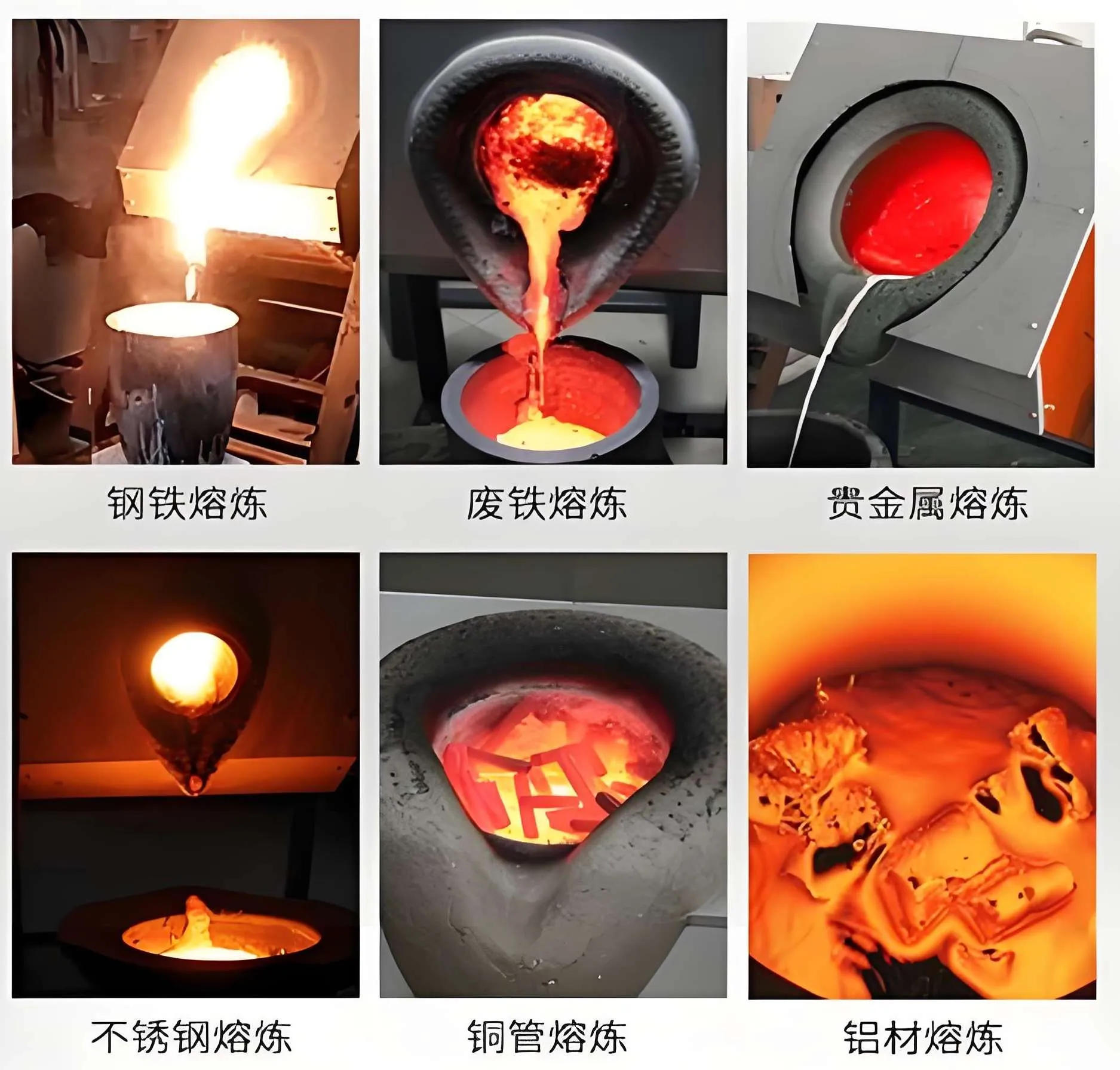
4. Material Balance and Process Cost
Immediate casting yield (%) = accepted casting mass / charged metal mass × 100. In precious-metal work, a complete reconciliation also tracks sprues, skull metal, dust and recoverable process residues. An example 5.00kg charge producing 4.90kg accepted pieces and 0.10kg recoverable material has 98% immediate acceptance but not necessarily 2% unrecoverable metal loss.
| Cost or Recovery Variable | Measurement | Reason |
|---|---|---|
| Electrical cost | kWh × utility tariff | Separates energy cost from charge value. |
| Crucible cost | Cost per qualified melt | Supports replacement planning. |
| Processing labor | Minutes per accepted batch | Reflects preparation and cleanup. |
| Assay and chemistry | Composition per batch | Reduces wrong-karat inventory risk. |
| Recoverable precious metal | Recorded grams in returns/residues | Correct material reconciliation. |
5. Example Three-Phase Electrical Infrastructure Check
Where a three-phase configuration is offered, apparent input S(kVA) = 1.732 × line voltage(V) × line current(A) / 1000. Since the MM-F input voltage, phase and rated power are not published, do not apply the following electrical model without a manufacturer datasheet.
| Required Document | Data to Check | Importance |
|---|---|---|
| Electrical nameplate | Voltage, phases, 50/60Hz, rated current and kW | Safe installation and breaker selection. |
| Operating measurement | True kW, RMS current, power factor | Verifies actual energy demand. |
| Coil/matching drawing | Frequency, coil and capacitor circuit | Confirms load compatibility. |
| Cooling diagram | Flow, pressure, inlet temperature, water quality | Confirms continuous-duty capability. |
| Safety test report | Flow-loss, overcurrent, overtemperature responses | Confirms interlocks operate correctly. |
6. Factory Acceptance Test for the MM-F Series
| Test | Evidence | Acceptance Basis |
|---|---|---|
| Exact model identity | MM-F model code, serial, electrical nameplate | Quoted configuration. |
| Gold capacity | Weighed charge of specified alloy and crucible | Safe fill and approved batch size. |
| Heating performance | Measured electrical kWh, mean kW and melt time | Agreed factory trial. |
| Temperature | Calibrated temperature indication and melt check | Specified casting temperature. |
| Quality | Assay, accepted casting mass, recoverable residue | Agreed jewelry quality standard. |
| Cooling and safety | Recorded flow/pressure and protection demonstrations | Supplier operating limits. |
| Repeatability | Several representative melts | Defined time and quality variation. |
Advantages
| Potential Advantage | Buyer Benefit | Qualification |
|---|---|---|
| Compact batch format | Suitable for jewelry-shop melting tasks. | Actual footprint and capacity must be checked. |
| IGBT-based power conversion | Allows controllable induction power with suitable matching. | Efficiency and kW not quantified on source page. |
| Six published capacity options | Potential choice between 2 and 8kg batches. | Exact model/crucible map not published. |
| Digital temperature indication | Supports operating repeatability. | Calibration and measurement method to confirm. |
| Built-in protection claims | Supports response to electrical and water-related faults. | Must be verified by functional tests. |
| Potential less direct fuel exposure | Electromagnetic energy enters metal or suitable crucible. | Contamination depends on total handling process. |
Limitations
| Limitation | Practical Impact | Mitigation |
|---|---|---|
| Missing power and frequency table | Cannot guarantee time, kWh or local supply match. | Obtain a model-specific certified datasheet. |
| Unclear capacity basis | 2–8kg may depend on gold density and crucible design. | Confirm usable gold mass and freeboard. |
| Melting does not refine gold | Impurities remain unless a separate refining method is used. | Use assay and qualified refining when purity is the objective. |
| Alloy cross-contamination | Different karats may mix through tools/crucibles. | Dedicated or validated-clean equipment. |
| Crucible wear | Contamination, cracking and product loss. | Approved crucible replacement practice. |
| Molten-metal hazards | Burns, moisture explosions and fumes. | Dry charge, guarded pouring and local ventilation. |
| Cooling dependence | IGBT and coil damage if flow is lost. | Test interlocks and maintain flow. |
| Published 24-hour claim lacks test boundary | Does not establish unconditional full-load operation. | Request ambient/cooling duty test. |
Why Choose HLQ Induction Equipment?
HLQ lists MM-F induction gold melting equipment alongside other small and industrial induction furnaces. For a meaningful purchase decision, request an exact model and crucible specification, electrical nameplate, cooling diagram and a representative gold-melting factory trial. The purchasing objective should be repeatable casting quality and accountable precious-metal recovery—not an unsupported claim that a nominal 8kg option always melts in a fixed number of minutes.
Workshops evaluating transportable installations can separately review the portable gold melting furnace.
Precious-Metal Project RFQ Checklist
| Customer Requirement | Information to Provide |
|---|---|
| Alloy | 24K, 18K, 14K, sterling silver, or exact composition. |
| Charge | 2–8kg required maximum; typical charge and shape. |
| Production | Batches per day and accepted product mass. |
| Temperature | Required pouring temperature and measurement method. |
| Electrical installation | Available line voltage, phase, frequency and breaker. |
| Crucible | Material, spare quantity, dedicated alloy rules. |
| Cooling | Water flow, pressure, temperature and quality. |
| Acceptance | Measured melt time, kWh, fineness, accepted yield and safety. |
Core FAQs
FAQ 1. What is the HLQ MM-F induction gold melting furnace?
It is a compact IGBT induction system intended for small batches of gold, silver and compatible nonferrous alloys. The source product page advertises six melting-capacity options from 2kg to 8kg, but does not provide a model-by-model power/frequency datasheet.
FAQ 2. Can it melt 2kg, 3kg, 4kg, 5kg, 6kg or 8kg of gold?
Those six capacities are published options. Before purchasing, confirm the exact selected model, whether capacity refers to pure gold, the usable crucible volume and the maximum safe fill level. Capacity does not establish hourly output.
FAQ 3. What electrical power and frequency does the MM-F furnace require?
The reviewed page does not publish those values. Request the rated input kW, line voltage, phases, maximum current and loaded operating kHz for the exact MM-F model. Do not use the ratings of another HLQ gold-melting furnace.
FAQ 4. How long does it take to melt 5kg of gold?
There is no verified MM-F full-charge melting time on the source page. As a calculation example, 5kg of pure gold may require roughly 0.30kWh of useful heat under the stated thermal assumptions. At an illustrative 30% overall efficiency this corresponds to 1.0kWh electrical input, or about 12 minutes at a hypothetical sustained 5kW real input. This is not a factory performance claim.
FAQ 5. Is an induction gold furnace the same as a gold refining machine?
No. Melting converts metal to liquid and may support alloying or casting. It does not automatically remove impurities or raise gold fineness. Refining requires a qualified separate chemical, electrochemical or metallurgical process, followed by assay.
FAQ 6. Which crucible should be used for gold and silver?
Graphite, clay-graphite and other suitable crucibles may be considered according to alloy chemistry and heating architecture. Select only a crucible approved for the actual MM-F system, required temperature and contamination limits. Separate dedicated crucibles may be needed for different karats.
FAQ 7. Does the gold melting furnace need water cooling?
The HLQ page describes insufficient-water protection, so the supplied system’s cooling circuit and interlocks require verification. Actual water flow, pressure, inlet temperature and water quality are not published; obtain the factory cooling diagram before choosing a pump or chiller.
FAQ 8. How should a jewelry workshop validate a gold melting furnace?
Test representative metal at the proposed charge mass. Record the exact crucible, line power, electrical kWh, melt time, pouring temperature, fineness, accepted metal and recoverable residue. Confirm the cooling and electrical protection functions, then repeat the trial before signing the factory acceptance report.