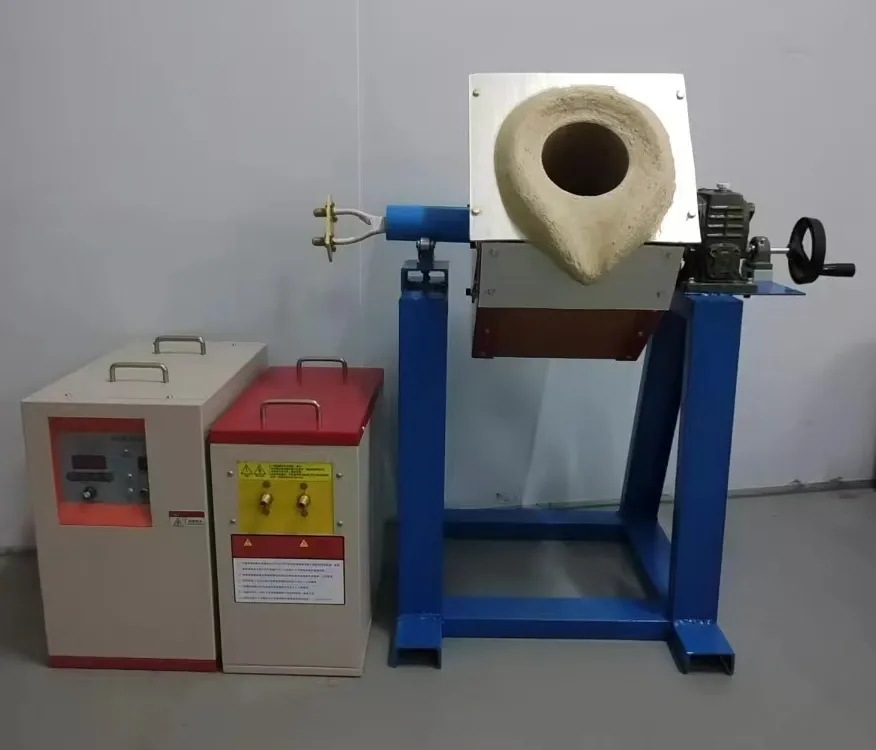
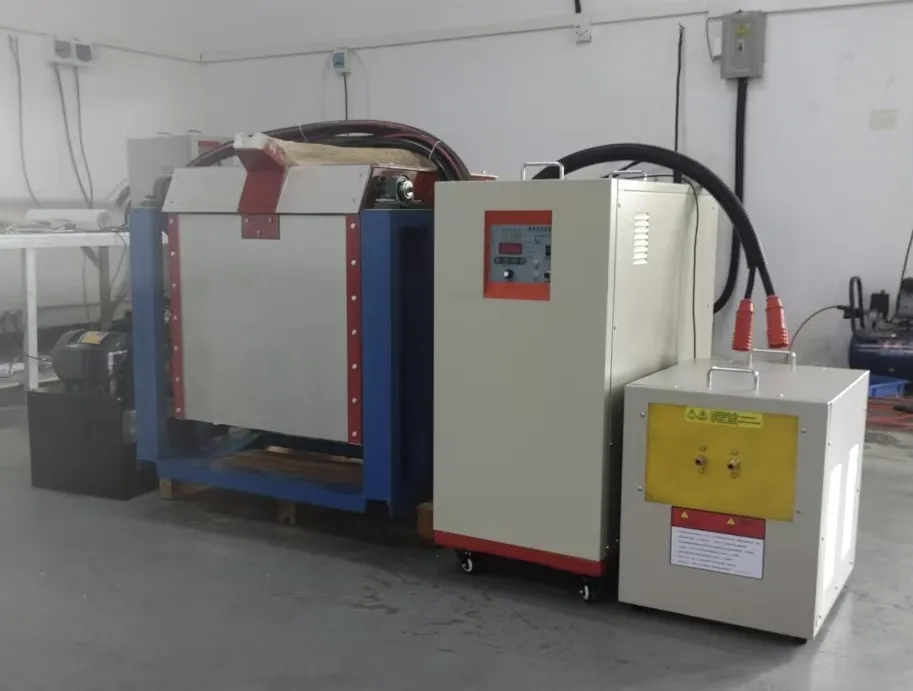
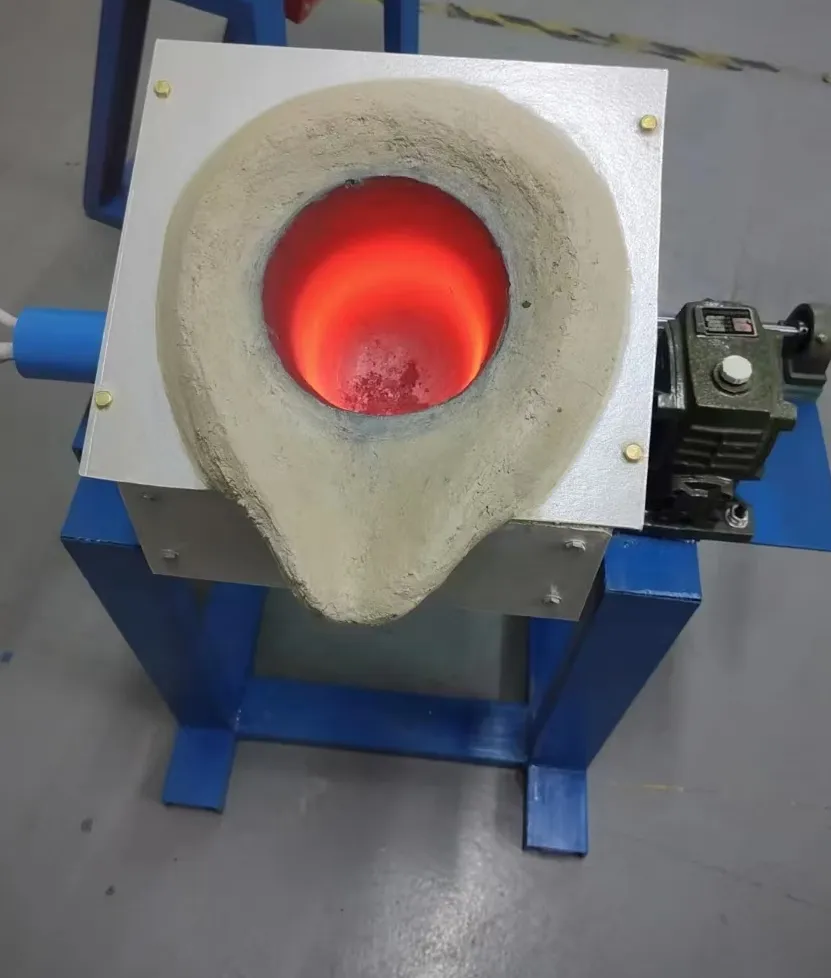
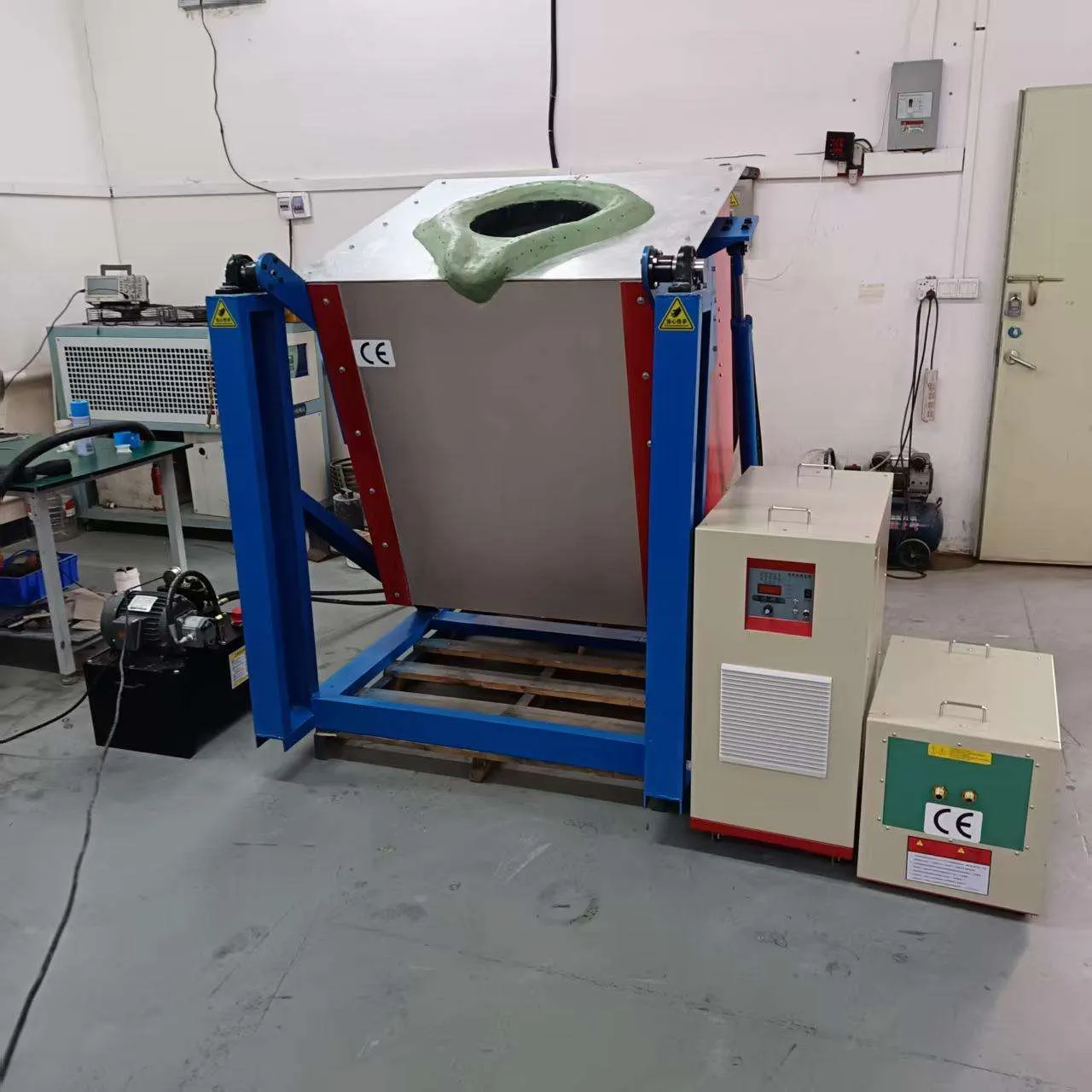

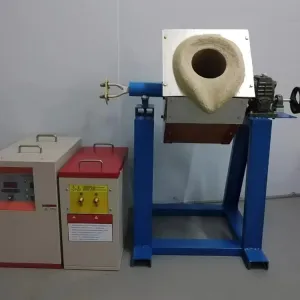
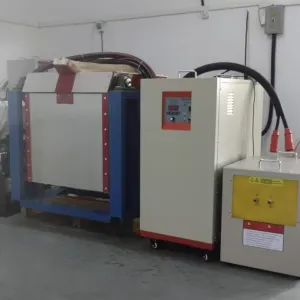

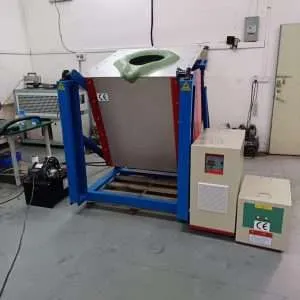

Induction Gold Smelter – Induction Gold Melting Furnace
Induction Gold Smelter – Induction Gold Melting Furnace Complete Guide

If you are looking for a fast, clean and efficient way to melt or refine gold, an induction gold smelter (also called an induction gold melting furnace) is usually the best choice. This guide explains how it works, the main types, key technical parameters, and how to choose the right model for your workshop, refinery or lab.
What Is an Induction Gold Smelter?
An induction gold smelter is an electric melting furnace that uses electromagnetic induction to heat and melt gold and gold alloys.
Compared with traditional gas, coal or oil-fired crucible furnaces, an induction gold melting furnace offers:
- Much faster heating and higher efficiency
- Precise temperature control
- Cleaner operation (no combustion gases, less dust)
- Lower risk of contamination of the molten gold
Typical applications include:
- Jewelry casting and alloy production
- Small–medium scale gold refining
- Fire assay and laboratory work
- Recycling of electronic and dental scrap containing gold
How an Induction Gold Melting Furnace Works
Induction gold smelters rely on electromagnetic induction:
- An alternating current flows through a copper coil (the induction coil).
- This creates a rapidly changing magnetic field around the coil.
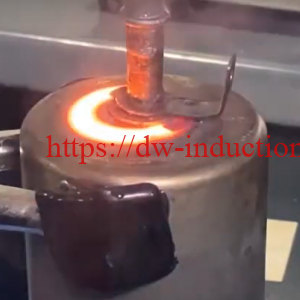
- When you place a metal charge (gold, silver, alloys) inside this field, eddy currents are induced in the metal.
- The electrical resistance of the metal converts this current into heat, melting the charge from the inside out.
Key technical points:
- Skin effect: At higher frequencies, current flows mainly near the surface of the metal. This allows fast surface heating but limits penetration depth.
- Frequency vs penetration:
- Low/medium frequency → deeper heating, good for larger batches
- High frequency → very fast surface heating, ideal for small charges and precise control
Main Types of Induction Gold Smelters

1. By Capacity
- Benchtop units: ~0.5–5 kg of gold
- Medium units: ~5–50 kg of gold
- Industrial units: 50 kg and above
2. By Frequency
- Low / Medium frequency (1–20 kHz)
- Better penetration, suitable for larger melts
- High frequency (20–100+ kHz)
- Very rapid heating, ideal for smaller melts and jewelry work
3. By Cooling Method
- Air-cooled
- Used for small, low-power benchtop machines
- Water-cooled
- Standard for medium and large induction gold melting furnaces
- Requires a closed-loop chiller or cooling tower
Key Components of an Induction Gold Melting Furnace
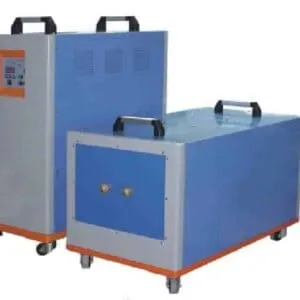
- Power supply
- Rectifier + inverter + control electronics
- Determines output power (kW) and frequency (kHz)
- Induction coil
- Copper tubing, usually water-cooled
- Shape (helical or pancake) affects heating pattern and efficiency
- Crucible
- Common materials: graphite, clay-graphite, SiC, alumina, zirconia
- Must withstand ~1,200–1,400 °C and be chemically compatible with gold/flux
- Cooling system
- Closed-loop water chiller or cooling tower
- Controls coil and power electronics temperature
- Control system
- Digital power control
- Temperature measurement (pyrometer or thermocouple)
- Safety interlocks (water flow, over-temperature, door switches)
- Furnace body and insulation
- Refractory and insulation to reduce heat loss
- Mechanical support for coil and crucible
Typical Technical Parameters (Reference Tables)
The following data are typical example ranges for reference. Actual specifications depend on the manufacturer and model.
Table 1 – Typical Benchtop Induction Gold Melting Furnace
| Parameter | Typical Range |
|---|---|
| Melting capacity (pure Au) | 0.5 – 5 kg |
| Rated power | 3 – 15 kW |
| Output frequency | 20 – 80 kHz |
| Power supply | 1-phase 220–240 V or 3-phase 380 V |
| Max temperature | 1,200 – 1,350 °C |
| Typical melt time (full load) | 3 – 10 minutes |
| Cooling method | Air-cooled or small water chiller |
| Duty cycle | 60 – 100% (depending on model) |
| Recommended crucible | Graphite or clay-graphite |
| Control mode | Manual power set / simple temperature control |
Table 2 – Typical Medium-Scale Induction Gold Smelter

| Parameter | Typical Range |
|---|---|
| Melting capacity (pure Au) | 5 – 30 kg |
| Rated power | 15 – 60 kW |
| Output frequency | 3 – 30 kHz |
| Power supply | 3-phase 380/400/415/480 V |
| Max temperature | 1,250 – 1,400 °C |
| Typical melt time (full load) | 8 – 20 minutes |
| Cooling method | Closed-loop water chiller |
| Cooling water flow | 10 – 40 L/min (depending on power) |
| Recommended crucible | Clay-graphite / SiC / high alumina |
| Tilting / pouring | Manual or electric tilting |
| Control mode | Digital power & temperature control |
Table 3 – Typical Industrial Induction Gold Melting Furnace
| Parameter | Typical Range |
|---|---|
| Melting capacity (pure Au) | 30 – 200 kg+ |
| Rated power | 60 – 300 kW+ |
| Output frequency | 1 – 10 kHz |
| Power supply | 3-phase industrial (e.g. 380–690 V) |
| Max temperature | 1,250 – 1,400 °C |
| Typical melt time (full load) | 20 – 45 minutes |
| Cooling method | Industrial water chiller/tower |
| Cooling water flow | 40 – 150 L/min+ |
| Furnace type | Hydraulic tilting / pouring |
| Control mode | PLC with multi-stage heating curves |
| Applications | Refineries, large casting houses |
How to Choose the Right Induction Gold Smelter
When selecting an induction gold melting furnace, focus on these factors:
- Melting capacity
- How many kilograms of gold do you need to melt per batch?
- How many batches per day?
- Power rating and melt time
- Higher kW = faster melt, but higher investment and power demand
- Match kW to your required cycle time and production volume
- Power supply & site conditions
- Available voltage (single-phase or three-phase)
- Electrical infrastructure and protection devices
- Cooling system
- Space for chiller / cooling tower
- Ambient temperature and water quality
- Purity and contamination control
- Choice of crucible to minimize carbon or impurity pick-up
- Cover/lid design to reduce oxidation and dust
- Operation and safety
- Automatic vs manual control
- Safety interlocks, alarms and emergency stop
- Ease of maintenance and spare parts availability
Operating Highlights (Standard Procedure Overview)
- Pre-start checks
- Ensure cooling water is flowing and at correct temperature
- Check electrical connections and safety interlocks
- Loading
- Charge clean gold granules, scrap or bars into crucible
- Add fluxes (e.g., borax, silica, soda ash) if refining or deoxidizing
- Melting
- Start at lower power, then ramp to full power
- Monitor temperature and melt surface behavior
- Refining / alloying (if required)
- Add silver, copper or other alloying metals
- Stir (mechanically or with inert rod) and skim slag
- Pouring
- Preheat molds, wear full PPE
- Tilt furnace or lift crucible carefully, pour smoothly to avoid splashing
- Shutdown
- Reduce power to zero, shut off system
- Keep cooling water running for the recommended time
Safety Considerations
An induction gold smelter is safer than a fuel-fired furnace, but still involves high temperatures, high current and molten metal:
- Electrical safety: proper grounding, insulation, trained electricians
- Thermal safety: heat-resistant gloves, apron, face shield, safety shoes
- Molten metal hazards:
- Never introduce wet tools, molds or scrap into the melt
- Control charging to avoid eruptions and splashing
- Fumes and ventilation: provide local exhaust where fluxes or other metals may fume
- Emergency preparedness: accessible emergency stop, dry-powder extinguishers, clear evacuation routes
Advantages of Induction Gold Melting Furnaces
- Very high efficiency and fast melt times
- Accurate temperature control and repeatable results
- Cleaner workplace (no open flame, no combustion gases)
- Reduced metal loss and oxidation
- Lower contamination risk, better gold quality
- Compact footprint and easy integration in existing lines
Limitations and Challenges
- Higher initial investment than simple gas furnaces
- Requires reliable electricity and cooling water
- Coil and crucible must be correctly matched and regularly inspected
- Less practical where power supply is unstable or unavailable
FAQ: Induction Gold Smelter – Induction Gold Melting Furnace
Q1: How long does it take to melt gold in an induction furnace?
For a correctly sized furnace, a full batch typically melts in 3–20 minutes for small and medium units, and up to 45 minutes for large industrial units.
Q2: Can the same induction furnace melt other metals?
Yes. Most induction gold smelters can also melt silver, copper, brass, bronze and other non-ferrous alloys, within their temperature and crucible limits.
Q3: Do I need a special power supply?
You need a stable single-phase or three-phase supply matching the furnace rating. Medium and industrial units generally require three-phase industrial power.