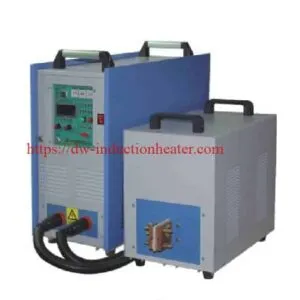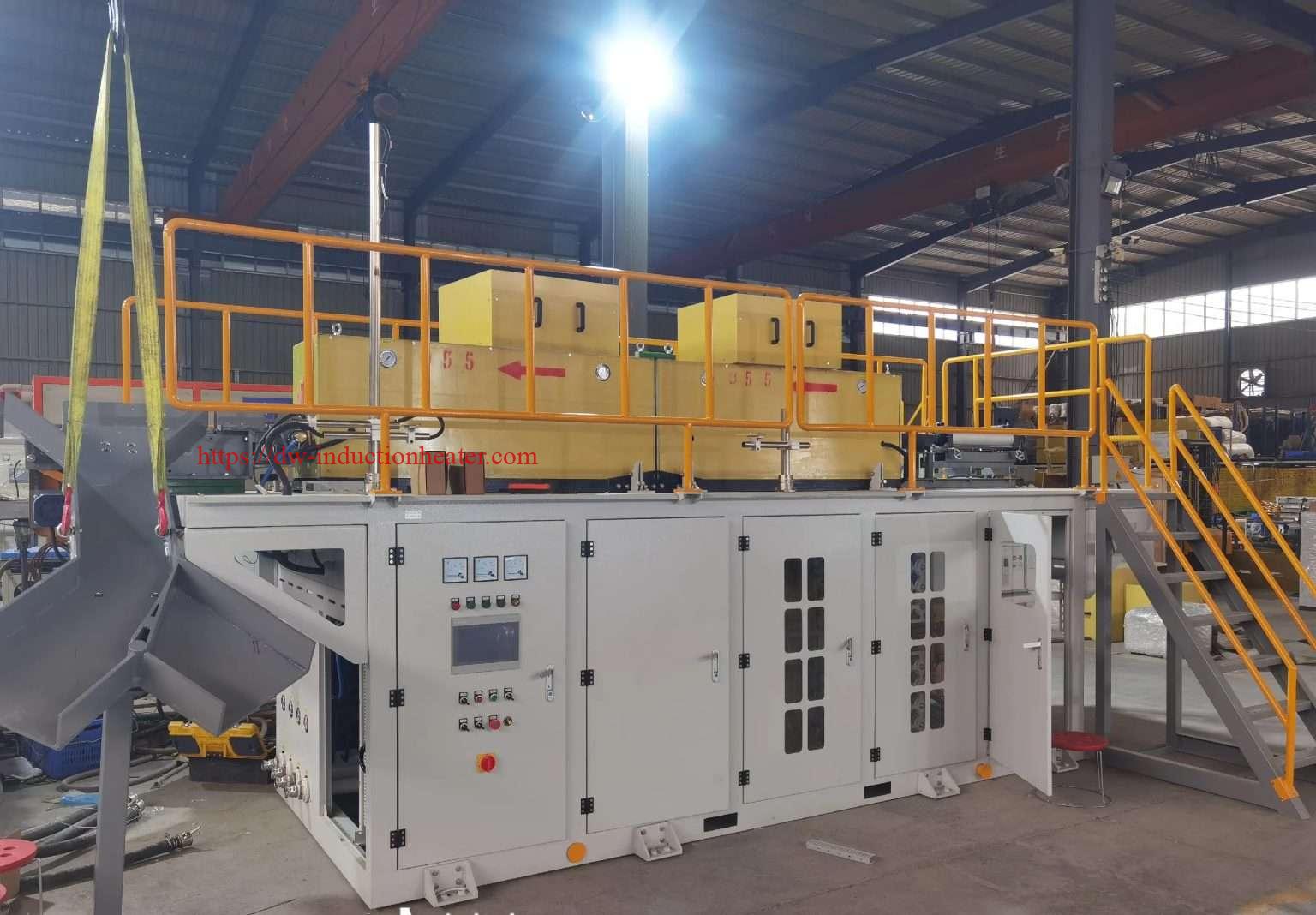

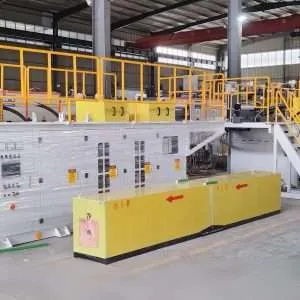

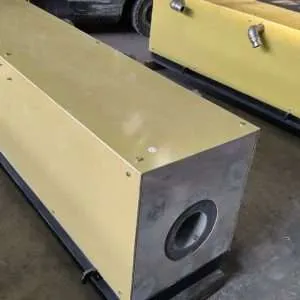
Continuous Steel Billet Heater with Induction Heating For Forging Steel Copper Aluminum Metals
Tool Steels and Special Steels
Important Note on Curie Temperature
Skin Depth and Frequency Selection
⚙️ Faster Heating — Higher Productivity
🔬 Dramatically Reduced Scale Formation
🌿 Environmental and Safety Benefits
Type 1: Single-Station Static Induction Heater
Type 2: Continuous Push-Through Induction Heater
Type 3: Walking Beam Induction Heater
Type 4: Rotary Indexing Induction Heater
Type 5: Channel Induction Heater (for Bars and Rods)
Heating Performance Parameters
Production Capacity by Billet Size
Step 1 — Define Your Billet Specifications
Step 2 — Define Your Production Requirements
Step 3 — Assess Your Infrastructure
Step 4 — Evaluate Key Technical Criteria
Step 5 — Evaluate Supplier Capabilities
Step 6 — Total Cost of Ownership Analysis
1. Introduction
In modern steel manufacturing, efficiency, precision, and energy savings are critical. One of the most important processes is heating steel billets to the correct temperature before forging, rolling, or extrusion. Traditional gas-fired furnaces are increasingly being replaced by continuous induction billet heaters, which provide faster heating, better temperature control, and improved energy efficiency.
Continuous steel billet heaters using induction technology are widely adopted in steel rolling mills, forging plants, and continuous casting lines, forming a key link between casting and forming processes.
The emergence and widespread adoption of continuous steel billet heaters with induction heating technology has fundamentally transformed how the industry approaches this critical process step. By generating heat directly inside the steel billet through electromagnetic induction rather than applying heat from an external source, induction heating systems deliver faster, cleaner, more precise, and significantly more energy-efficient billet heating than any conventional alternative.
Today, continuous induction billet heaters are the preferred choice for forging plants, rolling mills, seamless tube producers, and fastener manufacturers worldwide. This guide provides a comprehensive, expert-level examination of continuous steel billet induction heaters — what they are, how they work, what materials they can process, where they are applied, and how to select the right system for your specific production requirements.
2. What Is a Continuous Steel Billet Heater with Induction Heating?
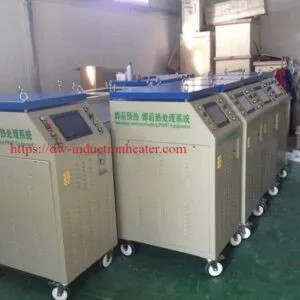
A continuous steel billet heater with induction heating is a fully automated industrial heating system designed to heat steel billets, bars, or rods to a precise target temperature — typically between 900°C and 1,300°C for forging applications — using the principle of electromagnetic induction, in a continuous, uninterrupted production flow.
Unlike batch-type furnaces that heat a group of billets together and require loading and unloading cycles, a continuous induction billet heater processes billets one after another in a seamless, uninterrupted sequence. Billets enter the heating system at room temperature from one end and exit at the required forging or rolling temperature from the other end, ready for immediate processing at the press, hammer, or rolling mill.
┌─────────────────────────────────────────────────────────┐
│ Continuous Steel Billet Induction Heater │
│ System Overview │
├─────────────────────────────────────────────────────────┤
│ │
│ [Billet Magazine] │
│ ↓ │
│ [Feed Conveyor / Push Mechanism] │
│ ↓ │
│ [Induction Heating Coil Stations] │
│ ↓ │
│ [Temperature Measurement (Pyrometer)] │
│ ↓ │
│ [Accept/Reject Gate] │
│ ↓ │
│ [Transfer to Forging Press / Rolling Mill] │
│ │
│ Supported by: │
│ • Solid-State Power Supply (Inverter) │
│ • Water Cooling System │
│ • PLC Automation and Control System │
│ • HMI Operator Interface │
└─────────────────────────────────────────────────────────┘
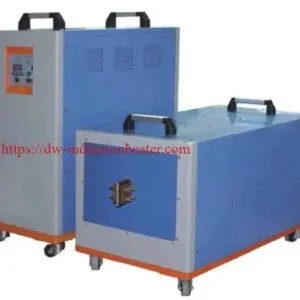
The system is designed for high production rates, tight temperature tolerances, minimal operator intervention, and seamless integration with downstream forging or rolling equipment.
3. Which Materials Are Suitable for Billet Forge Induction Heating?
Induction heating is highly effective for all ferromagnetic and electrically conductive metallic materials. For steel billet heating specifically, the following material categories are fully compatible:
- Low Carbon Steel (MS): 0.05% – 0.30% C
Examples: Q235, A36, S235, 1020
Heating temp: 1,100°C – 1,280°C
Suitability: ✅ Excellent

- Medium Carbon Steel: 0.30% – 0.60% C
Examples: EN8 (080M40), 1040, 1045, C45
Heating temp: 1,050°C – 1,250°C
Suitability: ✅ Excellent
- High Carbon Steel: 0.60% – 1.00% C
Examples: EN9 (080A92), 1080, 1090
Heating temp: 950°C – 1,150°C
Suitability: ✅ Excellent
- Chromium-Molybdenum Steel:
Examples: 4140, 4340, 42CrMo4, SCM440
Heating temp: 1,000°C – 1,200°C
Suitability: ✅ Excellent
- Nickel-Chrome Steel:
Examples: EN36, EN39, 8620
Heating temp: 950°C – 1,180°C
Suitability: ✅ Excellent
- Bearing Steel:
Examples: 52100, GCr15, SUJ2
Heating temp: 900°C – 1,100°C
Suitability: ✅ Good (narrow window — precise control needed)
- Spring Steel:
Examples: 9260, 51CrV4, SUP9
Heating temp: 900°C – 1,100°C
Suitability: ✅ Good
- Martensitic Stainless Steel:
Examples: 410, 420, 440C
Magnetic at room temperature
Heating temp: 1,000°C – 1,200°C
Suitability: ✅ Good
- Ferritic Stainless Steel:
Examples: 430, 446
Magnetic at room temperature
Heating temp: 950°C – 1,150°C
Suitability: ✅ Good

- Austenitic Stainless Steel:
Examples: 304, 316, 321
Non-magnetic — requires higher frequency
Heating temp: 1,100°C – 1,280°C
Suitability: ⚠️ Possible but less efficient
Tool Steels and Special Steels
- Hot Work Tool Steel: H11, H13, SKD61
- Cold Work Tool Steel: D2, Cr12MoV
- High Speed Steel: M2, W6Mo5Cr4V2
Heating temp: 900°C – 1,150°C
Suitability: ✅ Good (requires careful temperature control)
Important Note on Curie Temperature
⚠️ Critical Physical Behavior:
Steel is strongly ferromagnetic below 768°C (Curie Point)
→ High magnetic permeability → High induction efficiency
Above 768°C, steel becomes paramagnetic
→ Permeability drops to ~1
→ Induction efficiency decreases
This means:
- Heating from 20°C to 768°C: Fast and efficient
- Heating from 768°C to 1,200°C: Continues but requires
higher power density
- System design must account for this two-phase behavior
4. Principle of Induction Heating for Steel Billets
The operation of a continuous steel billet induction heater is governed by two fundamental laws of physics working in combination:
Faraday’s Law of Electromagnetic Induction states that a time-varying magnetic field induces an electromotive force (EMF) — and therefore an electrical current — in any electrically conductive material placed within that field.
Joule’s Law of Heating states that when an electrical current flows through a material with electrical resistance, heat is generated at a rate proportional to the square of the current multiplied by the resistance (P = I²R).
STEP 1 — Power Conversion
Mains electricity (50/60 Hz) →
Solid-state inverter (IGBT-based) →
High-frequency AC output (500 Hz – 10,000 Hz)

STEP 2 — Magnetic Field Generation
High-frequency AC current flows through
water-cooled copper induction coil →
Creates rapidly alternating electromagnetic field
inside and around the coil
STEP 3 — Eddy Current Induction
Steel billet fed through the centre of the coil →
Alternating magnetic field penetrates billet →
Induces eddy currents (circulating electrical currents)
within the steel billet material
STEP 4 — Joule Heating
Eddy currents encounter electrical resistance of steel →
Electrical energy converts directly to heat (I²R) →
Steel billet heats itself from within — no external flame
STEP 5 — Heat Distribution
Heat generated in outer skin layer (skin depth zone) →
Conducts inward to billet core →
Achieves uniform temperature throughout cross-section
Skin Depth and Frequency Selection
One of the most critical design parameters is electromagnetic skin depth — the depth below the billet surface where the majority of induced current and heat generation occurs.
Skin Depth Formula:
δ = 503 × √(ρ / μr × f)
Where:
δ = skin depth (mm)
ρ = electrical resistivity (Ω·m)
μr = relative magnetic permeability
f = operating frequency (Hz)
Skin depth for carbon steel at various frequencies:
| Frequency | Skin Depth (cold steel) | Skin Depth (hot steel >768°C) | Recommended Billet Diameter |
| 500 Hz | 4–6 mm | 25–35 mm | 80mm – 200mm |
| 1,000 Hz | 3–4 mm | 18–25 mm | 50mm – 150mm |
| 2,000 Hz | 2–3 mm | 13–18 mm | 30mm – 100mm |
| 4,000 Hz | 1.5–2 mm | 9–13 mm | 20mm – 60mm |
| 8,000 Hz | 1–1.5 mm | 6–9 mm | 10mm – 40mm |
The correct frequency selection ensures adequate penetration depth for uniform heating across the full billet cross-section within the required heating time.
5. Applications
Continuous steel billet induction heaters serve a wide range of demanding industrial applications across multiple sectors:
- Automotive components:
Crankshafts, connecting rods, camshafts,
steering knuckles, wheel hubs, gear blanks
- Heavy engineering:
Railway axles and wheels, ship propeller shafts,
mining equipment components, wind turbine shafts
- Fasteners and fittings:
Bolts, nuts, flanges, pipe fittings
- Hand tools:
Wrenches, hammers, chisels, drill bits
- Structural steel rolling:
Angles, channels, beams, flat bars

- Bar and rod rolling:
Round bars, square bars, hexagonal bars
- Wire rod production:
High carbon wire rod, welding wire rod
- Seamless tube and pipe:
Pre-heating billets for piercing and rolling
- Upset forging and heading (bolt making)
- Ring rolling (bearing rings, flanges)
- Extrusion (steel tube extrusion)
- Warm forming (below full forging temperature)
- Heat treatment (normalizing, hardening)
- Thixoforming (semi-solid metal forming)
6. Advantages
The adoption of continuous steel billet induction heaters offers compelling advantages over conventional gas-fired and resistance heating alternatives:
Gas furnace efficiency: 30% – 45%
Resistance furnace efficiency: 45% – 60%
Induction heater efficiency: 60% – 80%
For a plant processing 10,000 tonnes/year:
Gas furnace energy cost: ~$400,000/year
Induction heater energy cost: ~$200,000/year
Annual energy saving: ~$200,000
Modern induction systems achieve billet exit temperature accuracy of ±10°C to ±5°C, compared to ±30°C or worse for gas furnaces. This precision directly translates into:
- Consistent forging pressure and die fill
- Reduced die wear from temperature variation
- Tighter dimensional tolerances on forged parts
- Lower scrap rates from temperature-related defects
⚙️ Faster Heating — Higher Productivity
Gas furnace heating time: 30 – 90 minutes per batch
Induction heater heating time: 30 – 300 seconds per billet
Result:
- Faster production cycle
- Smaller work-in-progress inventory
- Immediate startup — no furnace warm-up period
- Instant shutdown — no cool-down losses
🔬 Dramatically Reduced Scale Formation
Scale loss comparison:
Gas furnace: 1.5% – 3.0% of billet weight
Induction heater: 0.1% – 0.5% of billet weight
For 10,000 tonnes/year at $600/tonne steel:
Gas furnace scale loss: 150–300 tonnes = $90,000–$180,000
Induction scale loss: 10–50 tonnes = $6,000–$30,000
Annual material saving: Up to $150,000+
Gas furnace (10t/hr capacity): Length 15–30 metres
Induction heater (same output): Length 4–12 metres
Space saving: 50–70% smaller footprint
Benefit: More floor space for production equipment
🌿 Environmental and Safety Benefits
- Zero combustion emissions — no NOₓ, CO, or CO₂ from heating process
- No open flame — reduced fire and explosion risk
- Lower workplace temperature — improved working conditions
- Quieter operation — no burner noise
- Easier compliance with environmental regulations
- Seamless integration with press or rolling mill control systems
- Automatic recipe selection by billet size and alloy
- Automatic under-temperature billet rejection
- Complete data logging for quality traceability
- Remote monitoring and diagnostics
7. Types of Steel Billet Heating Furnace
Type 1: Single-Station Static Induction Heater
Description:
One billet loaded at a time into a single coil station,
heated to temperature, then manually or automatically
transferred to the press.

Best for:
- Low production volumes
- Small forging shops
- R&D and prototype work
- Budget-constrained operations
Capacity range: 100 kg/hour – 1,000 kg/hour
Type 2: Continuous Push-Through Induction Heater
Description:
Billets are pushed through a series of inline induction
coil stations by a mechanical pusher mechanism.
Most common configuration for production forging plants.
Best for:
- Medium to high production volumes
- Round, square, and hexagonal billet sections
- Lengths from 100mm to 2,000mm+
- Integration with automatic forging lines
Capacity range: 500 kg/hour – 10,000 kg/hour
Type 3: Walking Beam Induction Heater
Description:
Billets are transported through the heating zone by a
walking beam conveyor mechanism, allowing individual
billet spacing and precise residence time control.
Best for:
- Large diameter billets (100mm – 400mm)
- Heavy forging applications
- Situations where billet-to-billet contact must be avoided
- Precise individual billet temperature control
Capacity range: 1,000 kg/hour – 20,000 kg/hour
Type 4: Rotary Indexing Induction Heater
Description:
Billets are loaded into rotating stations around a
circular indexing table, with each station progressing
through heating zones.
Best for:
- Short billets and slugs
- High-speed fastener and headed part production
- Compact space requirements
Capacity range: 200 kg/hour – 3,000 kg/hour
Type 5: Channel Induction Heater (for Bars and Rods)
Description:
Long bars or rods are fed continuously through an
extended coil channel, with the bar advancing at
controlled speed to achieve target temperature at exit.
Best for:
- Rolling mill pre-heating
- Long bar and rod heating
- Wire rod production
Capacity range: 1,000 kg/hour – 30,000 kg/hour
8. Equipment and Technical Parameters
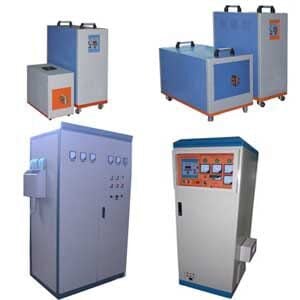
| Parameter | Small System | Medium System | Large System |
| Power rating | 100–500 kW | 500 kW–2 MW | 2 MW–10 MW+ |
| Operating frequency | 1,000–4,000 Hz | 500–2,000 Hz | 250–1,000 Hz |
| Input voltage | 380–480V 3-phase | 6.6kV–11kV | 11kV–33kV |
| Power factor | >0.90 | >0.92 | >0.95 |
| Inverter efficiency | >95% | >95% | >96% |
| Inverter technology | IGBT solid-state | IGBT solid-state | IGBT solid-state |
Heating Performance Parameters
| Parameter | Specification |
| Billet diameter range | 20mm – 400mm |
| Billet length range | 50mm – 3,000mm |
| Target heating temperature | 900°C – 1,300°C |
| Temperature accuracy | ±5°C – ±15°C |
| Cross-section uniformity | ±10°C – ±20°C |
| Heating rate | 50°C/sec – 300°C/sec |
| Scale loss | 0.1% – 0.5% |
| System thermal efficiency | 60% – 80% |

Production Capacity by Billet Size
| Billet Diameter | Billet Length | Target Temp | Required Power | Capacity |
| 40mm round | 200mm | 1,200°C | 150–200 kW | 800–1,200 kg/hr |
| 60mm round | 300mm | 1,200°C | 250–350 kW | 1,000–1,500 kg/hr |
| 80mm round | 400mm | 1,200°C | 400–550 kW | 1,500–2,500 kg/hr |
| 100mm round | 500mm | 1,200°C | 600–800 kW | 2,000–3,500 kg/hr |
| 150mm round | 600mm | 1,200°C | 1,000–1,500 kW | 3,000–5,000 kg/hr |
| 200mm round | 800mm | 1,200°C | 1,500–2,500 kW | 4,000–7,000 kg/hr |
| Parameter | Specification |
| Flow rate | 50–500 L/min (system dependent) |
| Supply temperature | 15–25°C |
| Maximum return temperature | 40°C |
| Water quality | Deionized, <50 µS/cm |
| Supply pressure | 3–6 bar |
| System type | Closed-loop with cooling tower |
| Feature | Standard | Advanced |
| PLC control | ✅ | ✅ |
| HMI touchscreen | ✅ | ✅ |
| Temperature closed-loop control | ✅ | ✅ |
| Recipe management | ✅ (20 recipes) | ✅ (unlimited) |
| Data logging | Basic | Full traceability |
| Remote diagnostics | Optional | ✅ Standard |
| ERP/MES integration | Optional | ✅ Standard |
| Energy monitoring | Basic | Real-time dashboard |
9. How to Choose a Suitable Equipment?
Selecting the right continuous steel billet induction heater requires systematic evaluation of multiple factors. Follow this structured decision framework:
Step 1 — Define Your Billet Specifications
□ Billet material / steel grade
□ Billet shape: round / square / hexagonal / flat
□ Billet diameter or cross-section dimensions (mm)
□ Billet length (mm)
□ Billet weight per piece (kg)
□ Required heating temperature (°C)
□ Temperature uniformity requirement (±°C)
Step 2 — Define Your Production Requirements
□ Required production rate (tonnes/hour or pieces/hour)
□ Number of production shifts (1 / 2 / 3 shifts per day)
□ Annual production volume (tonnes/year)
□ Number of different billet sizes to be processed
□ Frequency of size changeover
□ Future capacity expansion plans
Step 3 — Assess Your Infrastructure
□ Available electrical supply voltage and capacity (kVA/MW)
□ Available cooling water flow rate and temperature
□ Available floor space (length × width × height)
□ Existing material handling equipment
□ PLC/automation platform preferences
□ Capital budget range
Step 4 — Evaluate Key Technical Criteria
Power Rating Selection:
Required power (kW) = [Billet mass (kg) × Specific heat (480 J/kg°C)
× Temperature rise (°C)] ÷
[Heating time (seconds) × System efficiency (0.70)]
Frequency Selection:
- Large billets (>150mm): 500–1,000 Hz
- Medium billets (60–150mm): 1,000–2,500 Hz
- Small billets (<60mm): 2,500–8,000 Hz
Coil Design:
- Number of coil stations needed
- Coil inner diameter (billet diameter + 20–40mm clearance)
- Coil length per station
Step 5 — Evaluate Supplier Capabilities
✅ Technical criteria:
□ Proven experience in steel billet heating applications
□ Reference installations at comparable plants
□ In-house coil design and manufacturing capability
□ Comprehensive after-sales service network
□ Spare parts availability and delivery lead time
□ Remote diagnostics capability
✅ Commercial criteria:
□ Factory Acceptance Test (FAT) offered
□ Performance guarantees (temperature, capacity, energy)
□ Warranty terms (minimum 12 months)
□ Operator and maintenance training included
□ Commissioning support at your plant
Step 6 — Total Cost of Ownership Analysis
Do not evaluate on purchase price alone.
Calculate Total Cost of Ownership (TCO):
TCO = Capital Cost
+ Annual Energy Cost × System Life
+ Annual Maintenance Cost × System Life
+ Annual Material Loss (scale) × System Life
– Annual Productivity Gain × System Life
A higher-quality induction system with better efficiency
and reliability almost always delivers lower TCO over
its 15–20 year service life.
10. Conclusion
The continuous steel billet heater with induction heating represents one of the most significant technological advances in modern metalworking and forging manufacturing. By harnessing the power of electromagnetic induction to generate heat directly within the steel billet, these systems deliver a combination of performance attributes — speed, precision, energy efficiency, surface quality, automation capability, and environmental cleanliness — that no conventional heating technology can match.
For forging plants seeking to improve product quality and consistency, for rolling mills aiming to reduce energy costs and scale losses, for manufacturers under pressure to reduce their carbon footprint and comply with tightening environmental regulations, continuous induction billet heaters offer a compelling and proven solution.
The investment in a properly specified and well-maintained induction billet heating system typically delivers a payback period of 2–4 years through energy savings, material recovery, productivity improvements, and reduced maintenance costs — followed by 15–20 years of reliable, high-performance operation.
As steel manufacturing continues to evolve toward greater automation, tighter quality standards, and reduced environmental impact, continuous induction billet heating will only grow in importance as the preferred heating technology for the industry’s most demanding applications.
11. Frequently Asked Questions (FAQs)
Q1: What is the typical heating time for a steel billet in a continuous induction heater?
Heating time depends on billet size, material grade, and target temperature. Typical ranges are 30–90 seconds for small billets (20–50mm diameter) and 3–8 minutes for large billets (150–300mm diameter). This is dramatically faster than gas furnaces, which typically require 30–90 minutes.
Q2: Can one induction heater handle multiple billet sizes?
Yes. Most continuous induction heaters are designed with interchangeable coil tooling to accommodate different billet diameters and lengths. Each size combination is stored as a digital recipe in the control system. Changeover between sizes typically takes 30–90 minutes for coil tooling replacement, with recipe switching taking only seconds.
Q3: What happens if a billet exits the heater below the target temperature?
Modern systems include an automatic pyrometer measurement gate at the heater exit. Any billet outside the acceptable temperature window is automatically diverted by a reject gate to a return conveyor or scrap bin. The downstream press or rolling mill is not interrupted, and the under-temperature billet is either reheated or scrapped, depending on plant procedure.
Q4: How does induction heating compare to gas heating in terms of scale formation?
Induction heating produces dramatically less scale than gas heating. Because induction heats billets in 30 seconds to 8 minutes compared to 30–90 minutes in a gas furnace, there is far less time for surface oxidation to occur. Typical scale loss is 0