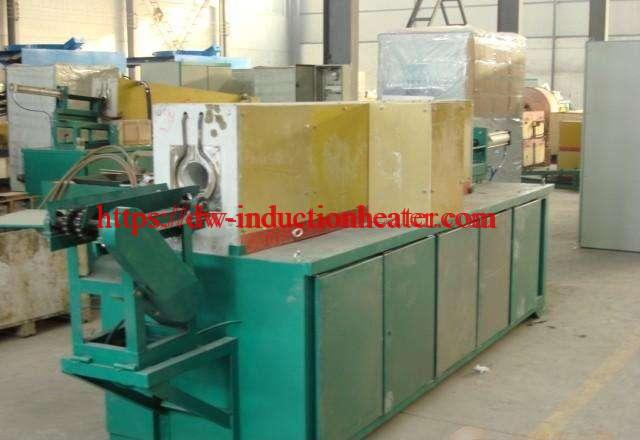




Steel Copper Aluminum Billet Forge Induction Heater | Efficient Induction Heating for Metals Forging
System Overview & Key Specifications
3.1 Step-by-Step Heating Process
3.2 Ferromagnetic Enhancement & Curie Temperature
3.3 Frequency vs Billet Diameter Selection
Non-Ferrous & Special Alloy Billets
5.1 Performance Comparison vs Conventional Heating
5.2 Quantified Business Benefits
7.Types of Billet Forge Induction Heating Processes
7.1 Open Die Induction Forging
7.2 Closed Die Induction Forging
7.3 Ring Rolling with Induction Heating
7.5 Hot Extrusion with Induction Heating
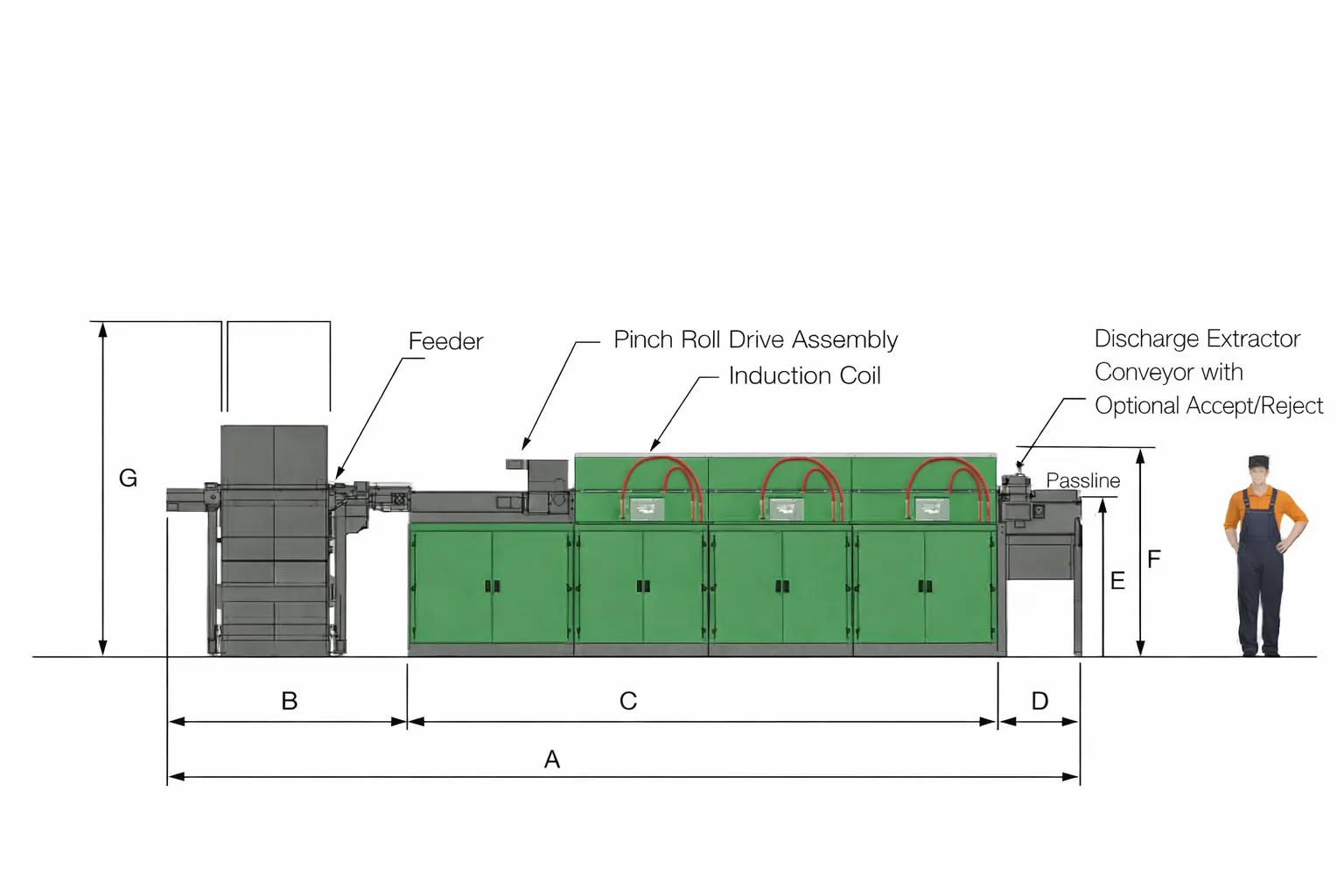
7.6 Continuous Induction Forge Heating
8.1 Power Supply Technical Parameters
8.2 Induction Coil Specifications
8.3 Production Rate vs Billet Size
8.4 Temperature Monitoring Equipment
1. Introduction
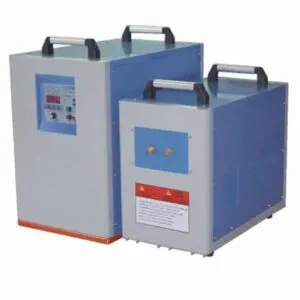
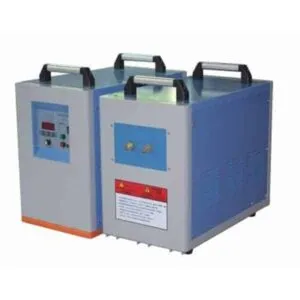
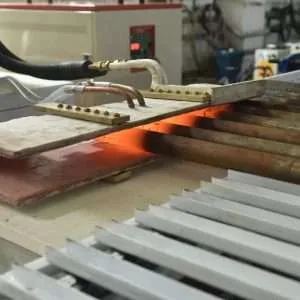
A billet forge induction heater is a modern industrial heating system designed to heat metal billets to forging temperatures using electromagnetic induction. Unlike traditional fuel-based furnaces, induction heating offers fast, efficient, and environmentally friendly heating for forging, extrusion, and rolling processes.
Billets—typically round, square, or rectangular metal bars—must be heated to specific temperatures to improve ductility and reduce deformation resistance before forming. Induction heating technology has become the preferred solution in industries such as automotive, aerospace, and heavy machinery due to its precision and automation capabilities.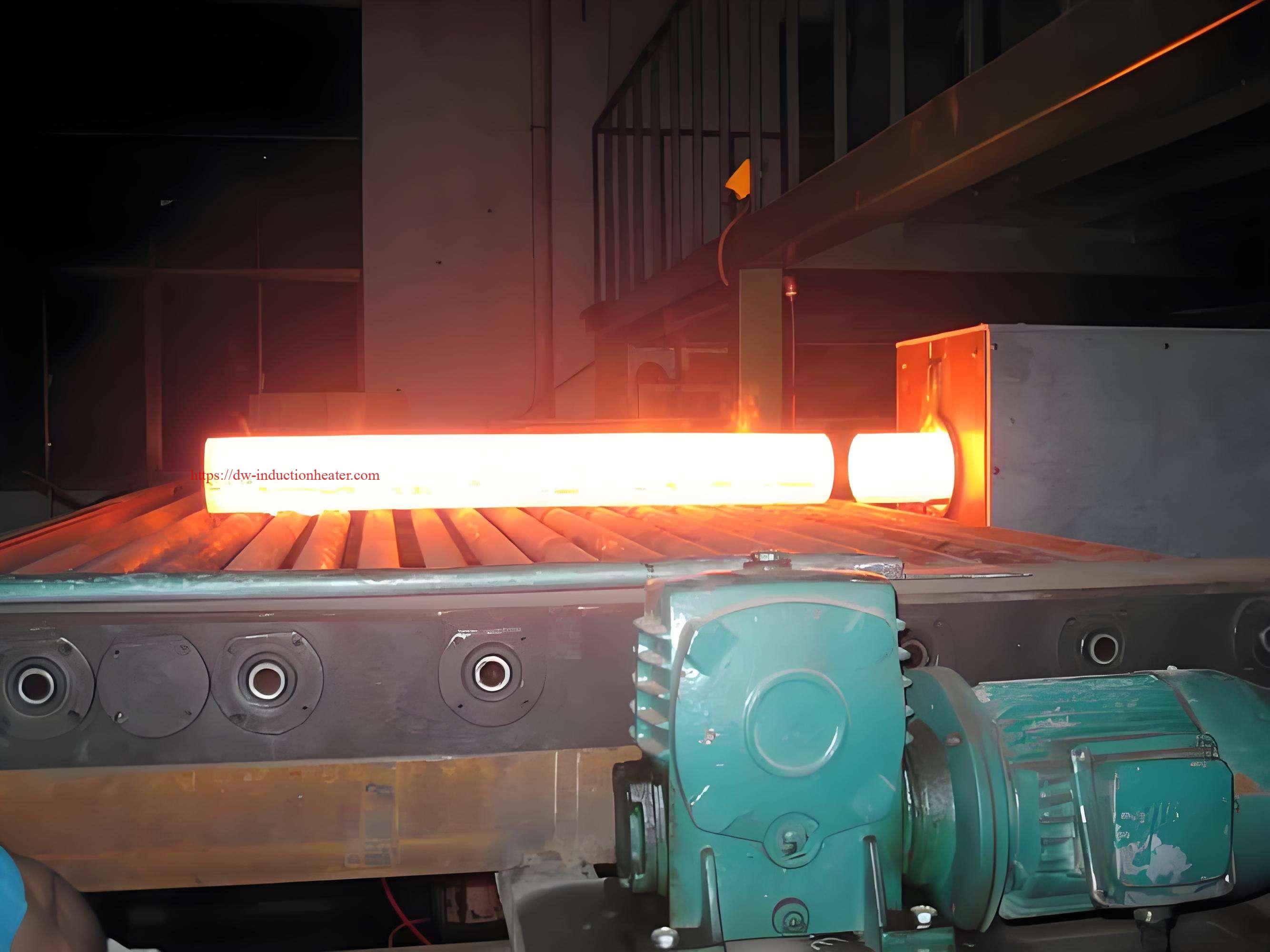
2. What is a Billet Forge Induction Heater?
A billet forge induction heater is an industrial electromagnetic heating system specifically engineered to heat metal billets — cylindrical or rectangular bars of steel, aluminum, titanium, copper, or other electrically conductive metals — rapidly, uniformly, and precisely to their required forging temperature before shaping operations in forging presses, drop hammers, screw presses, or ring rolling mills.
The fundamental distinction between a billet forge induction heater and all conventional heating methods lies in where heat is generated. Conventional gas furnaces, oil furnaces, and resistance furnaces transfer heat to the billet surface from external sources through combustion gases, radiant panels, or heating elements. A billet forge induction heater generates heat directly inside the metal billet through electromagnetically induced eddy currents — producing dramatically faster, more uniform, and more energy-efficient heating that translates directly into superior forging quality and lower production costs.
System Overview & Key Specifications
| Parameter | Specification |
| Heating Technology | Electromagnetic Induction (Faraday’s Law) |
| Heat Generation | Internal — eddy current Joule heating |
| Heating Speed | 15 seconds ~ 10 minutes per billet |
| Maximum Temperature | Up to 1,350°C (carbon & alloy steel) |
| Temperature Accuracy | ±2 ~ ±10°C |
| Energy Efficiency | 85 ~ 96% |
| Operating Frequency | 50 Hz ~ 10,000 Hz |
| Power Rating Range | 30 kW ~ 10,000+ kW |
| Billet Diameter Range | Ø10 mm ~ Ø1,200+ mm |
| Direct CO₂ Emissions | Zero |
| Warmup Time | Instant — zero startup delay |
| Automation Capability | Full PLC / Robotic Integration |
3. Working Principle of Billet Forge Induction Heater
The billet forge induction heater operates on three interconnected physical principles: Faraday’s Law of Electromagnetic Induction, the Joule heating effect, and the skin effect of alternating current in conductive materials.
3.1 Step-by-Step Heating Process
STEP 1 — AC Power Input
High-frequency alternating current from IGBT
inverter power supply feeds into water-cooled
copper induction coil surrounding the billet
↓
STEP 2 — Magnetic Field Generation
Alternating current creates a rapidly changing
electromagnetic field around and through
the induction coil assembly
↓
STEP 3 — Eddy Current Induction
Changing magnetic field induces eddy currents
directly inside the electrically conductive
metal billet — no physical contact required
↓
STEP 4 — Joule Heating Effect
Eddy currents flowing through the electrical
resistance of the metal generate heat
internally: P = I² × R (Joule’s Law)
↓
STEP 5 — Heat Distribution
Heat conducts from the current penetration
zone inward through the billet cross-section
achieving uniform temperature distribution
↓
STEP 6 — Target Temperature Achieved
Billet reaches precise forging temperature
within seconds to minutes depending on
billet size, material, and power rating
↓
STEP 7 — Temperature Verification
Infrared pyrometer or thermal camera
verifies billet temperature — accept or
reject gate controls transfer to press
↓
STEP 8 — Transfer to Forge Press
Heated billet transferred immediately to
forge press with minimal heat loss
3.2 Ferromagnetic Enhancement & Curie Temperature
For carbon and alloy steel billets, the ferromagnetic properties of iron below the Curie temperature (approximately 768~770°C) significantly amplify induction heating efficiency. Below this critical temperature, high magnetic permeability (μr = 50~500) dramatically enhances electromagnetic coupling between the induction coil and billet, accelerating heating speed and improving energy efficiency.
Above the Curie temperature (768°C), steel transitions from ferromagnetic to paramagnetic (μr ≈ 1), current penetration depth increases, and heating continues through eddy current resistance alone — still highly efficient but at a somewhat reduced rate requiring increased power output from the control system.
3.3 Frequency vs Billet Diameter Selection
| Billet Diameter | Optimal Frequency | Penetration Depth | Heating Mode |
| Ø10 ~ 25 mm | 5,000 ~ 10,000 Hz | 2 ~ 4 mm | Surface + conduction |
| Ø25 ~ 50 mm | 2,000 ~ 5,000 Hz | 4 ~ 8 mm | Surface + conduction |
| Ø50 ~ 100 mm | 500 ~ 2,000 Hz | 8 ~ 16 mm | Through heating |
| Ø100 ~ 150 mm | 250 ~ 500 Hz | 14 ~ 22 mm | Through heating |
| Ø150 ~ 250 mm | 100 ~ 250 Hz | 20 ~ 38 mm | Deep penetration |
| Ø250 ~ 400 mm | 50 ~ 100 Hz | 32 ~ 58 mm | Deep penetration |
| Ø400 mm+ | 50 Hz | 50 mm+ | Full penetration + soak |
4. Which Materials Are Suitable for Billet Forge Induction Heating?
The billet forge induction heater is compatible with all electrically conductive metallic materials. Ferromagnetic materials — particularly carbon and alloy steels — are most efficiently heated due to their enhanced electromagnetic coupling below the Curie temperature.
| Grade | Carbon Content | Forging Temperature | Main Application |
| AISI 1020/1025 | 0.18~0.28% | 1,200~1,250°C | General forgings, pins |
| AISI 1040/1045 | 0.38~0.48% | 1,150~1,200°C | Gears, shafts, automotive |
| AISI 1060/1080 | 0.55~0.83% | 1,050~1,150°C | Springs, tools |
| A516 Gr.70 | ≤ 0.28% | 1,100~1,200°C | Pressure vessel parts |
| A36 | ≤ 0.26% | 1,100~1,250°C | Structural components |
| Grade | Key Alloys | Forging Temperature | Application |
| 4130/4140 | Cr-Mo | 1,100~1,200°C | Gears, shafts, oil & gas |
| 4340 | Ni-Cr-Mo | 1,100~1,200°C | Landing gear, heavy shafts |
| 8620/8640 | Ni-Cr-Mo | 1,100~1,200°C | Carburized gears |
| P22/F22 | 2.25Cr-1Mo | 1,100~1,200°C | High temp flanges & piping |
| P91/F91 | 9Cr-1Mo-V | 1,050~1,150°C | Ultra high temp power plant |
| 52100 | Cr | 1,050~1,100°C | Bearing races & elements |
| 4145H | Cr-Mo | 1,100~1,200°C | Drill collars, oil tools |
Non-Ferrous & Special Alloy Billets
| Material | Forging Temperature | Key Application |
| Aluminum 6061/7075 | 400 ~ 480°C | Aerospace, automotive |
| Titanium Ti-6Al-4V | 900 ~ 1,000°C | Aerospace, medical |
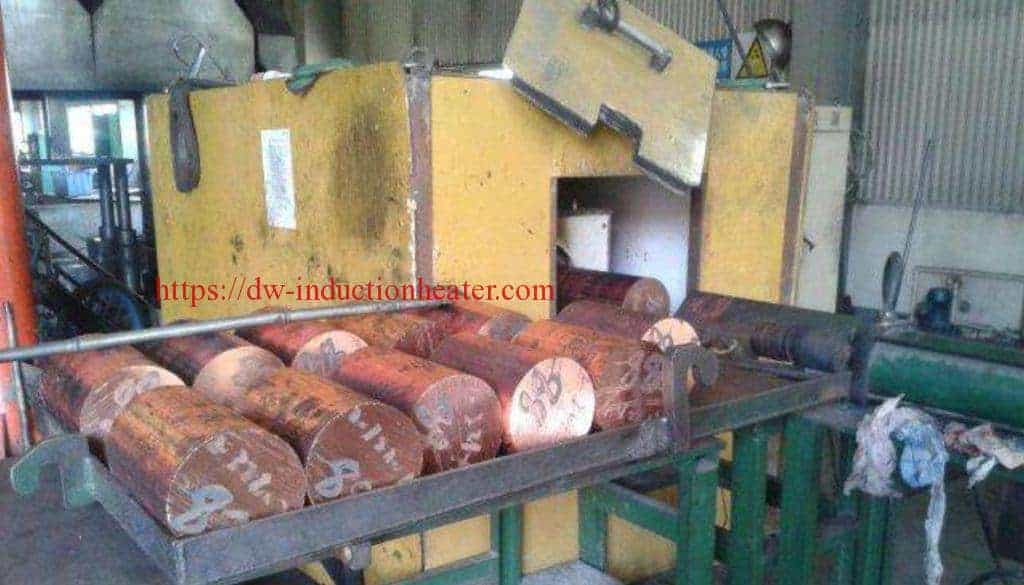
| Copper/Brass | 750 ~ 900°C | Electrical, plumbing |
| Inconel 718 | 980 ~ 1,050°C | Turbine discs, aerospace |
| Stainless 316/316L | 1,100 ~ 1,200°C | Oil & gas, food industry |
| Duplex SS 2205 | 1,050 ~ 1,150°C | Offshore, chemical plant |
5. Advantages of Billet Forge Induction Heater
5.1 Performance Comparison vs Conventional Heating
| Performance Factor | Billet Forge Induction Heater | Gas Furnace | Oil Furnace | Resistance Furnace |
| Energy Efficiency | ✅ 85 ~ 96% | ❌ 40~60% | ❌ 35~55% | ⚠️ 55~75% |
| Heating Speed | ✅ Seconds~Minutes | ❌ 30~90 min | ❌ 30~90 min | ❌ 20~60 min |
| Temperature Accuracy | ✅ ±2~10°C | ❌ ±20~50°C | ❌ ±25~50°C | ⚠️ ±10~20°C |
| Temperature Uniformity | ✅ Excellent | ⚠️ Variable | ⚠️ Variable | ✅ Good |
| Scale Formation | ✅ Minimal | ❌ Heavy | ❌ Heavy | ⚠️ Moderate |
| Direct CO₂ Emissions | ✅ Zero | ❌ Very High | ❌ Very High | ⚠️ Indirect |
| Startup Time | ✅ Instant | ❌ 30~60 min | ❌ 30~60 min | ❌ 20~40 min |
| Automation Integration | ✅ Seamless | ❌ Difficult | ❌ Difficult | ⚠️ Moderate |
| Floor Space Required | ✅ Compact | ❌ Large | ❌ Large | ⚠️ Medium |
| Safety | ✅ No open flame | ❌ Fire risk | ❌ High risk | ⚠️ Moderate |
| Maintenance Cost | ✅ Low | ❌ High | ❌ High | ⚠️ Medium |
| Die Life Impact | ✅ Improved | ❌ Reduced | ❌ Reduced | ⚠️ Moderate |
| Worker Environment | ✅ Clean & cool | ❌ Hot & dirty | ❌ Hot & dirty | ⚠️ Moderate |
5.2 Quantified Business Benefits
Energy Cost Savings:
→ 30 ~ 50% reduction vs gas furnace
→ 15 ~ 30% reduction vs resistance furnace
→ Instant startup = zero idle heating cost
Material Yield Improvement:
→ Less scale formation = 0.5~1.5% better yield
→ Better temperature uniformity = lower reject rate
→ Precise temperature = consistent mechanical properties
Production Efficiency Gains:
→ Zero warmup time = more production hours per shift
→ Faster heating cycle = higher throughput per hour
→ Automated reject gate = zero underheated billet risk
Tooling Cost Reduction:
→ Less scale = less die abrasion = longer die life
→ Better temperature uniformity = more even die loading
→ Consistent billet temp = predictable die wear patterns
Environmental & Compliance Benefits:
→ Zero direct CO₂, NOx, particulate emissions
→ Supports ISO 14001 environmental management
→ Meets European Green Deal requirements
→ Supports carbon neutrality commitments
6. Industry Applications of Billet Forge Induction Heater
| Industry | Components | Material | Volume |
| Automotive | Crankshaft, connecting rod, gear, hub | 4140/4340/1045 | 🔴 Very High |
| Oil & Gas | Flanges, valves, drill collars, fittings | F22/F11/4145H | 🟠 High |
| Aerospace | Landing gear, discs, airframe parts | 4340/Ti-6Al-4V/Inconel | 🟡 Medium |
| Power Generation | Turbine discs, rotor, boiler parts | P22/P91/CrMoV | 🟡 Medium |
| Fasteners | Bolts, studs, nuts, anchors | Carbon/Alloy steel | 🔴 Very High |
| Mining | Drill bits, wear parts, crusher parts | 4340/Hadfield | 🟠 High |
| Marine/Offshore | Propeller shafts, anchors, connectors | Carbon/Duplex SS | 🟡 Medium |
| Wind Energy | Main shaft, bearing rings, flanges | Alloy steel | 🟠 High |
| Hand Tools | Wrenches, hammers, agricultural tools | Carbon steel | 🔴 Very High |
| Railway | Wheels, axles, couplings | Carbon/Alloy steel | 🟡 Medium |
7.Types of Billet Forge Induction Heating Processes
7.1 Open Die Induction Forging
Used for large custom forgings including shafts, discs, cylinders, and rings. Billets are heated by induction and shaped between flat or simple-profile dies using hydraulic presses up to 80,000 tons.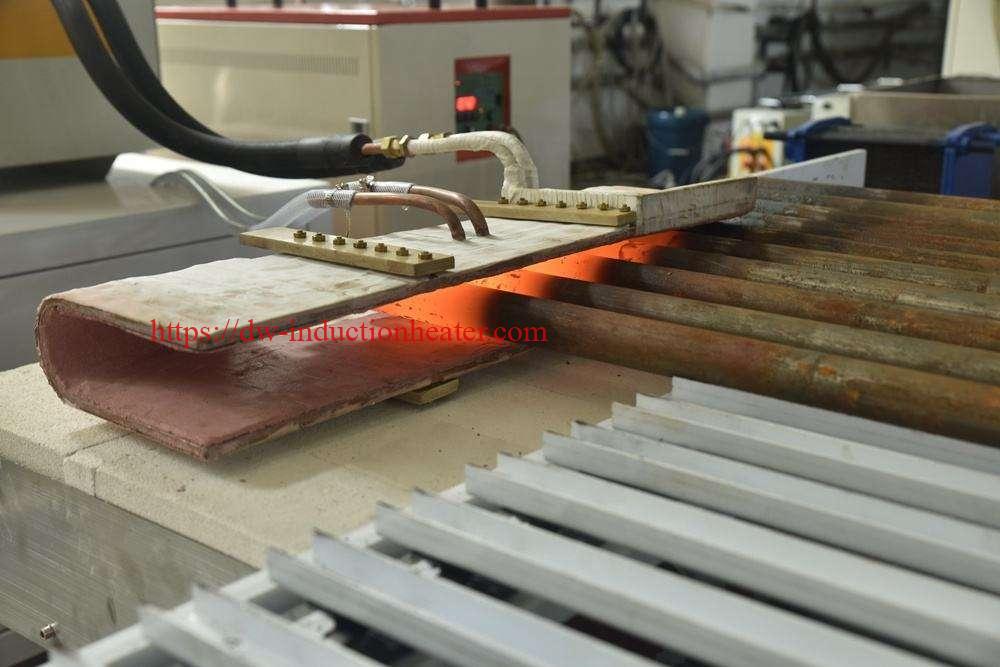
7.2 Closed Die Induction Forging
The most common induction billet forge process for high-volume production. Heated billets are pressed into precision die cavities to produce near-net-shape components. Widely used in automotive and oil & gas industries.
7.3 Ring Rolling with Induction Heating
Heated Billet → Upsetting → Piercing → Ring Rolling Mill
→ Seamless Rolled Ring (Flanges, Bearing Races, Gear Rings)
End-heating of bars using induction to enlarge specific sections. Common for bolt heads, drill pipe tool joints, valve stems, and engine valves.
7.5 Hot Extrusion with Induction Heating
Induction-heated billets pushed through dies to produce profiles, tubes, and complex cross-sections in steel, aluminum, copper, and titanium.
7.6 Continuous Induction Forge Heating
Bar Stock → Auto Cut → Roller Feed → Induction Coil
→ Pyrometer Check → Auto Transfer → Forge Press
→ High Volume Production (500~2,000+ pcs/hour)
| Process Type | Best For | Production Volume | Billet Size |
| Open Die | Large custom parts | Low~Medium | Large |
| Closed Die | Complex high-volume parts | Very High | Small~Medium |
| Ring Rolling | Rings, flanges, races | Medium~High | Medium~Large |
| Upset Forging | End enlargement | High | Small~Medium |
| Hot Extrusion | Profiles, tubes | High | Small~Medium |
| Continuous | Mass production | Very High | Small |
8. Equipment & Technical Parameters
There are several variations of Billet Forge Induction Heaters tailored to specific production styles and billet dimensions:
Continuous Billet Forging Heater: Billets are pushed end-to-end continuously through a long, multi-stage induction coil. Ideal for high-volume, automated production of uniform parts.
Walking Beam Induction Heater: Used for very heavy or large-diameter billets. A mechanical beam systematically lifts, advances, and lowers the billets through the coil, preventing them from fusing together or damaging the refractory lining.
Bar End Induction Heaters: Designed to heat only a specific section or the tip of a long bar, commonly used for upsetting (making bolt heads) or selective localized forging.

8.1 Power Supply Technical Parameters
| Parameter | Small System | Medium System | Large System | Heavy System |
| Power Output | 50~200 kW | 200~1,000 kW | 1,000~3,000 kW | 3,000~10,000 kW |
| Frequency | 1,000~10,000 Hz | 250~3,000 Hz | 100~1,000 Hz | 50~250 Hz |
| Input Voltage | 380V 3-phase | 380~660V 3-phase | 660~3,300V | 3,300~10,000V |
| Power Factor | > 0.95 | > 0.95 | > 0.95 | > 0.95 |
| Efficiency | 90~95% | 88~93% | 85~92% | 85~90% |
| Cooling | Water cooled | Water cooled | Water cooled | Water cooled |
| Control | PLC + HMI | PLC + HMI | PLC + HMI | PLC + SCADA |
8.2 Induction Coil Specifications
| Parameter | Specification |
| Coil Material | High conductivity copper tube |
| Cooling Method | Internal water circulation |
| Cooling Water Flow | 10 ~ 100 L/min |
| Operating Temperature | < 60°C (coil surface) |
| Insulation Class | H class (180°C) |
| Coil Inner Diameter | Match billet OD + 10~30mm gap |
| Coil Life | 2,000 ~ 10,000 operating hours |
| Refractory Lining | Ceramic / Refractory cement |
8.3 Production Rate vs Billet Size
| Billet Diameter | Power Required | Production Rate | Heating Time |
| Ø20 ~ 40 mm | 100 ~ 200 kW | 800 ~ 2,000 kg/hr | 30 ~ 60 sec |
| Ø40 ~ 80 mm | 200 ~ 500 kW | 500 ~ 1,500 kg/hr | 60 ~ 120 sec |
| Ø80 ~ 150 mm | 500 ~ 1,200 kW | 300 ~ 1,000 kg/hr | 90 ~ 180 sec |
| Ø150 ~ 250 mm | 1,200 ~ 2,500 kW | 200 ~ 600 kg/hr | 120 ~ 300 sec |
| Ø250 ~ 400 mm | 2,500 ~ 5,000 kW | 100 ~ 400 kg/hr | 180 ~ 480 sec |
| > Ø400 mm | 5,000 ~ 10,000 kW | 50 ~ 200 kg/hr | 300 ~ 900 sec |
8.4 Temperature Monitoring Equipment
| Equipment | Type | Measurement Range | Accuracy | Application |
| Infrared Pyrometer | Single point | 600 ~ 1,800°C | ±5°C | Standard billet check |
| Two-Color Pyrometer | Ratio type | 700 ~ 1,800°C | ±3°C | Scale-resistant measurement |
| Thermal Camera | Area imaging | 500 ~ 1,500°C | ±10°C | Full billet surface map |
| Fiber Optic Sensor | Contact-free | 400 ~ 2,000°C | ±5°C | High EMI environments |
| Thermocouple | Contact type | 0 ~ 1,600°C | ±2°C | Calibration reference |
9. How to Choose a Suitable Billet Forge Induction Heater
Investing in the correct system is vital for operational success. Consider these factors:
- Billet Size and Material: The diameter of your billets dictates the required frequency. Large F22 billets (e.g., 200mm) require low frequencies (around 500 Hz) to achieve deep electromagnetic penetration and ensure core-to-surface heating uniformity. Small MS bars (e.g., 30mm) require higher frequencies (3-10 kHz).
- Required Production Rate: Calculate your required throughput in kg/hour. As a general rule of thumb for steel, you need approximately 350 to 400 kWh to heat one metric ton of steel to 1200°C.
- Automation Needs: Decide if your facility requires a standalone, manual-feed machine, or a fully automated induction forging line integrated with step-feeders, automatic reject chutes for under-heated parts, and robotic press loaders.
- Infrastructure: Ensure your facility has adequate electrical supply and industrial cooling water systems, as the induction coils and power supplies require continuous, high-quality water cooling.
10. Conclusion
The Billet Forge Induction Heater represents the pinnacle of modern hot forming pre-treatment. By harnessing the power of electromagnetism, manufacturers can drastically improve their production efficiency, reduce energy waste, and achieve unparalleled metallurgical consistency. From handling standard Mild Steel (MS) construction hardware to processing critical F22 and P22 alloy flanges for the energy sector, induction technology provides the rapid, low-scale, and precise heating required to remain competitive in today’s global market. As industries continue to push towards automation and green manufacturing, replacing legacy gas furnaces with advanced induction systems is no longer just an option—it is a necessity.
11. Frequently Asked Questions (FAQs)
Q1: What is the main difference between an Induction Billet Forge and a gas furnace?
A1: An induction forge generates heat internally within the metal using magnetic fields, resulting in heating times measured in seconds or minutes. A gas furnace relies on ambient radiant heat to slowly warm the metal from the outside in, taking hours, which consumes more energy and creates excess surface scale.
Q2: Is a Billet Forge Induction Heater suitable for high-alloy steels like F22 and P22?
A2: Yes, it is highly suitable. Induction systems offer precise, closed-loop PLC temperature control via infrared pyrometers. This ensures that sensitive alloys like ASTM A182 F22 and P22 are heated exactly to their optimal forging temperature without overheating, preserving their critical microstructures.
Q3: How does induction heating achieve low-scale billet forging?
A3: Scale (oxidation) forms when hot metal is exposed to oxygen over time. Because induction heating is incredibly fast, the billet spends very little time at high temperatures before being forged. This reduces scale formation from roughly 3-4% (in gas furnaces) to under 1%, saving material and protecting forging dies.
Q4: How does the Curie temperature affect the induction heating process for Mild Steel (MS)?
A4: At room temperature, MS is highly magnetic and heats quickly due to both eddy currents and magnetic hysteresis. However, around 770°C (the Curie point), MS loses its magnetic properties. The induction machine must then automatically rely solely on eddy currents, often requiring an adjustment in power or frequency to push the steel up to the final 1200°C forging temperature.
Q5: Can the same induction machine be used to heat both steel and non-ferrous metals like aluminum or copper?
A5: While the physical machine frame and automation can be the same, non-ferrous metals have much lower electrical resistance and lack magnetic properties. Therefore, heating aluminum or copper usually requires a significantly different power supply frequency and specially designed coil compared to heating carbon steel.
Q6: What determines the frequency choice when selecting a medium frequency forging furnace?
A6: The primary factor is the cross-sectional diameter of the billet. Low frequencies (e.g., 200 Hz – 1 kHz) penetrate deeply into the metal and are used for thick billets to ensure core-to-surface heating uniformity. High frequencies (e.g., 3 kHz – 10 kHz) concentrate heat nearer the surface (skin effect) and are ideal for smaller diameter bars.