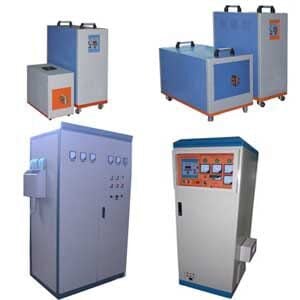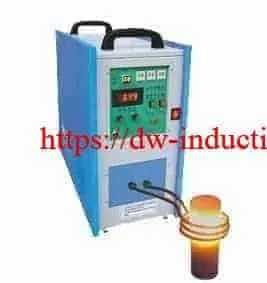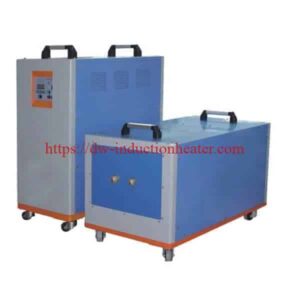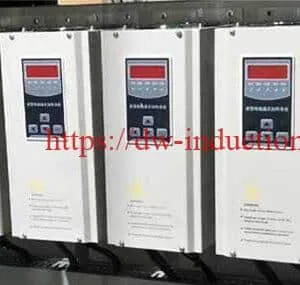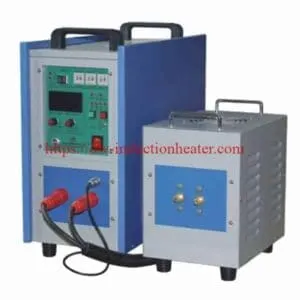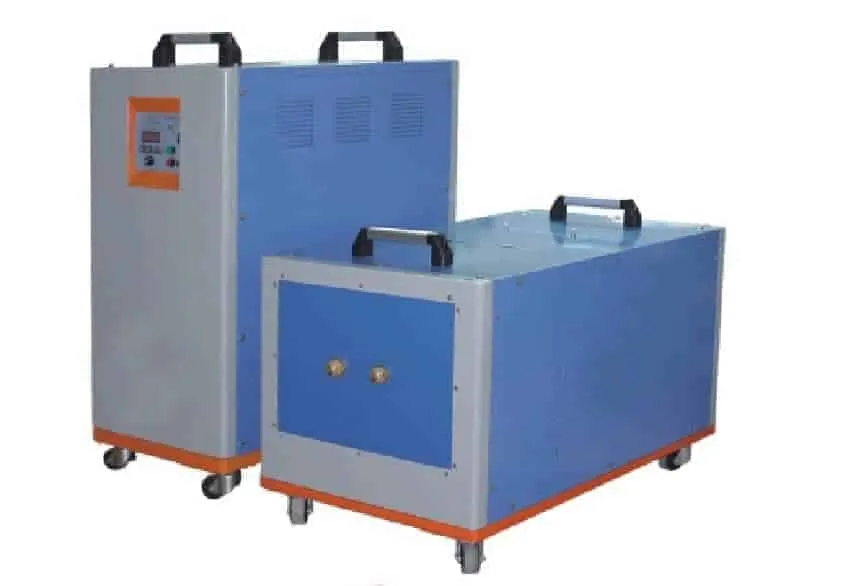
DW-HF-120kw Induction Heating Equipment
DW-HF-120KW Induction Heating Equipment for steel, copper, brass, stainless steel and alloy heating,metal melting,billets forge,PWHT,induction preheat welding,shrink fitting,hardening surface,etc.
The DW-HF-120KW Induction Heating Equipment is a high-performance, solid-state IGBT-based induction heating power supply delivering 120 kilowatts of continuous output power across a wide operating frequency range of 30 kHz to 80 kHz. Designed for demanding industrial applications, it heats ferrous and non-ferrous metals including carbon steel, alloy steel, stainless steel, copper, brass, aluminum, and titanium. It is widely deployed in surface hardening, through hardening, brazing, soldering, forging preheating, annealing, shrink fitting, and pipe bending operations across the automotive, aerospace, tooling, and general metal fabrication industries. For procurement engineers and production managers, it solves the critical problems of inconsistent heating quality, high energy waste, slow cycle times, and poor process repeatability that characterize older gas-fired and resistance heating methods.
Working Principle
The working principle of the DW-HF-120KW Induction Heating Equipment is electromagnetic induction. The power supply converts input electricity into high-frequency current. This current flows through a water-cooled copper induction coil, creating an alternating magnetic field around the coil. When a conductive workpiece is placed in this field, eddy currents are induced inside the metal.
The workpiece has electrical resistance, so these eddy currents generate heat. In magnetic steels, additional magnetic losses may also contribute to heating below the Curie temperature. As the steel approaches higher temperatures, magnetic properties change, and the heating behavior may also change. This is one reason why temperature control and process testing are important.
Frequency affects heating depth. Higher frequency concentrates heat near the surface and is useful for brazing, soldering, small-part heating and shallow surface hardening. Lower frequency provides deeper heating and is better for large parts or through-heating. Although the DW-HF-120KW is a high-frequency model, the actual frequency configuration should be matched to the application.
The heating result depends on five main engineering variables:
- Power: Determines heating capacity and speed.
- Frequency: Influences heating depth and surface/core temperature distribution.
- Coil design: Controls magnetic field distribution and heating uniformity.
- Coil-workpiece distance: Affects coupling efficiency and local heating intensity.
- Heating time and control method: Determines total energy input and process repeatability.
| Model | DW-HF-120KW Induction Heating Equipment | |
| Input power desire | 3X380V 50-60HZ | |
| Oscillate power max | 120KVA | |
| Oscillate frequency | 30K-80KHZ | |
| Input power max | 130KVA | |
| Cooling water max | 0.3Mpa≥6L/MIN | |
| Oscillating current | 30-160A | |
| Duty cycle | 100% 30°C | |
| Weight | 135KG | |
| Cubage | Host computer | 650X350X560mm |
| Extension | 700X350X460mm | |
| Cable length | 2m | |
Key Applications
The DW-HF-120KW’s combination of 120 kW output power and 30–80 kHz frequency range makes it exceptionally versatile across a broad spectrum of industrial heat treatment applications. The following are the primary application categories where this equipment delivers the greatest engineering and commercial value:
- Surface Induction Hardening: The most common application for the DW-HF-120KW is selective surface hardening of steel components — gears, shafts, camshafts, crankshafts, bearing journals, sprockets, and wear plates. The high-frequency operation (50–100 kHz for thin case depths, 10–30 kHz for deeper case depths) concentrates heating in the surface layer of the workpiece, rapidly austenitizing the steel surface to 850–950°C while the core remains relatively cool. Immediate quenching after heating produces a hard martensitic surface layer (typically 55–65 HRC) with a tough, ductile core — the ideal combination for wear-resistant, fatigue-resistant engineering components.
- Through Hardening of Small to Medium Components: For smaller workpieces (up to approximately 50mm diameter) where through hardening is required, the DW-HF-120KW provides sufficient power to heat the entire cross-section to austenitizing temperature within a controlled time cycle. Applications include hand tools, cutting blades, punches, dies, and small structural components.
- Induction Brazing: The DW-HF-120KW is widely used for brazing carbide inserts to steel tool bodies, copper tube assemblies, diamond tool segments to steel cores, and dissimilar metal joints in HVAC, refrigeration, and hydraulic system components. The precise, localized heating of induction brazing minimizes heat spread to adjacent components, eliminates the need for flux in many applications, and produces consistently high-quality brazed joints with minimal operator skill dependency.
- Forging Billet Preheating: Steel and non-ferrous billets up to approximately 80mm diameter can be preheated to forging temperature (1100–1250°C for carbon steel) using the DW-HF-120KW. The rapid, uniform heating of induction preheating produces billets with tighter temperature uniformity (±15°C) than gas furnace heating, resulting in more consistent forging loads, improved die life, and better dimensional control of forged parts.
- Annealing and Stress Relief: Controlled annealing of cold-worked steel and copper components, stress relief of welded assemblies, and process annealing of wire and tube are all achievable with the DW-HF-120KW. The programmable heating and cooling rate control of the digital PID system enables precise replication of the thermal cycles specified in material processing standards.
- Shrink Fitting and Thermal Assembly: Heating bearing housings, gear hubs, coupling flanges, and other interference-fit components to expand them for assembly onto shafts is a clean, fast, and precise application for the DW-HF-120KW. Induction heating expands the component uniformly in 30–120 seconds, compared to 15–30 minutes in an oven, with no risk of oxidation or distortion from uneven oven heating.
- Pipe and Tube Bending Preheating: Preheating the bend zone of steel pipes and structural sections before hot bending is a demanding application that requires rapid, uniform heating of a localized zone. The DW-HF-120KW with a custom-designed split coil or scanning coil provides precise control of the heated zone width and temperature, enabling consistent bend quality and minimizing wall thinning and ovality in the bent section.
- Induction Tempering: After hardening, many steel components require tempering to reduce brittleness and achieve the target hardness range. Induction tempering with the DW-HF-120KW at lower power settings (20–60 kW) and controlled temperature (150–650°C depending on the required final hardness) provides faster and more energy-efficient tempering than oven tempering, with the added advantage of being able to temper individual components on demand rather than waiting for a full oven batch.
- Semiconductor and Electronics Component Heating: At the upper end of the frequency range (50–80 kHz), the DW-HF-120KW can be used for precision heating of small electronic and semiconductor components, including lead-free soldering of power electronics assemblies, curing of thermally conductive adhesives, and controlled heating of sensor housings and connector bodies.

FAQ
1. What is the DW-HF-120KW Induction Heating Equipment used for?
It is used for industrial induction heating applications such as brazing, hardening, annealing, shrink fitting, soldering, pipe heating, carbide tool brazing, shaft hardening and localized heat treatment.
2. What materials can DW-HF-120KW heat?
It can heat carbon steel, alloy steel, stainless steel, copper, brass, carbide assemblies, nickel alloys and selected aluminum parts. Each material requires suitable coil design and process settings.
3. Is 120kW enough for induction brazing?
Yes. 120kW is sufficient for many medium and larger brazing applications, including copper tube assemblies, brass fittings, carbide tools, valves and industrial joints. Smaller parts may require lower power models.
4. Can DW-HF-120KW be used for induction hardening?
Yes. It can be used for surface hardening of medium-size shafts, gears, pins and wear parts when combined with the correct coil, quench system and process parameters.
5. What frequency is suitable for DW-HF-120KW?
The system is a high-frequency induction heating model. A practical frequency range may be around 10kHz–100kHz depending on configuration. Final frequency should match heating depth, material and workpiece geometry.
6. Does the machine need water cooling?
Yes. The induction coil and major power components require reliable cooling. A closed-loop cooling system or industrial chiller is recommended for continuous operation.
7. Can one coil be used for different products?
Sometimes, but not always. A coil designed for one part may not heat another part uniformly. Interchangeable coils are recommended for different workpiece sizes and applications.
8. Can the DW-HF-120KW be automated?
Yes. It can be integrated with PLC control, HMI, rotary table, robotic loading, automatic feeding, conveyor systems, quench stations and temperature feedback systems.
9. How should I choose between 60kW, 120kW and 200kW?
Choose based on workpiece size, material, heating temperature, heating time and production rate. 60kW is suitable for smaller parts, 120kW for medium industrial heating, and 200kW for larger or faster production applications.
10. Is induction heating better than flame heating?
For controlled industrial processes, induction heating is often cleaner, faster and more repeatable than flame heating. However, flame heating may still be cheaper for simple, non-critical, low-volume heating tasks.
11. What is the most important factor for stable induction heating?
The induction coil and fixture are critical. Even with a correct power supply, poor coil geometry or unstable workpiece positioning can cause uneven heating and poor process results.
12. Can HLQ customize DW-HF-120KW for my application?
Yes. HLQ can customize coils, fixtures, cooling systems, control modes and automation layouts according to material, workpiece size, heating temperature, cycle time and production requirement.