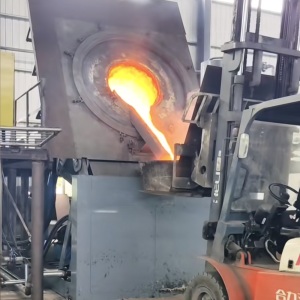
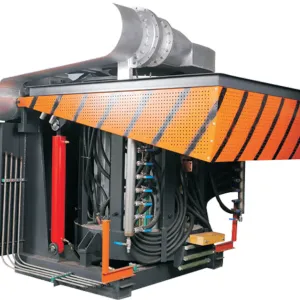
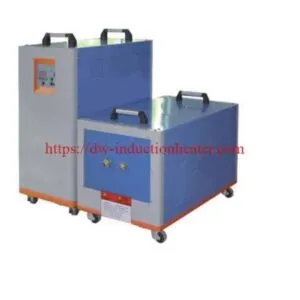
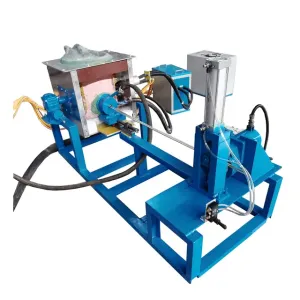
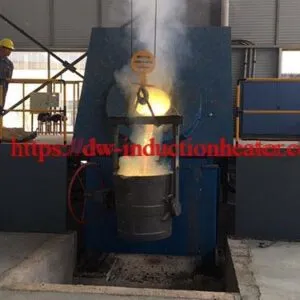
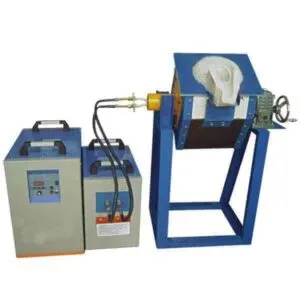
Copper Zinc Separation Furnace with Induction Melting
Explore HLQ copper zinc separation furnace with induction melting for brass scrap recycling, zinc recovery, and copper purification using vacuum distillation technology.Brass scrap, zinc-rich copper drosses, and end-of-life copper-zinc alloys have transformed from low-value waste into strategic raw-material streams thanks to one piece of equipment: the copper zinc separation furnace with induction melting. By exploiting the dramatic difference in vapor pressure between zinc (boiling point 907 °C) and copper (2,562 °C), induction-based separation simultaneously recovers two high-value metals at purities exceeding 99.9% — without flux, coke, or chemical leaching. The guide presents the technical, economic, and environmental performance of modern Cu-Zn separation systems through more than twenty detailed comparison tables, drawing on field data from installations engineered by HLQ Induction Equipment Co.,Ltd (https://dw-inductionheater.com), a leading global manufacturer of induction melting and recovery equipment.
1. What Is a Copper Zinc Separation Furnace with Induction Melting?
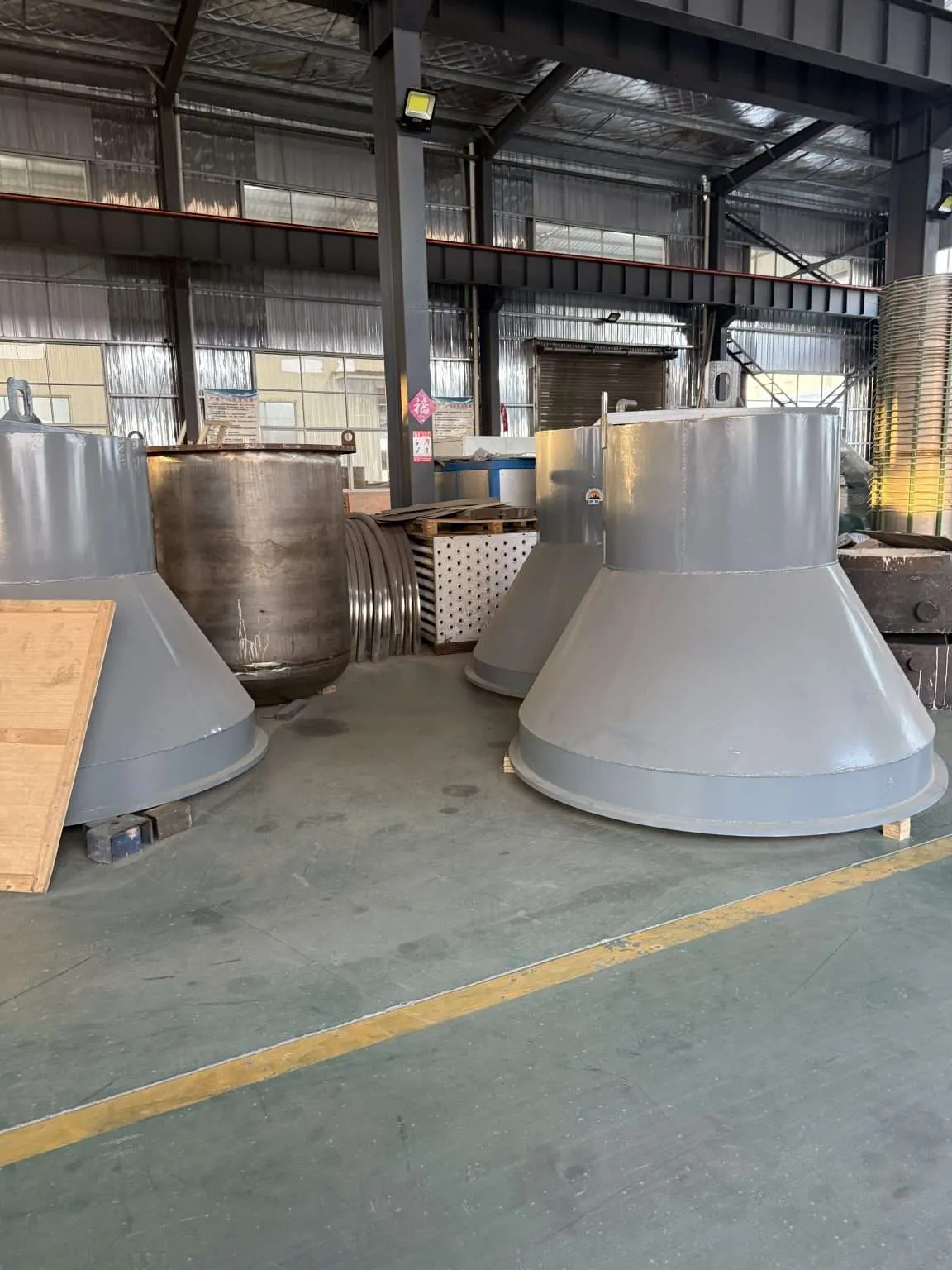
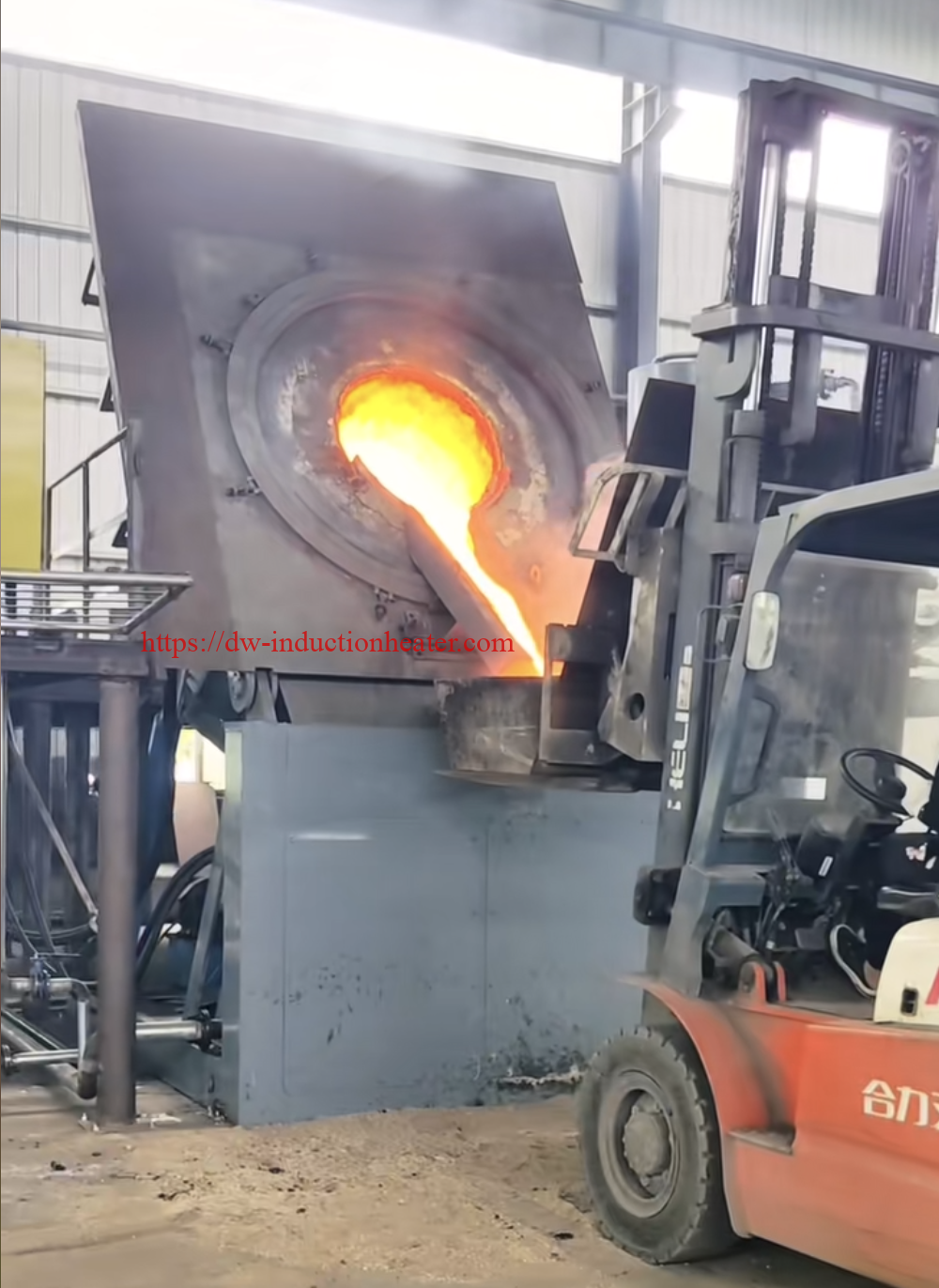
A copper zinc separation furnace with induction melting is a sealed pyrometallurgical system that uses electromagnetic induction to melt brass and copper-zinc alloy scrap, then volatilizes the zinc fraction and recovers it as condensed metallic zinc while tapping the residual copper as a refined liquid metal. The system combines four engineered modules — induction power supply, melting crucible, vapor-collection hood, and water-cooled condenser — into a single integrated copper zinc recovery system. HLQ engineers each unit at dw-inductionheater.com to match the customer’s specific scrap mix and production target.
2. Comparison vs. Alternative Separation Methods
Multiple metallurgical routes exist for separating copper from zinc. The induction melting zinc separation approach has become dominant because it consistently outperforms its peers across every measurable axis.
Method
Cu Recovery
Zn Recovery
Energy (kWh/t)
CO₂ (kg/t)
Capex
Scalability
HLQ Induction Cu-Zn Furnace
99.9%
99.5%
450–550
180–220
Medium
0.25–5 t/heat
Reverberatory Furnace
97%
70%
1,000–1,200
500–600
High
5–50 t/heat
Rotary Kiln
95%
80%
1,300–1,500
650–750
High
10–60 t/heat
Electric Arc Furnace
96%
60%
900–1,100
250–300
Very High
20–100 t/heat
Hydrometallurgical Leaching
92%
90%
700–900
400–500
Very High
Plant-scale
Vacuum Distillation (HLQ)
99.95%
99.9%
500–650
200–250
Medium-High
0.5–3 t/heat
3. The Science: Vapor Pressure and Thermodynamics
The physical foundation of the copper zinc separation furnace is the immense vapor-pressure differential between zinc and copper at typical brass-melt temperatures. Below is the standard reference data used by HLQ process engineers when sizing condensers and selecting operating temperatures.
Temperature (°C)
Zn Vapor Pressure (kPa)
Cu Vapor Pressure (kPa)
Vapor Pressure Ratio (Zn/Cu)
Separation Driving Force
800
0.18
1.9 × 10⁻⁹
~10⁸
Very strong
900
1.05
4.6 × 10⁻⁸
~2 × 10⁷
Very strong
950
2.45
2.3 × 10⁻⁷
~10⁷
Very strong
1,000
5.65
1.0 × 10⁻⁶
~5 × 10⁶
Very strong
1,050
11.8
4.0 × 10⁻⁶
~3 × 10⁶
Very strong
1,100
22.5
1.4 × 10⁻⁵
~1.6 × 10⁶
Very strong
1,150
40.0
4.5 × 10⁻⁵
~9 × 10⁵
Optimal Zn output
1,200
67.0
1.3 × 10⁻⁴
~5 × 10⁵
Optimal Zn output
4. Process Workflow Step-by-Step
Step
Stage
Time (min)
Temperature (°C)
Atmosphere
Purpose
1
Charging
5–10
Ambient
Air
Load brass scrap into crucible
2
Pre-heating
10–15
Up to 600
N₂ purge
Drive off moisture, oils, plastics
3
Melting
15–25
600–950
N₂ / Ar
Liquefy entire charge
4
Holding
10–15
950–1,000
Inert sweep
Homogenize bath, slag removal
5
Distillation
30–90
1,000–1,150
Inert / vacuum
Vaporize and capture zinc
6
Condensation
Continuous
200–450 (condenser)
Sealed
Solidify Zn vapor as ingot
7
Tapping
5–10
1,100–1,150
Inert
Cast refined Cu
8
Cool-down + QC
10–20
Cooling
—
Sample assay, batch close
5. Standard Technical Specifications
Parameter
Specification Range
Notes
Capacity per heat
250 kg – 5,000 kg
Custom up to 10 t
Output power
160 kW – 3,000 kW
IGBT medium-frequency
Operating frequency
500 Hz – 8,000 Hz
MF range optimal
Bath temperature
950 – 1,200 °C
PLC-controlled ±5 °C
Atmosphere
N₂ / Ar / vacuum
Selectable per recipe
Vacuum option
1 – 100 mbar
For premium Zn purity
Electrical efficiency
≥ 92%
SiC option ≥ 95%
Power factor
≥ 0.95
Capacitor-corrected
Cooling water flow
80 – 400 L/min
Closed-loop chiller
Cu purity
≥ 99.9%
Cathode-grade
Zn purity
≥ 99.95%
SHG-grade
Cycle time
60 – 180 min
Charge dependent
Control
Siemens / Mitsubishi PLC
HMI + remote IoT
Recipe storage
100+ programs
Versioned
Certifications
CE, ISO 9001
Full FAT documentation
6. Frequency, Power, and Capacity Mapping
Frequency is the single most important variable when selecting a medium frequency induction furnace for copper-zinc separation. Lower frequencies penetrate deeper, ideal for large baths, while higher frequencies couple efficiently with smaller charges.
Frequency
Charge Size
Recommended Power
Skin Depth (Cu)
Best Application
500 Hz
2,000 – 5,000 kg
1,500 – 3,000 kW
~9 mm
Large industrial recyclers
1,000 Hz
1,000 – 2,500 kg
800 – 1,800 kW
~6 mm
Mid-size brass mills
2,500 Hz
500 – 1,500 kg
500 – 1,200 kW
~4 mm
Standard recycling lines
4,000 Hz
250 – 750 kg
250 – 600 kW
~3 mm
Small batch lines
8,000 Hz
50 – 250 kg
100 – 250 kW
~2 mm
Pilot, R&D, lab
7. HLQ Cu-Zn Furnace Model Lineup
Model
Capacity (kg)
Power (kW)
Frequency (Hz)
Cycle (min)
Footprint (m²)
Target Customer
HLQ-CZ-250
250
160
4,000
60
10
Pilot / R&D
HLQ-CZ-500
500
320
2,500
75
14
Small recyclers
HLQ-CZ-1000
1,000
500
2,500
90
22
Mid recyclers
HLQ-CZ-1500
1,500
800
1,500
105
28
Brass mills
HLQ-CZ-2500
2,500
1,200
1,000
135
40
Tier-one recyclers
HLQ-CZ-3500
3,500
1,800
750
150
52
High-throughput plants
HLQ-CZ-5000
5,000
2,500
500
180
68
Large smelters
HLQ-CZ-V1000
1,000
650
1,500
110
30
Vacuum, premium Zn
8. Feedstock Compatibility Matrix
Feedstock
Cu Range
Zn Range
Pre-treatment
Suitability
Brass C260 (cartridge)
69–71%
29–31%
Sort, clean
Excellent
Brass C360 (free-cutting)
60–63%
34–37%
De-oil
Excellent
Brass C385 (architectural)
56–59%
40–43%
Sort, clean
Excellent
Brass turnings & swarf
60–70%
28–38%
De-oil, briquette
Very Good
Brass dross / skimmings
40–60%
30–50%
Crush, screen
Very Good
Faucet / valve scrap
58–62%
35–40%
Remove plating
Good
Brass radiators
65–70%
28–32%
Disassemble
Very Good
Brass cartridge cases
70%
30%
De-mil
Excellent
Cu smelter flue dust
5–25%
25–55%
Pelletize
Good (vacuum)
Galvanized steel skim
0–2%
40–80%
Magnetic sep.
Fair (Zn-only)
9. Output Quality and Purity Achieved
Output Stream
Typical Purity
Grade Equivalent
Residual Impurities
Market Application
Recovered Copper (atmospheric)
99.85–99.92%
Cu-DLP / Cu-ETP
Pb, Sn, Fe ≤ 0.15%
Wire rod, anodes, billets
Recovered Copper (vacuum)
99.95–99.97%
Cu-OFE adjacent
Pb, Sn ≤ 0.05%
Specialty alloys, electronics
Recovered Zinc (atmospheric)
99.90–99.95%
Z6 / SHG-equivalent
Pb, Cd ≤ 0.10%
Galvanizing, die casting
Recovered Zinc (vacuum)
99.99%
Z1 / SHG
Pb, Cd ≤ 0.01%
Battery, pharma, alloys
Slag / Residue
—
Disposal / further treatment
Minor Cu, Fe, Si
Reused in steel slag
10. Zinc Recovery Rate vs. Temperature
Bath Temperature (°C)
Hold Time (min)
Zn Recovery (%)
Cu Loss (%)
Energy Efficiency Index
900
60
23
0.01
Low
950
60
48
0.02
Low
1,000
60
83
0.04
Medium
1,050
45
93
0.06
High
1,100
40
97
0.08
Optimal
1,150
30
99.2
0.12
Optimal
1,200
25
99.6
0.18
Diminishing returns
11. Energy Consumption Benchmarks
Furnace Technology
kWh / tonne brass
Electrical / Fuel
Relative Cost (Index)
CO₂ kg/t (grid avg.)
HLQ Induction Cu-Zn
450–550
Electric
100
180–220
HLQ Vacuum Cu-Zn
500–650
Electric
118
200–250
Reverberatory (gas)
1,000–1,200
Natural gas
148
500–600
Rotary kiln (oil)
1,300–1,500
Heavy fuel oil
175
650–750
EAF (electric arc)
900–1,100
Electric
165
250–300
Hydrometallurgical
700–900
Electric + reagents
200
400–500
12. Emissions and Environmental Performance
Pollutant
HLQ Furnace (mg/Nm³)
Reverberatory (mg/Nm³)
EU IED Limit
US EPA Limit
China GB 16297
Particulate matter
< 5
30–80
20
23
120
Zinc fume
< 1
10–25
5
5
3.0
Lead
< 0.05
0.5–2
0.5
0.5
0.7
SO₂
< 5
50–200
200
150
550
NOₓ
< 20
200–500
200
200
240
CO
< 30
500–1,500
—
—
—
13. Crucible and Refractory Options
Crucible Material
Max Temp (°C)
Service Life (heats)
Pros
Cons
High-purity graphite
1,400
200–400
Excellent thermal shock, low cost
Slight oxidation; needs inert sweep
Graphite-clay (clay-bonded)
1,300
150–250
Good for batch melts
Lower thermal conductivity
Silicon carbide (SiC)
1,600
300–500
Long life, very strong
Higher capex
Alumina-magnesia ramming
1,500
500–1,000
Long campaign, monolithic
Initial sintering required
Magnesia / Al₂O₃ brick
1,700
800–1,200
Industry-grade, long life
Complex installation
14. Condenser System Specifications
Parameter
Standard Range
Vacuum Range
Notes
Condenser type
Water-jacketed copper
Stainless / multi-stage
SS for high-Zn purity
Inlet vapor temp.
1,000–1,150 °C
900–1,050 °C
Driven by furnace bath
Outlet condensed temp.
200–450 °C
150–350 °C
Solid Zn collected
Cooling water flow
80–250 L/min
120–350 L/min
Closed-loop chiller
Zn collection mode
Solid ingot
Solid ingot or powder
Selectable
Capture efficiency
≥ 99.5%
≥ 99.9%
Bag-house downstream
Maintenance interval
2–4 weeks
2–6 weeks
Cleaning + inspection
15. Operating Cost Analysis per Tonne
Cost Item
HLQ Induction (USD/t)
Reverberatory (USD/t)
Rotary Kiln (USD/t)
Notes
Electricity
$45–55
$25–35
$20–30
$0.10/kWh assumed
Fuel (gas/oil)
$0
$60–80
$80–110
—
Inert gas (N₂)
$3–6
$0
$0
HLQ uses sealed sweep
Refractory / crucible
$8–12
$15–25
$18–28
Per-tonne amortized
Labor
$10–15
$20–30
$25–35
HLQ is highly automated
Maintenance & spares
$5–8
$12–20
$15–25
—
Emissions treatment
$2–4
$10–18
$12–20
Filters, scrubbers
Total per tonne
$73–100
$142–208
$170–248
Direct production cost
16. ROI / Payback Estimate
Scenario
Capacity
Annual Throughput
Net Margin/t
Annual Profit
Payback
Small recycler (HLQ-CZ-500)
500 kg/heat
1,500 t
$280
$420,000
14–18 months
Mid recycler (HLQ-CZ-1500)
1,500 kg/heat
5,000 t
$320
$1.6M
10–14 months
Tier-one (HLQ-CZ-3500)
3,500 kg/heat
12,000 t
$340
$4.1M
9–12 months
Smelter (HLQ-CZ-5000)
5,000 kg/heat
18,000 t
$360
$6.5M
8–11 months
Margin assumes LME copper at $9,000/t and zinc at $2,800/t with conservative scrap discounts. Actual results depend on local energy, labor, and metal prices.
17. Industry Applications
Industry
Typical Feedstock
Output Stream
Recommended HLQ Model
Brass scrap recycling
Mixed brass turnings, end-of-life parts
Cu cathode + Zn ingots
HLQ-CZ-1500/2500
Brass mill internal recycling
Drosses, skimmings, off-cuts
Re-melt-ready Cu + Zn
HLQ-CZ-1000
Plumbing / faucet industry
Faucet, valve, fitting scrap
Cu billets + Zn ingots
HLQ-CZ-1500
Electrical / electronic recycling
Brass terminals, connectors
High-purity Cu + Zn
HLQ-CZ-V1000
Automotive recycling
Brass radiators, sync rings
Re-melt brass + Zn
HLQ-CZ-2500
Zinc reclaim ops
Zinc-rich dust, dross
Distilled Zn
HLQ-CZ-V1000
Cu smelter by-product
Zinc-bearing flue dust
Refined Zn
HLQ-CZ-3500
Munitions recycling
Brass cases, mixed alloys
Cu + Zn streams
HLQ-CZ-1500/2500
18. Buyer’s Selection Checklist
#
Decision Factor
Question to Answer
Impact
1
Scrap composition
What is the Cu/Zn ratio & impurities?
Crucible & condenser sizing
2
Annual throughput
Tonnes per year & heats per day?
Furnace capacity
3
Purity targets
Customer specs for Cu and Zn?
Atmospheric vs. vacuum
4
Architecture
Open bath, vacuum, twin chamber?
Capex & operating mode
5
Condenser type
Ingot or powder, water flow?
Zn output form
6
Off-gas system
Local emission limits?
Filter design
7
Automation level
Manual, PLC + HMI, MES/IoT?
Labor & data
8
Utilities
Power, water, inert gas, air available?
Site readiness
9
Layout / logistics
Floor space & material handling?
Workflow
10
Service support
Training, spares, SLA, IoT?
Long-term TCO
19. Maintenance Schedule
Frequency
Maintenance Task
Estimated Time
Owner
Each shift
Visual inspection of crucible & coil
10 min
Operator
Each shift
Cooling water flow & temp check
5 min
Operator
Daily
Quench / sweep gas system check
15 min
Operator
Daily
Off-gas pressure-drop reading
5 min
Operator
Weekly
Cooling water chemistry test
30 min
Maintenance
Weekly
Condenser inspection
45 min
Maintenance
Monthly
IGBT module inspection & cleaning
2 hours
Maintenance
Monthly
Bag-house filter replacement check
1 hour
Maintenance
Quarterly
Sensor & pyrometer calibration
3 hours
Engineering
Annually
Refractory relining (if needed)
1–3 days
Service team
Annually
Full electrical safety audit
1 day
Engineering
20. Safety and Compliance
Area
Hazard
HLQ Mitigation
Standard / Reference
High voltage
Electrocution
Interlocks, LOTO, ground monitor
IEC 60204, NFPA 70E
High temperature
Burns, fire
Heat shields, PPE, fire suppression
NFPA 86
Zinc fumes
Metal-fume fever
Sealed condenser, LEV, bag-house
OSHA PEL, EU OEL
Inert gas
Asphyxiation
O₂ monitor, ventilation
ANSI/ASSE Z9.5
Cooling water leak
Steam explosion
Pressure / flow interlocks
ASME guidelines
Electromagnetic field
Operator exposure
Coil shielding, controlled access
ICNIRP, IEEE C95.1
Emissions
PM, NOₓ, SO₂
Bag-house + scrubbers + CEMS
EU IED, US EPA, GB 16297
Documentation
Audit / traceability
Full PLC batch logging
ISO 9001, ISO 14001
21. Why Choose HLQ Induction Equipment Co.,Ltd
Capability
HLQ Advantage
Customer Benefit
Engineering experience
20+ years in induction heating
Mature, debugged designs
Vertical integration
In-house power supply, coil, mech, automation
Single-source warranty
Custom engineering
Each system tailored to scrap mix & goals
Optimized OPEX & output
Global footprint
Installations in 60+ countries
Local references & support
Quality certifications
CE, ISO 9001, full FAT
Compliance with global tenders
Direct manufacturer pricing
No intermediaries
Lower capex per kW
Service network
Remote IoT + on-site engineers
Minimum downtime
R&D pipeline
SiC, AI, advanced controls
Future-proof investment
Browse the full HLQ portfolio of induction melting equipment, including the copper zinc separation furnace with induction melting, at https://dw-inductionheater.com. The site includes specifications, video demos, case studies, and a contact form for application engineers.
22. Conclusion
The copper zinc separation furnace with induction melting is the single most economically and environmentally compelling equipment investment a brass recycler, mill, or smelter can make in 2026. The data tables in this guide make the case clearly: HLQ-engineered induction systems deliver 99%+ recovery of both copper and zinc, achieve cathode- and SHG-grade purities, consume roughly half the energy of legacy fuel-fired alternatives, emit a fraction of the regulated pollutants, and pay for themselves in well under two years across virtually every realistic deployment scenario. Combined with a straightforward maintenance footprint, robust safety architecture, and full Industry 4.0 readiness, the HLQ Cu-Zn furnace delivers an unmatched balance of performance, profit, and compliance.
23. Frequently Asked Questions (FAQ)
Q1. What is the typical recovery rate of an HLQ copper zinc separation furnace?
HLQ furnaces achieve more than 99% recovery of both copper and zinc, with vacuum-distillation models reaching 99.95% on premium feedstocks.
Q2. Which feedstocks are compatible?
Brass scrap (C260, C360, C385, etc.), turnings, swarf, dross, faucet/valve scrap, brass radiators, brass cases, zinc-bearing dust, and cooper smelter flue dust are all processable. See the feedstock compatibility table for details.
Q3. What are typical operating costs?
Direct production cost is approximately $73–$100 per tonne — about half that of reverberatory or rotary-kiln alternatives. See Section 15 for a detailed breakdown.
Q4. What is the payback period for an HLQ Cu-Zn separation system?
Most realistic deployments pay back in 8–18 months at current LME copper and zinc prices. Section 16 contains four scenario examples.
Q5. Does HLQ supply turnkey systems or only the furnace?
HLQ delivers full turnkey solutions: power supply, coil, crucible, condenser, off-gas system, automation, installation, training, commissioning, and lifetime service support.
Q6. How is operator safety ensured?
Multiple interlocks, sealed condenser, local exhaust ventilation, EMF shielding, oxygen monitors, full LOTO procedures, and PLC-based fault detection meet IEC, NFPA, OSHA, and EU IED standards.
Q7. Can the system be customized for unusual scrap streams?
Yes. HLQ engineers each copper zinc separation furnace to match the specific Cu/Zn ratio, contaminant profile, throughput, automation level, and emission standards of the customer’s site.
Q8. What kind of automation is included?
Standard packages include Siemens or Mitsubishi PLCs, full HMI touchscreens with 100+ recipes, MES connectivity, batch traceability, remote IoT diagnostics, and predictive-maintenance dashboards.
To provide the best experiences, we use technologies like cookies to store and/or access device information. Consenting to these technologies will allow us to process data such as browsing behavior or unique IDs on this site. Not consenting or withdrawing consent, may adversely affect certain features and functions.
Functional
Always active
The technical storage or access is strictly necessary for the legitimate purpose of enabling the use of a specific service explicitly requested by the subscriber or user, or for the sole purpose of carrying out the transmission of a communication over an electronic communications network.
Preferences
The technical storage or access is necessary for the legitimate purpose of storing preferences that are not requested by the subscriber or user.
Statistics
The technical storage or access that is used exclusively for statistical purposes.The technical storage or access that is used exclusively for anonymous statistical purposes. Without a subpoena, voluntary compliance on the part of your Internet Service Provider, or additional records from a third party, information stored or retrieved for this purpose alone cannot usually be used to identify you.
Marketing
The technical storage or access is required to create user profiles to send advertising, or to track the user on a website or across several websites for similar marketing purposes.