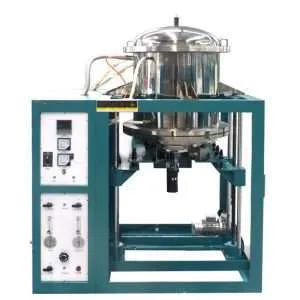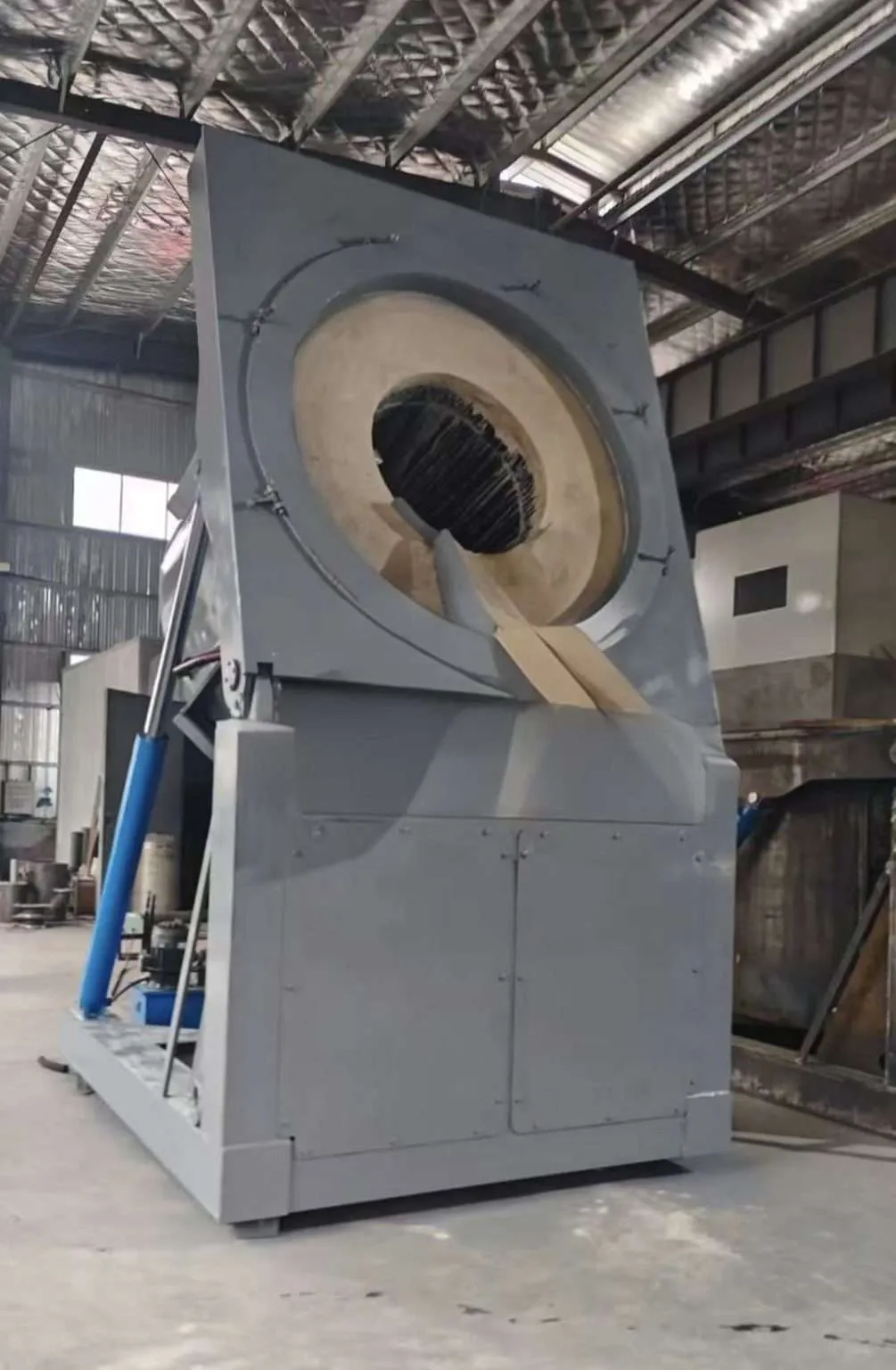





Vacuum Distillation Furnace for Copper-Zinc Separation and Recovery
Vacuum Distillation Furnace for Copper‑Zinc Separation and Recovery
Table of Contents
- Introduction
- What Is Vacuum Distillation Furnace?
- Which Materials Are Suitable for Vacuum Distillation Furnace?
- Principle
- Applications
- Why Use Vacuum Distillation Furnace for Copper‑Zinc Separation and Recovery?
- Advantages
- Equipment and Technical Parameters
- How to Choose a Suitable Equipment?
- Conclusion
- Frequently Asked Questions (FAQs)
1. Introduction
A vacuum distillation furnace for copper‑zinc separation and recovery is a high‑temperature, low‑pressure thermal refining system designed to separate copper and zinc based on their dramatically different boiling points under vacuum. It’s one of the cleanest, most efficient, and highest‑purity methods available for processing brass scrap, copper‑zinc alloys, galvanizing residues, and other mixed non‑ferrous materials.
As global industrialization intensifies, the demand for both copper and zinc continues to rise sharply. However, the mining and processing of primary ores are becoming increasingly challenging due to declining ore grades, higher extraction costs, and mounting environmental pressures. The metallurgical industry is therefore under significant pressure to develop more efficient and sustainable methods for separating and recovering copper and zinc from secondary resources, including scrap metals, industrial residues, dross, and alloy wastes.
Traditional separation methods such as pyrometallurgical smelting, hydrometallurgical leaching, and electrolytic refining have served the industry for decades. However, these approaches often involve high energy consumption, complex chemical processes, significant emissions, and costly waste management. As environmental regulations tighten and sustainability becomes a strategic imperative, the need for cleaner and more efficient alternatives has never been greater.
The vacuum distillation furnace for copper‑zinc separation and recovery has emerged as a highly effective response to these challenges. By exploiting the fundamental physical differences between copper and zinc under vacuum conditions, this advanced technology enables selective, high‑purity metal separation with minimal energy input and near‑zero environmental impact. As a next‑generation copper zinc separation furnace, vacuum distillation is increasingly adopted by smelters, foundries, and recycling facilities worldwide seeking to improve profitability, resource efficiency, and environmental compliance.
2. What Is Vacuum Distillation Furnace?
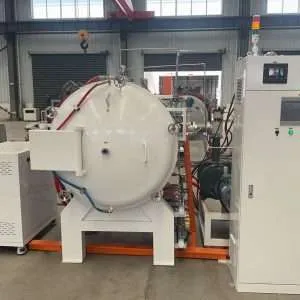
A vacuum distillation furnace is a high‑temperature metallurgical processing system that separates metals based on differences in their vapor pressures and boiling points under reduced pressure conditions. By creating a controlled vacuum environment inside the furnace chamber, the system significantly lowers the temperature at which volatile metals, such as zinc, begin to evaporate, allowing selective separation from less volatile metals like copper.
The furnace consists of several integrated subsystems working together to ensure efficient and controlled separation.
Main Components of a Vacuum Distillation Furnace:
| Component | Function | Key Feature |
| Furnace Chamber | Contains charge material during processing | High‑temperature resistant alloy construction |
| Heating System | Provides controlled thermal energy | Electric resistance or induction heating |
| Vacuum Pumping System | Creates and maintains low‑pressure environment | Multi‑stage vacuum pumps |
| Condensation Unit | Collects and solidifies zinc vapor | Water‑cooled or air‑cooled condenser |
| Temperature Control | Monitors and regulates furnace temperature | Thermocouples and PID controllers |
| PLC and HMI System | Automates and monitors full process | Touchscreen interface and data logging |
| Safety Systems | Protects equipment and operators | Pressure relief valves and interlocks |
The copper zinc separation vacuum furnace operates by heating the charge material to a temperature at which zinc selectively vaporizes while copper remains in a condensed phase. The zinc vapor is then directed to a condensation zone where it cools and solidifies into high‑purity metallic zinc. The remaining copper residue is recovered separately for reuse or further processing.
3. Which Materials Are Suitable for Vacuum Distillation Furnace?
One of the key strengths of the vacuum distillation furnace is its ability to process a wide variety of copper‑zinc‑containing materials. This versatility makes it suitable for both primary metallurgical operations and secondary metal recycling.
Suitable Feed Materials for Copper‑Zinc Vacuum Distillation:
| Material Type | Typical Zinc Content (%) | Typical Copper Content (%) | Processing Suitability |
| Brass Scrap | 10 – 40 | 60 – 90 | Excellent |
| Copper‑Zinc Alloy Ingots | 5 – 35 | 65 – 95 | Excellent |
| Industrial Dross and Skimmings | 5 – 25 | 20 – 70 | Very Good |
| Metallurgical Residues | 3 – 20 | 15 – 60 | Good |
| Electronic Waste Residues | 2 – 15 | 10 – 50 | Good |
| Zinc‑Rich Smelting By‑Products | 15 – 50 | 5 – 30 | Very Good |
| Mixed Non‑Ferrous Scrap | Variable | Variable | Case by Case |
Materials with higher zinc content generally yield better separation efficiency and higher zinc recovery rates. Pre‑treatment such as sorting, crushing, or melting may be required for certain feed types.
4. Principle
The operating principle of the copper zinc separation vacuum furnace is grounded in thermodynamics, specifically the relationship between vapor pressure, boiling point, and atmospheric pressure.
Boiling Points of Key Metals at Atmospheric Pressure:
| Metal | Melting Point (°C) | Boiling Point at 1 atm (°C) |
| Zinc (Zn) | 419.5 | 907 |
| Copper (Cu) | 1085 | 2562 |
| Lead (Pb) | 327.5 | 1749 |
| Tin (Sn) | 231.9 | 2602 |
Under reduced pressure, the boiling point of zinc decreases significantly, enabling separation at much lower temperatures.
Approximate Zinc Boiling Points at Different Pressures:
| Vacuum Pressure (Pa) | Approximate Zinc Boiling Point (°C) |
| 101,325 (1 atm) | 907 |
| 1,000 | 730 |
| 100 | 610 |
| 10 | 500 |
| 1 | 400 |
Core Thermodynamic Formula — Clausius‑Clapeyron Equation:
ln(P2P1)=−ΔHvapR(1T2−1T1)
Where:
- P₁, P₂ = vapor pressures at temperatures T₁ and T₂
- ΔH_vap = molar enthalpy of vaporization (J/mol)
- R = universal gas constant = 8.314 J/(mol·K)
- T₁, T₂ = absolute temperatures (K)
Zinc Separation Efficiency Formula:
ηZn=mZn, recoveredmZn, initial×100%
Process Flow Diagram (Textual Representation):
[Feed Material Loading]
↓
[Furnace Sealing & Vacuum Generation]
↓
[Controlled Heating to Target Temperature]
↓
[Selective Zinc Evaporation]
↓
[Zinc Vapor Transport to Condenser]
↓
[Zinc Condensation & Collection]
↓
[Copper Residue Recovery]
↓
[Product Quality Analysis & Packaging]
5. Applications
The vacuum distillation furnace for copper‑zinc separation and recovery serves a broad spectrum of industrial applications across metallurgy, recycling, and advanced materials sectors.
Application Areas and Use Cases:
| Industry Sector | Specific Application | Key Benefit |
| Metal Recycling | Brass and alloy scrap recovery | High zinc and copper yield |
| Non‑Ferrous Smelting | Intermediate product refining | Improved purity |
| Foundries | Brass alloy composition control | Consistent quality |
| Electronics Recycling | Recovery from circuit board residues | Valuable metal extraction |
| Battery Recycling | Processing of zinc‑containing residues | Sustainable recovery |
| Research and Development | Pilot‑scale metallurgical studies | Precise experimental control |
6. Why Use Vacuum Distillation Furnace for Copper‑Zinc Separation and Recovery?
Comparison of Copper‑Zinc Separation Technologies:
| Criteria | Pyrometallurgical Smelting | Hydrometallurgy | Electrolysis | Vacuum Distillation Furnace |
| Operating Temperature | Very High | Low‑Medium | Low | Medium‑Low |
| Energy Consumption | Very High | High | Very High | Low‑Medium |
| Environmental Impact | High emissions | Chemical waste | High power | Minimal |
| Metal Purity | Medium | High | Very High | Very High |
| Process Complexity | High | Very High | High | Moderate |
| Chemical Use | Flux agents | Acids and reagents | Electrolytes | None |
| Operating Cost | High | High | Very High | Lower |
| Suitable for Secondary Materials | Limited | Yes | Limited | Excellent |
This comparison demonstrates clearly why the vacuum distillation furnace is increasingly preferred for copper‑zinc separation and recovery in modern metallurgical and recycling operations.
7. Advantages
Summary of Key Advantages:
| Advantage | Technical Detail | Business Impact |
| High Metal Purity | Zinc >99%, Copper retains properties | Premium product value |
| Energy Efficiency | 20–40% lower than conventional methods | Reduced operating costs |
| Environmental Performance | Closed system, near‑zero emissions | Regulatory compliance |
| Material Flexibility | Wide range of feedstocks | Broader business scope |
| No Chemical Reagents | Physical separation only | No waste treatment costs |
| Automation Ready | PLC and HMI integration | Lower labor costs |
| Safe Operation | Enclosed, automated process | Improved workplace safety |
| Scalability | Batch and continuous options | Adaptable to demand |
Energy Savings Calculation Example:
Energy Savings (%)=Econventional−EvacuumEconventional×100%
If conventional smelting uses 850 kWh/ton and vacuum distillation uses 520 kWh/ton:
Energy Savings=850−520850×100%=38.8%
8. Equipment and Technical Parameters
Standard Technical Parameters of Vacuum Distillation Furnaces:
| Parameter | Specification Range |
| Operating Temperature | 400 – 1200°C |
| Maximum Temperature | Up to 1200°C |
| Vacuum Pressure Range | 1 – 50 Pa |
| Ultimate Vacuum Level | ≤ 1 Pa |
| Processing Capacity | 100 – 3000 kg/batch |
| Zinc Recovery Rate | ≥ 95% |
| Zinc Product Purity | ≥ 99.0% |
| Copper Residue Zinc Content | < 1% |
| Heating Power | 50 – 500 kW |
| Heating Method | Electromagnetic Induction |
| Control System | PLC + HMI Touchscreen |
| Cooling Method | Water‑cooled / Air‑cooled |
| Condenser Efficiency | > 95% vapor capture |
| Energy Consumption | 300 – 600 kWh/ton |
Performance Benchmark Chart (Textual Representation):
Zinc Recovery Rate:
Conventional Smelting |████████░░░░░░░░| 60–75%
Hydrometallurgy |██████████░░░░░░| 75–85%
Electrolysis |████████████░░░░| 85–92%
Vacuum Distillation |████████████████| 95–99%+
Energy Consumption (kWh/ton):
Conventional Smelting |████████████████| 850–1200
Hydrometallurgy |████████████░░░░| 700–950
Electrolysis |██████████████░░| 800–1100
Vacuum Distillation |████████░░░░░░░░| 400–700
9. How to Choose a Suitable Equipment?
Equipment Selection Decision Framework:
| Selection Factor | Key Questions | Recommendation |
| Feed Material | What is the zinc and copper content? | Higher zinc content suits batch furnaces |
| Production Capacity | What is the required throughput? | High volume needs continuous furnace |
| Purity Requirements | What purity standards are required? | Higher purity needs deeper vacuum |
| Energy Availability | What power supply is available? | Match heating method to power type |
| Budget | What is the investment limit? | Balance CAPEX vs OPEX |
| Automation Level | What level of automation is needed? | Consider PLC integration |
| Space Constraints | What is the available floor space? | Match footprint to plant layout |
| Environmental Requirements | What emission standards apply? | Vacuum system ensures compliance |
Total Cost of Ownership Formula:
TCO=CAPEX+∑n=1N(OPEXn+Maintenancen+Energyn)−Revenuemetal recovery
Where:
- CAPEX = Capital expenditure on equipment
- OPEX = Annual operating expenses
- N = Equipment lifespan in years
- Revenue = Income from recovered metals
10. Conclusion
The vacuum distillation furnace for copper‑zinc separation and recovery represents a transformative advancement in non‑ferrous metallurgy. By harnessing fundamental thermodynamic principles under controlled vacuum conditions, this technology achieves exceptional metal purity, superior energy efficiency, and outstanding environmental performance simultaneously.
As the global demand for copper and zinc continues to grow alongside increasing sustainability requirements, the copper zinc separation vacuum furnace is firmly establishing itself as the new industry standard. Its ability to process diverse secondary materials supports circular economy objectives and reduces dependence on primary mining resources.
For smelters, recyclers, foundries, and advanced materials producers, investing in vacuum distillation furnace technology delivers measurable improvements in metal recovery rates, operating costs, product quality, and regulatory compliance. It is not simply a technical upgrade but a strategic investment in the future of efficient and sustainable metal processing.
11. Frequently Asked Questions (FAQs)
Q1. What zinc purity can be achieved with a vacuum distillation furnace?
Zinc purity typically exceeds 99.0%, and in optimized conditions can reach 99.5% or higher, depending on feed material composition and process control parameters.
Q2. What is the typical zinc recovery rate?
Modern vacuum distillation furnaces achieve zinc recovery rates of 95% or above, significantly higher than conventional smelting or hydrometallurgical methods.
Q3. Can the furnace process contaminated or mixed scrap?
Yes. Vacuum distillation furnaces can handle a wide range of feed materials including contaminated brass scrap, mixed alloys, and industrial residues, though pre‑treatment may improve efficiency.
Q4. How does vacuum pressure affect separation efficiency?
Lower vacuum pressure reduces zinc’s boiling point further, enabling more efficient evaporation at lower temperatures, which improves energy efficiency and separation selectivity.
Q5. Is vacuum distillation environmentally compliant?
Yes. The closed‑system operation produces minimal emissions and requires no chemical reagents, making it fully compatible with modern environmental regulations.
Q6. What is the typical energy consumption?
Energy consumption ranges from 400 to 700 kWh per ton of processed material, representing a 30–40% reduction compared to conventional methods.
Q7. How long does a typical processing cycle take?
Batch cycles typically range from 4 to 12 hours depending on furnace size, material composition, and target purity levels.
Q8. Can the equipment be customized?
Yes. Vacuum distillation furnaces can be engineered to meet specific capacity, automation, heating method, and material handling requirements.
Vacuum Distillation Furnace for Copper-Zinc Separation and Recovery
Related products
-

Muffle Furnace-Muffle Oven-Laboratory Furnace-Chamber Furnace
-
Glass Melting Furnace
-
Electric Annealing Furnace-Bogie Hearth Furnace-Industry Heat Treatment Furnace
-
Laboratory Vacuum Furnace-Vacuum Heat Treatment Furnace-Vacuum Sintering Furnace
-
1200°C-1700°C lifting vacuum atmosphere furnace-lifting bottom vacuum heat treatment furnace