Induction Aluminum Melting Furnace for Aluminum Melting and Recycling
Induction Aluminum Melting Furnace for Aluminum Melting and Recycling | Engineering Selection Guide
Table of Contents
- Quick Answer
- What Is This Product?
- Key Applications
- Suitable Materials
- Working Principle
- Technical Specifications
- Recommended Model Selection
- Process Workflow
- Coil and Fixture Design
- Control System and Automation
- Common Problems and Solutions
- Engineering Selection Guide
- Advantages
- Limitations
- Why Choose HLQ Induction Equipment?
- FAQ
An induction aluminum melting furnace is an electric melting system used to melt aluminum ingots, aluminum scraps, aluminum cans, aluminum chips, aluminum alloy returns and non-ferrous casting materials. It is widely used in foundries, die casting plants, recycling workshops, aluminum profile factories, automotive parts plants and small-to-medium metal casting facilities. Compared with gas-fired melting, it provides cleaner heating, lower oxidation, better temperature control, safer operation and easier automation. For buyers, it solves common problems such as high fuel consumption, excessive dross, unstable melting temperature, poor working environment, difficult pouring control and rising environmental compliance pressure.
Quick Answer
An induction aluminum melting furnace is best suited for clean, efficient and controllable melting of aluminum and aluminum alloys in foundries, recycling plants and casting workshops. It uses electromagnetic induction to generate heat in the crucible and aluminum charge, melting aluminum without open flame. For production that requires lower oxidation, stable temperature, faster melting, reduced emissions and better metal yield, an induction aluminum melting furnace is usually a better engineering choice than traditional gas-fired melting. For small batches, graphite crucible induction furnaces are practical; for larger capacity and continuous production, hydraulic tilting medium-frequency induction furnaces are recommended.
What Is This Product?
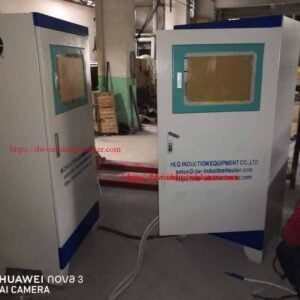
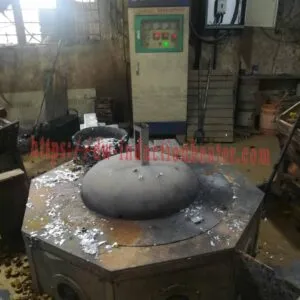
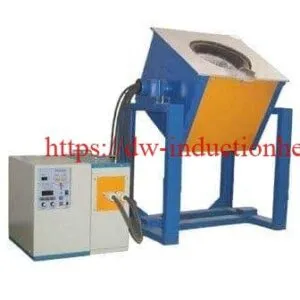
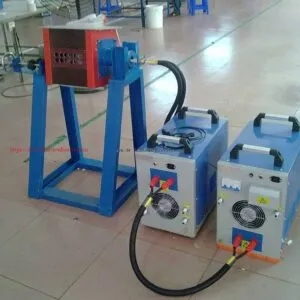
An induction aluminum melting furnace is a non-ferrous metal melting furnace designed specifically for aluminum and aluminum alloy melting. The complete system usually includes a medium-frequency induction power supply, water-cooled induction coil, furnace body, graphite or refractory crucible, thermal insulation, tilting frame, hydraulic tilting system, cooling water system, temperature measuring device and electrical control cabinet.
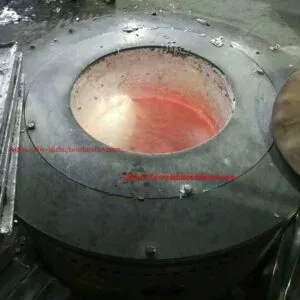
Unlike gas-fired furnaces, which transfer heat from flame to crucible and then to the metal, an induction aluminum melting furnace uses electromagnetic energy. Alternating current flows through a copper induction coil and creates an alternating magnetic field. This magnetic field induces eddy currents in the conductive load and the crucible system. These currents generate heat, causing the aluminum to melt rapidly and uniformly.
In practical aluminum melting, the furnace may be designed as a fixed crucible furnace, hydraulic tilting furnace, manual tilting furnace, bale-out furnace or continuous production melting system. For small workshops, 15–80 kW machines may be used for 5–100 kg aluminum melting. For medium foundries, 100–350 kW systems are commonly selected for 100–500 kg batches. For large recycling or casting plants, 500 kW to several megawatts may be used depending on hourly capacity.
The most common configuration for aluminum melting is a graphite crucible induction furnace or a refractory-lined crucible furnace. The graphite crucible is often preferred for small and medium aluminum batches because it has good thermal conductivity, good resistance to thermal shock and a smooth inner surface for molten aluminum. However, crucible quality, wall thickness, heating rate and handling practice strongly affect service life.
For industrial buyers, the key value of induction aluminum melting is not only energy saving. It also improves working conditions, reduces flame hazards, lowers metal oxidation, shortens melting time, improves temperature repeatability and makes production easier to control. In modern foundries, these factors are often more important than simple equipment price.
Key Applications
1. Aluminum Ingot Melting
Induction aluminum melting furnaces are widely used to melt standard aluminum ingots for casting, die casting, sand casting, gravity casting and mold pouring. The furnace can quickly heat ingots to molten state and maintain a stable pouring temperature.
2. Aluminum Scrap Recycling
The furnace can be used for clean aluminum scrap, profile scrap, extrusion scrap, casting returns, sprues, runners and rejected parts. It is suitable for recycling plants that need to remelt sorted aluminum into ingots or liquid metal for reuse.
3. Aluminum Cans Melting
Used beverage cans can be melted after proper sorting, cleaning, drying and coating management. Because aluminum cans are thin and have large surface area, charging practice must be controlled carefully to reduce oxidation loss and dross.
4. Aluminum Chips and Turnings Melting
Aluminum chips from machining can be remelted, but they must be dry and free from oil, water and cutting fluid. Briquetting or pre-compaction is recommended to improve yield and reduce oxidation.
5. Aluminum Alloy Casting
The furnace is suitable for melting ADC12, A356, 6061, 7075, Al-Si alloys, Al-Mg alloys, Al-Cu alloys and other casting or wrought aluminum alloys. Temperature control and alloy management are important to maintain composition.
6. Die Casting Production
For die casting workshops, induction melting can be used as a primary melting furnace or as a remelting system for returns. In many plants, induction melting is combined with holding furnaces and transfer ladles.
7. Laboratory and Small-Batch Aluminum Melting
Small induction aluminum melting furnaces are used in laboratories, universities, R&D centers and trial production workshops for alloy development, sample casting and process testing.
Suitable Materials
Induction aluminum melting furnaces are suitable for aluminum and many non-ferrous alloys. However, different aluminum materials have different melting behavior, oxidation tendency and recycling requirements.
| Material | Suitability | Engineering Notes |
|---|---|---|
| Pure Aluminum | Excellent | Easy to melt, good fluidity, suitable for ingot remelting and clean casting applications. |
| Aluminum Ingots | Excellent | Recommended feedstock for stable melting and predictable composition. |
| Aluminum Alloy Scrap | Good | Must be sorted by alloy grade to avoid composition instability. |
| Aluminum Cans | Conditional | Thin material with coatings; requires cleaning, drying and careful charging to reduce dross. |
| Aluminum Chips | Conditional | Should be dry and compacted. Oil, water and cutting fluid must be removed before melting. |
| Al-Si Casting Alloy | Excellent | Common for die casting, automotive parts and general casting production. |
| Al-Mg Alloy | Good | Requires temperature control and fluxing practice to reduce oxidation and burning loss. |
| Al-Cu Alloy | Good | Temperature uniformity and alloy mixing are important for stable casting quality. |
| Zinc, Tin, Lead | Possible | Can be melted with suitable crucible and temperature control, but furnace design may differ. |
| Copper and Brass | Possible with different configuration | Need higher temperature, different crucible selection and higher power density. |
Working Principle
The working principle of an induction aluminum melting furnace is electromagnetic induction. When medium-frequency alternating current passes through the water-cooled copper induction coil, an alternating magnetic field is generated around the coil. The aluminum charge and crucible system are placed inside this magnetic field. Eddy currents are induced in the conductive material, and these currents produce heat due to electrical resistance.
Aluminum is non-magnetic, so its heating behavior is different from steel. There is no strong magnetic hysteresis heating as in ferromagnetic metals. The heating mainly depends on eddy current loss and heat transfer through the crucible and metal bath. Because aluminum has high thermal conductivity and relatively low melting temperature, once the first molten bath forms, heat transfer becomes faster and more uniform.
A practical aluminum induction melting process includes several stages:
- Power input: The induction power supply converts industrial electricity into medium-frequency alternating current.
- Magnetic field generation: The water-cooled copper coil produces an alternating magnetic field.
- Eddy current generation: Eddy currents are induced in the aluminum charge and conductive crucible environment.
- Resistive heating: Electrical resistance converts induced current into heat.
- Melting: Solid aluminum gradually melts into a liquid bath.
- Electromagnetic stirring: Electromagnetic force helps circulate molten aluminum, improving temperature uniformity.
- Temperature holding: Power is reduced or controlled to keep the molten metal at the required pouring temperature.
- Tilting and pouring: The inner crucible or furnace body is tilted hydraulically to pour molten aluminum into a ladle or mold.
For aluminum, good temperature control is essential. Overheating increases oxidation, dross formation, hydrogen absorption risk and alloy element burning loss. Underheating causes poor fluidity, incomplete filling and casting defects. Therefore, a well-designed induction aluminum melting furnace should include stable power control, reliable temperature measurement and correct pouring operation.
Technical Specifications
| Parameter | Specification | Notes |
|---|---|---|
| Product Name | Induction Aluminum Melting Furnace | Designed for aluminum and aluminum alloy melting. |
| Furnace Type | Fixed, manual tilting or hydraulic tilting | Hydraulic tilting is recommended for safer and smoother pouring. |
| Capacity Range | 5 kg to 5000 kg per batch | Customized according to melting rate and production requirement. |
| Power Range | 15 kW to 3000 kW | Power selection depends on batch weight, melting time and efficiency target. |
| Frequency Range | 500 Hz to 20 kHz typical | Medium frequency is commonly used for industrial aluminum melting. |
| Melting Temperature | Approx. 660°C for pure aluminum; usually 680–760°C operating range | Actual temperature depends on alloy and casting process. |
| Crucible Type | Graphite, silicon carbide graphite or refractory-lined crucible | Selected according to capacity, alloy, temperature and service life requirement. |
| Induction Coil | Water-cooled copper coil | Coil must be protected by insulation and cooling water interlock. |
| Furnace Shell | Steel shell or aluminum shell structure | Steel shell is common for larger, heavy-duty furnaces. |
| Tilting System | Hydraulic cylinder, gearbox or manual tilting | Hydraulic tilting improves pouring control and operator safety. |
| Cooling System | Closed-loop water cooling tower or industrial chiller | Required for induction coil, power supply and capacitors. |
| Temperature Measurement | Thermocouple, immersion probe or infrared pyrometer | Immersion measurement is commonly used for molten aluminum accuracy. |
| Control Mode | Manual, timer, PLC or HMI automatic control | Automation improves repeatability and production traceability. |
| Power Supply | 3-phase 380V/415V/440V/480V/50/60Hz customized | Voltage can be customized according to country and factory conditions. |
Recommended Model Selection
| Application | Material | Recommended Power | Frequency |
|---|---|---|---|
| Laboratory aluminum melting | Pure aluminum, small alloy samples | 15–30 kW | 10–20 kHz |
| Small jewelry or sample casting | Aluminum alloy, small ingots | 25–60 kW | 8–20 kHz |
| 50–100 kg workshop melting | Aluminum ingots, clean scrap | 60–120 kW | 4–10 kHz |
| 150–300 kg aluminum foundry furnace | Aluminum alloy, casting returns | 120–250 kW | 2–8 kHz |
| 300–500 kg hydraulic tilting furnace | Aluminum ingots, scrap, runners | 200–400 kW | 1–6 kHz |
| 500–1000 kg aluminum recycling furnace | Aluminum scrap, profile scrap, clean returns | 350–800 kW | 0.8–4 kHz |
| 1–2 ton industrial aluminum melting | Aluminum alloy, recycled aluminum | 700–1500 kW | 0.5–3 kHz |
| 2–5 ton large aluminum melting line | Aluminum scrap, ingots, foundry returns | 1200–3000 kW | 0.5–2 kHz |
The above model selection table is a practical engineering reference. Final selection should be calculated based on aluminum charge weight, initial temperature, target pouring temperature, required melting time, furnace efficiency, charging method, crucible size, power supply capacity and production rhythm.
Process Workflow
A standard induction aluminum melting workflow includes preparation, charging, melting, refining, temperature adjustment, pouring and cleaning. Each stage affects metal quality and furnace life.
- Pre-operation inspection: Check power supply, cooling water, crucible condition, hydraulic system, electrical protection and emergency stop.
- Crucible preheating: Preheat the crucible gradually if required, especially for a new crucible or after long shutdown.
- Charging: Load dry aluminum ingots or clean scrap into the crucible. Avoid wet, oily or sealed materials.
- Start induction power: Increase power gradually according to the furnace operating procedure.
- Melting stage: Aluminum begins to soften, collapse and form a molten bath.
- Additional charging: Add more charge after the first batch collapses, keeping the crucible within safe filling limits.
- Electromagnetic stirring: Molten aluminum circulates under electromagnetic force, improving temperature uniformity.
- Fluxing and dross removal: Apply suitable refining flux if required and remove dross from the surface.
- Temperature measurement: Check molten aluminum temperature with a suitable probe or sensor.
- Holding: Reduce power and maintain the metal at the required pouring temperature.
- Tilting and pouring: Use the hydraulic tilting system to pour molten aluminum smoothly into a ladle, mold or holding furnace.
- Cleaning and shutdown: Remove residual dross, inspect crucible condition and follow proper shutdown procedure.
A good workflow improves metal yield, reduces dross and protects the crucible. The most important safety rule is to keep all aluminum charge dry. Moisture, sealed containers, oil and trapped liquid can cause dangerous explosions when placed into molten aluminum.
Coil and Fixture Design
The induction coil is the energy-transfer component of the furnace. It is normally made from high-conductivity copper tube and cooled by circulating water. The coil surrounds the crucible and generates the alternating magnetic field required for induction heating.
Induction Coil Design
For aluminum melting, coil design must consider furnace capacity, crucible diameter, frequency, power density, insulation thickness and cooling water flow. A well-designed coil should provide uniform heating, good electrical efficiency and long service life. Coil turns must be mechanically supported and electrically insulated from the furnace shell and surrounding structure.
Crucible Design
The crucible is the container that holds aluminum during melting. For graphite crucibles, the crucible height should match the insulation and furnace chamber design. In a tilting furnace, the inner crucible or furnace body must pour smoothly without spilling. The pouring lip, crucible shape and tilting axis should be designed for controlled molten aluminum flow.
Tilting Frame Design
Hydraulic tilting furnaces use a tilting frame, trunnion shaft, hydraulic cylinder and support base. The structure must withstand the furnace weight, molten aluminum weight, tilting force and thermal expansion. The outer support frame should remain stable during pouring, while the furnace body or crucible assembly tilts in a controlled direction.
Insulation Design
Thermal insulation reduces heat loss, protects the coil and improves energy efficiency. The insulation must resist high temperature, thermal cycling and mechanical vibration. It should be installed so that the graphite crucible and insulation height are matched correctly, avoiding excessive heat leakage or poor support.
Cooling Water Design
The induction coil and power supply require stable cooling water. Low water flow, high water temperature or scale blockage can cause coil overheating and equipment failure. Therefore, water flow sensors, pressure switches, temperature alarms and closed-loop cooling systems are recommended.
Control System and Automation
Modern induction aluminum melting furnaces are controlled by digital power supplies, PLC systems, HMI touch screens and safety interlocks. The control system regulates melting power, holding power, furnace tilting, cooling water status, temperature display, alarms and operating modes.
Main Control Functions
- Power adjustment from low power to rated power
- Melting and holding mode selection
- Digital display of voltage, current, power and frequency
- Cooling water pressure and temperature protection
- Overcurrent, overvoltage and overload protection
- Hydraulic tilting control
- Emergency stop and safety interlock
- Temperature monitoring and optional automatic holding control
- Production data recording for advanced systems
Automation is particularly useful when the furnace is used in batch production or integrated with die casting, ingot casting or recycling lines. Automatic temperature holding reduces overheating and improves alloy consistency. Hydraulic pouring control improves safety and reduces operator fatigue.
Common Problems and Solutions
| Problem | Possible Cause | Engineering Solution |
|---|---|---|
| Melting speed is too slow | Power too low, charge too large, poor crucible condition or low coupling efficiency | Increase power, optimize charge size, check crucible and confirm correct furnace capacity. |
| Excessive dross formation | Overheating, dirty scrap, thin aluminum cans, excessive stirring or long holding time | Control temperature, clean and sort scrap, reduce holding time and use proper fluxing practice. |
| Crucible cracks | Thermal shock, poor preheating, mechanical impact or wrong crucible material | Preheat gradually, avoid dropping charge, select correct crucible and follow supplier instructions. |
| Coil overheating | Insufficient cooling water, scale blockage, water pump failure or high inlet temperature | Check flow rate, clean cooling circuit, maintain pump and use a closed-loop cooling system. |
| Temperature is unstable | Poor temperature measurement, unstable power, uneven charging or excessive heat loss | Use reliable temperature probe, stabilize power supply, improve insulation and standardize charging. |
| Molten aluminum contamination | Mixed scrap, dirty charge, wrong flux, damaged crucible or tool contamination | Sort materials, clean charge, use dedicated tools and maintain crucible condition. |
| Hydraulic tilting is not smooth | Air in hydraulic system, cylinder leakage, poor alignment or overload | Bleed hydraulic system, check seals, align tilting shaft and avoid overfilling furnace. |
| Machine alarms during operation | Water shortage, overcurrent, overvoltage, overheating or loose connection | Check cooling water, electrical connections, load condition and protection settings. |
Engineering Selection Guide
Selecting an induction aluminum melting furnace requires a full engineering review. The buyer should not choose only by batch capacity. The correct furnace depends on required hourly output, aluminum type, melting temperature, available power, pouring method and operation skill level.
1. Define the Required Melting Capacity
There are two different capacity concepts: batch capacity and hourly melting rate. A 300 kg furnace does not automatically mean 300 kg per hour. The hourly capacity depends on power, charging time, melting time, dross removal, temperature adjustment and pouring cycle.
2. Calculate Required Power
The theoretical energy to heat and melt aluminum includes sensible heat from ambient temperature to melting point, latent heat of fusion and superheating to pouring temperature. In real production, furnace efficiency, crucible loss, dross loss and holding time must be included. For industrial design, an additional margin is recommended.
3. Choose the Correct Furnace Structure
A fixed furnace is suitable for small batches and manual ladling. A manual tilting furnace is suitable for small-to-medium pouring. A hydraulic tilting furnace is recommended for larger batches, safer pouring and better control. For high-volume production, two furnaces may be used alternately: one melting while the other pours or holds.
4. Select the Right Crucible
Graphite crucibles are common for aluminum melting, but the correct grade must be selected. Low-quality crucibles may crack, oxidize or contaminate the melt. For larger furnaces, refractory lining design may be more suitable.
5. Confirm Factory Power Supply
Before purchasing, confirm transformer capacity, cable size, voltage, frequency and power distribution. Large induction furnaces require strong electrical infrastructure. Power factor correction or special transformer arrangements may be required for some projects.
6. Plan Cooling Water System
Cooling water is not optional. The induction coil, capacitors and power supply must be cooled reliably. A closed cooling tower or chiller is recommended to avoid scale, corrosion and unstable water temperature.
7. Evaluate Safety and Environment
Although induction melting has no open flame, molten aluminum is still hazardous. The system should include dry charging procedures, operator protection, emergency stop, hydraulic safety lock, spill protection and ventilation for flux fumes.
Advantages
- Fast melting: High power density shortens melting time and improves production efficiency.
- Clean operation: No open flame, less smoke and better workshop environment.
- Lower oxidation: Compared with flame heating, induction melting can reduce oxidation and dross when operated correctly.
- Accurate temperature control: Electronic power control helps maintain stable molten aluminum temperature.
- Energy saving: Heat is generated efficiently around the crucible and metal charge, reducing unnecessary exhaust loss.
- Uniform melting: Electromagnetic stirring improves bath temperature and composition uniformity.
- Safe pouring: Hydraulic tilting allows smoother pouring with less operator effort.
- Easy automation: PLC, HMI, temperature control and production data logging can be integrated.
- Suitable for recycling: Clean aluminum scraps, ingots, returns and alloy materials can be remelted efficiently.
- Reduced labor intensity: Faster melting and tilting operation reduce manual handling.
Limitations
- Higher initial investment: Induction systems usually cost more than simple gas furnaces.
- Electrical capacity required: The factory must have enough transformer and power supply capacity.
- Cooling water required: The coil and power supply need reliable water cooling.
- Crucible life management: Graphite crucibles require correct preheating, charging and maintenance.
- Scrap quality matters: Wet, oily or contaminated scrap can cause safety and quality problems.
- Not ideal for unsorted scrap: Mixed alloy scrap may produce unstable chemical composition.
- Operator training required: Incorrect charging, overheating or pouring can reduce yield and safety.
Why Choose HLQ Induction Equipment?
HLQ Induction Equipment provides induction aluminum melting furnace solutions for aluminum casting, aluminum recycling, die casting, ingot remelting, aluminum can recycling and non-ferrous metal processing. The company focuses on matching furnace capacity, power supply, crucible design, tilting structure and cooling system according to the customer’s production requirement.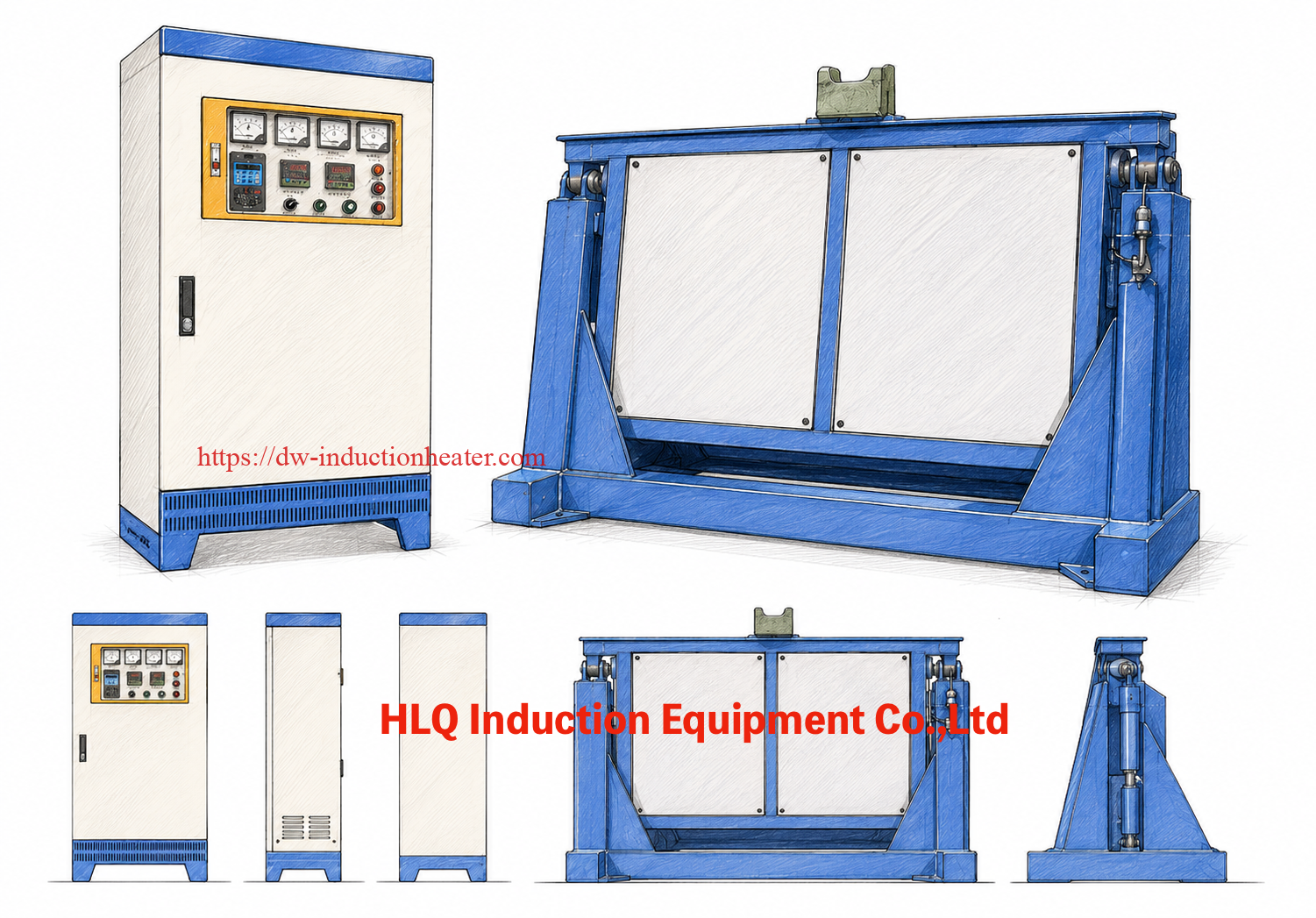
Engineering-Based Furnace Selection
HLQ does not recommend a furnace only by batch weight. The engineering team evaluates aluminum type, target hourly capacity, melting time, available power supply, pouring method, workshop layout and budget. This helps avoid undersized power, oversized furnace body, poor melting speed or unnecessary investment.
Customized Furnace Structure
HLQ can provide fixed, manual tilting and hydraulic tilting induction aluminum melting furnaces. The furnace can be customized for graphite crucible, refractory crucible, aluminum ingots, scraps, cans or casting returns.
Reliable Induction Power Supply
The induction power supply is designed for stable operation, fast heating, high efficiency and multiple protections. Common protections include overcurrent, overvoltage, water shortage, phase loss, overheating and emergency stop.
Practical Pouring and Handling Design
For aluminum melting, pouring control is very important. HLQ can design hydraulic tilting systems, crucible supports, pouring lips and furnace frames to improve safety and reduce molten metal splash.
Support for Complete Production Lines
HLQ can also support related equipment, including cooling water systems, feeding systems, temperature measurement, fume collection, ladles, ingot molds and customized automation solutions.
FAQ
1. What is an induction aluminum melting furnace?
It is an electric furnace that uses electromagnetic induction to melt aluminum ingots, scraps, cans, chips and aluminum alloys. It usually includes an induction power supply, water-cooled coil, crucible, furnace body, cooling system and control cabinet.
2. Can induction heating melt aluminum?
Yes. Aluminum is conductive, so eddy currents can be induced by the alternating magnetic field. These currents generate heat and melt the aluminum. The furnace design must consider aluminum’s non-magnetic behavior and high thermal conductivity.
3. What temperature is required to melt aluminum?
Pure aluminum melts at about 660°C. In production, molten aluminum is usually held above this temperature, commonly around 680–760°C depending on alloy type and casting process.
4. Is induction aluminum melting better than gas melting?
For clean operation, temperature control, lower oxidation and improved working environment, induction melting is usually better. Gas melting may still be used where gas is very cheap or electrical capacity is limited.
5. What crucible is used for aluminum induction melting?
Graphite crucibles, silicon carbide graphite crucibles and suitable refractory crucibles are commonly used. The correct crucible depends on capacity, alloy type, temperature and expected service life.
6. Can aluminum cans be melted in an induction furnace?
Yes, but aluminum cans must be cleaned, dried and charged correctly. Because cans are thin and coated, they can create more dross than ingots or thick scrap. Pre-compaction is recommended for better yield.
7. How much power is required to melt aluminum?
Power depends on batch weight and required melting time. Small furnaces may use 15–60 kW, medium furnaces may use 100–400 kW, and large industrial furnaces may require 700 kW to several megawatts.
8. Does an induction aluminum melting furnace need cooling water?
Yes. The induction coil, power supply and capacitors require stable cooling water. A closed-loop cooling system is recommended for reliable long-term operation.
9. What is the advantage of hydraulic tilting?
Hydraulic tilting allows the molten aluminum to be poured smoothly and safely. It reduces manual labor and improves pouring control, especially for medium and large capacity furnaces.
10. How can dross be reduced during aluminum melting?
Use clean and dry charge, avoid overheating, reduce holding time, control stirring intensity, remove dross properly and use suitable fluxing practice when necessary.
11. What information is needed to choose the right furnace?
The buyer should provide aluminum type, batch weight, hourly capacity, target melting time, available power supply, pouring method, factory layout and whether the material is ingot, scrap, cans or chips.
12. Can HLQ customize an induction aluminum melting furnace?
Yes. HLQ can customize furnace capacity, power supply, crucible type, tilting system, cooling system, control cabinet, voltage and automation level according to the customer’s production requirements.