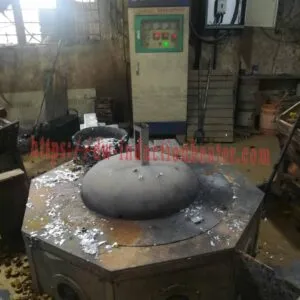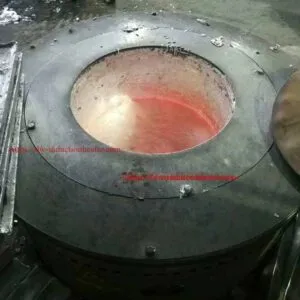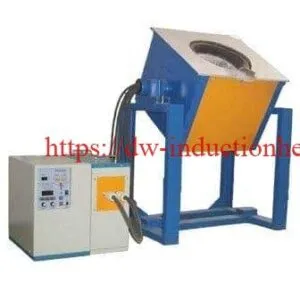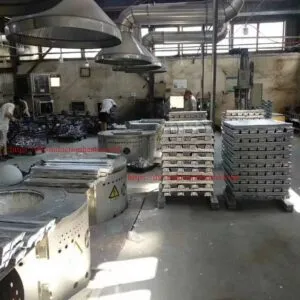


Melting Aluminum Recycling Furnace
Aluminum Recycling Melting Furnace for Scrap, Ingots and Prepared Cans
Quick Answer
The HLQ SMJD series is listed for remelting aluminum, aluminum alloy, aluminum scrap and prepared aluminum cans. The published range covers 13 configurations with aluminum charge capacities from 150 to 1,200 kg and listed power ratings from 60 to 200 kW. These kilogram figures describe melting capacity in the source table; they do not establish hourly throughput, cycle time or metal recovery yield.

Table of Contents
What is the Aluminum Recycling Melting Furnace?
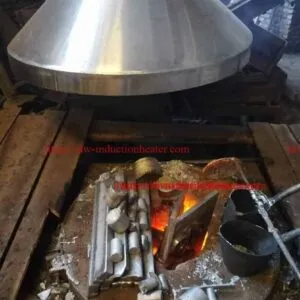
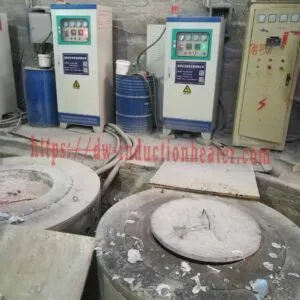
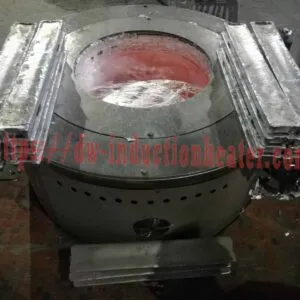
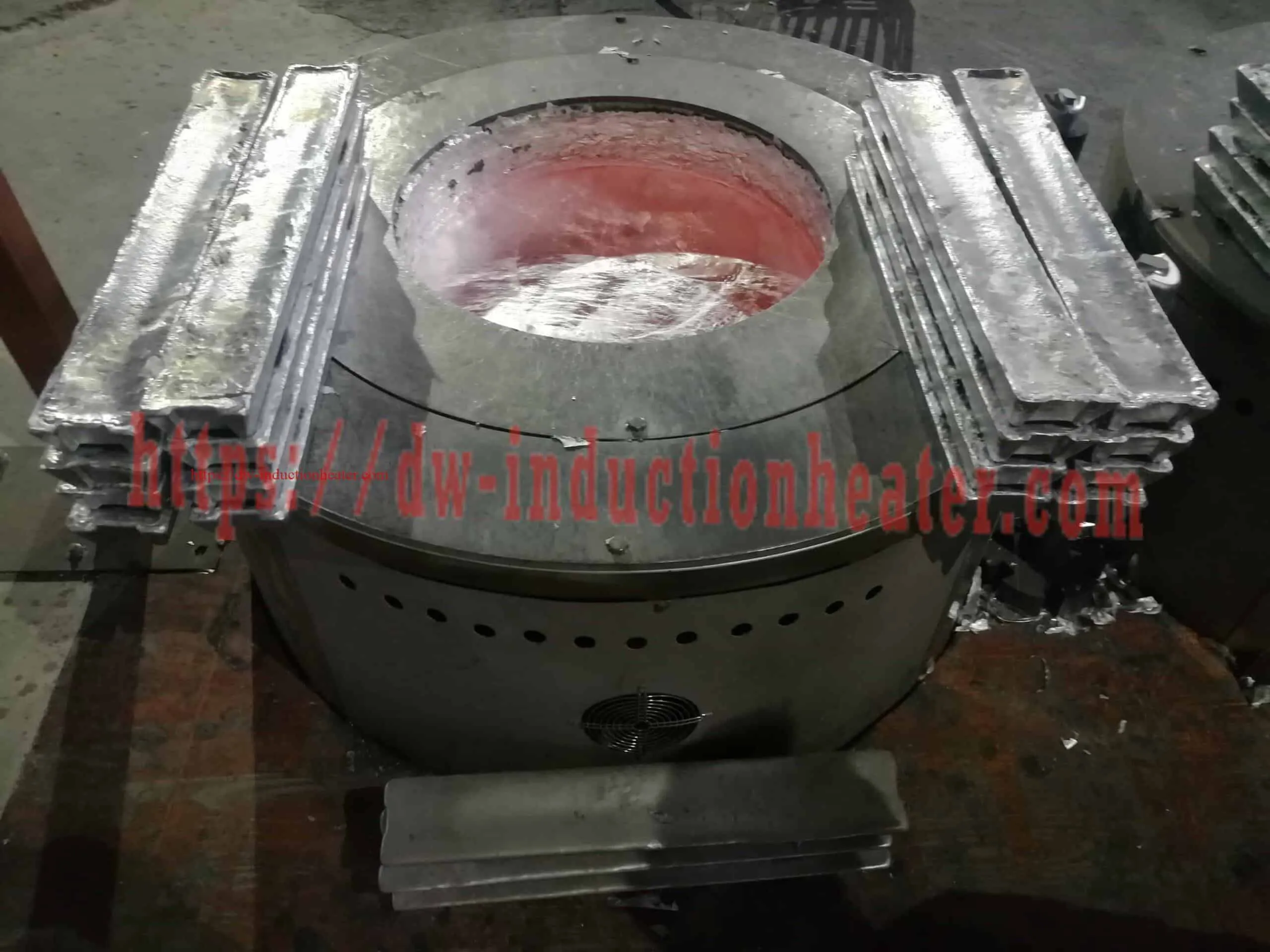
It is an electrically powered SMJD series furnace offered by HLQ for melting and remelting aluminum feed. The published model table identifies aluminum, aluminum alloy, aluminum scrap and pop cans as listed charge materials. The same table also lists capacities for other metals, but aluminum recycling is the focus of this page. Explore the wider aluminum melting furnace category for other HLQ configurations.
The model number alone does not specify a complete recycling line. Feed preparation, melt treatment, transfer and casting arrangements must be defined for the intended operation.

Key Applications
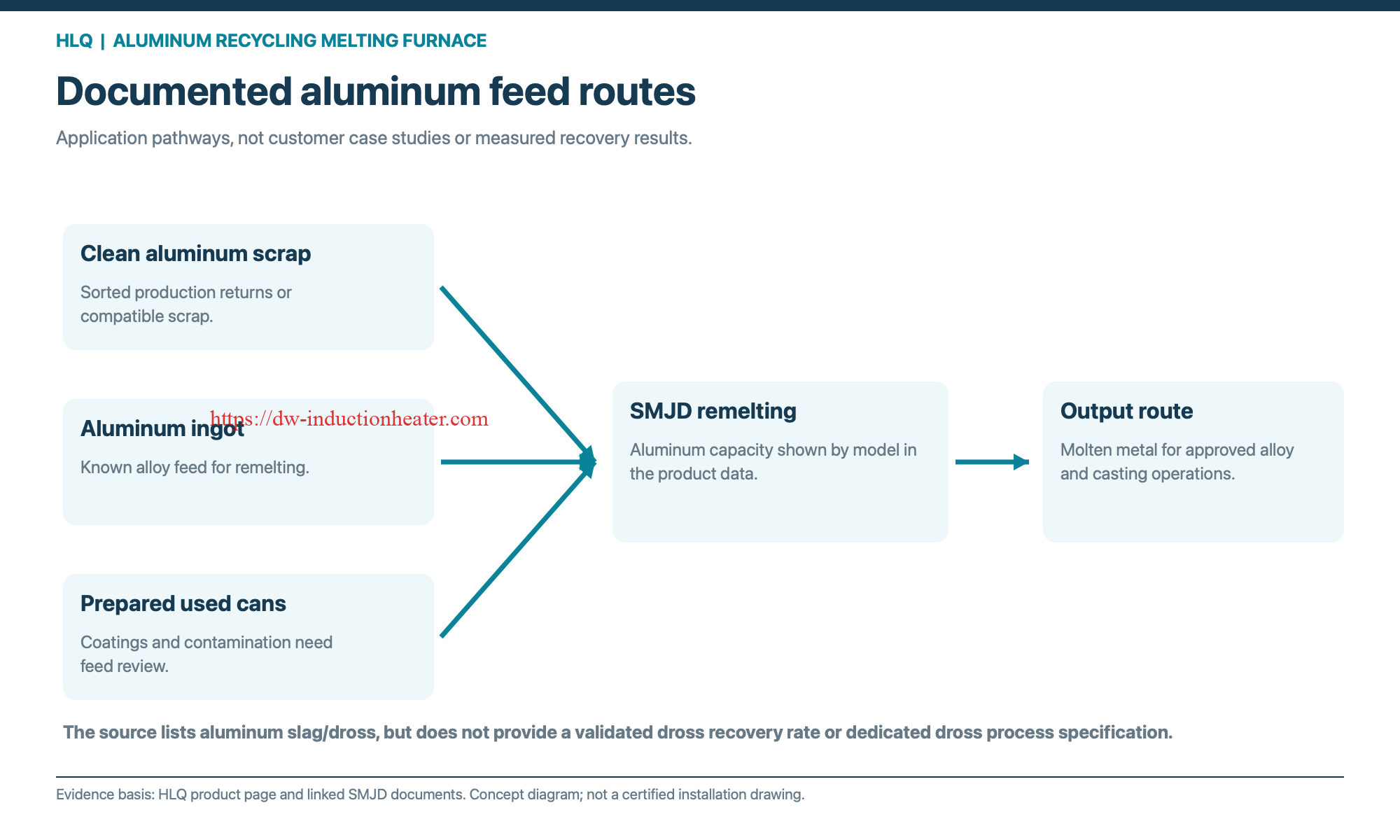
- Remelting sorted aluminum production scrap or compatible aluminum returns.
- Melting aluminum ingots and known aluminum alloy feed.
- Melting prepared used aluminum cans after the feed has been reviewed for coatings and contamination.
- Supplying molten aluminum to an approved downstream alloying, transfer or casting operation.
For a page focused specifically on can feed, see HLQ’s aluminum can recycling machine. The application diagram below illustrates feed routes; it is not a photograph of a customer installation or a measured recovery result.

Suitable Materials
| Feed category | Source-page status | Selection consideration |
|---|---|---|
| Aluminum and aluminum alloy | Listed in the SMJD capacity table | Identify the alloy and required output specification. |
| Aluminum scrap | Listed in the SMJD capacity table | Confirm grade, size, contamination and charge preparation. |
| Aluminum cans | Listed as “pop can” in the capacity table | Review coatings and other nonmetallic material before processing. |
| Aluminum slag or dross | Named in the original table | No dedicated dross process, recoverable metal fraction or recovery rate is specified; assess separately. |
The source table does not prove that every scrap condition behaves like clean aluminum. For another related product, see the HLQ aluminum scrap melting furnace page.
Working Principle
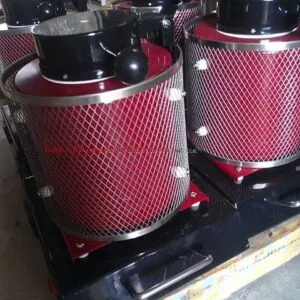
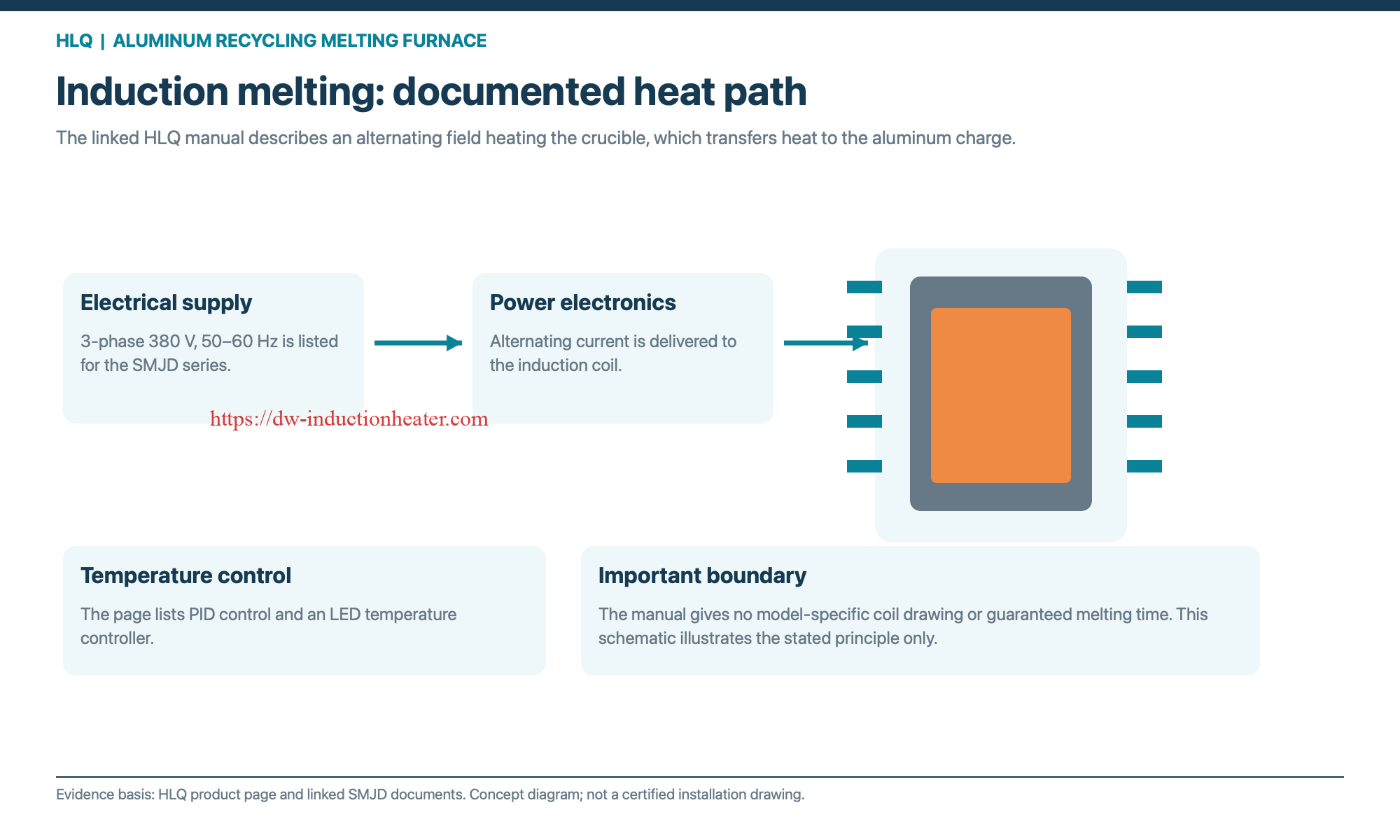
HLQ’s linked operating manual describes power electronics supplying alternating current to an induction coil. The changing magnetic field heats a conductive crucible, which transfers heat to the aluminum charge. The product page also describes temperature control using a PID system and a digital temperature controller. The precise coil, crucible and heating arrangement for a selected configuration should be confirmed against its final technical drawing. For general background, read HLQ’s induction furnace working principle guide.

Technical Specifications
The following values reproduce the published SMJD aluminum capacities and power ratings. Input current and crucible dimensions come from the SMJD induction melting furnace parameter PDF. The source uses “melting capacity” in kg without stating an hourly production rate.
| Model | Listed power | Aluminum melting capacity | Listed input current |
|---|---|---|---|
| SMJD-463 | 60 kW | 200 kg | 90 A |
| SMJD-480 | 60 kW | 150 kg | 90 A |
| SMJD-580 | 80 kW | 200 kg | 120 A |
| SMJD-600 | 60 kW | 230 kg | 90 A |
| SMJD-900 | 120 kW | 300 kg | 180 A |
| SMJD-905 | 80 kW | 300 kg | 120 A |
| SMJD-1250, 80 kW configuration | 80 kW | 400 kg | 120 A |
| SMJD-1250, 120 kW configuration | 120 kW | 450 kg | 180 A |
| SMJD-1500 | 120 kW | 500 kg | 180 A |
| SMJD-1550 | 120 kW | 520 kg | 180 A |
| SMJD-1700 | 160 kW | 600 kg | 240 A |
| SMJD-2300 | 160 kW | 800 kg | 240 A |
| SMJD-3100 | 200 kW | 1,200 kg | 300 A |
Shared values as published: three-phase 380 V input, 50–60 Hz; listed oscillation frequency range 1–100 kHz, with frequency customization stated in the parameter PDF. The original capacity table shows a series maximum temperature of 1,800°C. It does not provide an aluminum operating setpoint or a separate maximum for each configuration.

| Model | Crucible specification | Top outer diameter A | Top inner diameter B | Bottom outer diameter C | Height H |
|---|---|---|---|---|---|
| SMJD-463 | 463# | 565 | 500 | 310 | 617 |
| SMJD-480 | 480# | 510 | 420 | 400 | 710 |
| SMJD-580 | 580# | 420 | 360 | 300 | 840 |
| SMJD-600 | 600# | 620 | 525 | 620 | 470 |
| SMJD-900 | 900# | 520 | 425 | 510 | 960 |
| SMJD-905 | 905# | 620 | 530 | 620 | 650 |
| SMJD-1250 | 1250# | 620 | 535 | 620 | 850 |
| SMJD-1500 | 1500# | 735 | 640 | 460 | 900 |
| SMJD-1550 | 1550# | 775 | 682 | 400 | 750 |
| SMJD-1700 | 1700# | 610 | 500 | 610 | 1,200 |
| SMJD-2300 | 2300# | 880 | 775 | 355 | 1,000 |
| SMJD-3100 | 3100# | 780 | 645 | 780 | 1,400 |
The linked PDF states tolerances of ±10 mm for A, C and H, and ±5 mm for B. It gives one crucible dimension row for SMJD-1250 despite listing two power configurations. Check the final drawing before using these dimensions for installation or replacement procurement.
Recommended Model Selection
Use the published aluminum charge mass as an initial screening value, then review power, electrical supply, feed condition and the intended cycle. The table below groups existing configurations; it does not predict melting time.
| Target charge band | Published configurations in that band | Next check |
|---|---|---|
| 150–230 kg | SMJD-480, SMJD-463, SMJD-580, SMJD-600 | Compare 60 or 80 kW power and available electrical capacity. |
| 300–450 kg | SMJD-900, SMJD-905, two SMJD-1250 configurations | Keep the two SMJD-1250 power and capacity entries distinct. |
| 500–600 kg | SMJD-1500, SMJD-1550, SMJD-1700 | Confirm the selected charge form and crucible arrangement. |
| 800–1,200 kg | SMJD-2300, SMJD-3100 | Confirm electrical current, handling and site-service requirements. |
Process Workflow
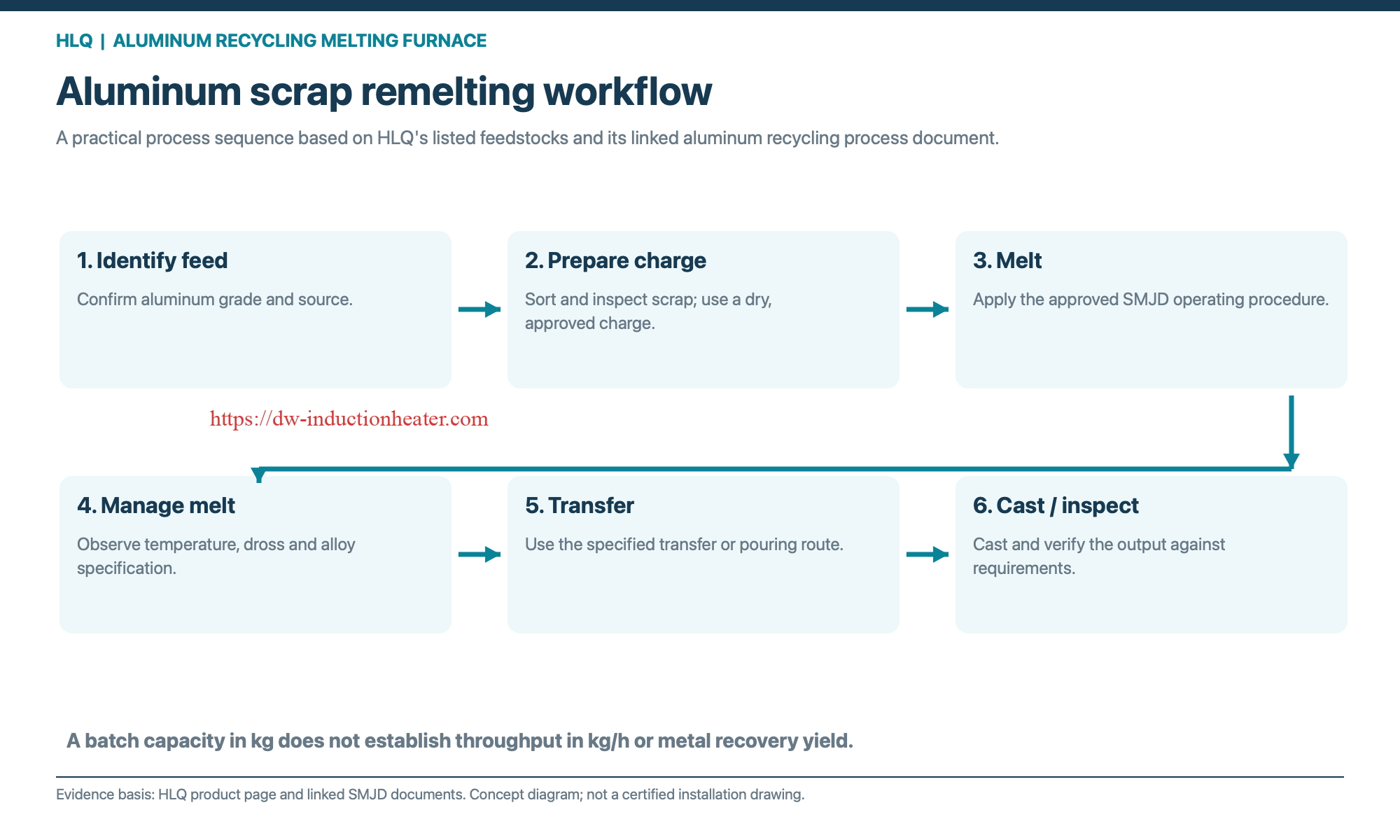
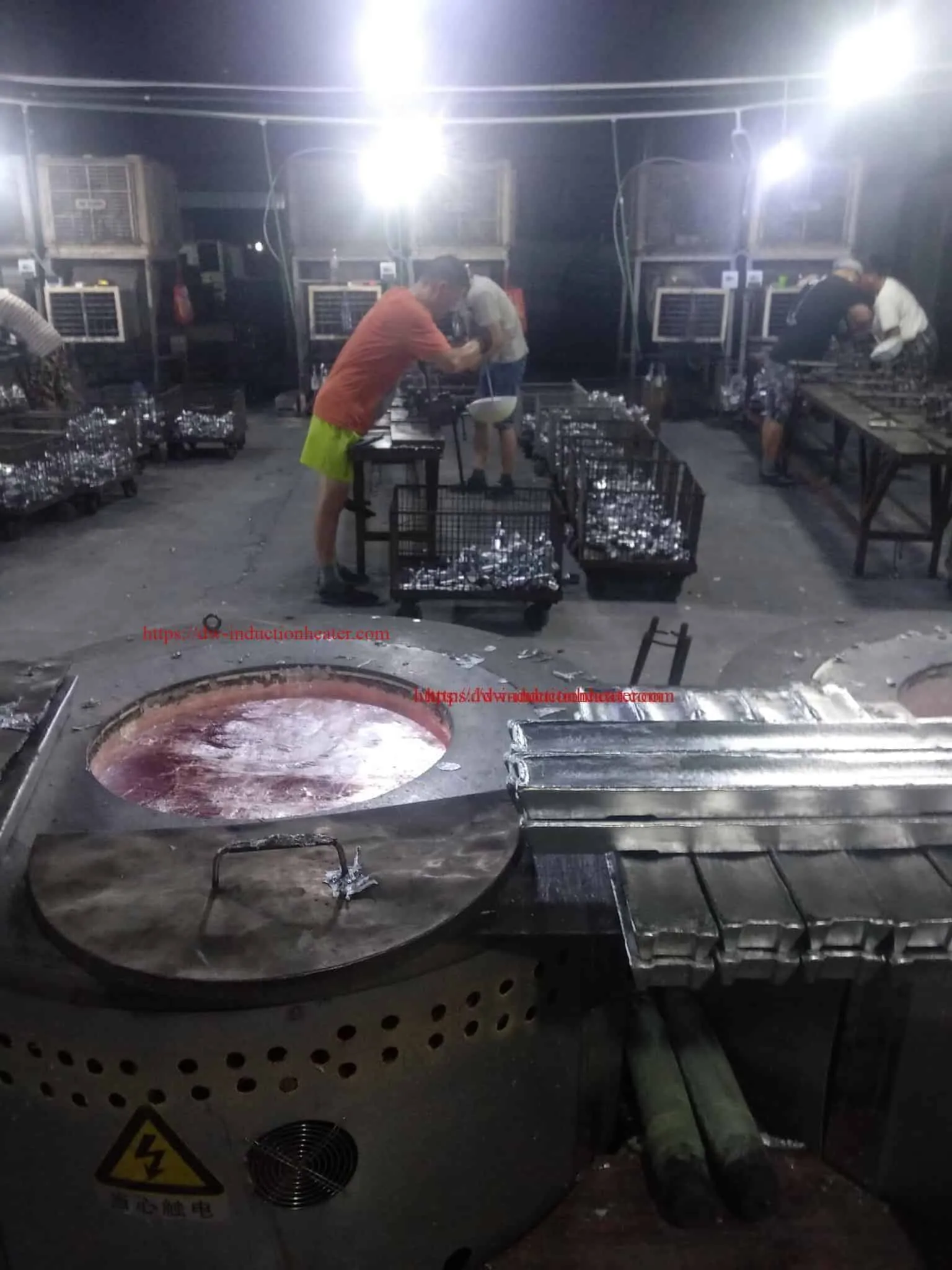
A responsible remelting sequence starts with feed identification and preparation, followed by charging, melting, melt assessment, transfer and casting or another defined downstream operation. HLQ also links an aluminum scrap recycling melting process document. That document discusses general secondary-aluminum processing, including rotary furnaces; it is background reading rather than an SMJD performance test.
Common Problems and Solutions
| Observed issue | Check first | Practical response |
|---|---|---|
| Actual output is lower than a proposed kg/h target | Whether a published kg capacity was mistaken for kg/h throughput | Measure the full production cycle and define the required hourly output separately. |
| Unstable melt quality | Feed alloy mix, coatings and contamination | Segregate and assess the charge against the required alloy specification. |
| High dross or low recovered metal | Scrap condition and the chosen melt-treatment method | Run a feed-specific trial; the page provides no guaranteed recovery percentage. |
| Electrical mismatch | Selected model’s listed power, current and 380 V supply | Check the final electrical documentation against the site supply. |
| Crucible replacement uncertainty | Model designation and published A, B, C, H dimensions | Confirm the final crucible drawing and tolerances before ordering. |
Engineering Selection Guide
Start with the material: alloy grade, scrap form, contamination and desired metal quality. Next define charge mass per cycle and the required output per shift. Match the charge mass against the SMJD table, then check listed power and current. The broader induction melting furnace range can help distinguish this aluminum application from other metal-melting products.
| Selection input | Why it matters | Published on this product page? |
|---|---|---|
| Aluminum charge mass | Initial model-capacity screening | Yes, by configuration |
| Power and input current | Electrical planning | Power on the page; current in the linked parameter PDF |
| Crucible dimensions | Fit and replacement planning | In the linked parameter PDF |
| Scrap grade and contamination | Melt quality and feed preparation | Only broad material categories are listed |
| Melting cycle and kg/h throughput | Production planning | No |
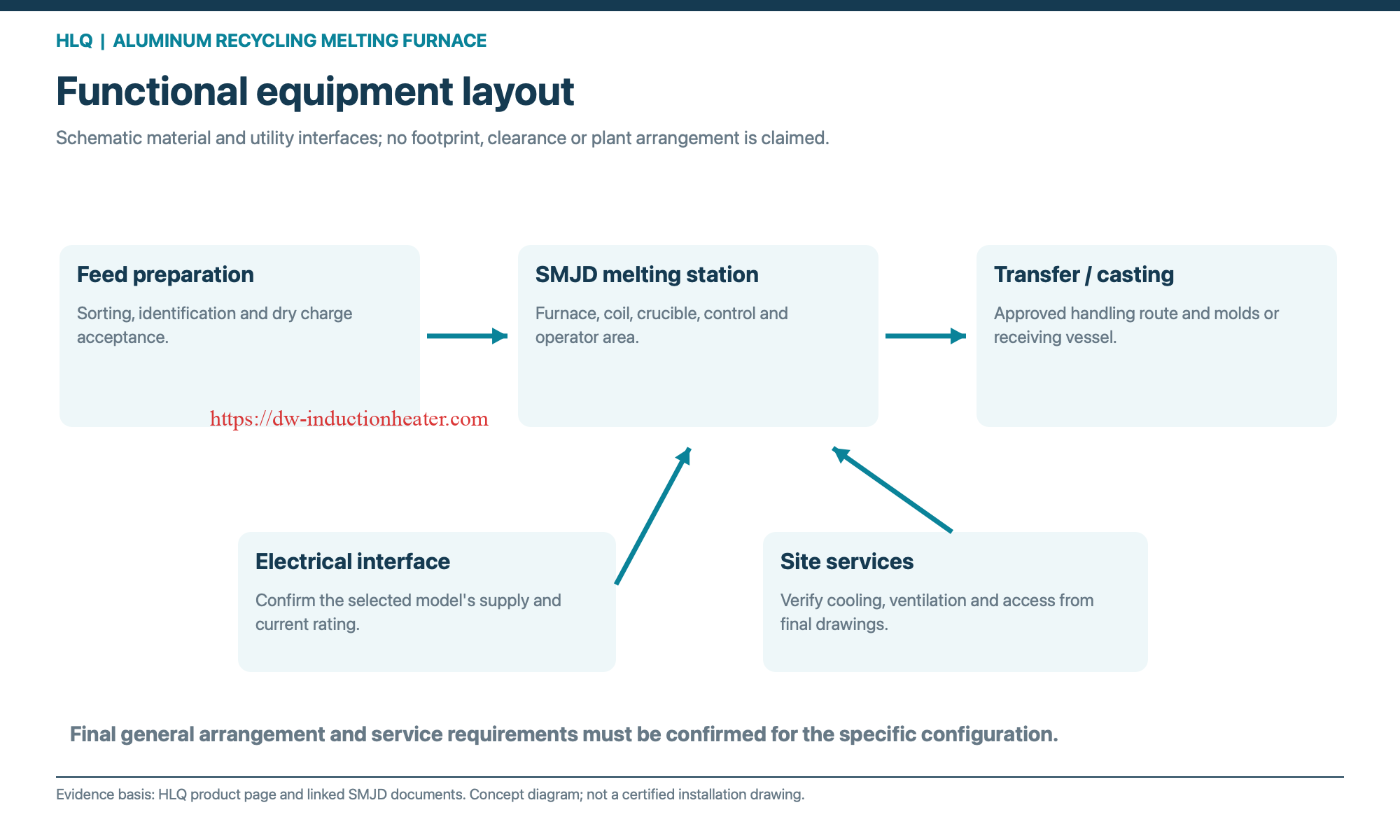
| Site layout and service connections | Installation planning | No model-specific arrangement is provided |
Advantages and Limitations
| Documented advantage or capability | Important limitation |
|---|---|
| 13 published power-and-capacity configurations support initial model comparison. | The table provides no guaranteed cycle time or hourly throughput. |
| Published electrical ratings and crucible dimensions support early engineering review. | Final site services, footprint and configuration drawings are not included. |
| Aluminum scrap, alloy and cans are named as possible feed categories. | Contamination, coatings and dross need feed-specific assessment. |
| The product page describes PID and digital temperature control. | It does not document a guaranteed temperature accuracy for every operating condition. |
For a broader technology comparison, see HLQ’s guide to induction melting vs gas melting and resistance melting.
Why Choose HLQ?
HLQ publishes a detailed SMJD configuration table, a separate electrical and crucible parameter sheet, and an operating manual. Those documents give engineers specific values to check when comparing a proposed aluminum remelting configuration. Read the HLQ induction melting furnace manual for the manufacturer’s stated operating principle and further product information, or visit the HLQ website for its product range.
6 Core FAQs
1. What is the smallest listed aluminum capacity?
SMJD-480 is listed at 150 kg of aluminum with 60 kW power.
2. What is the largest listed aluminum capacity?
SMJD-3100 is listed at 1,200 kg of aluminum with 200 kW power and 300 A input current in the linked parameter sheet.
3. Why does SMJD-1250 appear twice?
The published table gives two configurations under that model name: 80 kW and 400 kg aluminum capacity, or 120 kW and 450 kg aluminum capacity. The source does not assign separate model suffixes.
4. Does 1,200 kg mean 1,200 kg per hour?
No. The source labels it “melting capacity” in kg. It does not publish a cycle duration or hourly production rate.
5. Is 1,800°C the recommended temperature for melting aluminum?
No. The source table presents 1,800°C as a maximum temperature for the series. It does not state an aluminum operating setpoint.
6. Can the published data guarantee aluminum dross recovery?
No. The original material list mentions aluminum slag, but it does not specify a dedicated dross-processing method, feed acceptance criteria or recoverable metal yield.