

Induction Pipe and Tube Heating Applications-Electromagnetic Induction Heating Systems for Pipeline Processing & Manufacturing
Induction Pipe and Tube Heating Applications: Revolutionary Technology for Pipeline Processing
Introduction
Induction pipe heating and tube induction heating systems have revolutionized the pipeline and tubular manufacturing industries, offering unprecedented precision, efficiency, and control in heating applications. This advanced electromagnetic tube heating technology utilizes high-frequency alternating magnetic fields to generate heat directly within metal pipes and tubes, eliminating the inefficiencies and limitations of traditional heating methods such as flame heating, resistance heating, or furnace processing.
The pipeline preheating equipment based on induction technology delivers remarkable energy conversion efficiency exceeding 98%, while providing precise temperature control, rapid heating rates, and localized heating capabilities essential for modern manufacturing and construction processes. From induction pipe bending machines to induction pipe stress relieving systems, this technology serves critical roles across oil and gas, power generation, aerospace, automotive, and general manufacturing sectors.
Electromagnetic Induction Heating Principle for Pipes and Tubes
Fundamental Working Mechanism
Induction pipe heating operates on Faraday’s law of electromagnetic induction, specifically adapted for cylindrical geometries. The heating process involves sophisticated electromagnetic interactions:
Energy Conversion Sequence:
- High-Frequency Power Generation → Solid-state inverter produces alternating current at 1-400 kHz
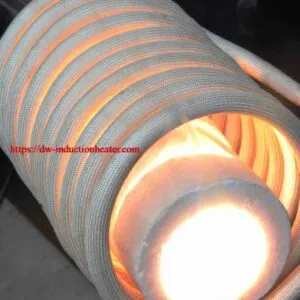
- Magnetic Field Creation → Induction coil (wrapped around or positioned near pipe) generates time-varying magnetic field
- Eddy Current Induction → Magnetic field penetrates pipe wall, inducing circular eddy currents
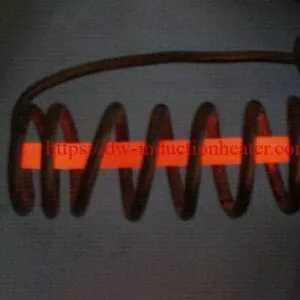
- Resistive Heating → Eddy currents encounter electrical resistance, generating heat within the pipe material
- Heat Distribution → Thermal conduction distributes heat through pipe wall thickness
- Temperature Control → Infrared sensors provide real-time feedback for precise regulation
Skin Effect and Penetration Depth
The tube induction heating system effectiveness depends on the skin effect phenomenon:
Penetration Depth Formula:
δ = 503 × √(ρ / (μr × f))
Where:
- δ = effective heating depth (mm)
- ρ = electrical resistivity (Ω·m)
- μr = relative magnetic permeability
- f = frequency (Hz)
Frequency Selection Guidelines:
- Low Frequency (1-10 kHz): Deep penetration for thick-wall pipes (>25mm)
- Medium Frequency (10-100 kHz): Standard pipe heating applications (5-25mm wall)
- High Frequency (100-400 kHz): Thin-wall tubes and surface heating (<5mm wall)


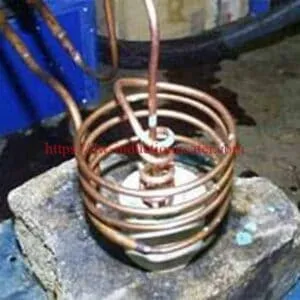
Coil Design Configurations
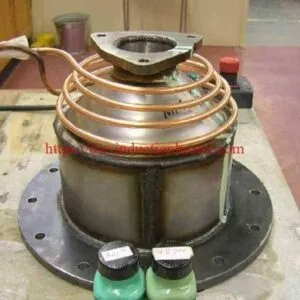
Electromagnetic tube heating systems utilize various coil geometries:
Solenoid Coils:
- Wrap around pipe circumference
- Uniform 360° heating
- Ideal for stationary heating and stress relieving
- Heating length: 50-1000mm per coil
Split/Clamshell Coils:
- Open design for easy positioning
- Rapid installation on existing pipelines
- Perfect for field applications and repairs
- Heating zones: 100-500mm
Hairpin/Channel Coils:
- Single-sided heating configuration
- Used for pipe bending and forming
- Localized heating precision
- Heating width: 25-150mm
Scanning Coils:
- Progressive heating along pipe length
- Continuous or indexed movement
- Ideal for long seam heating
- Travel speed: 50-500 mm/min
Outstanding Features and Advantages
Superior Heating Performance
Rapid Heating Rates:
The induction pipe bending machine achieves heating rates of 50-200°C per minute, dramatically reducing cycle times compared to furnace heating (5-15°C/min) or flame heating (20-40°C/min). This rapid response enables just-in-time manufacturing and reduces work-in-progress inventory.
Precise Temperature Control:
Advanced pipeline preheating equipment maintains temperature accuracy within ±3-5°C through closed-loop PID control systems with infrared pyrometers, ensuring consistent metallurgical results and preventing overheating damage.
Localized Heating Capability:
Unlike furnace heating that heats entire components, induction welding preheater systems apply heat only where needed, minimizing thermal distortion, reducing energy consumption by 40-60%, and allowing selective heat treatment of specific pipe sections.
Energy Efficiency and Environmental Benefits
Exceptional Energy Conversion:
- 98%+ electrical-to-thermal efficiency versus 45-65% for gas-fired systems
- 30-50% reduction in energy costs compared to resistance heating
- Zero direct emissions – no combustion products or greenhouse gases
- Minimal heat loss to surroundings due to electromagnetic coupling
- Power-on-demand operation eliminates standby losses
Reduced Carbon Footprint:
Tube heat treatment equipment using induction technology significantly reduces CO₂ emissions, supporting corporate sustainability initiatives and environmental compliance requirements.
Operational and Economic Advantages
Enhanced Safety:
- No open flames or hot surfaces in work area
- Reduced fire hazard risk
- Cooler working environment
- Automatic shutdown protection systems
- Minimal operator exposure to heat
Improved Product Quality:
- Consistent, repeatable heating profiles
- Reduced oxidation and scaling
- Minimal distortion and warping
- Better metallurgical control
- Lower rejection rates (typically <2%)
Cost Effectiveness:
- ROI period: 12-36 months for high-volume applications
- Labor savings: 40-60% reduction in heating time
- Maintenance costs: 70-80% lower than combustion systems
- Equipment lifespan: 15-25 years with proper maintenance
- Reduced rework: Improved first-pass quality
Process Flexibility
Multi-Application Capability:
Single electromagnetic pipeline heater systems can perform multiple operations:
- Preheating (100-300°C)
- Stress relieving (550-650°C)
- Annealing (650-900°C)
- Normalizing (850-950°C)
- Hardening (800-1000°C)
Adaptability:
- Handles pipe diameters from 10mm to 1500mm
- Wall thickness range: 1-100mm
- Material compatibility: carbon steel, stainless steel, alloys, copper, aluminum
- Quick changeover between different pipe sizes
Key Industrial Applications
Pipeline Construction and Installation
Field Welding Preheating:
Induction welding preheater systems provide critical preheat for pipeline construction:
- Temperature range: 100-300°C depending on material grade
- Heating band width: 150-300mm each side of weld
- Power requirement: 15-100 kW per station
- Applications: Oil & gas transmission lines, power plant piping, process pipelines
- Benefits: Prevents hydrogen cracking, reduces residual stress, improves weld quality
Post-Weld Heat Treatment (PWHT):
Induction post weld heat treatment for stress relief:
- Temperature: 550-650°C for carbon steel, 900-950°C for stainless
- Soak time: 1-4 hours depending on wall thickness
- Heating rate: 100-200°C/hour
- Cooling rate: <200°C/hour controlled
- Typical applications: Pressure vessels, refineries, chemical plants
Induction Tube and Pipe Manufacturing
Seamless Tube Production:
Seamless tube heating in rotary piercing and pilgering operations:
- Induction Billet preheating: 1100-1250°C for piercing
- Induction Reheating: 950-1150°C between forming passes
- Power density: 0.5-2 kW/cm² of tube surface
- Production rates: 50-200 tubes/hour
- Size range: 20-400mm diameter
Tube Expansion and Sizing:
Tube expansion heating for dimensional adjustment:
- Temperature: 650-850°C
- Localized heating zones: 50-200mm length
- Expansion rates: 2-5% diameter increase
- Applications: Heat exchanger tubes, boiler tubes
Induction Tube End Forming:
Induction heating for flaring, swaging, and end-forming operations:
- Heating length: 25-100mm from tube end
- Temperature: 750-950°C
- Cycle time: 15-45 seconds
- Applications: Automotive exhaust systems, hydraulic fittings
Pipe Bending and Forming
Hot Induction Bending:
Induction pipe bending machine technology for large-diameter pipes:
- Diameter range: 50-1500mm
- Wall thickness: 3-100mm
- Bend radius: 3D to 10D (D = pipe diameter)
- Heating temperature: 850-1050°C
- Bending speed: 50-300mm/min
- Applications: Offshore platforms, power plants, shipbuilding
Advantages over other bending methods:
- No mandrel required for most applications
- Minimal wall thinning (<5%)
- No wrinkling on compression side
- Excellent roundness retention (>95%)
- Can bend heavy-wall pipes economically

Heat Treatment Applications
Stress Relieving:
Pipe stress relieving system for residual stress reduction:
- Temperature: 550-650°C for carbon steel
- Soak time: 1 hour per 25mm thickness
- Applications: Welded assemblies, cold-formed components
- Benefits: Prevents stress corrosion cracking, improves dimensional stability
Annealing:
Induction annealing machine for microstructure modification:
- Temperature: 650-900°C depending on alloy
- Cooling method: Slow cool in air or furnace
- Applications: Softening work-hardened tubes, improving machinability
- Results: Reduced hardness, increased ductility
Hardening and Tempering:
Selective hardening of pipe components:
- Austenitizing temperature: 820-900°C
- Quench method: Water, polymer, or oil spray
- Tempering: 150-600°C
- Applications: Drill pipe tool joints, hydraulic cylinder rods
Joining and Assembly Operations
Brazing and Soldering:
Induction brazing system for tube assemblies:
- Temperature: 600-1100°C depending on filler metal
- Heating time: 10-60 seconds
- Joint types: Lap joints, socket joints, butt joints
- Applications: HVAC systems, heat exchangers, refrigeration components
- Advantages: Localized heating, minimal base metal melting, clean joints
Shrink Fitting:
Induction shrink fitting for mechanical assemblies:
- Expansion temperature: 200-400°C
- Interference fit: 0.05-0.5mm
- Cooling method: Natural air cooling
- Applications: Bearing installation, shaft coupling, gear mounting
- Benefits: No mechanical force required, uniform expansion
Coating Application:
Pipeline coating heating for thermoplastic applications:
- Temperature: 180-250°C for fusion-bonded epoxy
- Heating uniformity: ±5°C around circumference
- Applications: Corrosion protection, insulation coating
- Advantages: Consistent coating adhesion, rapid processing
Specialized Industrial Applications
Automotive Industry:
- Exhaust system tube forming and welding
- Drive shaft heat treatment
- Hydraulic brake line production
- Fuel rail manufacturing
Aerospace:
- Titanium tube forming (900-1000°C)
- Inconel tube stress relieving
- Landing gear component heating
- Hydraulic line production
Oil & Gas:
- Drill pipe heat treatment
- Casing and tubing manufacturing
- Pipeline repair and maintenance
- Subsea pipeline installation
Power Generation:
- Boiler tube manufacturing
- Superheater tube bending
- Heat exchanger tube production
- Condenser tube expansion
Technical Parameters and System Specifications
Standard Induction Pipe Heating Systems
| System Model | Power Output (kW) | Frequency Range (kHz) | Pipe Diameter (mm) | Wall Thickness (mm) | Heating Length (mm) | Temperature Range (°C) | Cooling Method |
|---|---|---|---|---|---|---|---|
| MF-25 | 25 | 10-30 | 20-100 | 2-10 | 100-300 | 100-1000 | Water |
| MF-50 | 50 | 5-25 | 50-200 | 3-15 | 150-500 | 100-1100 | Water |
| MF-100 | 100 | 3-20 | 100-400 | 5-25 | 200-800 | 100-1150 | Water |
| MF-200 | 200 | 1-15 | 200-800 | 8-40 | 300-1200 | 100-1200 | Water |
| MF-500 | 500 | 0.5-10 | 400-1500 | 10-100 | 500-2000 | 100-1250 | Water |
Performance Specifications
| Parameter | Specification | Notes |
|---|---|---|
| Power Conversion Efficiency | 92-98% | Inverter to coil |
| Thermal Efficiency | 65-85% | Coil to workpiece |
| Overall Efficiency | 60-83% | System total |
| Temperature Control Accuracy | ±3-5°C | With pyrometer feedback |
| Heating Rate | 50-200°C/min | Material and geometry dependent |
| Power Density | 0.3-3 kW/cm² | Surface area |
| Coil-to-Pipe Air Gap | 3-15mm | Affects coupling efficiency |
| Temperature Uniformity | ±10-20°C | Circumferential variation |
| Response Time | 0.5-2 seconds | From cold start |
| Duty Cycle | 100% | Continuous operation capable |
| Power Supply | 380V-480V, 3-phase | 50/60 Hz |
| Control System | PLC with HMI | Programmable recipes |
| Protection Rating | IP54-IP65 | Industrial environment |
| Ambient Temperature | -10 to +45°C | Operating range |
| Cooling Water Requirement | 10-50 L/min | Closed-loop system |
| Noise Level | <75 dB(A) | At 1 meter distance |
| Equipment Lifespan | 15-25 years | With proper maintenance |
Heating Time Calculation
Approximate heating time formula:
t = (m × Cp × ΔT) / (P × η)
Where:
- t = heating time (seconds)
- m = pipe mass (kg)
- Cp = specific heat capacity (J/kg·°C) – typically 460-500 for steel
- ΔT = temperature rise (°C)
- P = applied power (W)
- η = heating efficiency (0.65-0.85)
Example Calculation:
- Pipe: 200mm diameter × 10mm wall × 500mm length
- Material: Carbon steel
- Target temperature rise: 20°C to 900°C
- System power: 100 kW
- Heating efficiency: 75%
Result: Heating time ≈ 4.5 minutes
Application-Specific Parameters
| Application | Temperature (°C) | Heating Time | Power Required | Key Considerations |
|---|---|---|---|---|
| Weld Preheating | 100-300 | 3-10 min | 15-50 kW | Uniform band heating |
| Pipe Bending | 850-1050 | 2-5 min | 50-200 kW | Localized zone heating |
| Stress Relieving | 550-650 | 1-4 hours | 25-100 kW | Slow heating/cooling |
| Annealing | 650-900 | 30-120 min | 30-150 kW | Controlled atmosphere |
| Hardening | 820-900 | 1-3 min | 50-200 kW | Rapid quench required |
| Brazing | 600-1100 | 10-60 sec | 10-50 kW | Precise temperature |
| Shrink Fitting | 200-400 | 2-8 min | 15-75 kW | Uniform expansion |
| Coating Application | 180-250 | 1-5 min | 20-100 kW | Surface heating only |
System Components and Features
Core Components
Power Supply Unit:
- Solid-state IGBT or thyristor inverter
- Digital signal processor (DSP) control
- Power factor correction (PFC) >0.95
- Harmonic filtering
- Remote diagnostics capability
Induction Coil Assembly:
- Water-cooled copper tubing (8-25mm diameter)
- High-temperature insulation (Class H: 180°C)
- Flexible or rigid design options
- Quick-change mounting systems
- Lifespan: 5000-15000 heating cycles
Temperature Monitoring:
- Non-contact infrared pyrometers
- Thermocouple backup systems
- Multi-point temperature profiling
- Data logging and trending
- Alarm and interlock functions
Control System:
- Programmable logic controller (PLC)
- Human-machine interface (HMI) touchscreen
- Recipe management (100+ programs)
- Real-time process monitoring
- Network connectivity (Ethernet, Profibus)

Cooling System:
- Closed-loop water circulation
- Heat exchanger capacity: 50-500 kW
- Flow rate monitoring
- Temperature regulation (±2°C)
- Low-flow protection
Advanced Features
Adaptive Power Control:
Modern tube induction heating systems incorporate intelligent algorithms:
- Automatic power adjustment based on temperature feedback
- Compensation for material property variations
- Optimization for energy efficiency
- Predictive heating profiles
Multi-Zone Heating:
Simultaneous control of multiple heating zones:
- Independent temperature setpoints
- Coordinated heating sequences
- Gradient heating capabilities
- Applications: Long pipes, complex geometries
Process Documentation:
- Complete heating cycle recording
- Temperature-time profiles
- Energy consumption tracking
- Quality assurance compliance (ISO 9001, AS9100)
- Traceability for critical applications
Safety Systems:
- Emergency stop functionality
- Overcurrent protection
- Overvoltage protection
- Ground fault detection
- Water flow monitoring
- Overtemperature shutdown
- Door interlock switches
Conclusion
Induction pipe and tube heating applications deliver a compelling combination of speed, precision, energy efficiency, and cleanliness across many industrial processes. Whether used for bending, brazing, hardening, annealing, or shrink fitting, induction heating systems can be optimized through frequency, coil design, and process controls to meet demanding production and quality requirements.