

induction heating steel plate
Induction Heating Steel Plates for Cooking Welsh Cakes on a Conveyor
Quick Answer
Induction heating steel plates turns each plate on a food conveyor into a clean, evenly heated griddle.
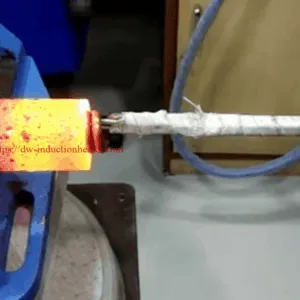
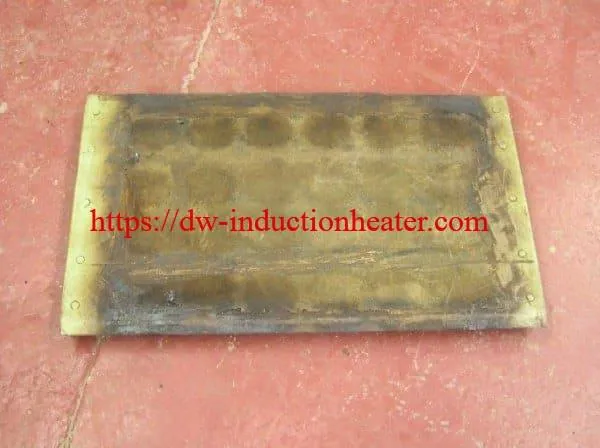
In this HLQ case, a flat serpentine coil under the steel conveyor heated 760 × 440 × 10 mm steel plates to a uniform 200 °C (392 °F) in about 3 minutes. The coil was powered by a DW-MF-45kW induction heating system at 20 kHz. Welsh cakes cook on the hot plate for 1½ minutes, move off the coil to be flipped, and then make a second pass to cook the other side. Heat goes only into the steel plates, so the work area stays cooler and safer, and running costs are lower than with gas-fired ovens.
What is Induction Heating of Steel Plates for Cooking?
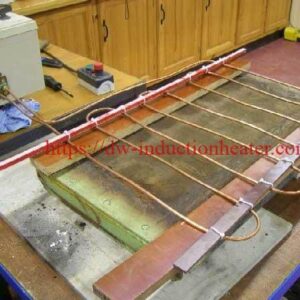
A flat induction coil under a steel conveyor induces eddy currents in each steel plate, so the plate itself becomes the hot cooking surface. There is no flame and no hot oven chamber, and very little heat reaches the surrounding area.
| Item | HLQ case data |
|---|---|
| Objective | Heat steel plates on a conveyor system to cook Welsh cakes |
| Material | Steel plate, 760 × 440 × 10 mm (29.9 × 17.3 × 0.4 in) |
| Temperature | 200 °C (392 °F), uniform |
| Frequency | 20 kHz |
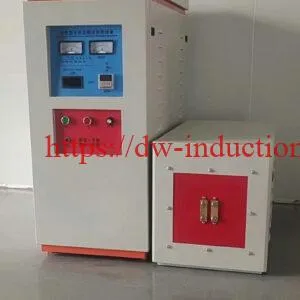
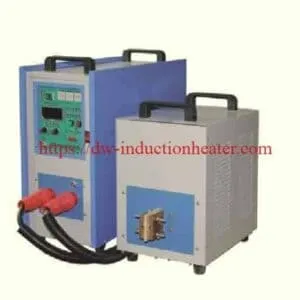
| Equipment | DW-MF-45kW induction heating system with a remote workhead containing one 1.3 µF capacitor, plus a coil designed for this application |
| Coil | Flat serpentine heating coil under the steel conveyor |
| Heat-up | About 3 minutes to 200 °C |
| Cooking | 1½ minutes per side; flipped off the coil, then a second pass cooks the other side |
Key Applications

| Application | HLQ case data | Reference |
|---|---|---|
| Cooking Welsh cakes on conveyor plates | 200 °C, ≈ 3 min heat-up, DW-MF-45kW, 20 kHz | This case |
| Releasing baked products from aluminum molds | 150 °C, DW-HF-60kW, 65 kHz | induction heating aluminum cake molds |
| Tin flow-melting on a steel hot plate | 232 °C in 1.34 s, DW-UHF-20kW, 350 kHz, dog-bone coil | induction hot plate with tin coating for flow-melting |
| Heating steel plates for forging | About 1200 °C | induction heating steel plate for forging |
| Preheating steel plates for hot forming | 950 °C, DW-HF-45KW | steel plate shovels hot forming with induction preheating |
| Preheating steel before welding | Weld preheat | why induction preheating is essential for welding |

Suitable Materials
| Material | Notes |
|---|---|
| Steel plates | 760 × 440 × 10 mm, heated to 200 °C (this case) |
| Tin-coated carbon steel plates | 200 × 120 mm, 232 °C (HLQ hot plate case) |
Working Principle

- The DW-MF-45kW supplies 20 kHz power through the remote workhead (1 × 1.3 µF).
- The flat serpentine coil under the conveyor creates an alternating field.
- Eddy currents heat each steel plate to a uniform 200 °C.
- The Welsh cakes cook directly on the hot plate.
| Calculation (one plate, heat absorbed only) | Value |
|---|---|
| Plate mass (steel, 7850 kg/m³) | ≈ 26 kg |
| Energy from 20 °C to 200 °C (cp ≈ 0.46–0.50 kJ/kg·K) | ≈ 2.2–2.4 MJ |
| Average absorbed power over 3 minutes | ≈ 12–13 kW (losses not included) |
Technical Specifications
| Parameter | Value |
|---|---|
| Plate size | 760 × 440 × 10 mm (29.9 × 17.3 × 0.4 in) |
| Plate temperature | 200 °C (392 °F), uniform |
| Heat-up time | About 3 minutes |
| Cooking time | 1½ minutes per side, two passes |
| Frequency | 20 kHz |
| Power supply | DW-MF-45kW |
| Workhead | Remote, 1 × 1.3 µF |
| Coil | Flat serpentine, under the conveyor |
| Handling | Steel conveyor |
Recommended Model Selection
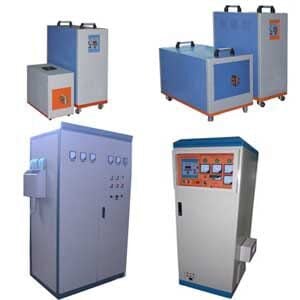
The Welsh cake line used the DW-MF-45kW at 20 kHz. All DW-MF models work at 1–20 kHz on a 3-phase 380 V supply, with 100% duty cycle.
| Model | Power | Input current |
|---|---|---|
| DW-MF-15 | 15 kW | 23 A |
| DW-MF-25 | 25 kW | 36 A |
| DW-MF-35 | 35 kW | 51 A |
| DW-MF-45 | 45 kW | 68 A |
| DW-MF-70 | 70 kW | 105 A |
| DW-MF-90 | 90 kW | 135 A |
| DW-MF-110 | 110 kW | 170 A |
| DW-MF-160 | 160 kW | 240 A |
Details: medium frequency induction power generator. All models: HLQ induction heating device models.
Process Workflow

| Step | Action |
|---|---|
| 1 | Steel plate on the conveyor |
| 2 | The plate heats over the coil to 200 °C in about 3 minutes |
| 3 | Welsh cakes are placed on the hot plate |
| 4 | The first side cooks for 1½ minutes |
| 5 | The conveyor moves the cakes off the coil, where they are flipped |
| 6 | A second pass over the coil cooks the other side |
| 7 | The cooked Welsh cakes are unloaded |
Line layout

Common Problems and Solutions
| Problem | Cause | Solution |
|---|---|---|
| Hot, uncomfortable work area | Gas-fired ovens release heat into the room | Induction heats only the steel plates; minimal heat radiates around |
| High air-conditioning cost | Heat released into the working environment | Less heat released with induction (case result) |
| Uneven cooking | Plate temperature not uniform | Flat serpentine coil designed for uniform 200 °C |
| Only one side cooked per pass | Heat comes from below | Flip off the coil, then a second pass |
Engineering Selection Guide
| Factor | What to confirm | Why it matters |
|---|---|---|
| Plate size and thickness | For example, 760 × 440 × 10 mm | Coil size and power |
| Cooking temperature | For example, 200 °C | Power and control |
| Heat-up and cooking times | For example, 3 min and 1½ min per side | Power rating and conveyor speed |
| Coil position | Under the conveyor | Flat coil design |
| Utilities | 3-phase 380 V; cooling water for the water-cooled unit | Installation |
Advantages and Limitations
| Advantages | Limitations |
|---|---|
| Clean heat directed only to the steel plates | Coil designed for the plate size and conveyor |
| Safe, comfortable working conditions | Cakes are heated from below; a flip and second pass are needed |
| Lower operating cost than gas-fired ovens | Cooling water is required |
| Lower air-conditioning cost | — |
Why Choose HLQ?
| Strength | Evidence |
|---|---|
| Food-line experience | Steel griddle plates and aluminum cake molds |
| Flat coils | Serpentine coil under a conveyor |
| Steel plate experience | Cooking, tin flow-melting, forging, hot forming |
| DW-MF series | 15–160 kW, 100% duty |
| Lower running cost | Compared with gas-fired ovens |
10 Core FAQs
1. What is heated in this application?
Steel plates on a conveyor system, used to cook Welsh cakes.
2. What size are the plates?
760 × 440 × 10 mm (29.9 × 17.3 × 0.4 in).
3. What temperature is used?
A uniform 200 °C (392 °F).
4. How long does the plate take to heat?
About 3 minutes.
5. How are the Welsh cakes cooked?
1½ minutes on the hot plate, then they are flipped off the coil and a second pass cooks the other side.
6. Which equipment was used?
A DW-MF-45kW induction heating system at 20 kHz, with a remote workhead containing one 1.3 µF capacitor.
7. Which coil was used?
A flat serpentine heating coil under the steel conveyor.
8. Why use induction instead of gas?
Heat goes only to the steel plates, working conditions are safer and more comfortable, and operating and air-conditioning costs are lower.
9. How much energy does one plate need?
By calculation, about 2.2–2.4 MJ to go from 20 °C to 200 °C, or about 12–13 kW absorbed over 3 minutes, not including losses.
10. What is needed for a quotation?
The plate size and material, the target temperature, the conveyor speed and cooking times, and the available supply.