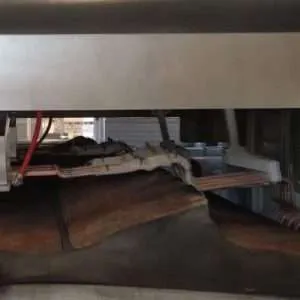
Waste Mill Liners Recycling Machine with Induction Heating
Waste Mill Liners Recycling Machine with Induction Heating for Rubber–Steel Separation | Engineering Selection Guide
Table of Contents
- Quick Answer
- Product Summary
- What Is This Product?
- Key Applications
- Suitable Materials
- Working Principle
- Key Technical Parameters
- Technical Specifications
- Engineering Selection Guide
- Recommended Model Selection
- Process Workflow
- Advantages
- Common Problems and Solutions
- Machine Structure and Main Components
- Industries Served
- Case Study / Typical Application
- FAQ
Quick Answer
A mill liners separation recycling machine with induction heating is an industrial recycling system designed to separate bonded rubber from steel backing plates in used mill liners. The machine uses electromagnetic induction to heat the steel plate inside the rubber-steel composite liner, weakening the adhesive or vulcanized bonding layer at the interface. Once the bond loses strength, the rubber layer can be peeled, lifted, scraped, or mechanically separated from the steel plate. Compared with flame burning, manual cutting, furnace heating, or chemical stripping, induction heating provides faster interface heating, better steel recovery, less uncontrolled smoke, reduced labor intensity, and more repeatable processing for ball mill liners, SAG mill liners, AG mill liners, and other rubber-steel mining wear components.
A mill liners recycling machine with induction heating is a heavy-duty recycling workstation used to separate worn rubber layers from steel backing plates in used rubber-steel mill liners. It handles ball mill liners, SAG mill liners, AG mill liners, rubber-backed steel plates, vulcanized rubber-metal composites, and mining liner scrap. The machine combines an induction power supply, customized heating head, worktable, cooling system, fume extraction, temperature monitoring, and mechanical peeling tools. Main applications include mining liner recycling, steel plate recovery, liner refurbishment, scrap sorting, and rubber removal before re-rubberizing. Key buyer benefits include faster separation, cleaner steel recovery, lower labor cost, safer operation, and higher recycling value.
What Is This Product?
The mill liners separation recycling machine with induction heating is a specialized industrial machine for processing used rubber-steel composite mill liners. In mining and mineral processing plants, mill liners are installed inside grinding mills to protect the mill shell, absorb impact, improve grinding performance, and reduce equipment wear. Many mill liners are manufactured with a steel backing plate and a thick rubber layer. The steel plate gives mechanical strength and installation rigidity, while the rubber layer provides impact absorption, noise reduction, wear resistance, and protection against abrasive ore particles.
After long-term operation, the rubber surface becomes worn, cracked, aged, hardened, or damaged. However, the steel backing plate may still have value. It can be recovered as scrap steel, reused after cleaning, or sent for refurbishment and re-rubberizing. The main difficulty is that the rubber is usually bonded very strongly to the steel plate. This bond can be created by vulcanization, adhesive bonding, mechanical locking, compression molding, or a combination of these methods.
Traditional removal methods are usually inefficient. Manual cutting requires heavy labor and creates safety risks. Open flame burning creates smoke, odor, uncontrolled temperature, and possible steel damage. Furnace heating consumes more energy because it heats the whole liner mass, including rubber, steel, and surrounding air. Chemical stripping is slow, costly, and not suitable for every plant. The induction heating recycling machine provides a more controlled alternative.
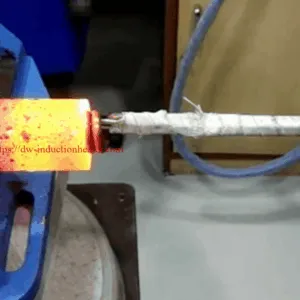
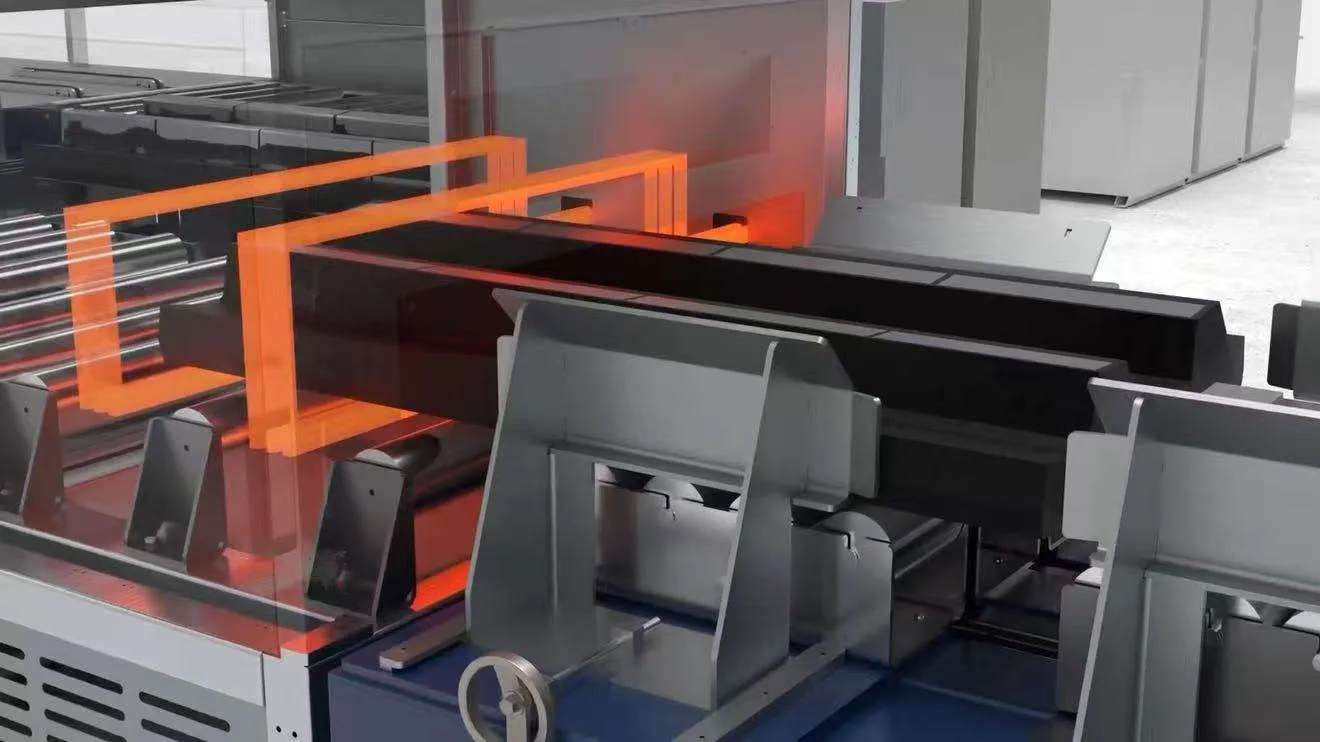
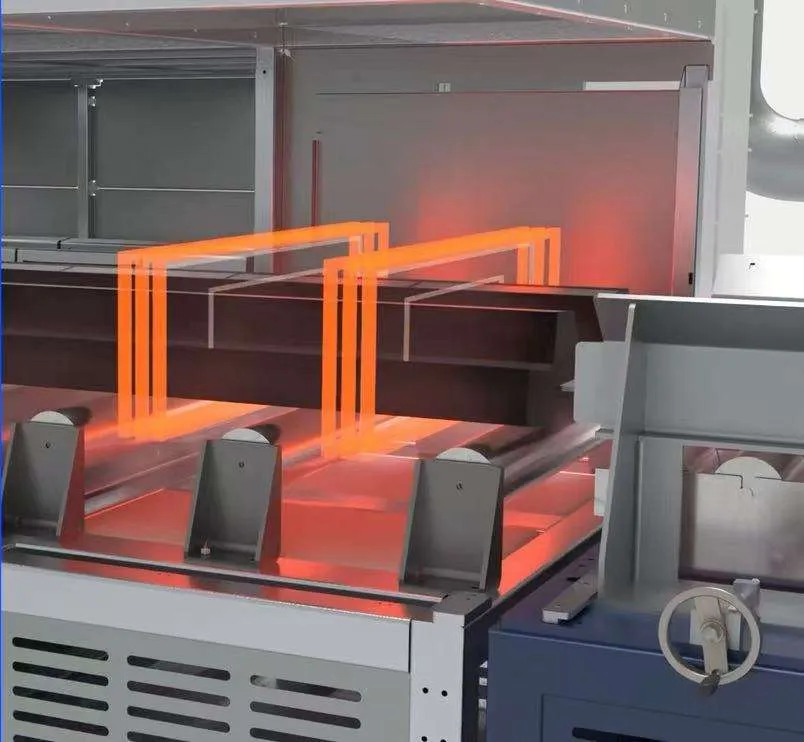
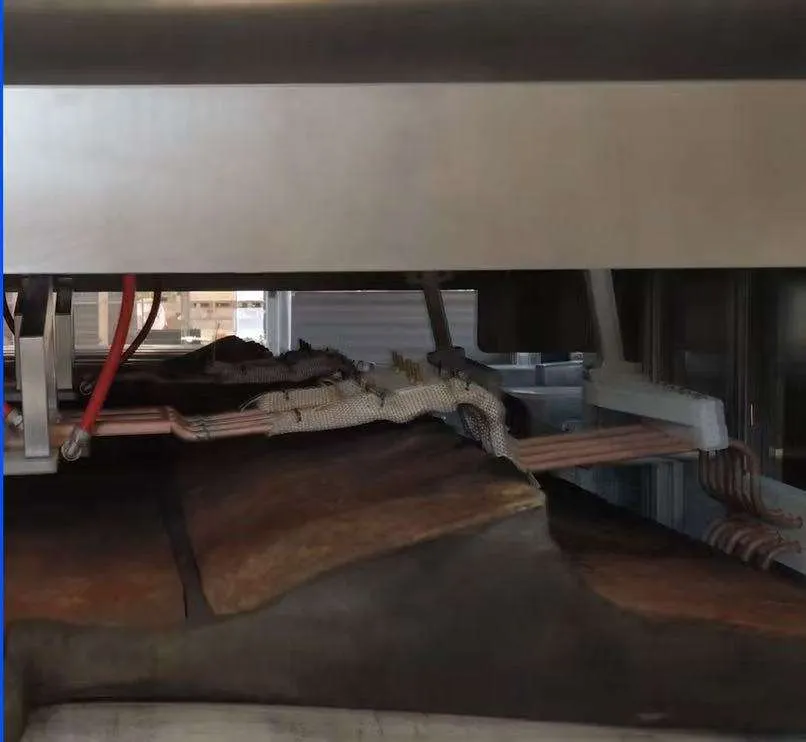
Instead of burning the rubber from the outside, the machine heats the steel backing plate directly. The induction heating head generates an alternating magnetic field. This field induces eddy currents inside the conductive steel plate. The steel heats rapidly and transfers heat to the rubber-steel interface. When the interface temperature reaches the debonding range, the adhesive layer softens, decomposes, chars slightly, or loses bonding strength. Then the machine or operator can remove the rubber using a hydraulic peeling device, scraper, lifting fixture, pry tool, or mechanical roller.
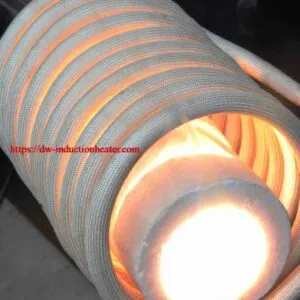
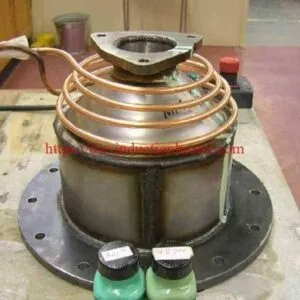
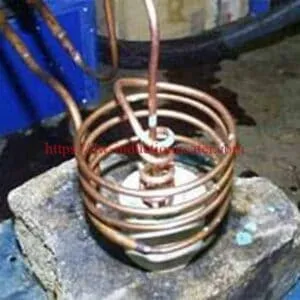
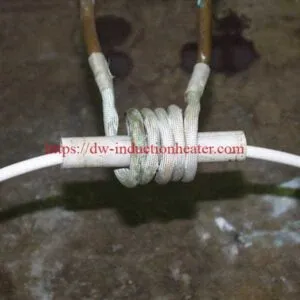
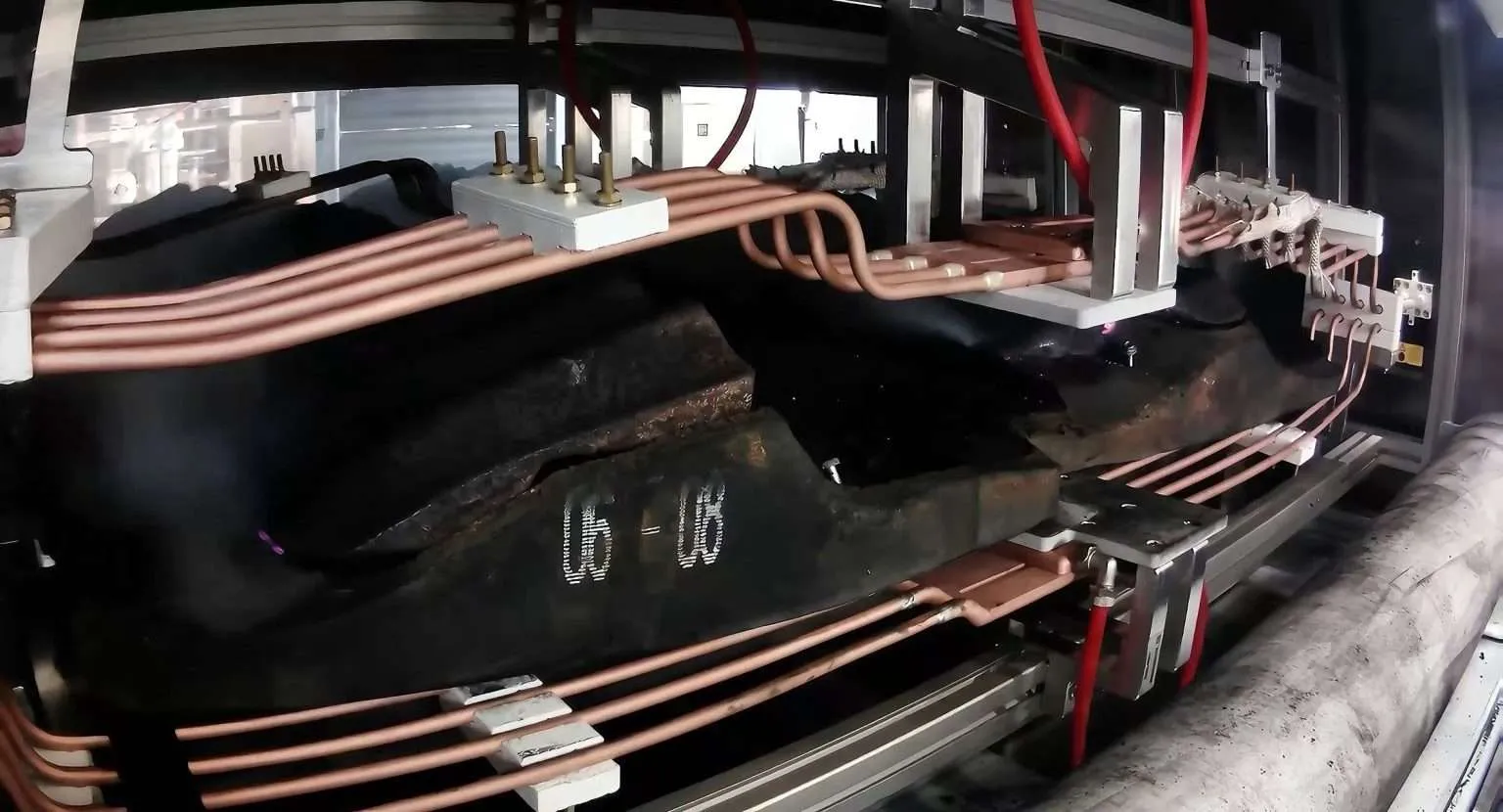
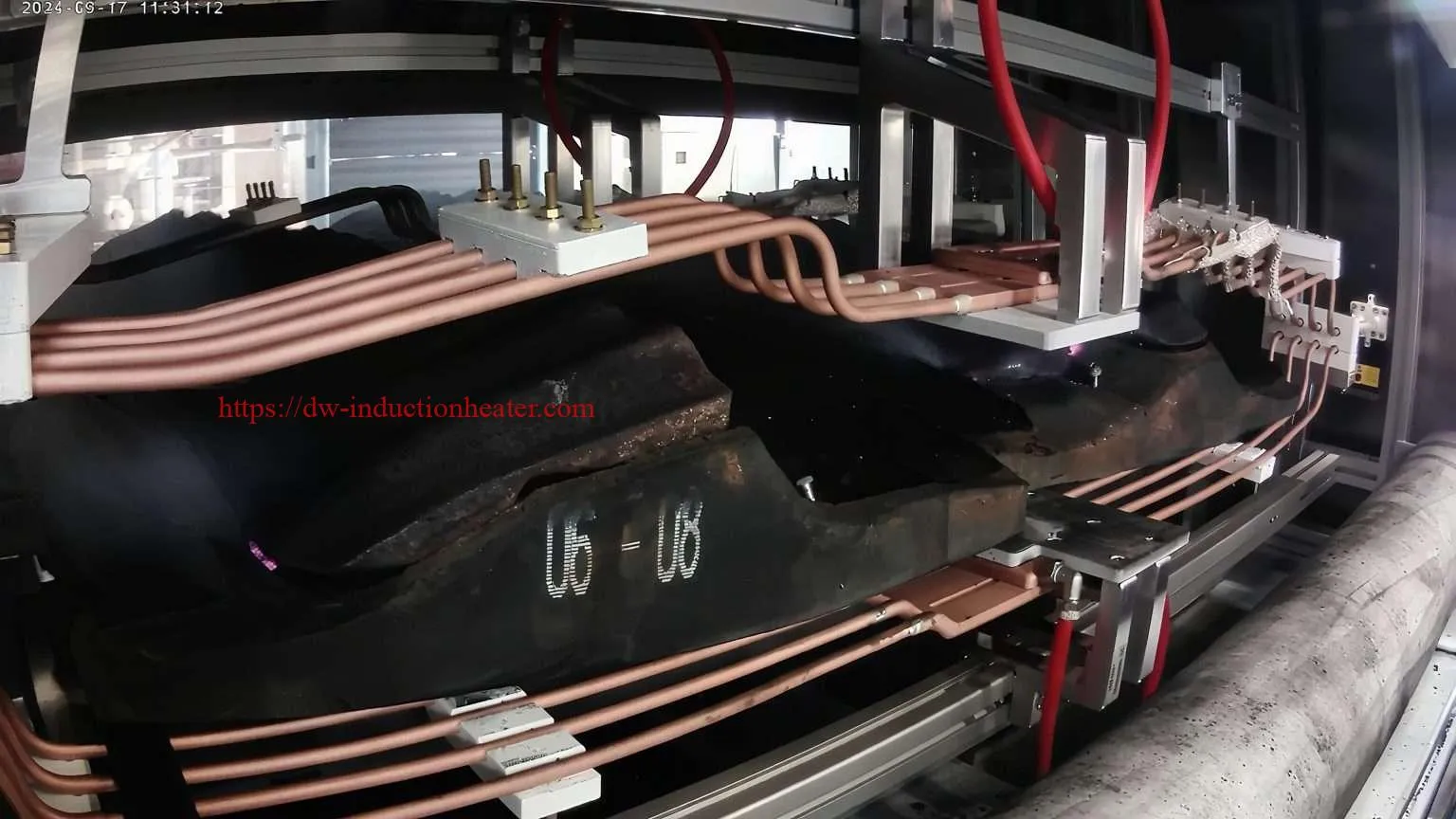
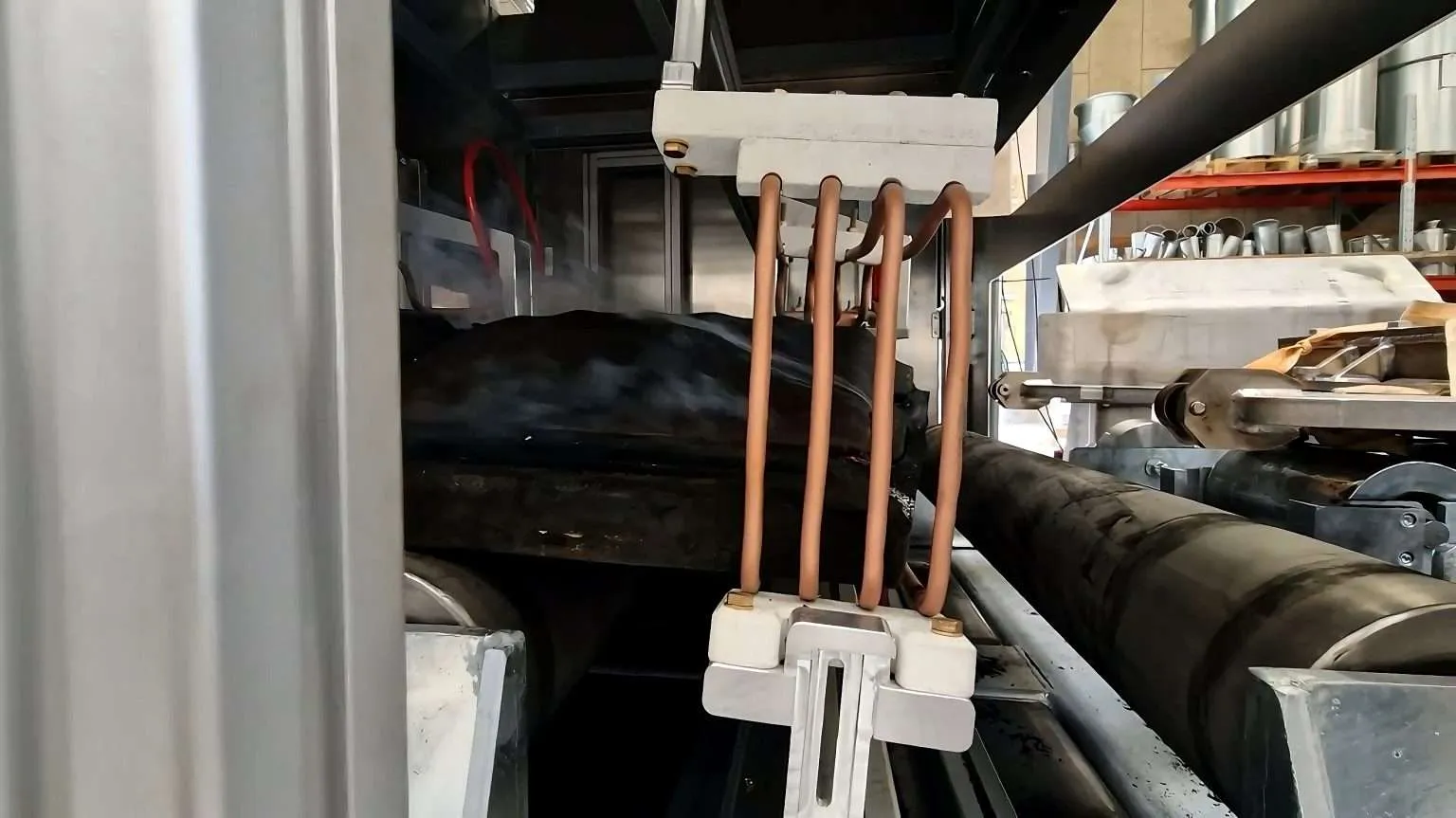
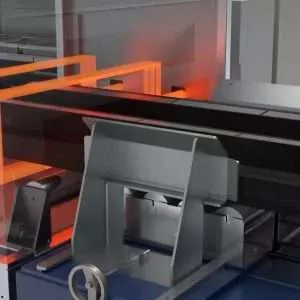
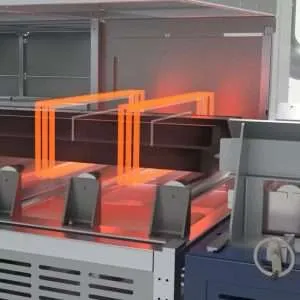
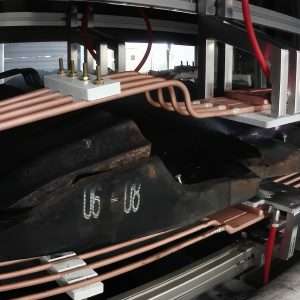
In a practical workshop, this product is not only an induction heater. It is a complete recycling workstation. Depending on the project, it can include a medium-frequency induction power supply, flat induction coil, curved induction heating head, water-cooled cable, matching cabinet, water chiller, heavy-duty worktable, lifting frame, hydraulic peeling clamp, infrared temperature sensor, PLC control panel, smoke extraction hood, and safety protection enclosure.
Key Applications
The machine is designed for rubber-steel composite separation in heavy industrial recycling and refurbishment operations. It is especially suitable for used mining mill liners where the rubber is thick, the steel backing plate is valuable, and manual separation is difficult.
| Application | Processing Purpose | Typical Workpiece | Engineering Benefit |
|---|---|---|---|
| Used Mill Liner Recycling | Remove worn rubber and recover steel plate | Ball mill liner, SAG mill liner, AG mill liner | Improves steel recycling value and reduces mixed scrap |
| Rubber-Steel Separation | Weaken rubber-to-metal bonding layer | Vulcanized rubber bonded steel plate | Reduces peeling force and manual cutting |
| Mill Liner Refurbishment | Remove old rubber before re-rubberizing | Reusable steel backing plate | Protects the steel base for possible reuse |
| Mining Scrap Processing | Separate composite waste into rubber and steel streams | Rubber-metal liner scrap | Improves sorting quality and recycling efficiency |
| Maintenance Workshop Repair | Process replaced liners after mill maintenance | Damaged rubber-backed liner plates | Shortens maintenance waste handling cycle |
| Preheating Before Mechanical Peeling | Reduce adhesion before scraping or hydraulic pulling | Large rubber-coated steel sections | Allows easier mechanical separation with lower tool wear |

Suitable Materials
The machine works best on rubber-steel composite liners that contain an electrically conductive steel backing plate. The induction field does not directly heat rubber effectively. Instead, heat is generated inside the steel plate and then transferred to the adhesive or vulcanized bonding interface. Therefore, the material structure is very important.
| Material / Structure | Suitability | Expected Result | Engineering Notes |
|---|---|---|---|
| Natural rubber bonded to carbon steel | Excellent | Fast steel heating and effective bond weakening | Common in mining rubber-steel liners |
| Synthetic rubber bonded to steel | Good | Requires process testing due to rubber formulation differences | Temperature window varies by compound |
| Vulcanized rubber on steel plate | Good | Bond weakens when interface reaches suitable temperature | Mechanical peeling is usually required after heating |
| Rubber bonded to alloy steel | Very good | Good heating response depending on alloy type | Power and frequency should match steel properties |
| Thick steel-backed mill liners | Good | Requires lower frequency and higher power | Useful for SAG mill and heavy-duty liners |
| Thin steel-backed rubber plates | Good | Fast heating, but temperature must be controlled | Risk of local overheating if dwell time is too long |
| Rubber-only liners without steel backing | Not suitable for direct induction | No effective conductive heating body | Requires another heating method or metal susceptor |
| Non-metallic composite liners | Limited | Depends on conductive inserts or metal layers | Trial testing is required before machine selection |
 Working Principle

The working principle of the mill liners recycling machine is electromagnetic induction heating. An induction power supply converts industrial AC power into medium-frequency or high-frequency current. This current flows through a copper induction coil inside the heating head. The coil generates an alternating magnetic field. When a steel backing plate is placed within this field, eddy currents are induced in the steel. Because steel has electrical resistance, the eddy currents generate heat directly inside the plate.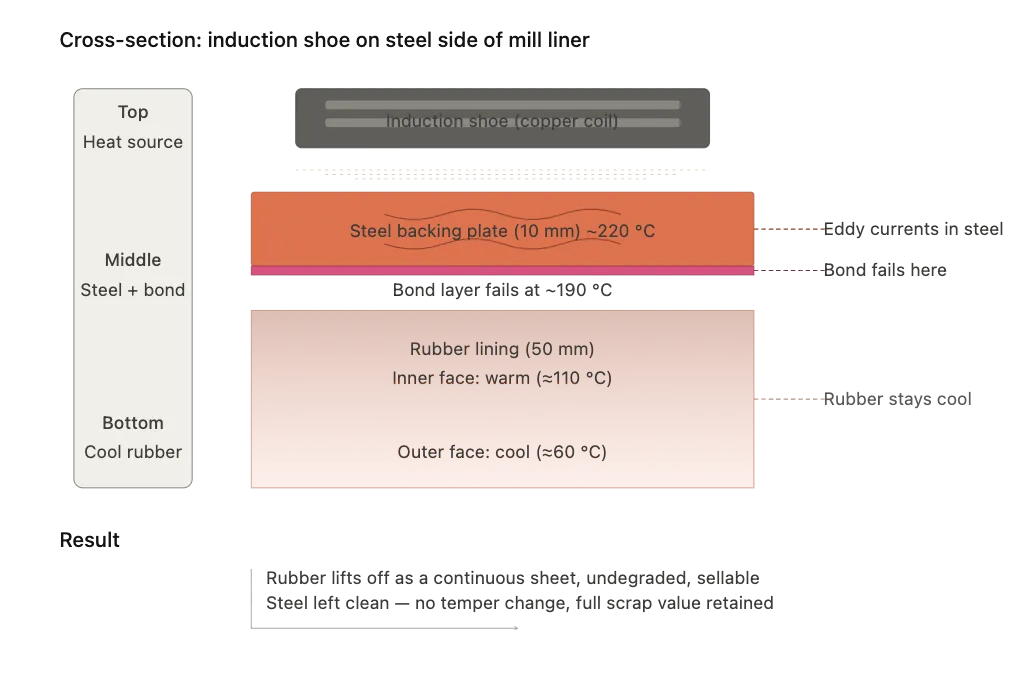
For rubber-steel mill liners, this direct steel heating creates a useful thermal effect. The rubber layer itself is not the main heating target. The machine is designed to heat the steel plate and the bonding interface. As the steel temperature rises, heat moves from the steel surface into the adhesive layer or vulcanized rubber interface. When the interface reaches the correct temperature range, the bond strength drops. The rubber then becomes easier to separate by mechanical force.
This is different from external flame burning. In flame burning, the outside rubber surface is heated first. The rubber may burn heavily before enough heat reaches the steel interface. This causes smoke, residue, odor, fire risk, and inconsistent separation. Induction heating is more selective because the steel plate is heated from within the composite structure. The process can be controlled by power level, heating time, coil distance, scanning speed, and temperature feedback.
The preferred engineering method is controlled interface debonding rather than complete rubber combustion. The goal is to weaken the adhesive layer enough for peeling. The operator or machine should remove the rubber while the interface is still hot. If the workpiece is heated and then left to cool, the rubber may become difficult to remove again, and a second heating pass may be required.
Key Technical Parameters
| Parameter | Typical Range | Engineering Meaning |
|---|---|---|
| Machine Power | 30 kW – 300 kW+ | Determines processing speed, heating area, and suitable liner size |
| Frequency Range | 1 kHz – 30 kHz | Lower frequency is preferred for thick steel backing plates |
| Input Voltage | 3-phase 380 V / 415 V / 480 V / custom | Matched to local plant electrical supply |
| Steel Plate Thickness | 5 mm – 80 mm | Affects heating depth, power demand, and frequency selection |
| Rubber Thickness | 10 mm – 150 mm+ | Affects heat transfer time and peeling difficulty |
| Interface Temperature | Typically 150°C – 320°C | Process-dependent range for bond weakening |
| Steel Temperature | Typically 180°C – 400°C | Should be controlled to avoid warping and unnecessary oxidation |
| Heating Mode | Spot, strip, sectional, scanning, semi-automatic | Selected according to liner shape and daily capacity |
| Cooling Method | Water-cooled coil, cable, and power supply | Recommended for stable continuous recycling operation |
| Temperature Monitoring | Infrared sensor, thermocouple, thermal camera | Improves repeatability and reduces over-burning |
Technical Specifications
| Parameter | Specification | Notes |
|---|---|---|
| Product Name | Mill Liners Separation Recycling Machine with Induction Heating | For rubber removal and steel plate recovery |
| Heating Principle | Electromagnetic induction heating | Steel backing plate becomes the heat source |
| Power Supply | IGBT medium-frequency induction power supply | Adjustable power output for different liner types |
| Recommended Power Options | 60 kW, 100 kW, 160 kW, 200 kW, 300 kW, customized | Selected according to thickness and throughput |
| Frequency | 1 kHz – 30 kHz | Lower frequency for thicker steel plate |
| Heating Head | Flat coil, curved coil, C-shaped coil, scanning coil | Customized according to liner geometry |
| Working Table | Heavy-duty steel worktable with support frame | Designed for heavy mining liner handling |
| Mechanical Separation | Manual scraper, hydraulic clamp, lifting fixture, roller peeling | Selected by labor level and production capacity |
| Control System | Manual control, PLC + HMI, semi-automatic recipe control | PLC is recommended for repeatable batch processing |
| Cooling System | Industrial water chiller or circulating water tank | Maintains coil and power supply stability |
| Fume Control | Smoke extraction hood and filtration system | Recommended for indoor recycling workshops |
| Safety Protection | Emergency stop, overcurrent, overvoltage, cooling fault, overheating alarm | Required for heavy-duty industrial operation |
 Engineering Selection Guide

| Selection Factor | What to Check | Recommended Engineering Decision |
|---|---|---|
| Steel Backing Thickness | Measure real thickness of the steel plate | Use lower frequency and higher power for thick backing plates |
| Rubber Thickness | Check remaining rubber thickness after mill service | Thicker rubber needs longer heat transfer time and stronger peeling tools |
| Bonding Method | Adhesive bonded, vulcanized, mechanically locked, or mixed | Conduct trial heating to find the best debonding temperature |
| Liner Geometry | Flat, curved, ribbed, segmented, or irregular profile | Customize coil shape and fixture to maintain stable coil spacing |
| Daily Capacity | Pieces per shift, tons per day, or recycling target | Higher capacity requires higher power and semi-automatic feeding or scanning |
| Steel Recovery Purpose | Scrap recovery or reuse for refurbishment | Use more controlled heating when steel plate must be reused |
| Smoke Control Requirement | Indoor workshop, outdoor site, environmental restrictions | Use temperature monitoring and fume extraction to reduce uncontrolled smoke |
| Operator Skill Level | Manual operation or trained production line team | Use PLC recipes and sensors to reduce dependence on operator judgment |
| Available Utilities | Electrical supply, cooling water, compressed air, lifting equipment | Confirm plant infrastructure before final machine specification |
| Safety Requirements | Heavy object handling, hot surfaces, smoke, electrical power | Design shields, emergency stops, grounding, lifting fixtures, and ventilation |
Recommended Model Selection
Model selection should be based on actual mill liner structure and production requirements. A low-power machine may work for trial separation, but it may be too slow for production recycling. A high-power machine can improve throughput, but it must be matched with a suitable coil, cooling system, fixture, and peeling mechanism. Power alone does not guarantee good separation. The complete machine design determines productivity.
| Machine Class | Recommended Power | Suitable Workpiece | Recommended Use |
|---|---|---|---|
| Trial / Small Repair Machine | 30 – 60 kW | Small rubber-steel plates, thin backing plate below 15 mm | Low-volume test, repair shop, process development |
| Standard Workshop Machine | 80 – 120 kW | Medium mill liners with 10–30 mm steel backing | General ball mill liner and rubber-steel scrap processing |
| Heavy-Duty Recycling Machine | 160 – 200 kW | Large liners, thick steel plates, high bonding strength | Mining maintenance center and recycling plant |
| High-Capacity Production Line | 250 – 300 kW+ | SAG mill liners, high tonnage scrap, thick rubber-steel composite liners | Continuous or semi-automatic industrial recycling |
| Customized Multi-Station System | Customized | Large curved liners, irregular liners, mixed liner batches | Automated recycling lines with handling and fume control |
For most recycling workshops that process used ball mill liners and medium-sized rubber-steel composite plates, an 80–120 kW machine is usually a practical choice. For large SAG mill liners or liners with steel backing plates thicker than 30 mm, a 160–200 kW machine is more suitable. For high-throughput mining recycling plants, the machine should be designed as a system, including automatic scanning, hydraulic peeling, cooling, fume extraction, and crane-compatible material handling.
Process Workflow
A stable recycling process depends on correct coordination between induction heating and mechanical separation. The machine should not simply overheat the rubber. The best process is to heat the steel backing plate, weaken the bond at the interface, and remove the rubber before the interface cools.
- Receiving and Sorting: Used mill liners are sorted by size, shape, steel thickness, rubber thickness, contamination level, and recycling target.
- Pre-Cleaning: Ore dust, mud, grease, and loose rubber are removed from the liner surface to improve safety and visibility.
- Workpiece Positioning: The liner is placed on the heavy-duty worktable. Curved liners may need support blocks or fixtures to prevent movement.
- Heating Head Alignment: The induction heating head is positioned over the target zone with controlled distance from the steel side or rubber side.
- Test Heating: The operator starts with lower power to confirm heating response, coil coupling, and temperature rise rate.
- Interface Heating: The machine heats the steel plate until the rubber-steel bonding layer reaches the required weakening temperature.
- Mechanical Peeling: Rubber is lifted, peeled, scraped, or pulled by hydraulic clamp while the interface remains hot.
- Sectional Processing: The heating head moves to the next section. Heating and peeling are repeated until most rubber is removed.
- Residue Cleaning: Remaining adhesive, carbonized rubber, and surface residue are removed by scraping, grinding, blasting, or secondary light heating.
- Steel Plate Inspection: The recovered steel plate is checked for cracks, deformation, corrosion, holes, and reuse potential.
- Sorting and Output: Steel is sorted for scrap recycling or refurbishment, while rubber waste is collected separately for disposal or secondary recycling.


Advantages
1. Direct Heating of Steel Backing Plate
The machine heats the conductive steel plate directly through electromagnetic induction. This is more efficient than heating the rubber surface first, because the critical bonding interface is close to the steel plate.
2. Faster Separation than Manual Cutting
When the bonding layer is weakened by heat, the peeling force is greatly reduced. Operators spend less time cutting, grinding, and prying. A hydraulic peeling fixture can further improve production speed.
3. Better Steel Recovery Quality
Recovered steel plates are usually cleaner and less damaged than steel removed by aggressive flame cutting. This improves scrap value and may allow reuse in refurbishment operations.
4. More Controlled than Open Flame Burning
The induction process can be controlled by power, time, coil position, scanning speed, and temperature feedback. This reduces uncontrolled burning and improves repeatability.
5. Lower Labor Intensity
Heavy rubber-steel liners are difficult to process manually. Induction heating reduces bond strength, making mechanical peeling easier and safer.
6. Suitable for Heavy Mining Workpieces
The machine can be customized with heavy-duty worktables, curved coils, lifting fixtures, and hydraulic peeling tools to process large mill liners from mining plants.
7. Cleaner Workshop Operation
When combined with fume extraction and controlled temperature, the machine provides a cleaner working environment than uncontrolled burning or outdoor flame removal.
8. Higher Recycling Value
Separated steel and rubber are easier to handle than mixed composite scrap. Steel plates can be sold as cleaner scrap or reused after inspection, improving total recovery value.
Common Problems and Solutions
| Problem | Possible Cause | Engineering Solution |
|---|---|---|
| Rubber remains firmly bonded after heating | Interface temperature too low, heating time too short, strong vulcanized bond | Increase dwell time, improve coil coupling, heat smaller sections, and peel immediately while hot |
| Too much smoke or odor | Rubber is overheating or burning instead of controlled debonding | Reduce power, use infrared temperature monitoring, shorten heating cycle, and use fume extraction |
| Steel plate warps | Excessive local heating, thin plate, uneven heating, long dwell time | Use scanning heating, lower power density, clamp the plate, and control steel temperature |
| Heating speed is too slow | Power is too low, coil gap is too large, frequency is unsuitable, or steel plate is very thick | Select higher power, reduce coil distance, use lower frequency, and redesign coil geometry |
| Uneven separation | Curved liner profile, uneven rubber thickness, poor coil alignment | Use custom curved coil, fixture support, multi-pass heating, and section-by-section peeling |
| Coil temperature rises too high | Insufficient cooling water, blocked water path, poor cable connection, excessive current | Check water pressure, flow rate, chiller capacity, cable terminals, and coil design |
| Induction power supply trips | Load mismatch, overcurrent, unstable input power, cooling fault, or poor grounding | Check matching circuit, power supply parameters, cooling system, input voltage, and grounding |
| Recovered steel has adhesive residue | Incomplete debonding or delayed peeling after heating | Peel while hot, perform a second light heating pass, or clean residue by scraping or blasting |
| Operator results vary by shift | Manual judgment, inconsistent dwell time, inconsistent coil distance | Use PLC recipes, fixed fixtures, temperature sensors, and standard operating procedures |
Machine Structure and Main Components
A professional mill liners separation recycling machine should be designed as a complete processing system. The induction power supply provides thermal energy, but the actual production efficiency also depends on fixture design, liner handling, peeling equipment, cooling, smoke control, and operator safety.
| Component | Function | Engineering Notes |
|---|---|---|
| Induction Power Supply | Generates medium-frequency current for induction heating | IGBT power supply with adjustable output is recommended |
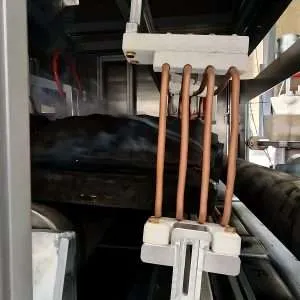
| Induction Heating Head | Creates magnetic field and heats steel backing plate | Flat, curved, C-shaped, or scanning coil depending on liner geometry |
| Matching Cabinet | Improves power matching between supply and coil | Useful for high-power or special coil designs |
| Water-Cooled Cable | Transfers high current from power supply to heating head | Must be sized for duty cycle and current rating |
| Cooling System | Cools coil, cable, and power electronics | Industrial chiller is recommended for continuous work |
| Heavy-Duty Worktable | Supports large and heavy liners during heating and peeling | Should allow lifting, clamping, and drainage of residues |
| Hydraulic Peeling Tool | Pulls or lifts rubber after bond weakening | Improves productivity and reduces manual force |
| Temperature Monitoring | Measures surface or interface-related temperature | Infrared sensor or thermal camera helps prevent over-burning |
| PLC / HMI Control Panel | Controls power, timing, recipes, alarms, and interlocks | Recommended for repeatable industrial production |
| Fume Extraction System | Collects smoke and odor from heated rubber and adhesive | Important for indoor workshops and environmental compliance |
| Safety Guard and Emergency Stop | Protects operators from hot surfaces, moving tools, and electrical risks | Should be included in all production machines |
Industries Served
The machine is designed for industries that operate, maintain, recycle, or refurbish rubber-steel mill liners and heavy rubber-metal wear parts. It supports both recycling value recovery and circular economy practices in mining and heavy industry.
- Mining and mineral processing plants
- Gold, copper, iron ore, nickel, zinc, and phosphate processing operations
- Ball mill, SAG mill, and AG mill maintenance workshops
- Mill liner manufacturing and refurbishment companies
- Industrial rubber recycling facilities
- Steel scrap recovery and sorting plants
- Heavy equipment repair centers
- Cement grinding and mineral grinding plants
- Metallurgical equipment maintenance companies
- Industrial waste recovery and circular economy projects
Case Study / Typical Application
Application: Recycling Used Rubber-Steel Mill Liners from a Mining Plant
| Item | Typical Engineering Data |
|---|---|
| Industry | Mining liner recycling and maintenance |
| Workpiece | Used rubber-steel composite mill liner |
| Liner Type | Curved ball mill and SAG mill liner sections |
| Typical Liner Size | 800–1500 mm length, 400–800 mm width |
| Steel Backing Thickness | 20–40 mm |
| Remaining Rubber Thickness | 40–100 mm |
| Machine Power | 160 kW medium-frequency induction heating system |
| Heating Head | Water-cooled curved induction heating head |
| Separation Tool | Hydraulic peeling clamp with manual scraper assistance |
| Control System | PLC + HMI with timed heating recipe and infrared temperature monitoring |
| Goal | Separate rubber and recover steel backing plate for recycling or refurbishment |
 Process Description

The used liner sections were first cleaned and sorted by size. A curved liner was placed on a support fixture so the induction heating head could maintain a consistent gap with the steel backing plate. The operator selected a heating recipe based on liner thickness. The machine heated the first section of the steel plate until the interface between rubber and steel reached the debonding condition.
After heating, the hydraulic peeling clamp pulled up one edge of the rubber layer. A scraper was used to guide the separation line. The heating head then moved along the liner surface, and the peeling clamp continued pulling the rubber away from the steel plate. This section-by-section process avoided the need to burn the whole liner and helped reduce unnecessary smoke.
Result
The induction heating recycling machine reduced manual cutting work, improved separation speed, and allowed cleaner steel recovery. The recovered steel backing plates were easier to inspect and sort. Some plates were sent for scrap recycling, while selected plates with acceptable condition were considered for refurbishment. The process was most efficient when heating and peeling were performed continuously without allowing the bonding interface to cool.
FAQ
1. What is a mill liners separation recycling machine with induction heating?
It is a recycling machine that uses electromagnetic induction to heat the steel backing plate of rubber-steel mill liners. The heat weakens the rubber-to-steel bonding layer, allowing the rubber to be removed and the steel plate to be recovered.
2. Can the machine process SAG mill liners and ball mill liners?
Yes. The machine can be designed for ball mill liners, SAG mill liners, AG mill liners, and other rubber-steel wear components. Large or curved liners may require customized heating heads and fixtures.
3. Does induction heating burn the rubber?
The preferred process is not full rubber burning. The goal is controlled interface heating. If the temperature is too high or the dwell time is too long, rubber may burn and produce smoke. Temperature monitoring and fume extraction are recommended.
4. What power should be selected?
For small or trial applications, 30–60 kW may be enough. Standard workshop processing often uses 80–120 kW. Heavy-duty mining liner recycling commonly requires 160–200 kW. High-throughput production lines may use 250–300 kW or customized systems.
5. What steel thickness can be processed?
Typical steel backing plates from 5 mm to 80 mm can be processed, depending on machine power, frequency, coil design, and heating time. Thick plates usually require lower frequency and higher power.
6. Is the recovered steel plate reusable?
It depends on the condition of the steel. If the plate is not cracked, severely corroded, or deformed, it may be cleaned and reused for refurbishment. Otherwise, it can be recovered as cleaner scrap steel.
7. Is water cooling required?
Most medium- and high-power induction recycling machines require water cooling for the coil, power supply, and water-cooled cable. Continuous industrial operation should use a reliable water chiller.
8. What auxiliary equipment is needed?
A practical system usually includes a heavy-duty worktable, lifting equipment, hydraulic peeling clamp, scraper, cooling system, temperature monitoring, fume extraction hood, and safety guarding.
9. Can the same machine handle different liner shapes?
Yes, but different liner shapes may require different fixtures or induction heads. Flat liners, curved liners, ribbed liners, and irregular liners should be evaluated before final machine design.
10. How can the best separation result be achieved?
The best result is achieved by using suitable power, correct coil distance, controlled temperature, section-by-section heating, immediate mechanical peeling, good fume extraction, and standardized operating procedures.
Conclusion
A mill liners separation recycling machine with induction heating is a practical and efficient solution for recovering steel plates from used rubber-steel mill liners. By heating the steel backing plate directly, the machine weakens the rubber-to-metal bonding interface and allows faster, cleaner, and more controlled separation than many traditional methods.
The success of the process depends on engineering design. Power rating, frequency, coil shape, liner geometry, steel thickness, rubber thickness, peeling method, cooling system, smoke extraction, and safety protection must all be matched to the actual workpiece. For general mill liner recycling, an 80–120 kW machine may be suitable. For large mining liners and thick steel backing plates, 160–300 kW or higher may be required.
For mining companies, liner manufacturers, recycling plants, and maintenance workshops, induction heating provides a modern recycling method that can reduce manual labor, increase steel recovery value, improve workshop safety, and support more sustainable processing of heavy rubber-steel composite waste.