
Table of Contents
- Introduction
- What Is an Induction Melting Furnace
- How an Induction Melting Furnace Works
- Main Components
- Melting Process
- Types of Induction Melting Furnaces
- Materials That Can Be Melted
- Advantages
- Key Technical Factors
- Industrial Applications
- Conclusion
- FAQs
Introduction
An induction melting furnace is a modern electric furnace used to melt metal by electromagnetic induction. It is widely used in foundries, casting plants, recycling workshops, and non-ferrous metal processing industries because it provides fast melting speed, precise temperature control, high energy efficiency, and cleaner operation than traditional fuel-fired furnaces.
In simple terms, an induction melting furnace converts electrical energy into heat directly inside the metal charge. Instead of using a flame or combustion chamber, it creates an electromagnetic field that causes the metal itself to heat up. This makes the process efficient, controllable, and suitable for many kinds of ferrous and non-ferrous metals.
What Is an Induction Melting Furnace?
An induction melting furnace is an electric melting system that uses an induction coil and alternating current to generate heat inside a metal charge. It is designed to melt materials such as steel, iron, copper, aluminum, brass, and bronze for casting, alloying, refining, or recycling.
The furnace typically includes a power supply, induction coil, furnace body, refractory lining, cooling system, control cabinet, and sometimes a hydraulic tilting mechanism for pouring molten metal.
Table 1. Simple Definition Table
| Item | Description |
|---|---|
| Equipment type | Electric melting furnace |
| Heating method | Electromagnetic induction |
| Main purpose | Melting metal |
| Common use | Foundry, casting, recycling |
| Typical materials | Steel, iron, copper, aluminum, brass, bronze |
Chart 1. Main Functions of an Induction Melting Furnace

How an Induction Melting Furnace Works
The working principle of an induction melting furnace is based on electromagnetic induction. Alternating current flows through an induction coil and creates an alternating magnetic field. When metal is placed inside the furnace, the magnetic field induces eddy currents in the metal charge. These currents create heat because the metal resists the electrical flow.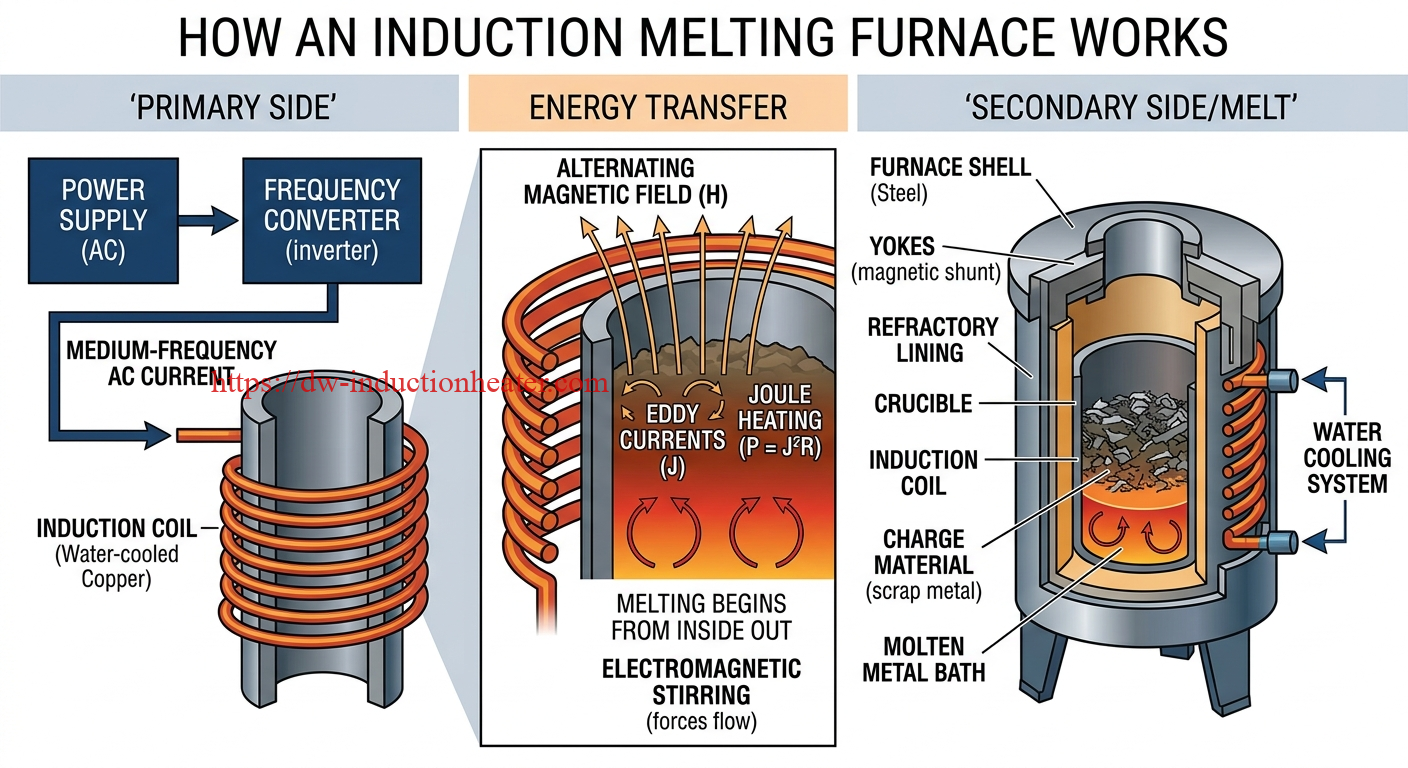
As the heat increases, the metal temperature rises until the charge melts. For some ferrous materials, magnetic effects can also contribute to heating below the Curie temperature.
Diagram 1. Induction Melting Furnace Working Principle

AC Power Input
Power Supply / Inverter
Induction Coil
Magnetic Field
Metal Charge
Eddy Currents
Heat Generation
Metal Melting
Table 2. Step-by-Step Working Principle
| Step | Action |
|---|---|
| 1 | Electrical power enters the system |
| 2 | The power supply delivers alternating current |
| 3 | The induction coil creates a changing magnetic field |
| 4 | The metal charge is exposed to the field |
| 5 | Eddy currents form inside the metal |
| 6 | Resistance generates heat |
| 7 | The metal melts |
Main Components
Each part of the induction melting furnace has a specific function in the melting process.
Table 3. Main Components and Functions
| Component | Function |
|---|---|
| Power supply | Converts electrical power into usable induction power |
| Induction coil | Produces the electromagnetic field |
| Furnace body | Holds the melting chamber |
| Refractory lining | Protects the furnace shell from heat |
| Cooling system | Prevents overheating of coil and power parts |
| Control cabinet | Controls power, safety, and operating settings |
| Tilting mechanism | Helps pour molten metal safely |
| Temperature monitoring system | Measures and controls melt temperature |
Diagram 2. Basic Furnace Structure
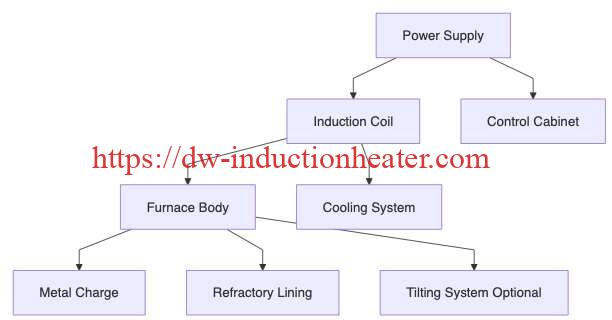
Power Supply
Induction Coil
Furnace Body
Metal Charge
Refractory Lining
Cooling System
Control Cabinet
Tilting System Optional
Melting Process
The melting process in an induction furnace is efficient and well suited to industrial control.
Table 4. Typical Melting Process Stages
| Stage | Description |
|---|---|
| Charging | Load metal scrap, ingots, or alloy materials |
| Heating | Induction power generates heat in the charge |
| Melting | Metal changes from solid to liquid |
| Temperature adjustment | Melt temperature is raised to required level |
| Slag removal | Impurities are removed |
| Pouring | Molten metal is poured into molds or ladles |
Chart 2. Simplified Process Flow
Types of Induction Melting Furnaces
Different induction melting furnaces are designed for different production needs.
Table 5. Common Types
| Furnace Type | Main Feature | Typical Application |
|---|---|---|
| Coreless induction furnace | Most common type for melting | General foundry use |
| Channel induction furnace | Often used for holding molten metal | Continuous metal supply |
| Hydraulic tilting induction furnace | Easier and safer pouring | Copper, steel, aluminum foundries |
| Medium-frequency furnace | High industrial melting efficiency | Large and medium foundries |
| High-frequency furnace | Fast response for smaller batches | Precious metals and lab use |
Materials That Can Be Melted
Induction melting furnaces can melt a wide range of metals and alloys.
Table 6. Common Materials
| Material | Suitability | Typical Use |
|---|---|---|
| Steel | Excellent | Casting and alloy production |
| Cast iron | Excellent | Iron foundries |
| Copper | Excellent | Electrical and industrial products |
| Aluminum | Excellent | Aluminum casting and recycling |
| Brass | Excellent | Fittings and hardware |
| Bronze | Excellent | Industrial and decorative castings |
| Precious metals | Good | Jewelry and refining |
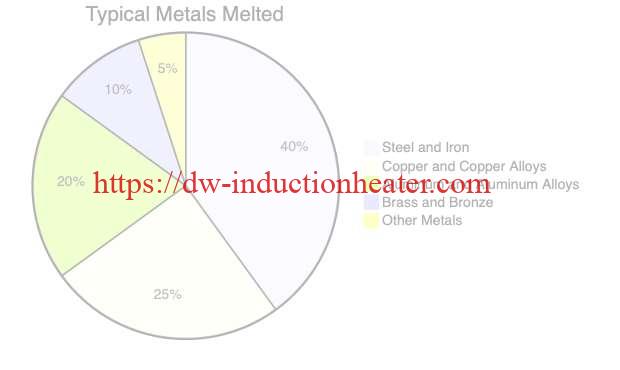
Chart 3. Typical Material Use Distribution
Advantages
Induction melting furnaces offer many advantages compared with traditional furnaces.
Table 7. Main Advantages
| Advantage | Benefit |
|---|---|
| Fast melting speed | Higher productivity |
| High energy efficiency | Lower energy cost |
| Accurate temperature control | Better melt quality |
| Low oxidation loss | Better metal recovery |
| Clean operation | Less smoke and pollution |
| Easy automation | Stable production |
| Compact design | Saves workshop space |
Table 8. Comparison with Fuel-Fired Furnace
| Item | Induction Melting Furnace | Fuel-Fired Furnace |
|---|---|---|
| Heat source | Electromagnetic | Combustion flame |
| Melting speed | Faster | Slower |
| Temperature control | More precise | Less precise |
| Working environment | Cleaner | Hotter and dirtier |
| Energy efficiency | Higher | Lower |
| Oxidation loss | Lower | Higher |
Key Technical Factors
Several technical factors influence furnace performance and melting efficiency.
Table 9. Key Technical Factors
| Factor | Importance |
|---|---|
| Furnace power | Determines melting rate |
| Frequency | Influences heating behavior |
| Metal type | Affects melting efficiency |
| Furnace capacity | Must match production demand |
| Refractory lining | Affects thermal protection and life |
| Cooling system | Protects the induction coil and power parts |
| Power control | Supports process stability |
| Pouring system | Improves safety and handling |
Chart 4. Main Performance Drivers
Industrial Applications
Induction melting furnaces are used in many industries where metal melting is a core process.
Table 10. Main Applications
| Industry | Typical Use |
|---|---|
| Steel foundry | Steel and alloy melting |
| Iron foundry | Cast iron melting |
| Copper processing | Copper and copper alloy melting |
| Aluminum casting | Melting and recycling aluminum |
| Hardware manufacturing | Brass and bronze melting |
| Metal recycling | Scrap remelting |
| Precision casting | Controlled alloy preparation |
Diagram 3. Industrial Application Flow

Metal Scrap or Raw Material
Induction Melting Furnace
Molten Metal
Refining / Slag Removal
Pouring
Molds or Casting Line
Conclusion
An induction melting furnace is an efficient electric furnace that melts metal through electromagnetic induction. It is one of the most important melting technologies in modern industry because it combines speed, energy efficiency, process control, and clean operation.
Whether used for steel, iron, copper, aluminum, brass, or bronze, the induction melting furnace offers reliable and repeatable performance for foundries, casting workshops, recycling plants, and industrial metal production lines. Its simple working principle, combined with advanced control systems, makes it a preferred choice for modern metal melting applications.
FAQs
1. What is an induction melting furnace used for?
It is used to melt metals such as steel, copper, aluminum, brass, and iron for casting, alloying, and recycling.
2. Does an induction melting furnace use fuel?
No. It uses electricity and electromagnetic induction instead of gas, oil, or coal.
3. Why is induction melting efficient?
Because heat is generated directly inside the metal charge, reducing wasted energy.
4. Can induction furnaces melt both ferrous and non-ferrous metals?
Yes. They are suitable for both ferrous and non-ferrous metals.
5. Is an induction melting furnace suitable for industrial production?
Yes. It is widely used for continuous and batch melting in industrial environments.