Induction Annealing Aluminum Tube
Induction Annealing Aluminum Tube: DW-HF-45KW at 62 kHz Heats a Fill Neck to 650 °F for Bending
Objective:
To anneal aluminum fuel tank fill necks to 650 °F (343 °C) for bending.
The requirement is simple to state and hard to meet. To induction anneal aluminum tube is to soften it enough that it can be bent, and the bend happens on the tube while it is still hot, so the whole fill neck has to be at temperature and uniformly so. A torch cannot do this evenly on a 14 in length of tube, and a furnace cannot deliver the tube hot enough to form straight into the bending operation. High frequency induction heating does both, because the heat is generated inside the aluminum itself and only the length of tube inside the coil is affected.
The wider equipment range for this class of work is covered by HLQ’s high frequency induction heating series, and the published method for this class of heat treatment is set out under induction annealing heating treatment equipment. The full published specification of the machine used here is on the DW-HF-45KW induction heating equipment page.
Technical Parameters
| Parameter | Specification |
|---|---|
| End Product | fuel tank fill necks |
| Equipment | DW-HF-45KW Induction Heater, with a workhead and a coil specifically designed for this application |
| Materials | Aluminum fill neck, 2.5 in (63.5 mm) diameter, 14 in (35.5 cm) long |
| Temperature | 650 °F (343 °C) |
| Frequency | 62 kHz |
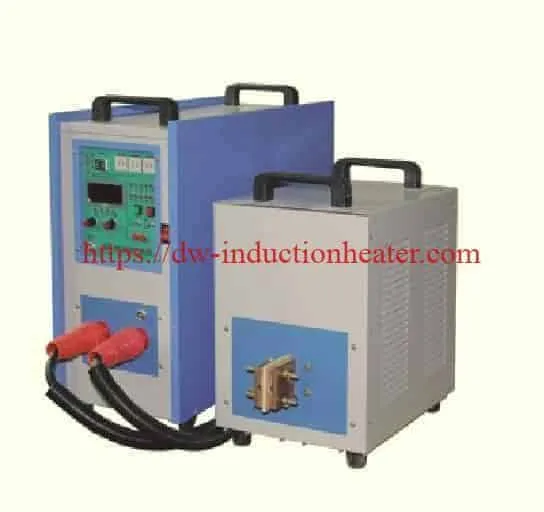
The published specification of the DW-HF-45KW induction heater is reproduced below as published by the manufacturer.
| Technical parameter | Published specification |
|---|---|
| Manufacturer | HLQ Induction Equipment Co., Ltd. |
| Model | DW-HF-45KW |
| Input power | 3 × 380 V, 50–60 Hz |
| Oscillating power max | 45 kVA |
| Oscillating frequency | 30–80 kHz |
| Operating frequency in this application | 62 kHz |
| Input power max | 50 kVA |
| Cooling water max | 0.3 MPa, ≥ 6 L/min |
| Oscillating current | 15–90 A |
| Duty cycle | 100 % at 30 °C |
| Weight | 75 kg |
| Host computer size | 550 × 240 × 535 mm |
| Extension unit size | 470 × 265 × 440 mm |
| Cable length | 2 m |
| Induction coil | Customized for the workpiece geometry |
Testing:
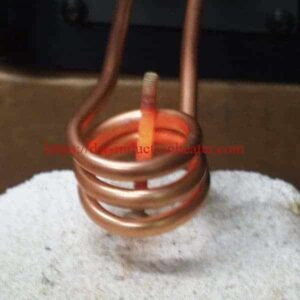
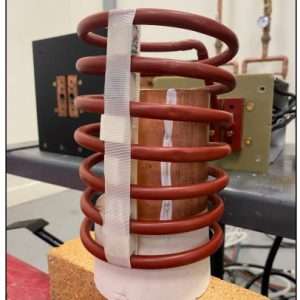
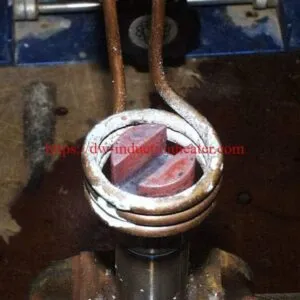
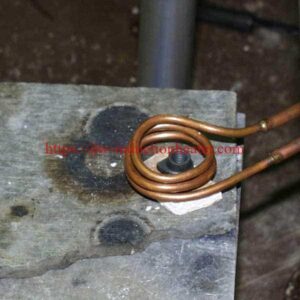
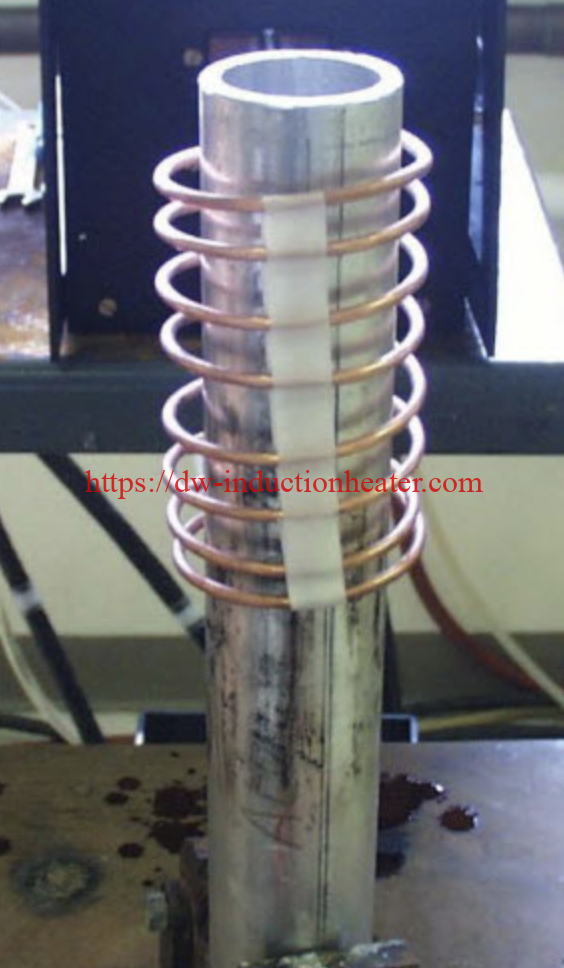
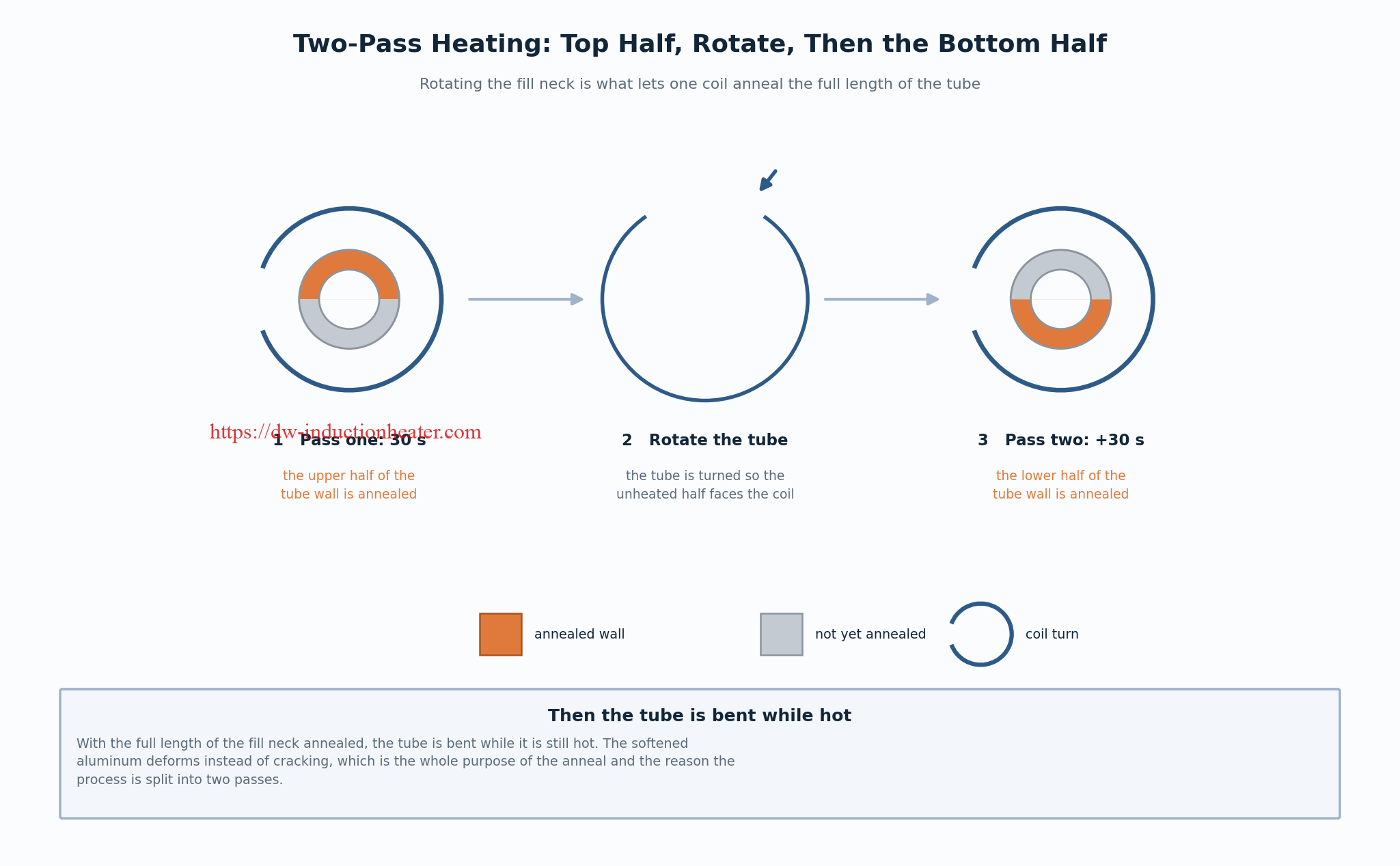
An eight-turn helical coil was used to heat the tube for annealing. To anneal the full length of the tube, the tube was placed in the coil and heated for 30 seconds, then rotated, and the bottom half was heated for an additional 30 seconds. The tube was then bent while hot to prevent cracking.
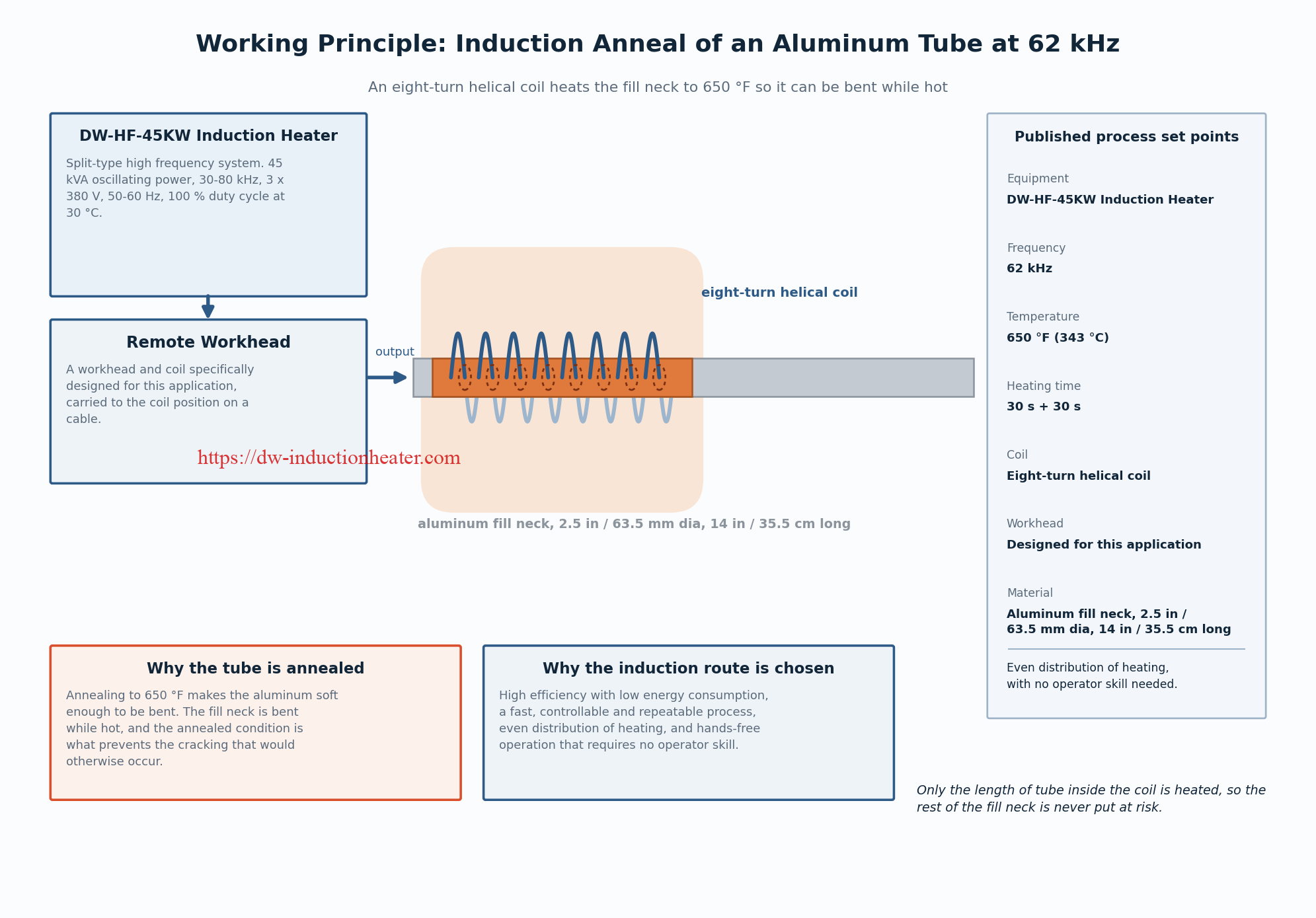
The rotating step is the part of this process that decides whether it works. A helical coil of eight turns does not cover the full 14 in length of the fill neck, so it heats one portion at a time, and in the first pass the half of the tube wall facing the coil is the half that is annealed. Rotating the tube brings the other half into the heated position for the second pass, and only when both halves have been through the coil is the full length of the neck in a condition that can be bent without cracking.
Because the heat is generated in the aluminum by the induced current rather than carried to it from a flame, the temperature is reached quickly and evenly, and the part can go straight from the coil into the bending operation while it is still hot. The coil design and the workhead were developed specifically for this application, and the standard induction heating coils range covers the configurations for other tube and pipe work.
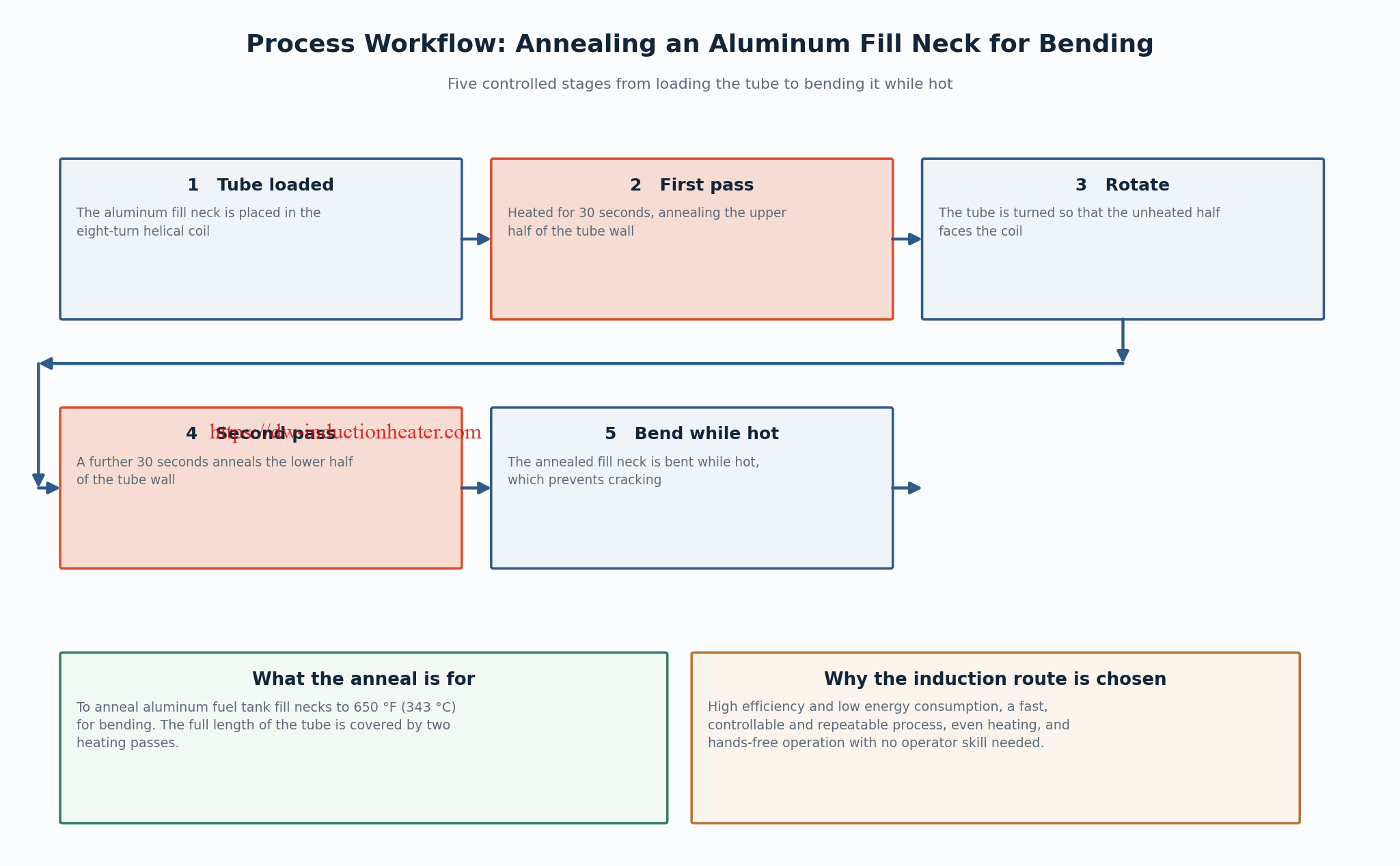
The five controlled stages that take a fill neck from a cold part to a bent component are set out below. Stages 2 and 4 are where the result is decided, because they are the stages in which the two halves of the tube wall have to come up to temperature.
- Tube loaded. The aluminum fill neck is placed in the eight-turn helical coil.
- First pass. The tube is heated for 30 seconds, which anneals the upper half of the tube wall.
- Rotate. The tube is turned so that the unheated half faces the coil.
- Second pass. The bottom half is heated for an additional 30 seconds, so the full length of the tube is annealed.
- Bend while hot. The tube is bent while hot, and the softened aluminum deforms instead of cracking.
The common problems specific to this application, and the process control that answers each one, are set out below.
| Problem | Possible cause | Recommended solution |
|---|---|---|
| Fill neck cracking during bending | Part of the tube length not fully annealed before the bend | Complete both passes, rotating the tube, so the upper and lower halves of the wall are each annealed for 30 seconds |
| Uneven temperature along the tube | Coil geometry, turn spacing or part positioning not consistent | Even distribution of heating, with the coil and workhead designed for this application |
| Inconsistent result between parts | Operator technique or manual timing varying | Fast, controllable and repeatable process with hands-free heating that involves no operator skill for manufacturing |
| Uneven heating | Incorrect coil geometry or workpiece positioning | Review field distribution and fixture alignment |
| Surface overheating | Excessive local power density or insufficient thermal equalization time | Review heating power, frequency and duration |
| Slow heating | Poor coil coupling, insufficient useful power, or excessive heated mass | Verify loaded power, coil design and the heating cycle |
| Cooling water alarm | Insufficient flow, blockage or excessive temperature | Stop heating and inspect the cooling circuit |
Where the cell does not fit the standard range, the published custom induction heating applications route covers the coil design and application work that goes into a purpose-built solution for a specific product.
Benefits:
| Benefit | Published outcome |
|---|---|
| High efficiency | Low energy consumption |
| Fast, controllable and repeatable process | The same cycle on every fill neck |
| Prevention of cracks | Because the tube is annealed over its full length before it is bent |
| Hands-free heating | That involves no operator skill for manufacturing |
| Even distribution of heating | The whole heated length of the tube reaches temperature evenly |
summary
The DW-HF-45KW Induction Heater at 62 kHz, with a workhead and an eight-turn helical coil designed specifically for this application, anneals an aluminum fuel tank fill neck to 650 °F (343 °C) so it can be bent while still hot without cracking.
The process is a two-pass one, and that is what makes it work. The tube goes into the coil and is heated for 30 seconds, which anneals the half of the wall facing the coil; the tube is then rotated and the other half is heated for a further 30 seconds. Because the heat is generated inside the aluminum rather than applied to it from outside, the temperature is reached fast and evenly, and only the length of tube actually inside the coil is affected. The result is a fast, controllable and repeatable process with even distribution of heating, low energy consumption and no operator skill required on the line, and a fill neck that bends instead of cracking.
| Parameter | Value |
|---|---|
| End product | fuel tank fill necks |
| Equipment | DW-HF-45KW Induction Heater |
| Workhead and coil | Designed specifically for this application |
| Coil | Eight-turn helical coil |
| Frequency | 62 kHz |
| Temperature | 650 °F (343 °C) |
| Material | Aluminum fill neck, 2.5 in / 63.5 mm diameter, 14 in / 35.5 cm long |
| Heating time | 30 seconds, then the tube is rotated and the bottom half is heated for an additional 30 seconds |
| Next operation | The tube is bent while hot to prevent cracking |
| Production outcome | Cracks prevented, with a fast, repeatable and hands-free process |
For the wider equipment range, HLQ’s induction heating PDF carries the full machine catalogue, and the general principles of the process are set out under why use induction annealing.