


Induction Brazing & Retipping Carbide Tips on Steel Tools
How Does Induction Brazing Remove and Replace Carbide Tips?
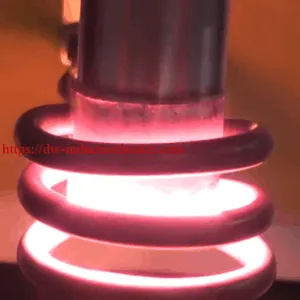
Induction brazing carbide tips is a fast, localized process that can both remove a worn carbide tip from a steel tool and braze a new carbide tip onto the same workpiece by reheating the brazed joint with a controlled electromagnetic field.
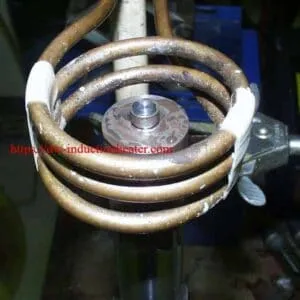
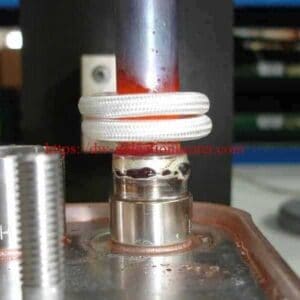
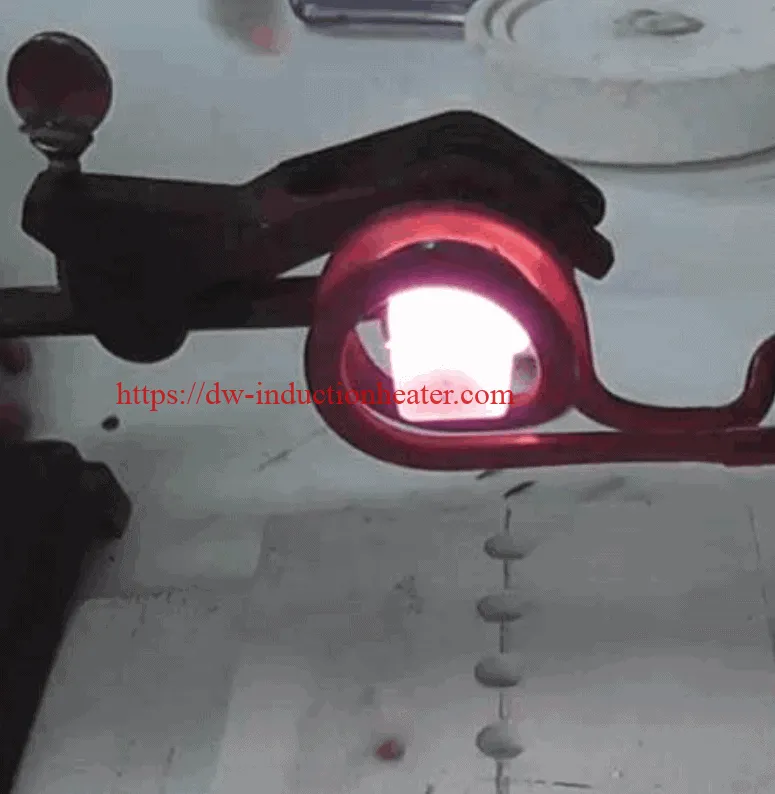
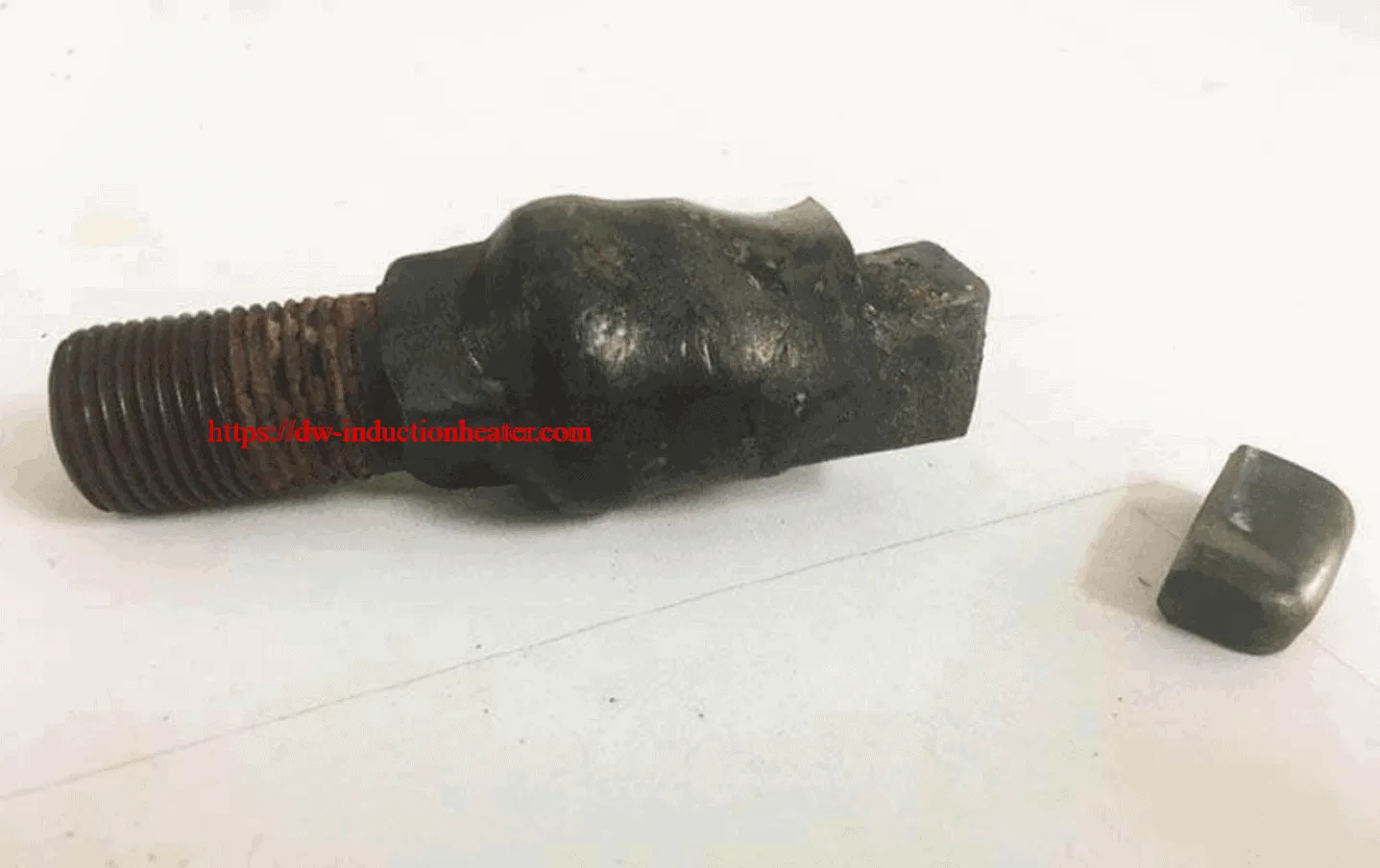
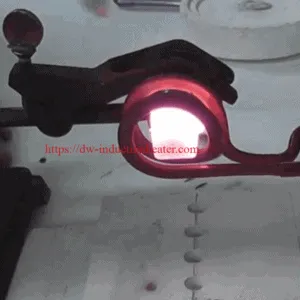
In this HLQ application, a DW-UHF-6kW handheld induction brazing heater operated at approximately 5 kW process power. The carbide-to-steel joint was heated to around 1450°F (787°C), allowing the old carbide tip to be removed in approximately 30 seconds. After joint preparation, the replacement carbide tip was brazed onto the same steel workpiece in another approximately 30-second heating cycle.
Objective
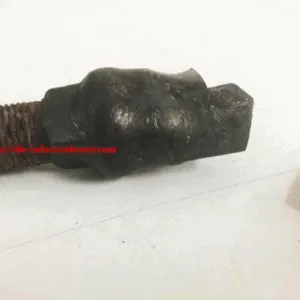
The objective of this application is to remove an old carbide tip from a steel work piece. After the removal of the carbide, brazing a new carbide tip onto the same steel work piece.
Equipment
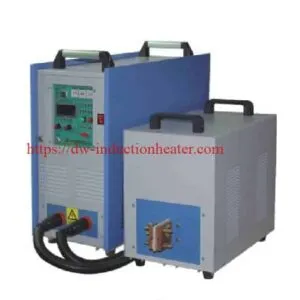
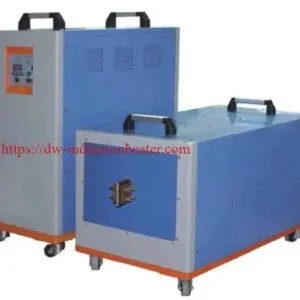
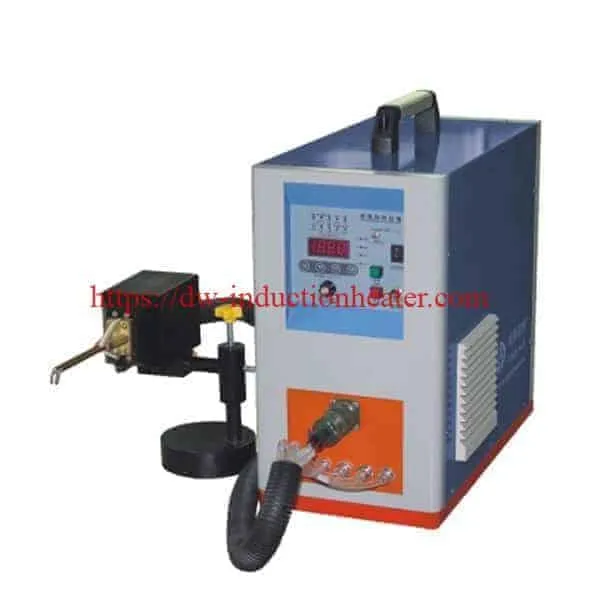
DW-UHF-6KW handheld induction brazing heater
Test 1
Removal
Materials: Carbide tipped work piece
Power: 5 kW
Temperature: 1450ºF (787ºC)
Time: 30 seconds
Test 2
Replacement
Materials: Carbide tipped work piece
Power: 5 kW
Temperature: 1450ºF (787ºC)
Time: 30 seconds


Technical Table – Carbide Tip Removal & Retipping
| Technical Parameter | Test 1 – Removal | Test 2 – Replacement |
|---|---|---|
| Application | Remove worn carbide tip | Braze new carbide tip |
| Base Assembly | Carbide-tipped steel workpiece | Carbide-tipped steel workpiece |
| Induction Equipment | HLQ DW-UHF-6kW handheld heater | HLQ DW-UHF-6kW handheld heater |
| Rated Equipment Power | 6 kW | 6 kW |
| Applied Process Power | Approx. 5 kW | Approx. 5 kW |
| Joint Temperature | Approx. 1450°F / 787°C | Approx. 1450°F / 787°C |
| Heating Time | Approx. 30 sec | Approx. 30 sec |
| Heating Method | Localized induction heating | Localized induction heating |
| Joint Type | Carbide-to-steel brazed joint | Carbide-to-steel brazed joint |
| Main Objective | Melt/soften existing braze | Flow new brazing alloy |
| Heating Head | Handheld | Handheld |
| Coil | Custom induction coil | Custom induction coil |
| Process Control | Power + time + coil position | Power + time + coil position |
| Typical Use | Tool repair / debrazing | Retipping / refurbishment |
| Main Benefit | Fast localized removal | Repeatable replacement brazing |

Why Use Induction Heating for Carbide Tool Retipping?
Traditional carbide-tip replacement often requires torch heating over a relatively large area. Induction heating can instead concentrate energy around the brazed interface.
This makes the process especially useful when the objective is to:
- remove only the worn carbide tip,
- minimize unnecessary heating of the tool body,
- reuse the original steel workpiece,
- shorten retipping time,
- improve heating repeatability,
- reduce operator dependence.
The same induction system can therefore perform both debrazing and rebrazing, making it useful for carbide-tool repair shops and industrial maintenance departments.
FAQs
1. Can induction heating remove an old carbide tip?
Yes.
Induction heating can reheat the existing carbide-to-steel brazed joint until the filler metal softens or melts, allowing the worn carbide tip to be removed.
In this HLQ test, the old carbide tip was removed in approximately 30 seconds using about 5 kW process power.
2. Can the same induction machine braze the replacement carbide tip?
Yes.
After the worn carbide tip is removed and the joint surface is prepared, the same induction heater can be used to braze the replacement tip.
The replacement test on this page also required approximately 30 seconds at about 787°C.
3. What temperature is required for carbide tip induction brazing?
The exact temperature depends on the filler alloy.
For this application, the carbide-to-steel joint was heated to approximately 1450°F / 787°C.
The production temperature should always follow the selected brazing-alloy specification.
4. What size induction brazing machine was used?
This application used an HLQ DW-UHF-6kW handheld induction brazing heater.
Actual process power during both removal and replacement tests was approximately 5 kW.
5. Is induction retipping better than torch heating?
For repetitive repair work, induction heating can provide several advantages:
- localized heating,
- repeatable cycle time,
- no direct flame at the joint,
- reduced heating of surrounding tool areas,
- easier process control,
- faster tip replacement.
Torch heating may still be practical for occasional repair, while induction is particularly useful for repeat carbide-tool refurbishment.
6. What brazing alloy is suitable for carbide-to-steel joints?
Silver-based brazing alloys are commonly used for carbide-to-steel tooling applications because they provide suitable flow and joint performance at relatively moderate brazing temperatures.
Final alloy selection should consider:
- carbide grade,
- steel grade,
- cutting load,
- impact load,
- service temperature,
- required joint strength.
7. What type of induction coil is used for carbide retipping?
The coil should be custom-designed around the actual carbide-tip and steel-tool geometry.
For efficient retipping, the coil should concentrate electromagnetic energy around the brazed interface while limiting unnecessary heating of the rest of the workpiece.
8. Can carbide tip retipping be automated?
Yes.
An automated system can include:
- fixed or robotic coil positioning,
- PLC-controlled heating,
- pneumatic fixtures,
- pyrometer monitoring,
- automatic carbide-tip placement,
- brazing-alloy feeding,
- indexing tables.
This is useful for high-volume cutting-tool manufacturing and refurbishment.