
Brazing Copper Tubing with Induction
Brazing Copper Tubing with Induction Heating System
Quick Answer: What Is Induction Brazing for Copper Tubing?
Induction brazing copper tubing is a fast, precise and repeatable process that uses a high-frequency electromagnetic field to heat the copper tube joint until the brazing alloy melts and flows into the joint by capillary action.
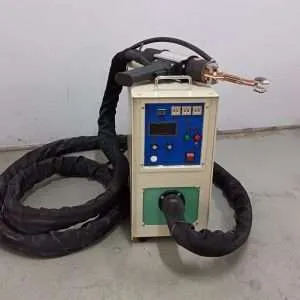
For this copper tubing brazing application, an HLQ DW-UHF-10kW induction brazing machine heats the joint to approximately 1500°F (815°C). During testing, the brazing alloy flowed successfully within approximately 5–5.2 seconds, demonstrating that high-frequency induction heating can provide extremely short and controllable brazing cycles for copper tube assemblies.
Unlike torch brazing, induction brazing applies heat only to the required joint area. This improves repeatability, reduces operator dependence and makes the process easier to integrate into automated production lines.
Induction brazing is especially suitable for:
- HVAC copper tubing
- Refrigeration systems
- Air-conditioning components
- Compressor tubing
- Heat exchangers
- Copper pipe fittings
- Appliance manufacturing
- Automotive fluid lines
- Copper-to-copper tube assemblies
- High-volume industrial brazing production
Technical Parameters – Induction Brazing Copper Tubing
| Technical Parameter | Specification / Application Data |
|---|---|
| Application | Brazing copper tubing |
| Heating Technology | High-frequency induction heating |
| Induction Brazing Machine | HLQ DW-UHF-10kW |
| Rated Power | 10 kW |
| Workpiece Material | Copper tubing |
| Test Tube | Heavy-wall 5/16-inch copper tubing |
| Brazing Temperature | Approx. 1500°F / 815°C |
| Typical Heating Time | Approx. 5–5.2 seconds |
| Brazing Material | 505 alloy braze paste |
| Joint Configuration | Tube-to-tube brazed connection |
| Heating Method | Localized electromagnetic induction |
| Coil Type | Customized copper induction brazing coil |
| Production Coil | Custom-designed according to joint geometry |
| Magnetic Field Control | Ferrite concentrators can be used where required |
| Process Control | Time, power and coil-position control |
| Automation Capability | Manual, semi-automatic or fully automatic |
| Typical Industries | HVAC, refrigeration, compressors, appliances, automotive and heat exchangers |
| Main Benefit | Rapid, repeatable and localized copper tube brazing |
How Does Copper Tube Induction Brazing Work?
An induction brazing system sends high-frequency alternating current through a water-cooled copper induction coil. This creates an alternating electromagnetic field around the copper tubing.
Electrical currents are induced in the workpiece, generating heat directly in and around the brazing area.
The typical process is:
- Clean and prepare the copper tube surfaces.
- Assemble the copper tube connection.
- Apply brazing paste or position the brazing alloy.
- Place the joint inside or adjacent to the induction coil.
- Start the programmed induction heating cycle.
- Heat the joint until the brazing alloy reaches its flow temperature.
- Allow the molten brazing alloy to flow through the joint by capillary action.
- Stop the induction power and allow the joint to cool.
Because the heating cycle can be programmed precisely, each component can receive almost the same heating profile.
Objective
Demonstrating induction brazing copper tubing and braze time using the DW-UHF-10 kW system and available split lab coil
Equipment
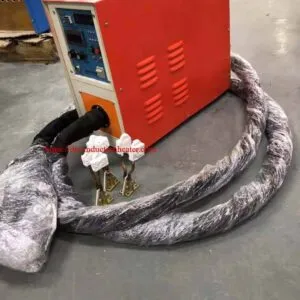
DW-UHF-10KW induction brazing machine
Materials
• Copper tubing – Suction Tube
• Braze paste
Key Parameters
Power: 10 kW
Temperature: Approximately 1500° F (815° C)
Time: 5 – 5.2 sec
Process:
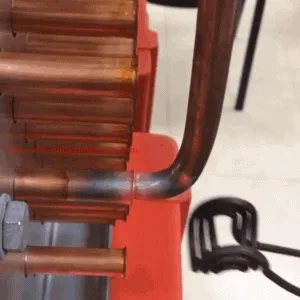
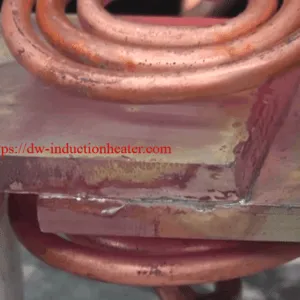
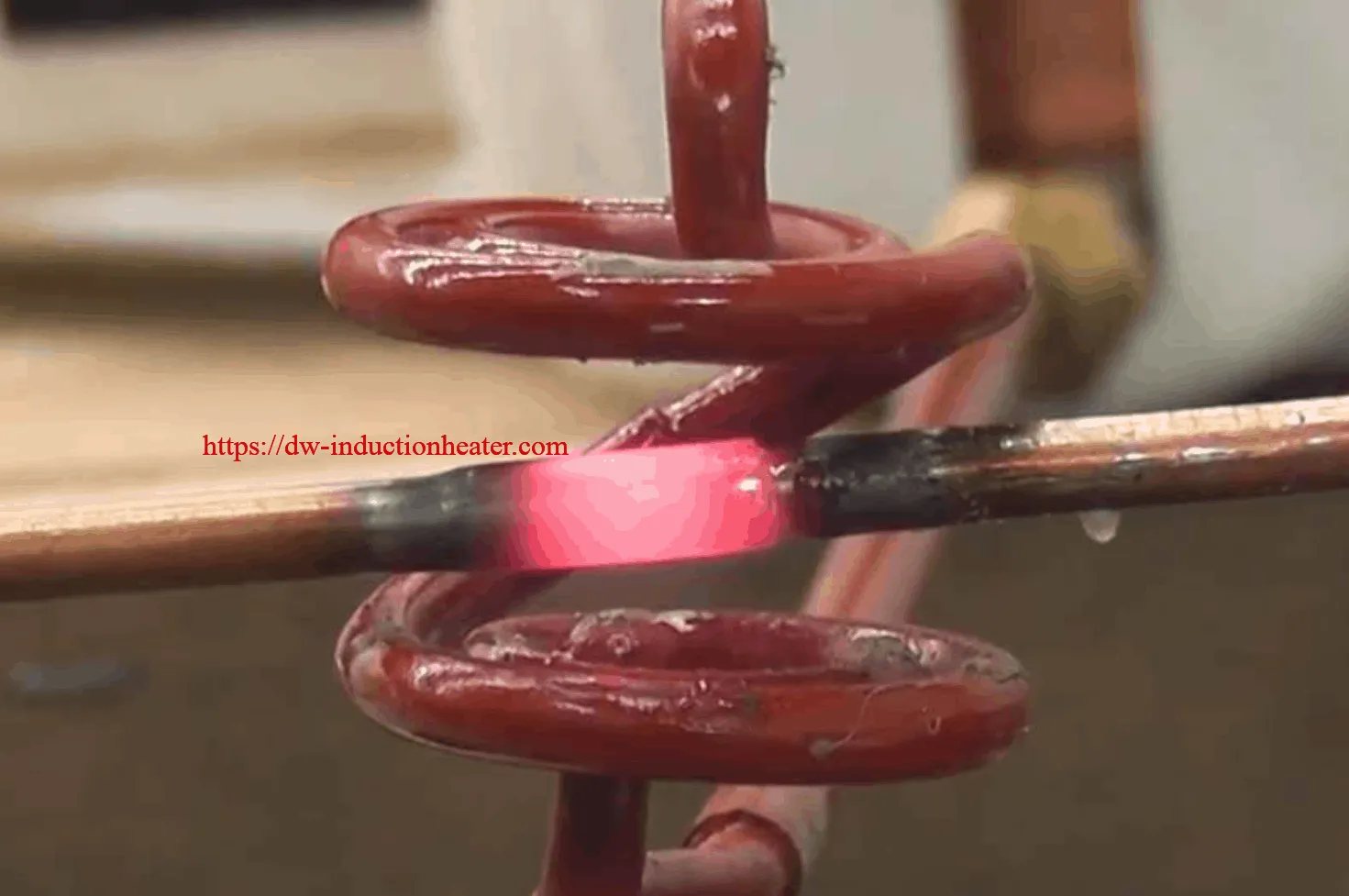
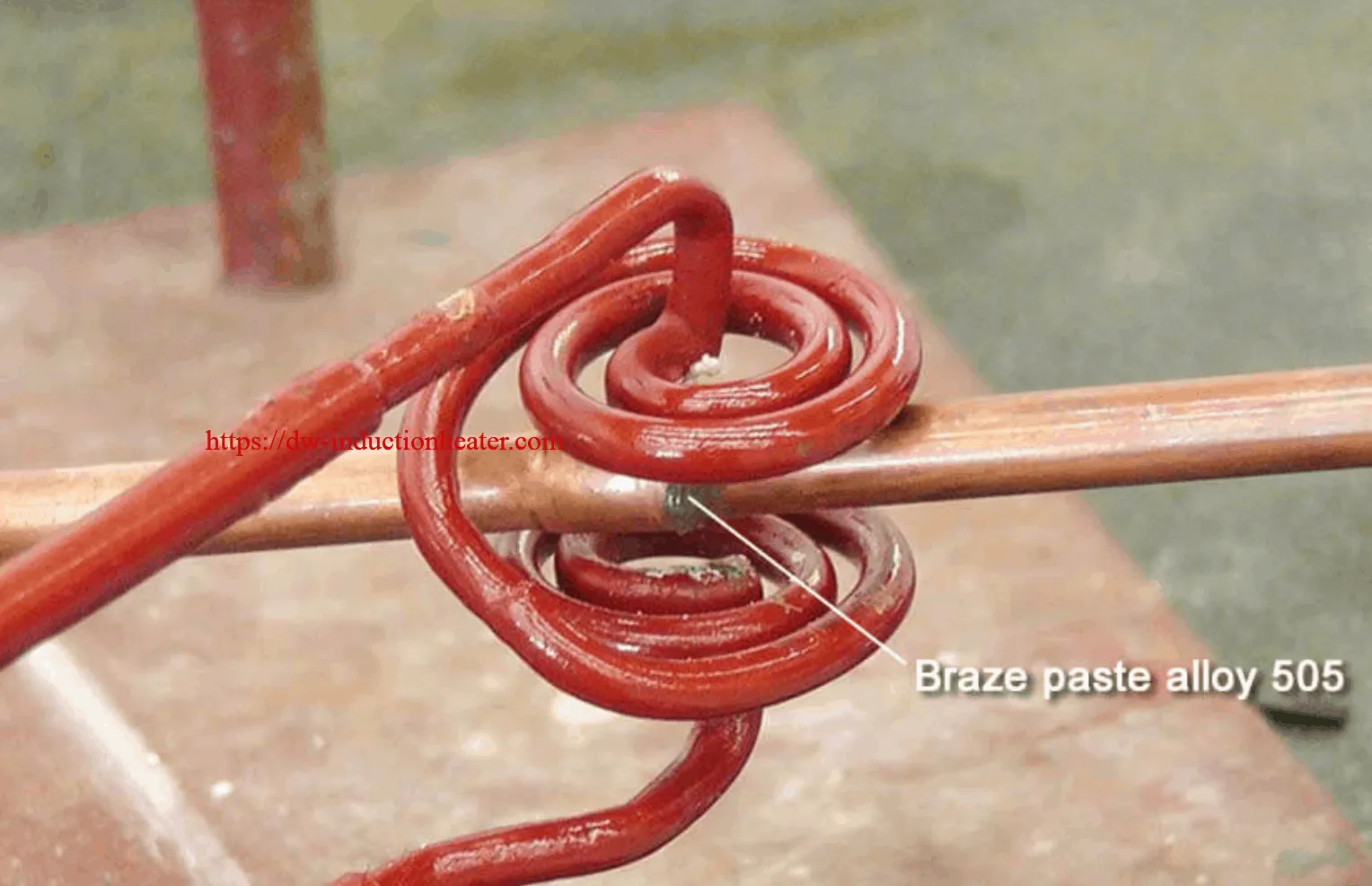
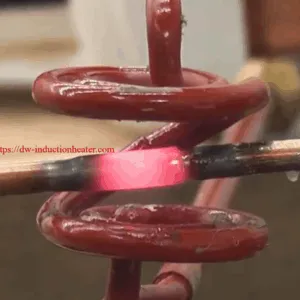
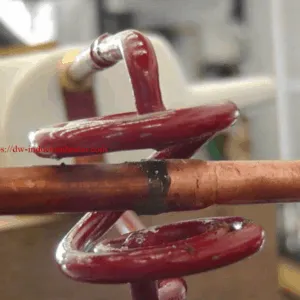
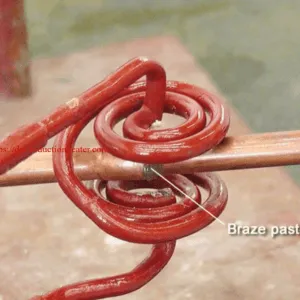
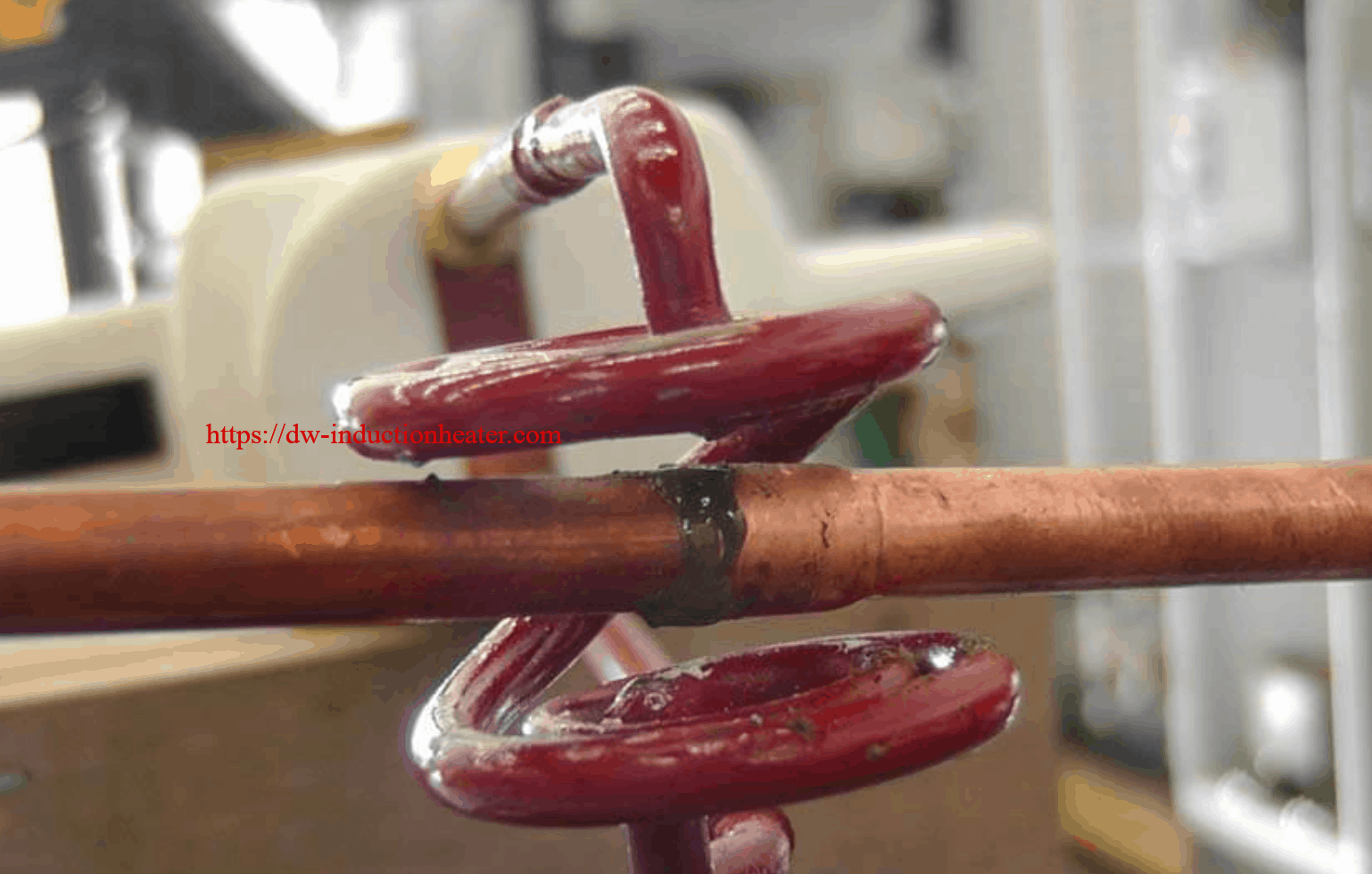
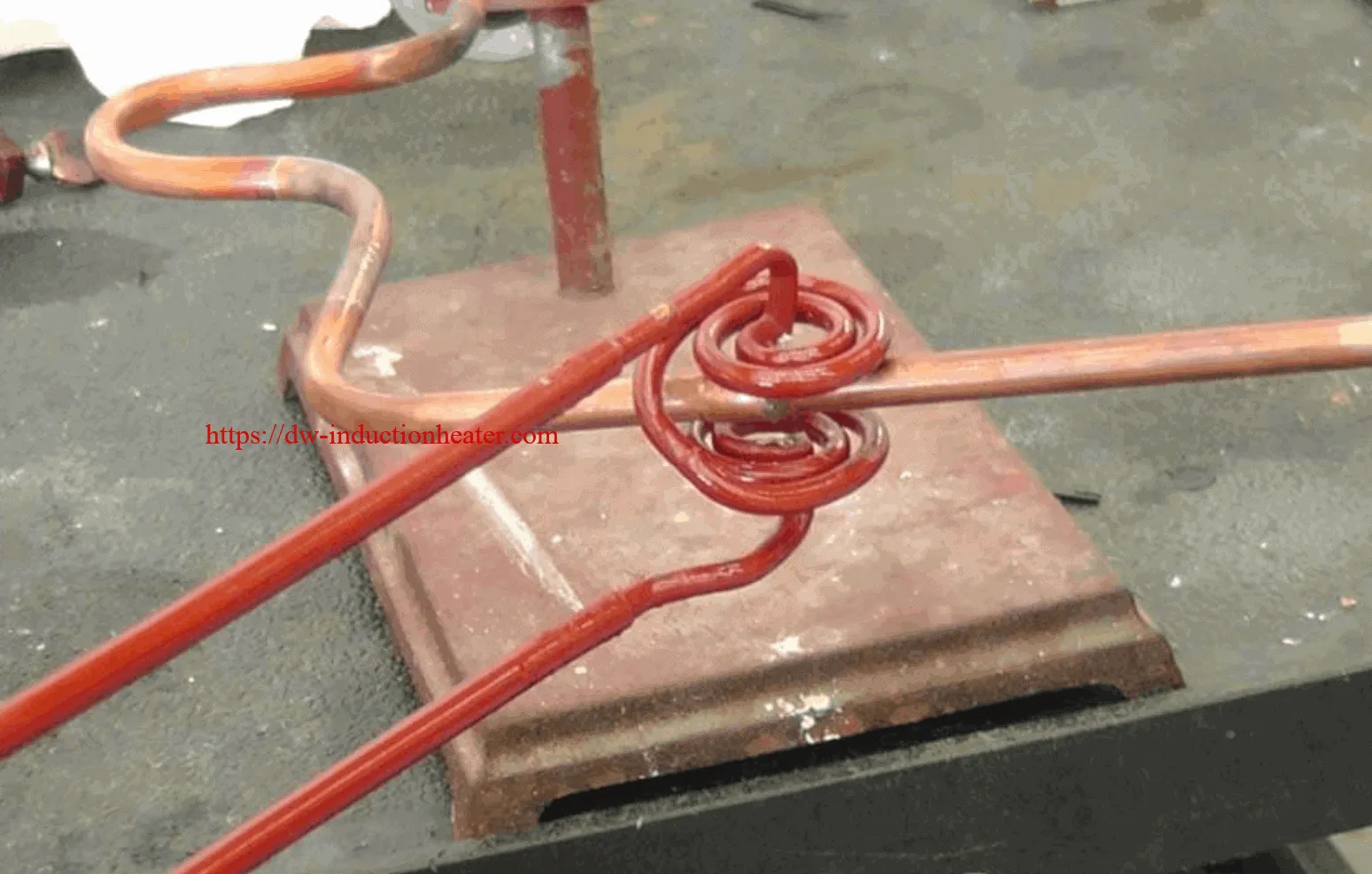
As only one assembly was provided for the test, we set up a test load using a heavy wall 5/16” copper tubing set up such as one tube accepted the other at a formed open flange end. Heat time was estimated based on using tempilaque paint to indicate the temperature. The test assembly, (followed by the provided components) were assemble with a coating of 505 alloy braze paste and placed in the lab test coil per the attached photographs) A heat cycle 5 – 5.2 seconds was found to flow the alloy and make the joint.

Results/Benefits:
- As demonstrated, the DW-UHF model induction brazing system is capable of heating both the largest and smallest tube to tube sections to complete a brazed joint. Heat times using an available test coil are within the production heat time expectations required by Electrolux.
- HLQ will require a full assembly for review in order to develop the final coil design that can accommodate all 12 joints indicated on your layout photograph. It is necessary to know and see the clearances between the tube connections to be brazed and the steel compressor section to insure that the steel housing is not affected by the resulting RF field created at the load coil. This final design may require the addition of ferrite materials in the coil that will serve to focus the RF field to the copper leads and not to the steel housing.
- Initial tests were completed on the DW-UHF-10kW utilizing an available lab coil. The production coil will be contained in a none-conductive housing that will permit the operator to use it to locate the coil against the copper leads for accurate and positive heating location for the braze process. The production coil design will incorporate shorter leads than the test coil and be configured such that the heat cycles will be improved (shorter heat times).

Why Use Induction Heating for Brazing Copper Tubing?
Fast Brazing Cycle
High-frequency induction heating can generate heat extremely quickly. In this application, the copper tube joint reached the required brazing condition in approximately 5–5.2 seconds.
Localized Heating
The induction coil concentrates energy around the tube connection instead of heating the complete copper assembly.
Repeatable Brazing Quality
Heating time, power and coil position can be standardized, reducing variations between operators.
No Direct Flame
Induction brazing does not require a torch flame at the workpiece, making it attractive for industrial production environments.
Easy Automation
Induction brazing equipment can be combined with:
- PLC control
- Automatic tube positioning
- Robotic handling
- Temperature monitoring
- Automatic brazing alloy feeding
- Multi-station indexing tables
- Automatic cooling systems
Custom Coil Design
The induction coil can be engineered to match the exact copper tube diameter, joint position and production layout.
For assemblies located close to steel compressor housings or other conductive parts, ferrite magnetic-field concentrators can also be incorporated into the coil design to direct the electromagnetic field toward the copper joint and minimize unwanted heating of nearby components.
FAQs About Induction Brazing Copper Tubing
1. Can copper tubing be brazed using induction heating?
Yes. Copper tubing can be brazed very effectively using induction heating. A high-frequency induction brazing machine rapidly heats the tube joint until the brazing alloy melts and flows into the joint. The process is widely suitable for HVAC, refrigeration, compressor, heat exchanger and appliance manufacturing.
2. How fast can induction heating braze a copper tube?
Heating time depends on tube diameter, wall thickness, joint design, induction power and brazing alloy.
In this HLQ test application, a 10kW DW-UHF induction brazing machine completed the heating cycle in approximately 5–5.2 seconds.
Production systems can often be optimized further through dedicated induction coil design.
3. What temperature is required for brazing copper tubing?
The required temperature depends primarily on the brazing alloy.
For this application, the copper tubing was heated to approximately 1500°F (815°C) to achieve brazing alloy flow.
The operating temperature should always be selected according to the filler metal, flux, base materials and required joint properties.
4. What size induction brazing machine is suitable for copper tubing?
Small and medium copper tube joints commonly use high-frequency induction heating systems.
The required power depends on:
- Copper tube diameter
- Tube wall thickness
- Joint mass
- Required heating time
- Production rate
- Coil-to-workpiece coupling
- Number of joints heated simultaneously
A 10kW high-frequency induction brazing machine was sufficient for the copper tube application described on this page.
5. Is induction brazing better than torch brazing for copper tubing?
For repeat industrial production, induction brazing offers several advantages over manual torch brazing.
These include:
- More repeatable heating
- Faster cycle times
- Localized heat
- No direct flame
- Programmable heating cycles
- Reduced dependence on operator technique
- Easier automation
- Consistent production quality
Torch brazing may remain practical for repair work or very low production volumes, while induction brazing is particularly suitable for repetitive manufacturing.
6. What type of induction coil is used for brazing copper tubes?
The induction coil is normally custom-designed according to:
- Tube outside diameter
- Joint length
- Tube spacing
- Joint accessibility
- Required heating pattern
- Nearby metal components
- Required production cycle time
Split coils, multi-turn coils, channel coils and specially shaped induction brazing coils can all be used depending on the application.
7. Can induction brazing be used for HVAC and refrigeration copper tubing?
Yes. Induction brazing is well suited to HVAC and refrigeration copper tube joints, including components used in:
- Air conditioners
- Refrigerators
- Heat pumps
- Compressors
- Condensers
- Evaporators
- Heat exchangers
The short and repeatable heating cycle makes induction brazing particularly attractive for appliance and HVAC production lines.
8. Can copper tube induction brazing be automated?
Yes. Copper tube induction brazing can be integrated into semi-automatic or fully automatic production systems.
Automation can include robotic loading, PLC control, automatic coil positioning, brazing alloy dispensing, temperature monitoring, indexing tables and automatic cooling.
For high-volume manufacturing, automated induction brazing can significantly improve production consistency and reduce cycle-time variation.