
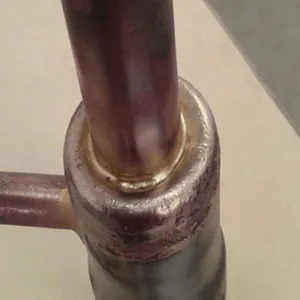

Brazing Steel Tube to Copper Tube with Induction Heater
High Frequency Induction Brazing Steel Tube to Copper Tube
Quick Answer: How Does Induction Brazing Join Steel Tube to Copper Tube?
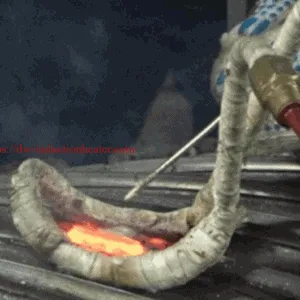
Induction brazing is a fast and precise method for joining a steel tube to a copper tube without directly heating the entire component. A high-frequency induction brazing machine generates concentrated electromagnetic heat at the joint area, allowing the brazing alloy to melt and flow between the steel and copper surfaces by capillary action.
Objective
The goal is to braze a steel tube to a copper tube in 60 seconds using flux and brazing alloy.
Equipment
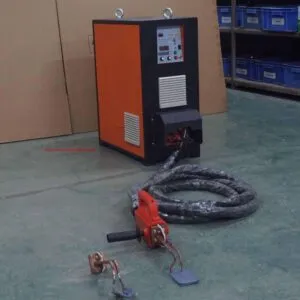
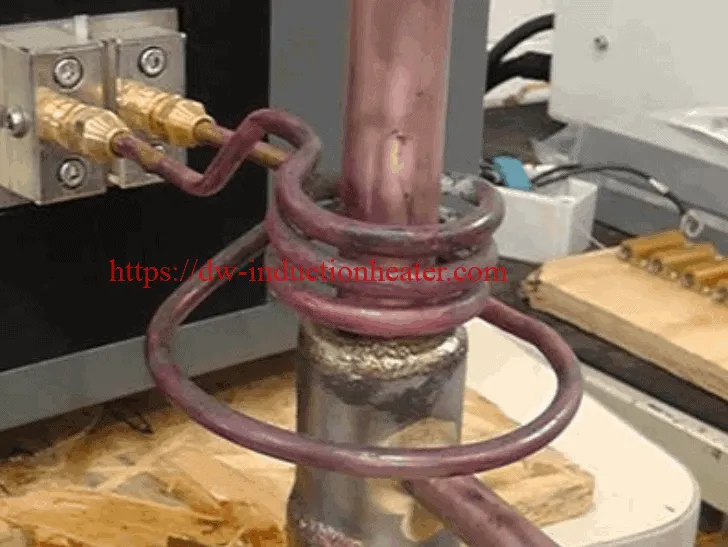
DW-UHF-10kw induction brazing heater
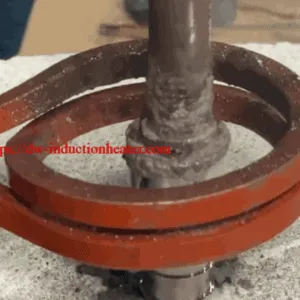
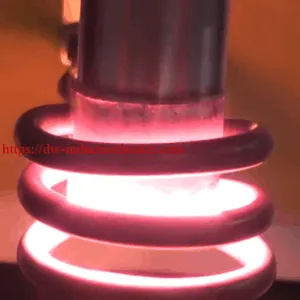
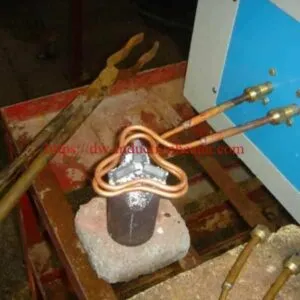
Three turns dual diameter coil
Materials
• Steel tube and copper receiver
• Braze alloy (CDA 681)
• B-1 flux
Key Parameters
Temperature: Approximately 1750° F (954° C)
Frequency: 148 kHz
- The assembly section was pre-assembled and fluxed (B-1) then located in the two diameter coil with a single pre-formed alloy ring set at the interface area.
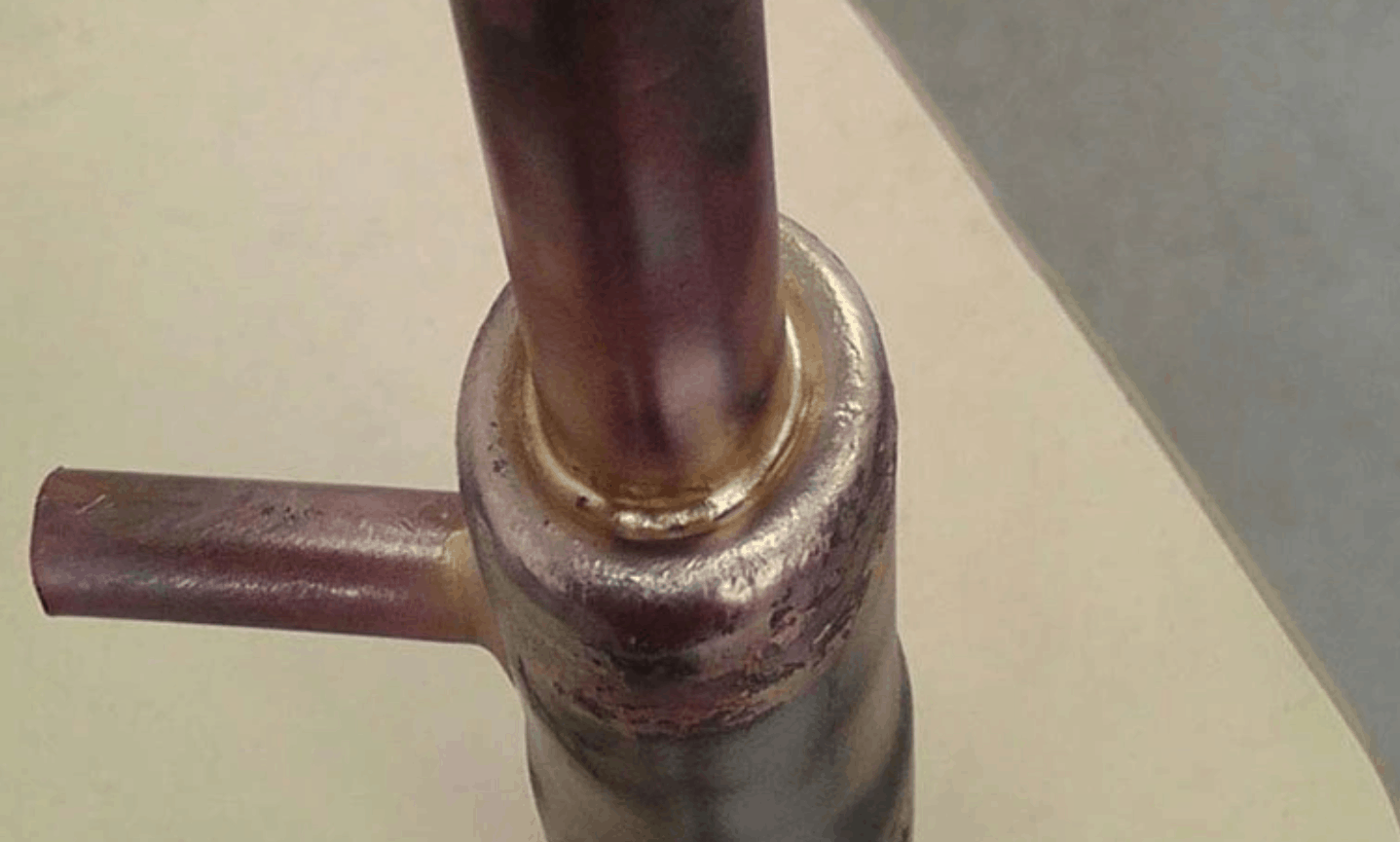
- Alloy flow and joint completed in 60 seconds.
- The material was cooled in water following the completion of induction brazing.
- The joint was then cross-sectioned to validate that the brazing process had produced a strong, high quality joint.
Results/Benefits:
- Strong durable joints with induction heating
- Selective and precise heat zone, resulting in less part distortion and joint stress than welding
- Less oxidation
- Faster heating cycles
- More consistent results and suitability for large volume production, without the need for batch processing
- Safer than flame brazing
In this application, a DW-UHF-10kW induction brazing heater operating at approximately 148 kHz heats the steel-to-copper joint to about 1750°F (954°C). Using a specially designed three-turn dual-diameter induction coil, CDA 681 brazing alloy and B-1 flux, the brazed joint can be completed in approximately 60 seconds.
Compared with conventional torch brazing, induction brazing provides better control of the heating zone, faster cycle times, reduced oxidation, repeatable joint quality and easier integration into automated production lines.
This process is particularly suitable for HVAC tubing, refrigeration components, heat exchangers, automotive fluid lines, compressor assemblies, hydraulic tubing and industrial pipe fittings where reliable copper-to-steel joints are required.
Technical Parameters for Steel Tube to Copper Tube Induction Brazing
| Technical Parameter | Specification / Process Data |
|---|---|
| Application | Brazing steel tube to copper tube |
| Heating Method | High-frequency induction heating |
| Induction Brazing Machine | DW-UHF-10kW |
| Rated Power | 10 kW |
| Operating Frequency | Approximately 148 kHz |
| Brazing Temperature | Approximately 1750°F / 954°C |
| Typical Heating Time | Approximately 60 seconds |
| Workpiece Materials | Steel tube + copper tube / copper receiver |
| Brazing Alloy | CDA 681 brazing alloy |
| Flux | B-1 brazing flux |
| Induction Coil | Three-turn dual-diameter induction coil |
| Heating Area | Localized tube joint area |
| Brazing Method | Preformed brazing alloy ring at interface |
| Post-Brazing Cooling | Water cooling used in the tested process |
| Process Control | Time, power and heating-position control |
| Automation Capability | Suitable for manual, semi-automatic or automatic production |
| Typical Industries | HVAC, refrigeration, automotive, heat exchanger, appliance and industrial tubing |
| Main Advantage | Fast, repeatable and localized steel-to-copper brazing |
Why Use Induction Heating for Brazing Steel Tube to Copper Tube?
Steel and copper have significantly different thermal and electrical properties. Copper conducts heat extremely quickly, while steel responds differently to the electromagnetic field. For this reason, successful steel-to-copper induction brazing requires the correct combination of frequency, power, coil geometry, joint clearance, brazing alloy and heating time.
A properly designed induction coil concentrates heat around the brazing joint instead of heating the complete tube assembly. This helps the brazing alloy reach its flowing temperature while limiting unnecessary heat exposure to surrounding areas.
Key benefits include:
- Precise localized heating around the brazing joint
- Consistent and repeatable brazing temperature
- Shorter heating cycles than many conventional methods
- Reduced oxidation and scale formation
- Lower risk of overheating surrounding components
- No open flame near the workpiece
- Easy integration with PLC-controlled production lines
- Better suitability for high-volume manufacturing
- Improved operator-to-operator process consistency
- Custom induction coil designs for different tube diameters
FAQs About Induction Brazing Steel Tube to Copper Tube
1. Can steel tube be brazed directly to copper tube using induction heating?
Yes. Steel tube can be brazed to copper tube using induction heating when the correct brazing alloy, flux, joint design and induction coil are selected. Induction heating concentrates energy at the joint and heats the assembly until the brazing filler metal melts and flows between the steel and copper surfaces.
2. What temperature is required for induction brazing steel to copper?
The required temperature depends mainly on the brazing alloy being used. In this HLQ application, the joint was heated to approximately 1750°F (954°C) using CDA 681 brazing alloy. The actual brazing temperature should always be selected according to the filler alloy, flux and workpiece requirements.
3. What size induction heater is required for brazing steel tube to copper tube?
The required induction heater power depends on tube diameter, wall thickness, joint mass, desired cycle time and production rate. For the application described here, a 10kW high-frequency induction brazing machine successfully completed the joint in approximately 60 seconds. Larger tubes or faster production may require higher power.
4. What frequency is suitable for steel-to-copper tube induction brazing?
High-frequency induction heating is commonly suitable for localized tube brazing because it allows energy to be concentrated around a relatively small joint area. The tested steel-to-copper application operated at approximately 148 kHz. The optimum frequency varies according to tube diameter, material thickness and coil design.
5. Why is a special induction coil needed for brazing copper to steel?
Copper and steel respond differently during induction heating, so coil geometry is critical for balancing the temperature of both components. A customized dual-diameter or contoured induction coil can distribute electromagnetic energy more effectively around the joint and help achieve uniform brazing alloy flow without excessive overheating.
6. Is induction brazing better than torch brazing for steel and copper tubes?
Induction brazing provides several advantages for repeat production, including localized heating, programmable cycle times, reduced operator dependence, no direct flame and easier automation. Torch brazing can still be appropriate for low-volume or field work, while induction brazing is particularly attractive for consistent industrial production.
7. What industries use induction brazing for steel-to-copper joints?
Steel-to-copper induction brazing is widely applicable to HVAC systems, refrigeration equipment, compressors, heat exchangers, automotive components, hydraulic systems, appliance manufacturing, electrical equipment and industrial tubing assemblies where reliable dissimilar-metal joints are required.
8. Can an induction brazing machine be integrated into an automatic production line?
Yes. Induction brazing systems can be integrated with PLC controls, automatic feeding, robotic loading, temperature monitoring, timed heating cycles and automatic cooling systems. This makes induction brazing well suited for continuous or high-volume manufacturing of steel-to-copper tube assemblies.