

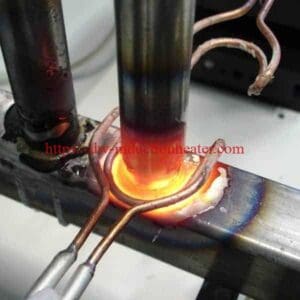


Induction Brazing
Induction Brazing Process: How It Works, Materials, Cases and Equipment
Quick Answer
Induction brazing is a materials-joining process that uses a filler metal, and usually an anti-oxidizing flux, to join two close-fitting metal parts without melting the base materials. Induced heat melts the filler, which capillary action draws into the joint. Induction brazing can join a wide range of metals, even ferrous to non-ferrous, and heats only a narrowly defined area. In published HLQ brazing cases, copper, brass, steel, stainless steel and carbide joints were brazed at about 618–954 °C (1145–1750 °F), in 3 seconds to 2 minutes per joint, with DW-UHF, DW-HF or DWS handheld induction brazing systems.
Table of Contents
- What is Induction Brazing?
- Key Applications
- Suitable Materials
- Working Principle
- Technical Specifications
- Recommended Model Selection
- Process Workflow
- Common Problems and Solutions
- Engineering Selection Guide
- Advantages and Limitations
- Why Choose HLQ?
- 10 Core FAQs
What is Induction Brazing?
Induction brazing is a materials-joining process that uses a filler metal (and usually an anti-oxidizing solvent called flux) to join two pieces of close-fitting metal together without melting the base materials. Instead, induced heat melts the filler, which is then drawn into the base materials by capillary action.

Key Applications
HLQ induction brazing systems can be used for virtually any brazing task. Typical uses:
| Industry | Typical brazed parts |
|---|---|
| Electrotechnical | Generator and transformer components such as bars, strands, rings, wires and SC-rings |
| Automotive | Fuel pipes, AC and brake parts |
| Aeronautics | Fan blades, blades for casings, fuel and hydraulic systems |
| Houseware | Compressor components, heating elements and faucets |
| HVAC and refrigeration | Copper tubing and heat exchanger joints; see HVAC brazing with induction heating system |

| HLQ brazing case | Temperature | Time | Equipment |
|---|---|---|---|
| Induction brazing copper tubing (suction tube, 505 alloy paste) | ≈ 1500 °F (815 °C) | 5–5.2 s, 10 kW | DW-UHF-10kW |
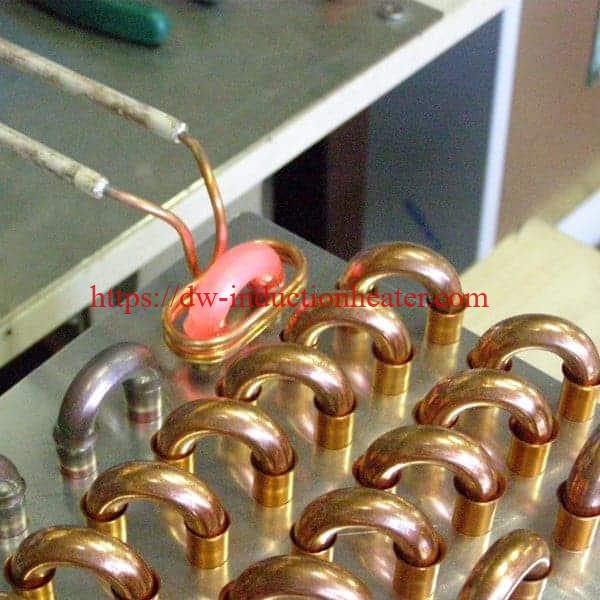
| Heat exchanger copper pipes (6 joints, plastic covers nearby) | ≈ 1292 °F (700 °C) | 5 s per joint, 15 kW | DWS-20 handheld |
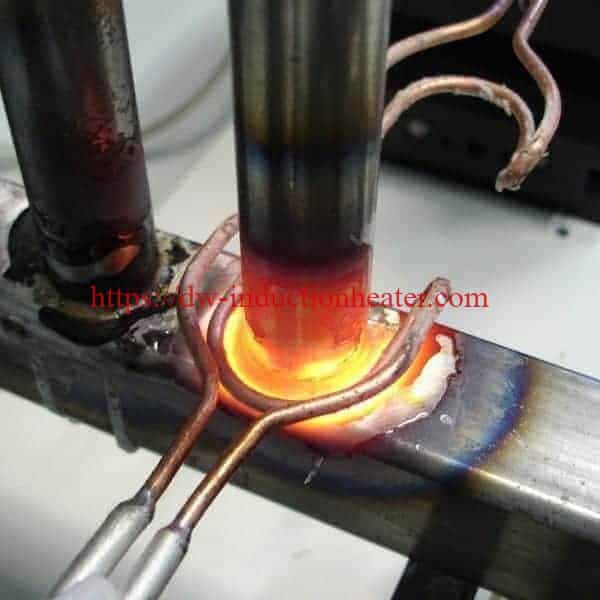
| Stainless steel tubing joints | 1472 °F (800 °C) | 15 s, 8 kW | DW-UHF-10kW |
| Pipe to pipe end (lap joint, 1–6 m tubes) | ≈ 1382 °F (750 °C) | 30 s – 1 min | DW-UHF-10kW |
| Brass tube to brass disk (Sil-Fos rod, flux) | 1475–1500 °F (801–815 °C) | 45 s, 5 kW | DW-HF-15kW |
| Brass fitting to copper tube (silver solder rings) | 1300 °F (704 °C) | 283 / 250 kHz | DW-UHF-20kW |
| Carbide tip removal and retipping | 1450 °F (787 °C) | 30 s, 5 kW | DW-UHF-6kW handheld |
| Steel tube to copper tube (CDA 681, B-1 flux) | ≈ 1750 °F (954 °C) | 60 s, 148 kHz | DW-UHF-10kW |
Suitable Materials
Induction brazing can join a wide range of metals, even ferrous to non-ferrous. Combinations and fillers in HLQ cases:
| Base metals | Filler / flux | HLQ case data |
|---|---|---|
| Copper to copper | 505 alloy braze paste | ≈ 815 °C, 5–5.2 s |
| Steel to copper | CDA 681 preform ring, B-1 flux | ≈ 954 °C, 60 s |
| Brass to brass | Sil-Fos rod, Stay Silv flux | 801–815 °C, 45 s |
| Brass fitting to copper tube | Silver solder rings | 704 °C |
| Stainless steel tubing | Stay Silv filler | 800 °C, 15 s |
| Copper to stainless steel | – | 1145 °F+ (618 °C), under 40 s |
| Carbide to steel | Black brazing flux and braze shims (carbide-to-shaft case) | 787–815 °C; see brazing carbide tips with induction |
| Aluminium tube assembly | – | 350–500 kHz, 22 s to brazing temperature; see induction brazing aluminum tube assembly |
Working Principle

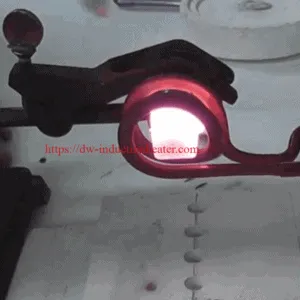
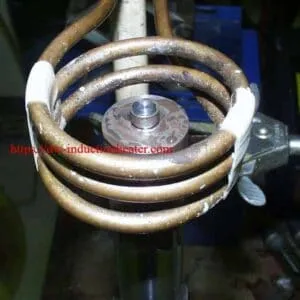
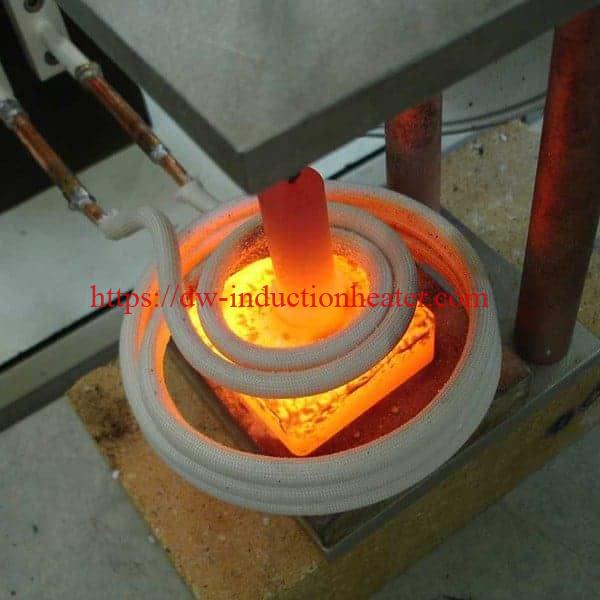
The induction power supply drives alternating current through a coil placed around the joint. Eddy currents heat only the joint area of the parts. When the joint reaches brazing temperature, the filler metal (preform ring, paste, rod or shim) melts and capillary action draws it into the close-fitting gap. The flux protects the surfaces from oxidation. The base materials are not melted, so correctly brazed joints are strong, leak-proof, corrosion resistant and neat, usually requiring no further milling, grinding or finishing.
Technical Specifications
| Parameter | Range in published HLQ brazing cases |
|---|---|
| Brazing temperature | ≈ 618–954 °C (1145–1750 °F) |
| Heating time per joint | 3 seconds (carbon steel filter) to about 2 minutes (copper plate overlay joints) |
| Applied power | 5 kW to 15 kW in the cases listed above; up to 11.5 kW in a carbide tip case |
| Frequency | 148 kHz to 300 kHz in DW-UHF cases; 350–500 kHz in an aluminium tube case |
| Filler forms | Preform rings, paste, rods, shims |
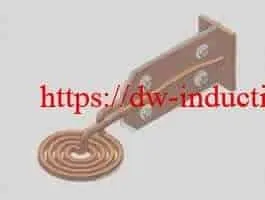
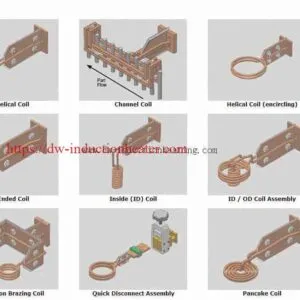
| Coils | Helical (3-turn, dual diameter), split, U-shape, C-coil; designed for each joint |
| Operation | Handheld, manual station, semi-automatic or automated line |
Recommended Model Selection
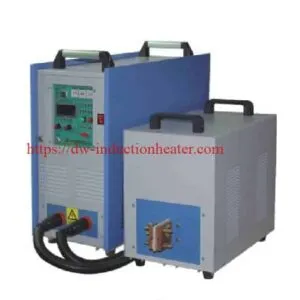
DWS series from the HLQ handheld induction brazing machine page:
| Parameter | DWS-10 | DWS-30 | DWS-60 | DWS-100 |
|---|---|---|---|---|
| Max. input power | 10 kW | 30 kW | 60 kW | 100 kW |
| Input voltage | 3P × 380 V | 3P × 380 V | 3P × 380 V | 3P × 380 V |
| Generator weight | 40 kg | 47 kg | 120 kg | 150 kg |
| Heating head weight | 1.5 kg | 3.1 kg | 4.5 kg | 8 kg |
| Cable length | 3–8 m | 3–8 m | 3–8 m | 3–8 m |
| Cooling pressure / min. flow | > 0.3 MPa / > 5 L/min | > 0.3 MPa / > 15 L/min | > 0.3 MPa / > 30 L/min | ≥ 0.3 MPa / ≥ 30 L/min |
| Typical application | Small joints | General brazing | Larger assemblies | Heavy-duty brazing |
Power supplies used in HLQ brazing cases (frequency ranges from the HLQ induction heating device table and product pages):
| Model | Frequency | Brazing cases |
|---|---|---|
| DW-UHF-6kW | 300–1100 kHz | Carbide tip retipping (handheld); carbon steel filter (3 s) |
| DW-UHF-10kW | 100–500 kHz | Copper tubing, steel to copper tube, stainless tubing, pipe end, carbide to shaft |
| DW-UHF-20kW | 50–250 kHz | Brass fitting to copper tube; carbide tips on milling cutters |
| DW-HF-15kW | 30–80 kHz | Brass tube to brass disk |
| DW-HF-25kW | 30–80 kHz | Copper plate overlay joints (about 2 min) |
| DW-HF-45kW | 30–80 kHz | Steel tanks |
Process Workflow

- Fit – prepare clean, close-fitting parts.
- Flux – apply an anti-oxidizing flux.
- Filler – place the filler as a preform ring, paste, rod or shim at the joint.
- Coil – position the coil around the joint.
- Heat – the filler melts and capillary action draws it into the joint.
- Cool – in air, or in water as in the HLQ steel tube to copper tube brazing case.
- Inspect – check that the joint is complete; that case cross-sectioned the joint to validate the process.


Common Problems and Solutions
| Problem | Possible cause | Solution |
|---|---|---|
| Filler does not flow well | Insufficient temperature, dirty surface, wrong filler metal or uneven heating | Clean the joint, select a suitable filler, improve the coil design and optimize heating time |
| Brazed joint quality is unstable | Wrong filler, poor flux, insufficient heating or overheating | Control heating time, joint clearance, filler placement and temperature |
| Heating too slow | Coil gap too large, wrong coil design or oversized workpiece | Optimize coil shape, reduce the coil gap or choose higher power |
| Workpiece overheats | Heating time too long or power too high | Reduce heating time, lower power and use timer or temperature monitoring |
| Surface oxidizes | Overheating or long exposure in air | Reduce heating time; use flux or a protective atmosphere (one HLQ case brazed a copper tube assembly in an inert atmosphere) |
| Heat-sensitive parts near the joint | Flame heating spreads heat | Use a coil that heats only the joint; in the HLQ heat exchanger case, joints were brazed without affecting plastic covers |
| Coil overheats | Insufficient cooling water or a blocked coil | Check water flow, pressure and water quality |
Problem data from the HLQ DW-HF-15kW and DW-HF-45kW product pages and HLQ brazing cases.
Engineering Selection Guide
| Brazing task | HLQ case reference |
|---|---|
| Small copper and stainless tube joints | DW-UHF-10kW: 5–15 s per joint |
| Joints brazed in place (HVAC, heat exchangers) | DWS handheld: 5 s per joint in the heat exchanger case; cables 3–8 m |
| Carbide tips | DW-UHF-6kW handheld (30 s) or DW-UHF-20kW (10 s to temperature) |
| Larger brass and copper parts | DW-HF-15kW (45 s) to DW-HF-25kW (about 2 min) |
| Aluminium tube assemblies | 350–500 kHz, 22 s to brazing temperature |
| High-volume automotive joints | DW-UHF-6kW-III with a water-cooled heat station: 3 s, continuous duty |
- Joint design: parts must be close-fitting so capillary action can draw in the filler.
- Filler and flux: choose them for the base metals (examples in Suitable Materials).
- Station type: a fixed heat station for production lines, a handheld head for large or installed assemblies.
- Data to send: part drawing, base metals, filler and flux, joint size, cycle time, parts per hour, supply voltage and cooling water.
Advantages and Limitations
| Advantages | Limitations |
|---|---|
| Joins a wide range of metals, even ferrous to non-ferrous | Parts must be close-fitting |
| Precise and quick; only narrowly defined areas are heated | Flux is usually required |
| Strong, leak-proof, corrosion-resistant joints | The coil must be designed for each joint |
| Neat joints, usually requiring no milling, grinding or finishing | Heating time and temperature must be confirmed by test |
| Ideal for integrating into production lines | Water cooling is required |
Why Choose HLQ?
- Published brazing cases in copper, brass, steel, stainless steel, carbide and aluminium.
- Fixed heat stations (DW-UHF and DW-HF) and DWS handheld systems from 10 to 100 kW.
- Coils designed for each joint: helical, dual-diameter, split, U-shape and C-coils.
- Systems used in electrotechnical, automotive, aeronautics, houseware and HVAC applications.
10 Core FAQs
1. What is induction brazing?
A joining process in which induced heat melts a filler metal that capillary action draws into a close-fitting joint, without melting the base materials.
2. Is flux required?
Usually. An anti-oxidizing flux is used with the filler metal.
3. Which metals can be induction brazed?
A wide range, even ferrous to non-ferrous. HLQ cases include copper, brass, steel, stainless steel, carbide and aluminium.
4. What brazing temperatures are used?
About 618–954 °C (1145–1750 °F) in published HLQ cases, depending on the filler and base metals.

5. How long does a brazed joint take?
From 3 seconds to about 2 minutes per joint in HLQ cases; copper suction tubes took 5–5.2 seconds.
6. Does induction heat the whole part?
No. Only narrowly defined areas are heated, leaving adjacent areas and materials unaffected.
7. Do brazed joints need finishing?
Correctly brazed joints are neat and usually require no further milling, grinding or finishing.
8. Can induction brazing be used on a production line?
Yes. It is ideal for integrating into production lines, including semi-automatic and automated stations.
9. Is handheld induction brazing available?
Yes. HLQ DWS handheld systems range from 10 to 100 kW with 3–8 m cables.
10. What information is needed for a quotation?
The part drawing, base metals, filler and flux, joint size, cycle time, output, and available power supply and cooling water.