
Steel Die Induction Heating
Steel die induction heating in a thermal process of an enclosed powder
Quick Answer: How Is a Steel Die Heated by Induction?
Steel die induction heating uses an alternating electromagnetic field to generate heat directly within the conductive steel die. This allows the die to be heated rapidly and precisely without relying on a conventional oven or batch furnace. In the documented application, a steel die containing compressed powder was heated to approximately 400°C using a medium-frequency induction system operating at about 22 kHz. A custom nine-turn helical induction coil and thermocouple monitoring were used to provide controlled heating and a one-hour thermal soak.
This process is suitable for thermal processing, powder consolidation, die heating, mold preheating and manufacturing applications requiring repeatable ramp-and-soak temperature control.
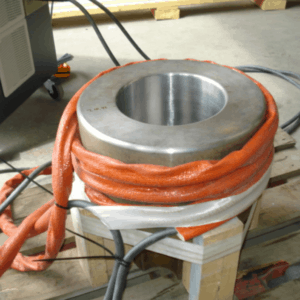
Objective : A steel die is heated with induction in a thermal process of an enclosed powder
Material: Steel die with a compressed powder solid inside
Temperature: 400 ºC (750 ºF)
Frequency: 22 kHz
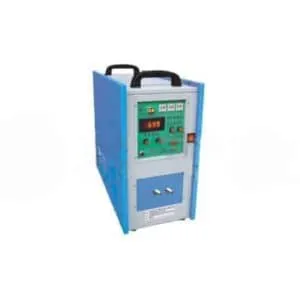
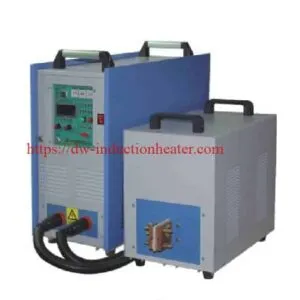
Induction Heating Equipment: DW-MF-70kW/30kHz induction heating system, equipped with a remote workhead containing one 53μF capacitor
– An induction heating coil designed and developed specifically for this application.
Process Induction Heating is evaluated to replace an oven/batch process.
Advantages include reduced heating/cooling ramp times and floor space requirements.
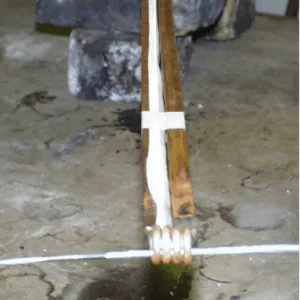
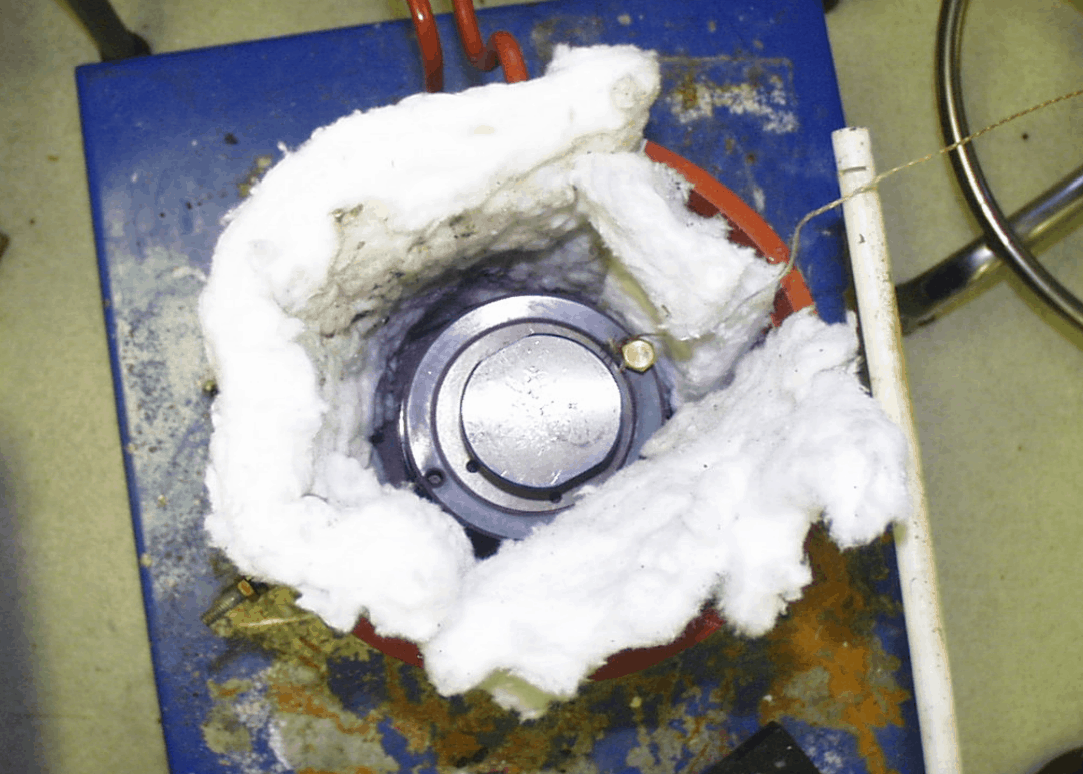
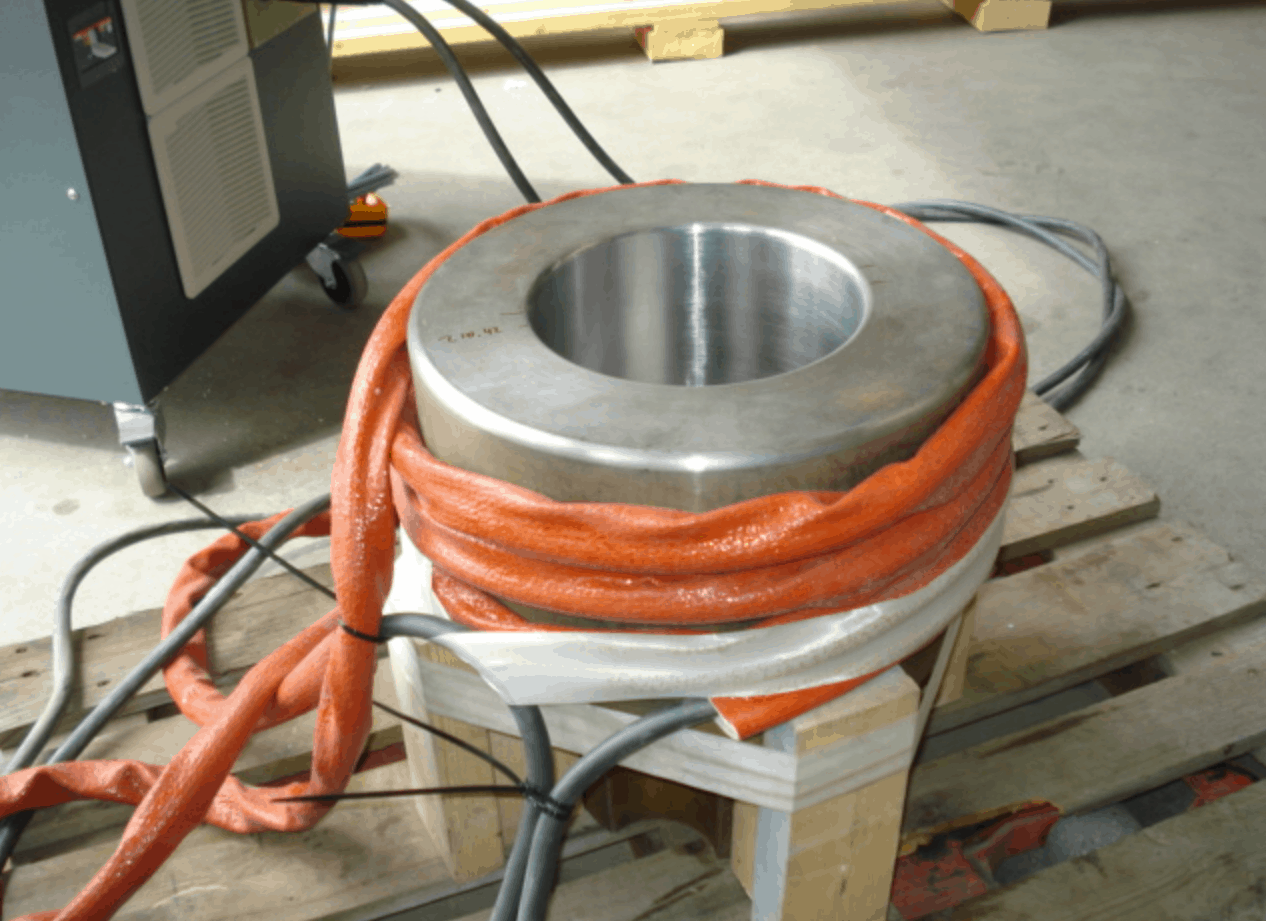
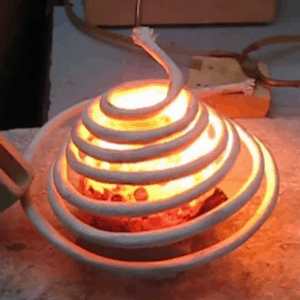
A nine-turn helical induction heating coil is used to heat the steel die while temperature of the die is monitored with a thermocouple. Die heating soak time is one hour.
Results/Benefits Induction heating provides:
– heat generated within the part, saving energy and time
– easy integration with a press
– anticipated process energy savings
– greatly reduced footprint compared with oven, batch, carts
– precise controllable heat
– rapid ramp-up and cool-down times
– automatic ramp and soak capability

How Steel Die Induction Heating Works
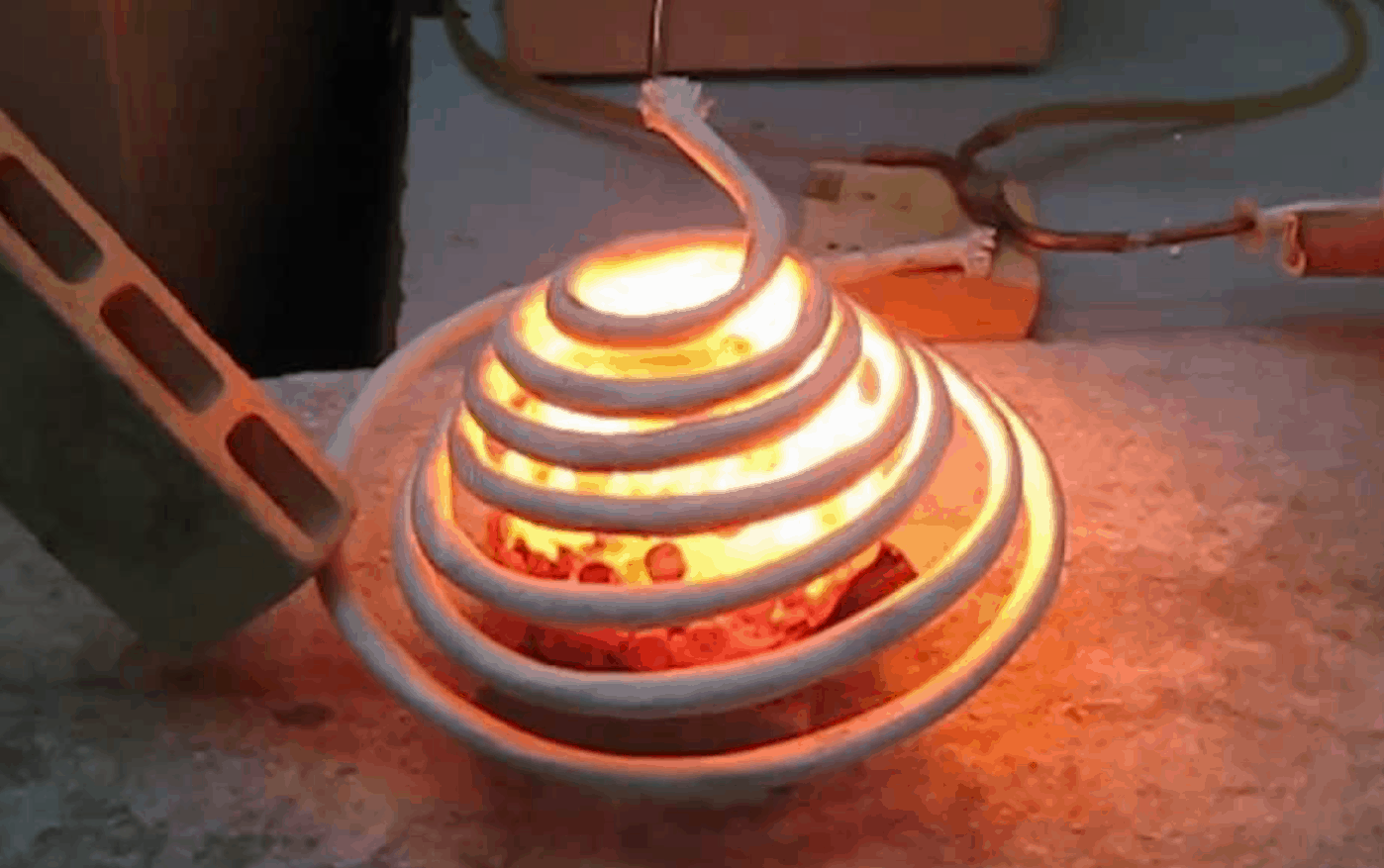
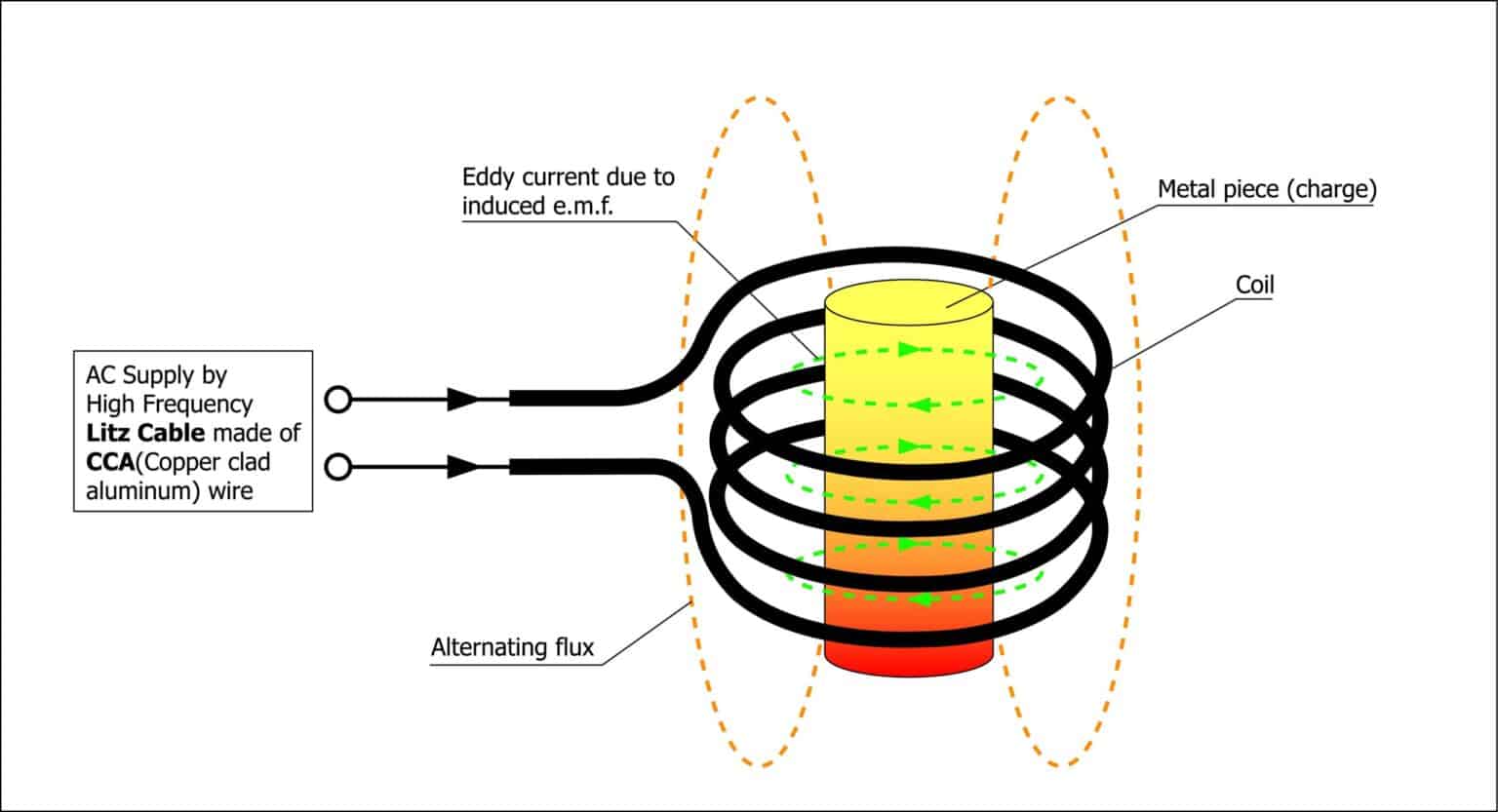
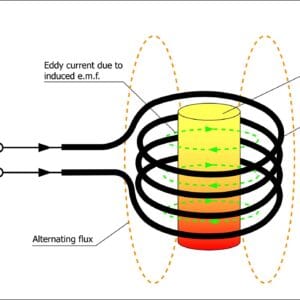
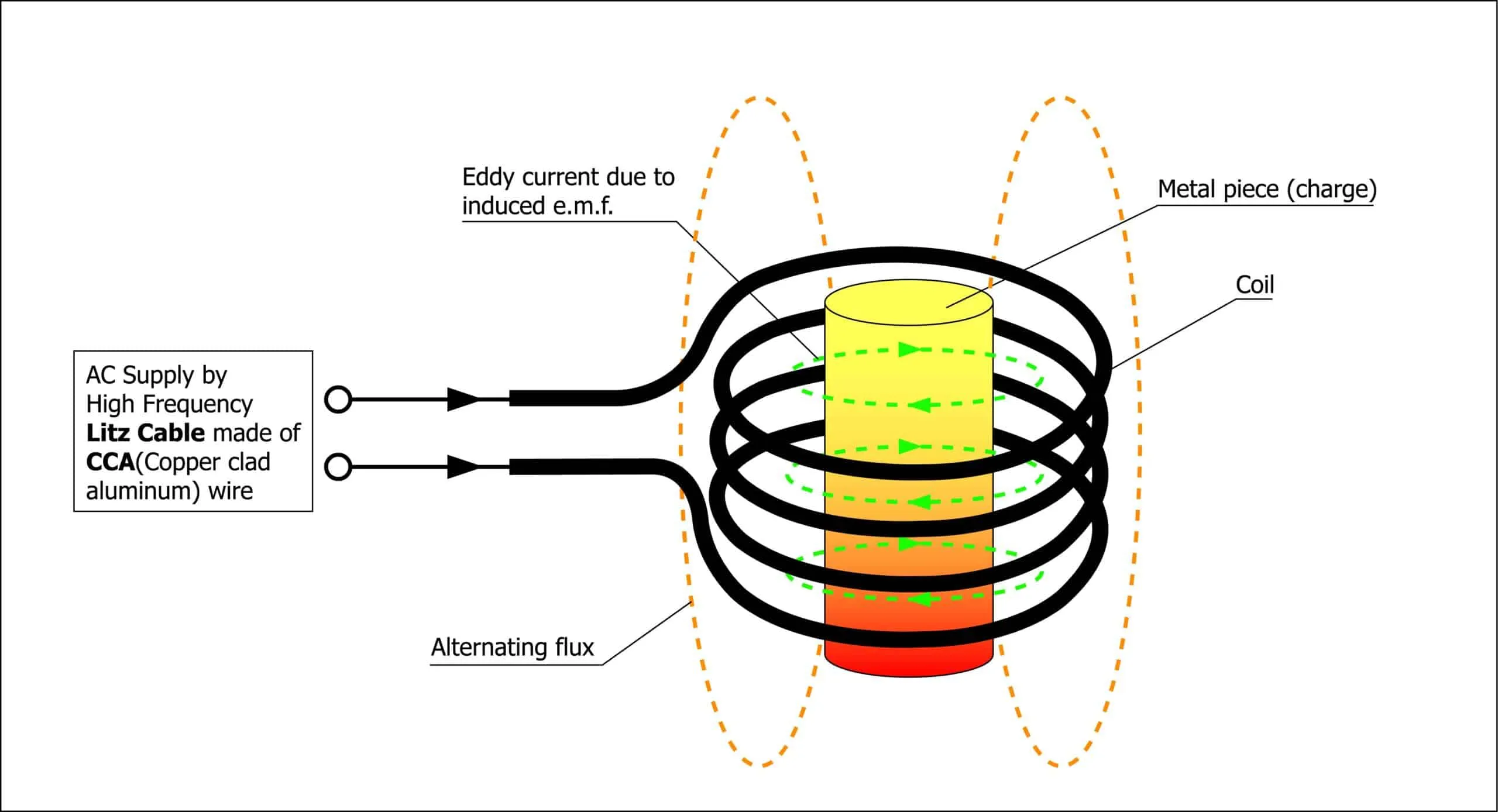
When alternating current flows through the induction coil, it produces a changing magnetic field around the steel die. Eddy currents are induced inside the conductive steel, producing heat directly in the workpiece.
Because the heat is generated within the die rather than transferred from a heated furnace atmosphere, the process can provide faster ramp-up, controlled temperature profiles and reduced equipment footprint.
For this application, a nine-turn helical induction coil was designed specifically around the steel die. A thermocouple monitored the die temperature while the process maintained a one-hour soak period.
For engineers developing similar tooling, die or mold applications, proper induction heating coil design is critical because coil-to-part coupling strongly affects heating rate and uniformity.
FAQs
1. What is steel die induction heating?
Steel die induction heating is a process in which an alternating electromagnetic field induces electrical currents directly within a steel die, generating heat inside the metal. It can be used for die preheating, thermal processing, powder-processing applications and controlled heating before forming or pressing operations.
2. What temperature can an induction heater reach when heating a steel die?
The achievable temperature depends on steel composition, die mass, induction power, frequency, coil design and required heating time. In the documented HLQ application, the steel die was heated to approximately 400°C (750°F) using a medium-frequency induction system.
3. What frequency is suitable for steel die induction heating?
Frequency selection depends on die dimensions, wall thickness, heating depth and required temperature uniformity. The documented application operated at approximately 22 kHz, which falls within the medium-frequency range and was suitable for heating the steel die used in the process.
4. Can induction heating replace an oven for heating steel dies?
In many repetitive industrial applications, yes. Induction heating can reduce warm-up time and equipment footprint while offering programmable temperature control. The current steel-die application was specifically evaluated as a replacement for an oven/batch heating process.
5. How is steel die temperature controlled during induction heating?
Temperature can be monitored using thermocouples or non-contact infrared sensors. In this application, a thermocouple monitored the die while the induction system provided controlled heating and a one-hour soak. Closed-loop PLC/PID control can also be used for automated ramp-and-soak profiles.
6. How should an induction coil be designed for heating a steel die?
The coil should follow the geometry of the die closely enough to provide efficient magnetic coupling while maintaining safe electrical clearance. Turn count, coil diameter, coupling distance, frequency and power all influence temperature uniformity. In the documented application, a custom nine-turn helical coil was used. HLQ’s coil-design guidance also notes that closer coupling generally improves energy transfer.