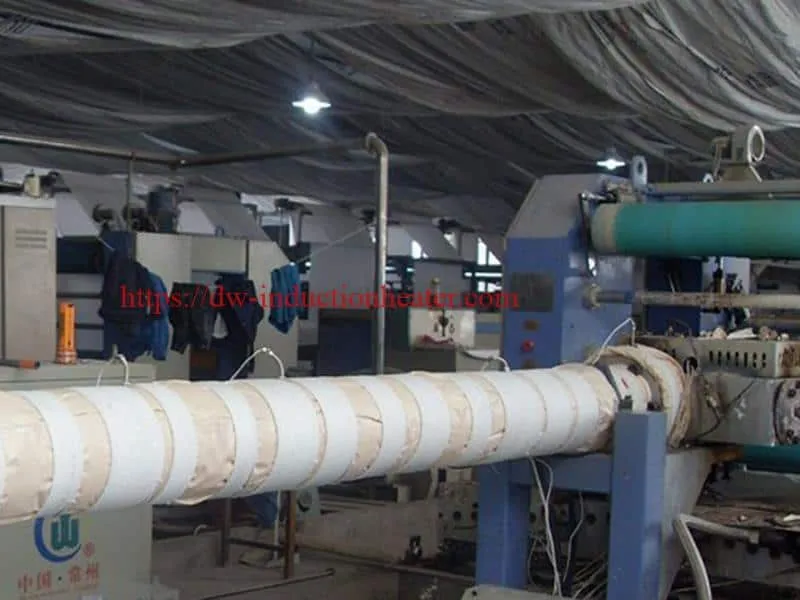
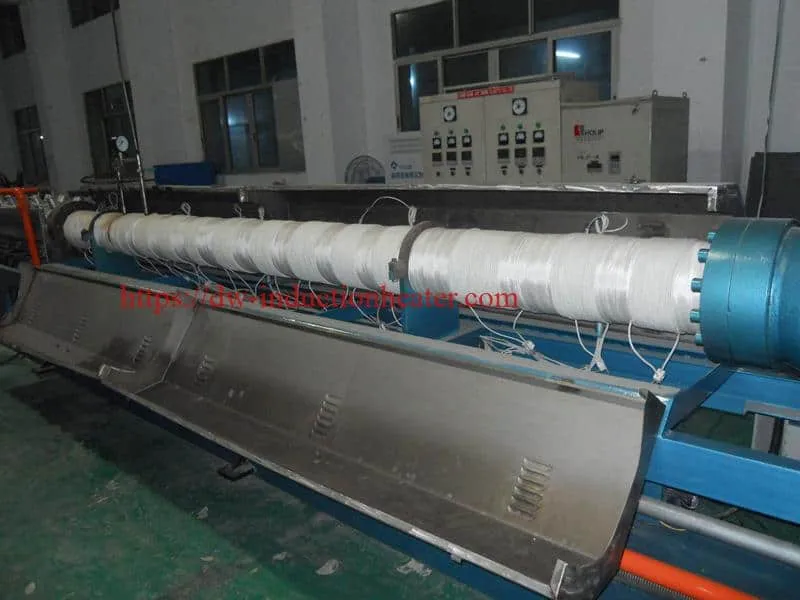
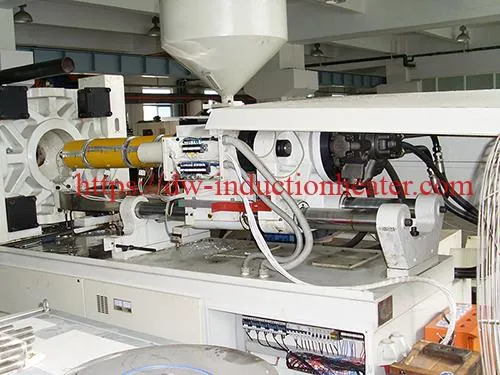

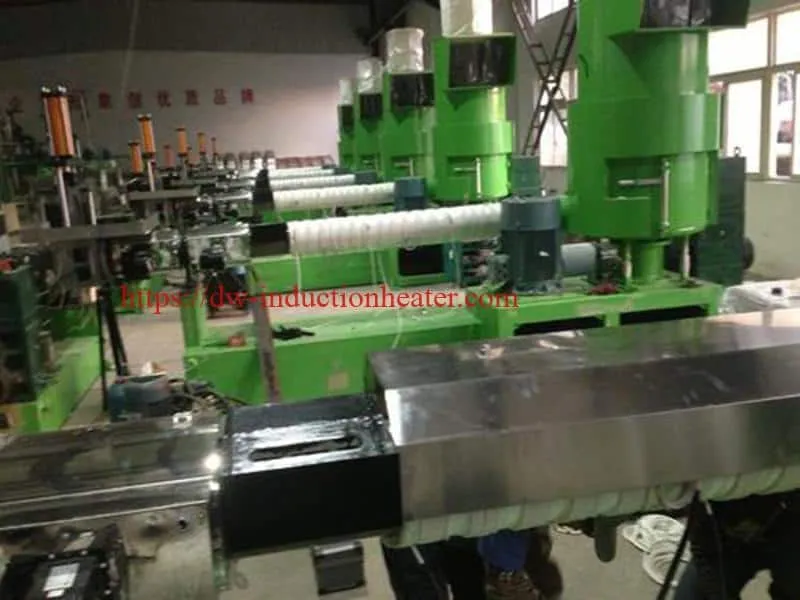
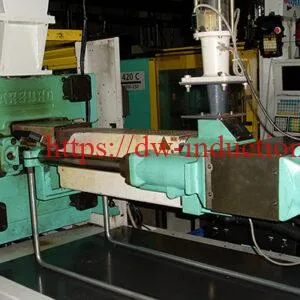


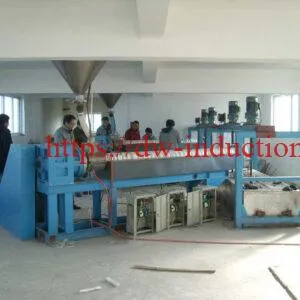


induction heating plastic granulator
Induction Heating Plastic Granulator & Plastic Extruder Barrel Heating System
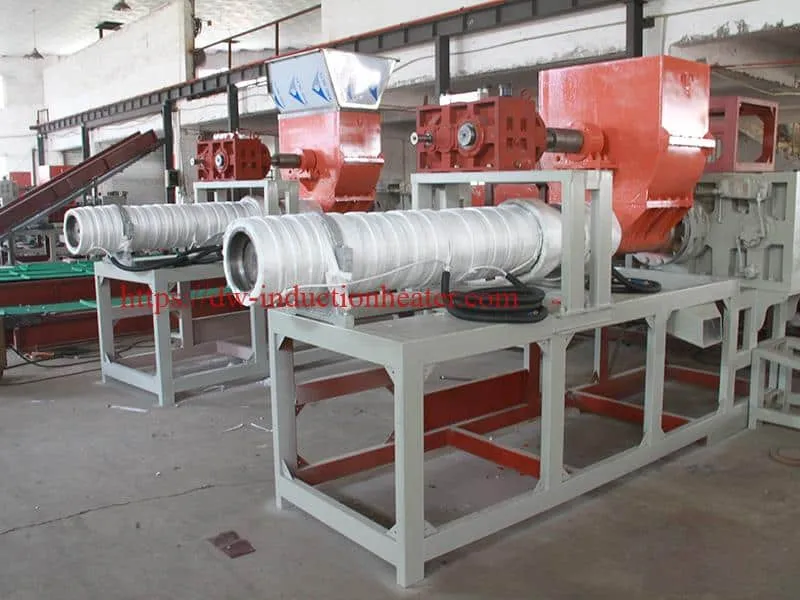
Quick Answer: An induction heating plastic granulator uses electromagnetic induction to heat the conductive steel barrel of a plastic granulating, extrusion, injection molding or recycling machine. Instead of first heating a resistance band and then transferring heat into the barrel, electromagnetic induction generates eddy-current heat directly within the metal barrel. The barrel then transfers thermal energy to the plastic material inside.
HLQ electromagnetic induction barrel heating systems can be used to retrofit plastic granulators, extruders, pelletizers, blown-film machines, injection molding machines and plastic recycling equipment. Typical heating areas include the barrel, cylinder, flange, die head and other conductive metal process sections.
Induction heating offers rapid electrical power control and minimizes the intermediate thermal resistance associated with conventional heater bands. Actual energy savings depend on the original heaters, barrel temperature, insulation, production load and operating cycle.

What Is an Induction Heating Plastic Granulator?
An induction heating plastic granulator is a plastic-processing machine in which the conventional resistance heater bands around the metal barrel are replaced or supplemented by electromagnetic induction heating.
The plastic material itself is not normally heated directly by induction because most polymers are electrically non-conductive. Instead, the electrically conductive steel barrel absorbs electromagnetic energy and becomes the heat-generating body.
The operating sequence is:
Electrical Power → Induction Power Supply → Induction Coil → Electromagnetic Field → Steel Barrel Heating → Plastic Material Heating
This principle can be applied to plastic granulation, extrusion, pelletizing, injection molding, blown film, recycling and other continuous polymer-processing machines.
How Does Electromagnetic Induction Heat a Plastic Extruder Barrel?
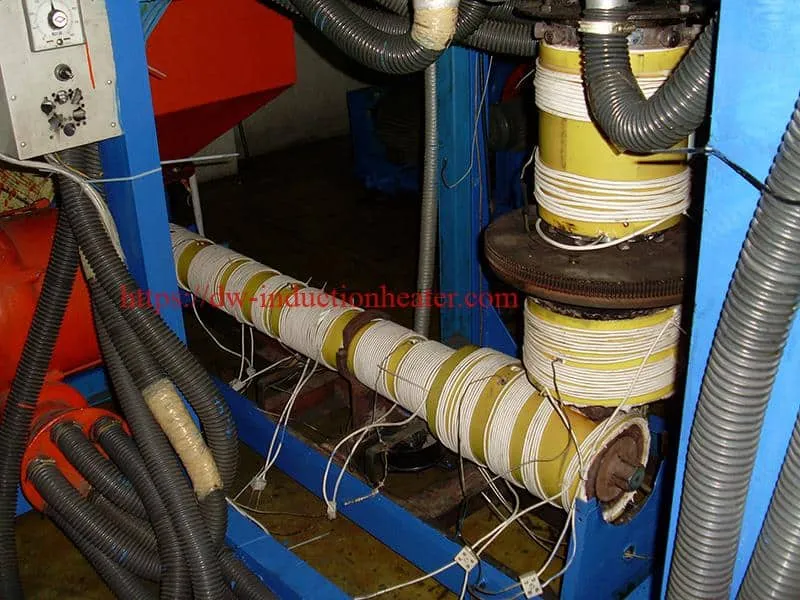
An induction coil is installed around the outside of the metallic barrel. A thermal insulation layer is normally positioned between the hot barrel and the induction coil.
When alternating current flows through the coil, an alternating magnetic field is generated. The magnetic field penetrates the conductive barrel wall and induces circulating electrical currents known as eddy currents.
The electrical resistance of the metal converts these currents into thermal energy.
Because heat is generated in the barrel itself, there is no need to first heat a resistance wire and then conduct that heat across the heater-band interface.
The barrel then transfers heat to the polymer through conduction, mixing and shear generated by the rotating screw.
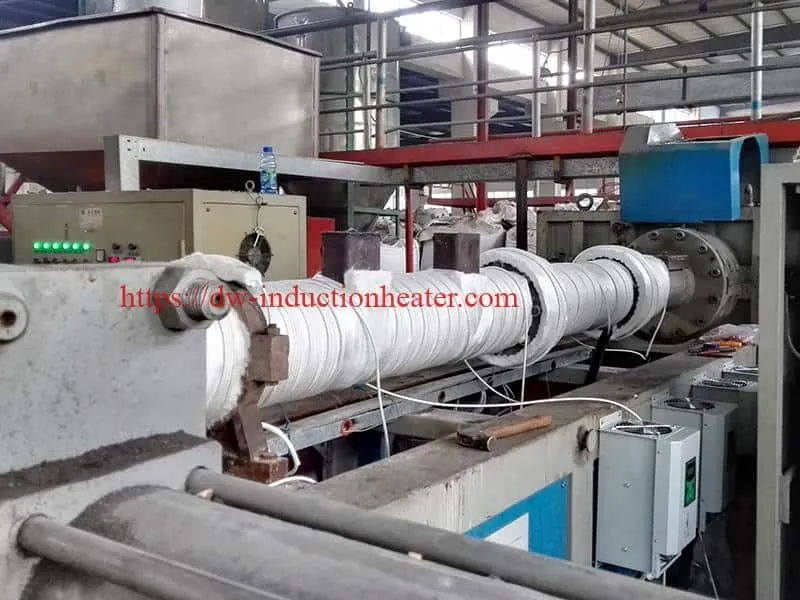
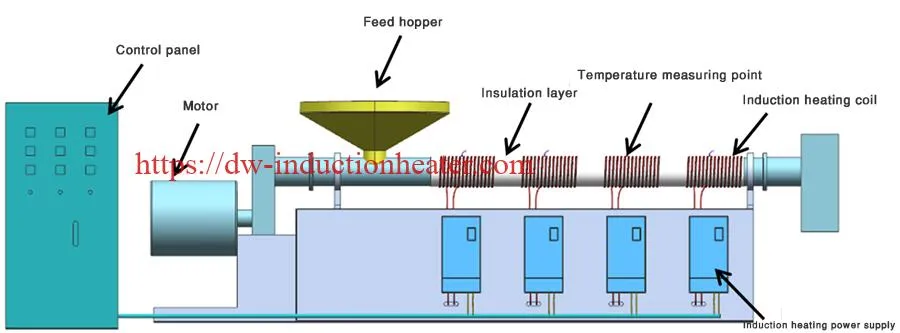
Induction Heating System Layout for Plastic Extrusion
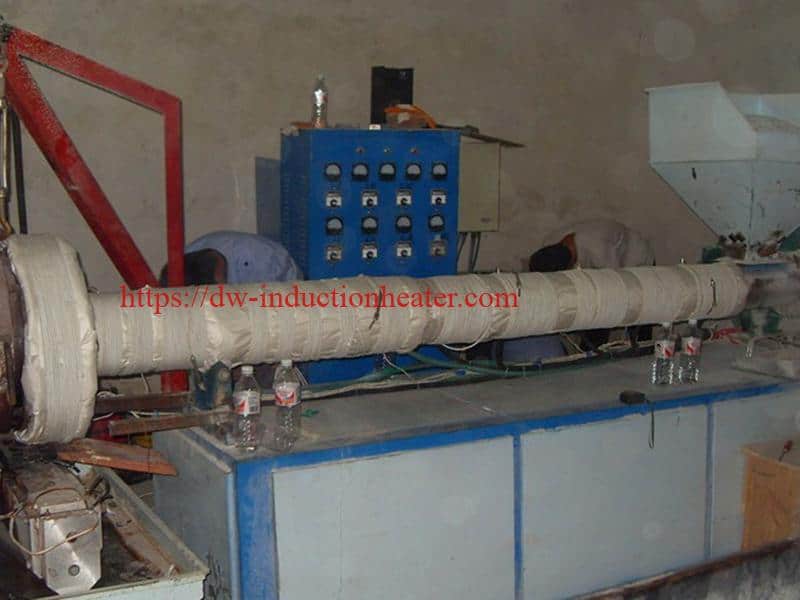
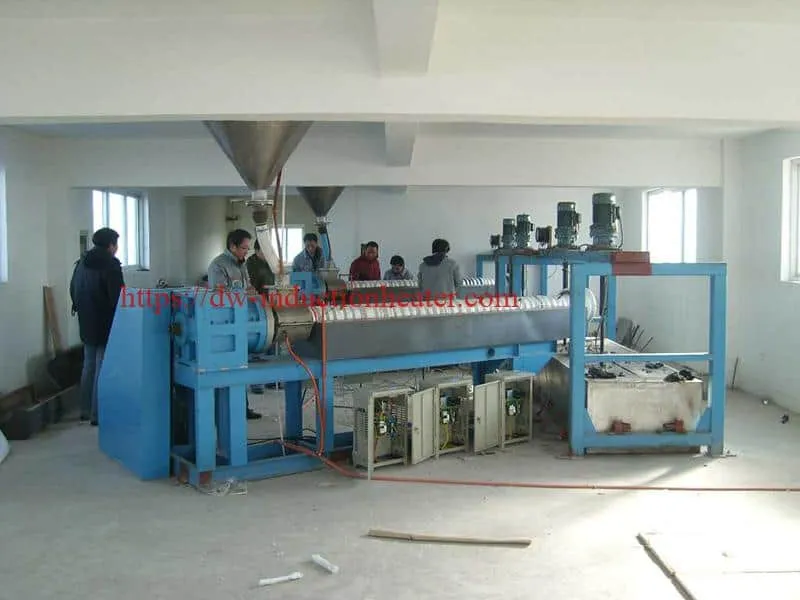
A typical induction-heated plastic extrusion line consists of several independently controlled barrel-heating zones.
Each zone can include:
- Induction heating power supply
- Thermal insulation layer
- Induction heating coil
- Temperature sensor
- Temperature controller
- Metal barrel or cylinder
- Screw and plastic-processing section
The barrel may be divided into several heating zones because different sections of an extruder often require different temperature set points.
For example, the feed section may operate at a lower temperature while compression, metering and die zones require progressively different temperature settings.

Main Components of an Induction Plastic Granulator Heating System
| Component | Main Function |
|---|---|
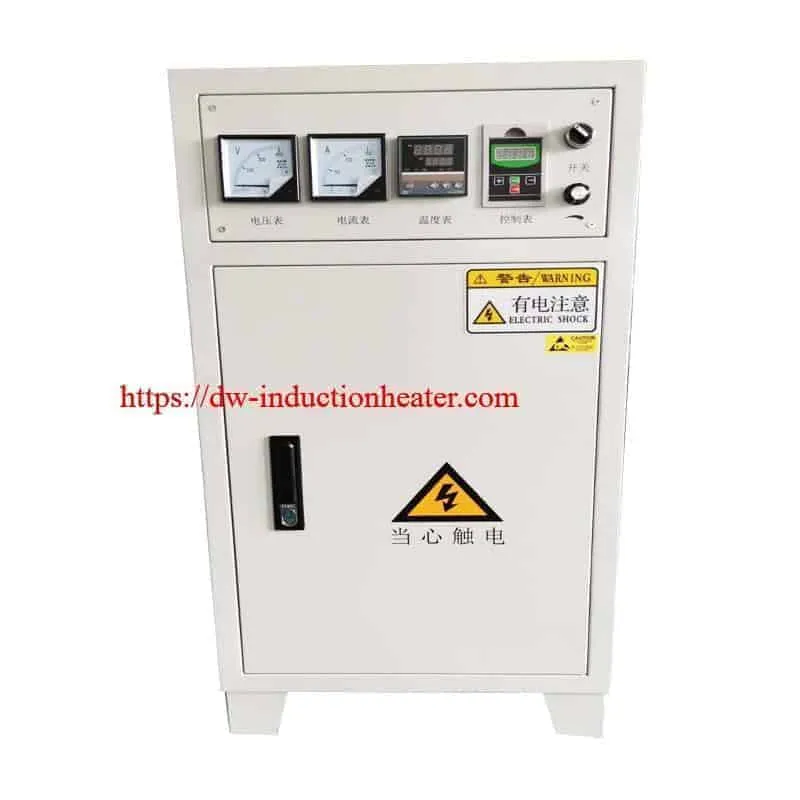
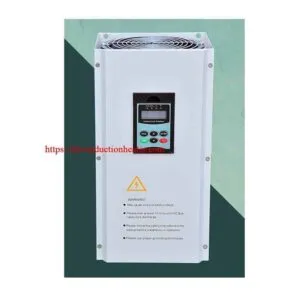
| Induction Heating Power Supply | Converts industrial electrical power into controlled induction heating output |
| Induction Coil | Creates the alternating electromagnetic field around the barrel |
| Thermal Insulation | Reduces heat loss from the barrel and thermally isolates the induction coil |
| Steel Barrel | Absorbs electromagnetic energy and generates heat |
| Temperature Sensor | Measures barrel temperature for closed-loop control |
| Temperature Controller | Adjusts induction power according to the required temperature |
| Electrical Control System | Coordinates individual heating zones and machine operation |
| Cooling / Ventilation | Maintains suitable operating temperature of the induction electronics |
Typical Multi-Zone Extruder Heating Arrangement
Industrial plastic extruders usually require multiple independent temperature zones rather than one large heater.
| Heating Zone | Typical Function | Recommended Control |
|---|---|---|
| Feed Zone | Initial material preheating | Independent temperature control |
| Compression Zone | Progressive polymer melting | Independent temperature control |
| Metering Zone | Maintain uniform melt condition | High-accuracy temperature control |
| Adapter / Flange | Maintain melt temperature between barrel and die | Separate heating zone where required |
| Die Head | Maintain required extrusion temperature | Independent heating and temperature measurement |
Where Can Induction Heating Be Used in Plastic Processing?
The technology can be applied to a wide range of plastic-processing machinery.
| Plastic Processing Equipment | Typical Induction Heating Area |
|---|---|
| Plastic Granulator | Barrel / cylinder |
| Plastic Extruder | Barrel, flange and die head |
| Plastic Pelletizer | Extrusion barrel and die section |
| Injection Molding Machine | Injection barrel |
| Blown Film Machine | Extruder barrel and die |
| Plastic Recycling Machine | Melting and extrusion barrel |
| Wire / Cable Extrusion Line | Extrusion barrel and die head |
| Sheet Extrusion Machine | Multi-zone extrusion barrel |
| Profile Extrusion Machine | Barrel and die section |
Induction heating works directly on electrically conductive materials such as metal. In plastic processing, the steel barrel acts as the conductive heating body while the plastic receives heat indirectly from the barrel.
Induction Heating for Plastic Granulation and Pelletizing
Plastic pelletizing and granulating systems melt polymer feedstock before extrusion through a die and subsequent cutting.
Depending on the machine, applications may include:
- Virgin plastic pellet production
- Recycled plastic granulation
- PE pelletizing
- PP pelletizing
- PVC processing
- ABS processing
- Engineering plastic extrusion
- Masterbatch production
- Compounding lines
- Dry-cut pelletizing
- Water-ring / wet-cut pelletizing
The required barrel-heating power depends on barrel diameter, heated length, insulation, processing temperature, polymer type and whether significant additional thermal load is introduced by incoming material.
Why Replace Resistance Heater Bands with Induction Heating?
Traditional plastic-processing machines commonly use mica, ceramic or other resistance heater bands around the metal barrel.
A resistance heater first converts electrical power into heat inside the heating element. That heat must then transfer through the heater-band structure and contact interface before entering the barrel.
Any heat radiated or convected outward from the heater surface is unavailable for directly heating the process barrel.
An induction heater, by comparison, generates electromagnetic energy that produces heat directly inside the conductive barrel.
A properly insulated induction installation can therefore reduce external heat loss, but the actual improvement must be evaluated against the condition and operating efficiency of the original heating system.
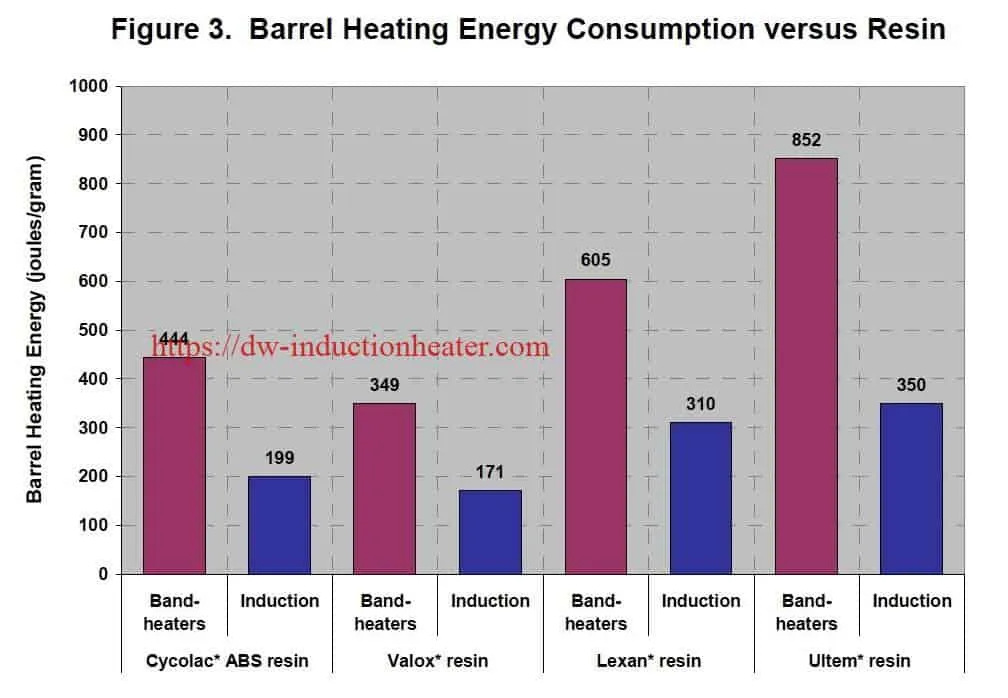
Induction Heating vs Traditional Resistance Barrel Heaters
| Feature | Induction Barrel Heating | Traditional Resistance Heater |
|---|---|---|
| Heating Principle | Heat generated directly inside conductive barrel | Heating element generates heat and transfers it to barrel |
| Heat Transfer Path | Short | Element → heater band → barrel |
| Heating Response | Fast electronic response | Depends on heater thermal mass |
| External Heat Loss | Can be reduced substantially with insulation | Higher if heater bands are exposed or poorly insulated |
| Temperature Control | Independent electronic zone control | Conventional ON/OFF or PID control |
| Heater Element Burnout | No conventional resistance heater element around barrel | Resistance elements require periodic replacement |
| Barrel Surface Insulation | Normally insulated | Varies by heater design |
| Workshop Radiant Heat | Typically reduced when properly insulated | Can be significant |
| Retrofit | Possible on suitable conductive barrels | Standard installation method |
Important: Energy-saving percentages should not be treated as guaranteed values. Actual energy reduction depends on existing heater efficiency, operating temperature, machine loading, insulation condition, barrel geometry and production cycle.
Key Advantages of Induction Heating for Plastic Processing
1. Direct Barrel Heating
Electromagnetic energy generates heat directly inside the conductive metal barrel.
2. Reduced External Heat Loss
The use of thermal insulation between the barrel and induction coil reduces heat transfer into the surrounding workshop.
3. Fast Heating Response
Electronic induction power can be changed quickly when the controller requests additional or reduced heat.
4. Independent Temperature Zones
Each section of a long extrusion barrel can use a separate induction power module and temperature sensor.
5. No Conventional Heater-Band Element
The induction coil is not used as a resistance heating element, reducing dependence on conventional heater-band replacement.
6. Lower External Surface Temperature
Correct insulation can significantly reduce the temperature of the outer coil area compared with an exposed hot resistance heater.
7. Suitable for Retrofit Projects
Existing extrusion and granulation machines can often be converted to induction barrel heating without replacing the complete plastic-processing machine.
8. Electronic Power Control
Induction heating modules can be integrated with existing temperature controllers, PLCs and production-line control systems.
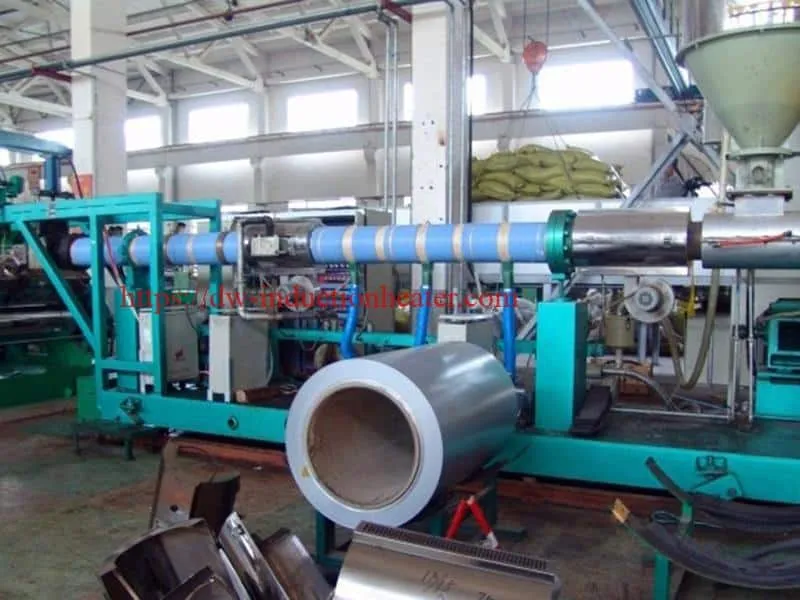
Induction Heating Power Calculation for a Plastic Granulator
Correct power sizing is one of the most important parts of an induction barrel-heating retrofit.
HLQ uses two practical approaches for preliminary selection:
Method 1: Existing Heater Power Is Known
| Existing Heater Load Rate | Preliminary Induction Power Selection |
|---|---|
| ≤ 60% | Approximately 80% of original installed heating power |
| 60–80% | Approximately equal to original installed heating power |
| > 80% | Engineering evaluation; approximately 120% of original power may be considered |
These values are preliminary selection guidelines. The actual thermal load should be checked before final equipment sizing.
Method 2: Existing Heating Power Is Unknown
| Machine Type | Preliminary Power Density |
|---|---|
| Injection Molding Machine | Approximately 3 W/cm² of heated barrel surface |
| Blown Film Extruder | Approximately 3 W/cm² |
| Plastic Extrusion Machine | Approximately 3 W/cm² |
| Dry-Cut Pelletizing Machine | Approximately 4 W/cm² |
| Wet-Cut Pelletizing Machine | Approximately 8 W/cm² |
Example: Calculate Induction Heater Power for an Extruder Barrel
Assume a cylindrical extrusion barrel has:
- Barrel diameter: 160 mm = 16 cm
- Heating length: 1000 mm = 100 cm
- Reference power density: 3 W/cm²
The cylindrical heating surface area is approximately:
A = π × D × L
A = 3.14 × 16 × 100 = 5,024 cm²
Estimated heating power:
P = 5,024 × 3 = 15,072 W
Therefore, the preliminary induction power requirement is approximately:
15 kW
This value should then be checked against barrel operating temperature, polymer throughput, start-up time, insulation thickness and individual zone requirements.
Recommended Power Calculation Formula
| Calculation | Formula |
|---|---|
| Barrel Surface Area | A = π × D × L |
| Preliminary Induction Power | P = A × Power Density |
| Extrusion / Injection Reference | P ≈ A × 3 W/cm² |
| Dry-Cut Pelletizer Reference | P ≈ A × 4 W/cm² |
| Wet-Cut Pelletizer Reference | P ≈ A × 8 W/cm² |
Factors That Affect Actual Required Heating Power
Surface-area calculations provide only a preliminary estimate. Final induction heater selection should also consider:
| Parameter | Influence on Heating Requirement |
|---|---|
| Barrel Diameter | Determines heated surface area |
| Heated Length | Determines total heating area |
| Barrel Wall Thickness | Affects thermal mass and heat distribution |
| Barrel Material | Affects electromagnetic coupling and resistive heating |
| Target Temperature | Higher operating temperature normally increases heat loss |
| Heating Time | Shorter warm-up time requires more available power |
| Polymer Throughput | Higher material flow can increase process thermal load |
| Incoming Material Temperature | Colder feed material requires additional energy |
| Insulation | Better insulation reduces environmental heat loss |
| Number of Zones | Determines power distribution along barrel |
| Screw Shear Heating | Mechanical energy can contribute significant process heat |
Induction Heating for Plastic Extrusion Machines
Plastic extruders are particularly suitable for multi-zone induction heating because the extrusion barrel is long and normally already divided into several controlled temperature sections.
Typical products include:
- Plastic pipe
- Plastic sheet
- Plastic film
- Plastic profiles
- Cable insulation
- Masterbatch
- Compound materials
- Recycled plastic pellets
Each zone can be engineered independently according to barrel diameter, length and required temperature.
Induction Heating for Plastic Recycling and Pelletizing
Plastic recycling lines frequently require continuous melting of shredded or granulated polymer before filtration, extrusion and pellet cutting.
Induction barrel heating can be applied to:
- PE recycling lines
- PP recycling lines
- PVC processing
- ABS recycling
- Film recycling
- Plastic washing and pelletizing lines
- Recycled polymer compounding
For continuous recycling systems, the thermal design should consider both electrical barrel heating and mechanical heating generated by screw shear.
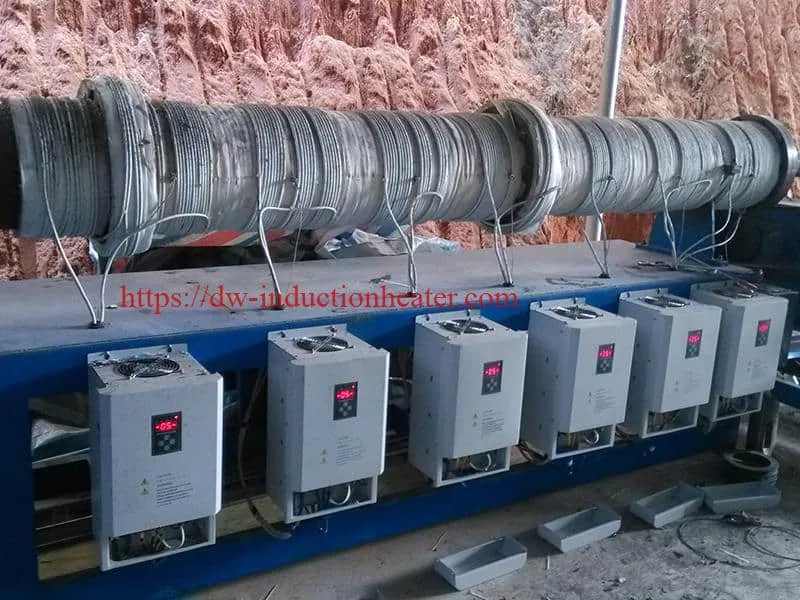
Induction Heating for Injection Molding Machines
The same electromagnetic barrel-heating concept can be applied to the injection unit of suitable plastic injection molding machines.
Advantages can include:
- Rapid barrel heating
- Reduced external heat radiation
- Independent heating zones
- Electronic temperature control
- Retrofit of suitable existing machines
The design must leave sufficient clearance for machine movement, wiring, hopper components, guards and maintenance access.
Barrel Material Requirements
Electromagnetic induction works directly only on electrically conductive materials. The most favorable plastic-processing applications therefore use metallic barrels with suitable electromagnetic properties.
| Barrel Material | Induction Heating Suitability |
|---|---|
| Carbon Steel | Excellent |
| Alloy Steel | Very Good / application dependent |
| Nitrided Steel | Generally suitable; engineering evaluation recommended |
| Bimetallic Barrel | Application dependent |
| Stainless Steel | Depends on grade and magnetic properties |
| Aluminum | Requires specialized induction design |
| Non-Metallic Barrel | Cannot normally be heated directly by induction |
Why Thermal Insulation Is Important
Induction heating does not eliminate the need for thermal insulation.
A properly designed system normally uses the following arrangement:
Steel Barrel → Thermal Insulation → Induction Coil
The insulation performs several important functions:
- Reduces outward heat loss
- Protects the induction coil from excessive barrel temperature
- Reduces external surface temperature
- Improves overall heating efficiency
- Helps stabilize barrel temperature
Insulation material and thickness should be selected according to barrel temperature and available installation space.
Temperature Control for Plastic Extrusion
Accurate barrel temperature is important because polymer viscosity and melt quality are temperature dependent.
A typical control loop consists of:
Thermocouple → Temperature Controller / PLC → Induction Power Supply → Barrel Heating
Each heating zone can have its own thermocouple and independent set point.
For demanding extrusion processes, the control system can also coordinate heating with barrel cooling because screw shear may generate enough internal heat that some zones require cooling after steady-state production is reached.
Typical Temperature Zones
Actual settings depend on resin formulation and machine design, but a typical extrusion process may use several zones:
| Zone | Function |
|---|---|
| Zone 1 | Feed / initial heating |
| Zone 2 | Compression and melting |
| Zone 3 | Further melting and homogenization |
| Zone 4 | Metering |
| Adapter | Melt transfer |
| Die Head | Maintain final processing temperature |
How to Retrofit an Existing Plastic Extruder
A typical retrofit project includes the following stages:
- Record existing heater power for each barrel zone.
- Measure barrel diameter and heating length.
- Identify barrel material.
- Record operating temperatures.
- Measure actual electrical consumption where possible.
- Remove existing heater bands if required.
- Install suitable thermal insulation.
- Wind or install the induction coil around each zone.
- Install induction power modules.
- Connect thermocouples and temperature controls.
- Test each heating zone independently.
- Verify temperature uniformity.
- Compare electrical consumption under equivalent production conditions.
How to Evaluate Real Energy Savings
The most reliable way to determine energy savings is to compare the original and induction systems under the same production conditions.
| Measurement | Before Retrofit | After Retrofit |
|---|---|---|
| Product / Resin | Record | Same material |
| Production Throughput | Record kg/h | Use comparable kg/h |
| Barrel Temperature | Record | Use same set points |
| Production Time | Record | Use same duration |
| Electricity Consumption | Measure kWh | Measure kWh |
| Ambient Conditions | Record | Keep comparable where possible |
Energy-saving percentage can then be calculated as:
Energy Saving (%) = (Original kWh − Induction kWh) ÷ Original kWh × 100%
This method provides much more useful engineering data than relying on a fixed theoretical saving percentage.
Information Required for Induction Heater Selection
| Required Information | Example |
|---|---|
| Machine Type | Plastic granulator / extruder |
| Barrel Material | Alloy steel |
| Barrel Diameter | 160 mm |
| Total Heating Length | 2000 mm |
| Number of Heating Zones | 4 |
| Original Heater Power | 20 kW |
| Operating Temperature | 180–250°C |
| Plastic Material | PP / PE / PVC / ABS |
| Production Capacity | kg/h |
| Required Warm-Up Time | Minutes |
| Electrical Supply | 380 V / 50 Hz / 3 Phase |
Induction Heating Plastic Granulator Selection Guide
For the most accurate recommendation, provide the dimensions of every individual heating zone rather than only the overall barrel dimensions.
Example:
| Zone | Diameter | Length | Current Heater Power | Operating Temperature |
|---|---|---|---|---|
| Zone 1 | _____ mm | _____ mm | _____ kW | _____ °C |
| Zone 2 | _____ mm | _____ mm | _____ kW | _____ °C |
| Zone 3 | _____ mm | _____ mm | _____ kW | _____ °C |
| Zone 4 | _____ mm | _____ mm | _____ kW | _____ °C |
Applications by Plastic Processing Industry
| Industry | Typical Application |
|---|---|
| Plastic Recycling | Recycled pellet extrusion and granulation |
| Pipe Manufacturing | PE, PP and PVC extrusion |
| Film Manufacturing | Blown-film extruder barrel heating |
| Injection Molding | Injection barrel heating |
| Wire & Cable | Insulation extrusion |
| Profile Manufacturing | Plastic profile extrusion |
| Compounding | Masterbatch and polymer compounding |
| Sheet Production | Plastic sheet extrusion |
Frequently Asked Questions About Induction Heating Plastic Granulators
What is an induction heating plastic granulator?
It is a plastic granulating or pelletizing machine that uses electromagnetic induction to heat its conductive metallic barrel instead of relying entirely on conventional resistance heater bands.
Does induction heating heat the plastic directly?
Normally no. Most plastic materials are non-conductive. The induction system heats the metal barrel, and the barrel transfers heat to the polymer.
Can induction heating be used on an existing plastic extruder?
Yes, many existing plastic extruders can be retrofitted if the barrel material and geometry are suitable for induction heating.
Can induction heating be used for a plastic pelletizer?
Yes. It can be used for suitable dry-cut and wet-cut pelletizing systems, although power requirements differ depending on the process.
How is induction heater power calculated?
A preliminary calculation can use heated barrel surface area multiplied by a reference power density. The current HLQ guideline uses approximately 3 W/cm² for extrusion and injection machines, 4 W/cm² for dry-cut pelletizers and 8 W/cm² for wet-cut pelletizers.
Can induction heating reduce electricity consumption?
It can reduce electricity consumption when it replaces a less efficient or poorly insulated barrel-heating system. The actual saving must be measured under equivalent production conditions.
Does the induction coil become as hot as the barrel?
The coil is not the primary heat-generating resistance element. Thermal insulation between the barrel and coil helps limit heat transfer from the hot barrel to the coil.
Can each barrel zone have a different temperature?
Yes. Multi-zone induction systems can use independent power supplies, thermocouples and temperature settings.
Can induction heating be used for PVC extrusion?
Yes, provided the barrel material, temperature control and heating configuration are suitable for the extrusion machine and PVC process.
Can it be used for PE and PP recycling?
Yes. Induction barrel heating can be applied to PE and PP extrusion and recycling machines.
Can it be used for injection molding machines?
Yes. Suitable metallic injection barrels can be heated by electromagnetic induction.
Does an induction retrofit require changing the screw?
Normally the heating retrofit concerns the barrel and external heating system. Whether any screw modification is required depends on the original machine and process rather than the induction principle itself.
What information is needed for a quotation?
Please provide barrel diameter, heating length, number of zones, barrel material, existing heater power, operating temperature, polymer type, production capacity and electrical supply.
Request an Induction Heating Plastic Granulator Quotation
For accurate induction heater selection, please provide:
| Project Information | Customer Data |
|---|---|
| Machine Type | ________________________ |
| Plastic Material | ________________________ |
| Barrel Material | ________________________ |
| Barrel Diameter | _____ mm |
| Total Heating Length | _____ mm |
| Number of Heating Zones | _____ |
| Existing Heating Power | _____ kW |
| Operating Temperature | _____ °C |
| Production Capacity | _____ kg/h |
| Required Warm-Up Time | _____ minutes |
| Electrical Supply | _____ V / _____ Hz / _____ Phase |
| Installation Country | ________________________ |
HLQ engineers can use these parameters to calculate the required induction heating power, determine the number of heating zones, recommend the induction power supply configuration and prepare a suitable electromagnetic barrel-heating solution for the plastic granulator or extrusion machine.
Brief Introduction of induction heating plastic granulator/plastic extrusion:
Induction heating plastic granulator/plastic extrusion is a one type of energy-saving heater. It has many advantages including significant energy-saving, fast heating up, high energy efficiency, low or zero maintenance etc. It can also lower environment temperature by generating much less heat. While installing the induction heater system, there will not involve any major changes to the electrical control system.
 Where can induction heating plastic granulator/plastic extrusion?
It is mainly applied to injection, extrusion; blow filming, wire drawing, granulating and recycling machines, etc. The product application includes film, sheet, profile, raw material etc. It can be used for heating the barrel, flange, die head, screw and other parts of the machines. It is excellent in energy-saving and cooling down work environment.
Induction heating is the process of heating an electrically conducting object (usually a metal) by electromagnetic induction, where eddy currents are generated within the metal and resistance leads to Joule heating of the metal. The induction coil itself does not get heated. The heat generating object is the heated object itself.
Why and how induction heating plastic granulator/plastic extrusion can save energy?
Presently,most of the plastic machines are using the conventional resistance heating method, where the resistance wire is heated up and then transfer the heat to the barrel via heater cover.So only the heat close to the barrel surface can be transferred to the barrel and the heat close to outside heater cover is lost to the air which causes a rise in environment temperature.
Induction heater is technology where high frequency magnetic fields which cause he be heated up bu electro-magnetic field(EMF)that are brushing against each other.When the barrel is heated up and heat is minimum,there is very high heat efficiency and minimum heat loss to the environment where energy saving could reach30-80%.Due to the fact that the induction coil is not producing any high heat and also there is no resistance wire that gets oxidized and causes the heater to burn out, the induction heater has a longer service life and also less maintenance.
 What are the advantages of induction heating plastic granulator/plastic extrusion?
- Energy efficiency 30%-85%
Currently, plastic processing machinery mainly uses resistance heating elements which can produce a large amount of heat radiated to the surroundings. Induction heating is an ideal alternative to solve this issue. The surface temperature of induction heating coil ranges between 50ºC and 90ºC, the heat losses are significantly minimized, providing energy savings of 30%-85%. The energy saving effect is therefore more obvious when the induction heating system is used in high power heating equipment.
- Safety
Using induction heating system enables the surface of the machine to be safe for touching, and that means it can avoid burn injuries which often occur in plastic machines that use resistance heating elements, providing a safe workplace for operators. - Fast heating, high heating efficiency
Compared to resistance heating whose energy conversion efficiency is approximately at 60%, the induction heating is over 98% efficient at converting electricity to heat. - Lower workplace temperature, higher operation comfort
After using induction heating system, the temperature of entire production workshop is lowered by more than 5 degrees. - Long service life
In contrast to resistance heating elements that have to long-lasting work at high temperature, the induction heating works at near ambient temperature, therefore efficiently prolonging the service life. - Accurate temperature control, high product qualification rate
The induction heating provides low or no thermal inertia, so that it will not cause the temperature overshoot. And the temperature can remain at set value of 0.5 degree difference.
What is the superiority of induction heating plastic granulator/plastic extrusion compared with traditional heaters?
| Induction heater | Traditional heaters | |
| Heating method | Induction heating is the process of heating an electrically conducting object (usually a metal) by electromagnetic induction, where eddy currents are generated within the metal and resistance leads to Joule heating of the metal. The induction coil itself does not get heated. The heat generating object is the heated object itself | Resistance wires get heated directly and heat is transferred by contact. |
| heating up time | Quicker heating-up, higher efficiency | slower heating-up, lower efficiency |
| Energy saving rate |
Save 30-80% energy rate,reduce working temperature |
Cannot save energy |
| Installation | Easy to install | Easy to install |
| Operation | Easy to operate | Easy to operate |
| Maintenance |
Control box is easy to replace without turning off your machine |
Easy to replace but have to turning off your machine |
| Temperature Control | Small thermal inertia and precise temperature control because the heater doesn’t get heated byitself. | Big thermal inertia, low accuracy in temperature control |
| Product Quality | Higher product quality because of precise temperature control | Lower product quality |
| Safety |
Outer sheath is safe to touch, lower surface temperature, no electric leakage. |
Temperature on outer sheath is much higher, easy to get burned. Electric leakage under wrong operation. |
| Service life of heater | 2-4years | 1-2 years |
| Service life of Barrel and Screw |
Longer usage life for barrel, screw etc. due to lower frequency of changing heaters. |
Shorter usage life for barrel, screw etc. |
| Environment | Lower environment temperature; No noise |
Much higher environment temperature and much noise |
Induction Heating Power Calculation
In the case of knowing the heating power of existing heating system, selecting an appropriate power according to load rate
- Load rate ≤ 60%, applicable power is 80% of the original power;
- Load rate between 60%-80%, select the original power;
- Load rate > 80%, applicable power is 120% of the original power;
When the heating power of existing heating system is unknown
- For injection molding machine, blown film machine and extrusion machine, the power should be calculated as 3W per cm2 according to the actual surface area of the cylinder (barrel);
- For dry cut pelletizing machine, the power should be calculated as 4W per cm2 according to the actual surface area of the cylinder (barrel);
- For wet cut pelletizing machine, the power should be calculated as 8W per cm2 according to the actual surface area of the cylinder (barrel);
For example: cylinder diameter 160mm, length 1000mm (i.e. 160mm=16cm, 1000mm=100cm)
Cylinder surface area calculation: 16*3.14*100=5024cm²
Calculating as 3W per cm2: 5024*3=15072W, i.e. 15kW