Annealing Stainless Steel Pin for Braided Medical Device Ends
Annealing Stainless Steel Pin for Braided Medical Device Ends with the DW-UHF-4.5KW Induction Heater
Objective:
To anneal a stainless steel pin used to terminate and trim a 2.3 mm stainless steel braid, so that the braid end can be cut cleanly without the individual filaments flaring outward or unwinding from the braid structure.
The requirement comes from a medical device manufacturer that produces braided components for surgical instruments. A braided end has to be terminated and then trimmed in sections to length, and a braid that has been cut cold tends to open up: the woven filaments spring away from the cut, the end flares, and the termination is no longer usable. Heat treatment is what closes the braid back down on itself, and the practical question is how to deliver that heat to a part this small without distorting it, oxidising it, or melting it.
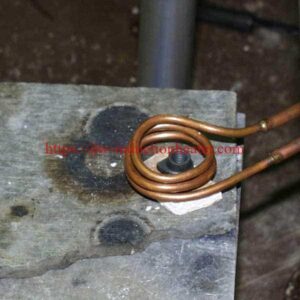
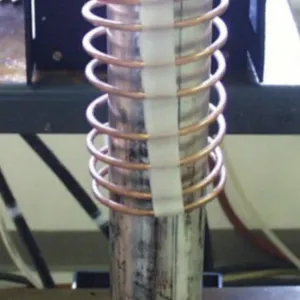
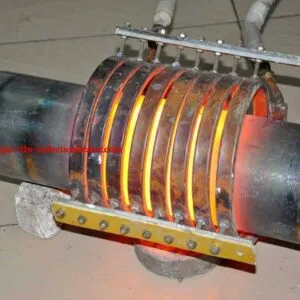
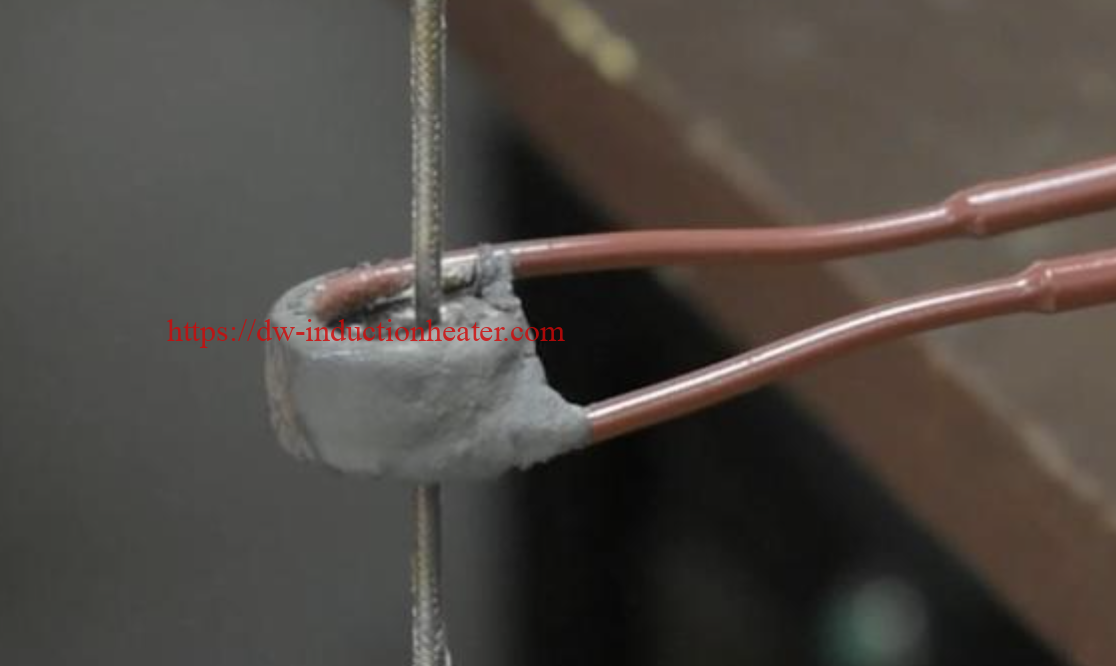
Annealing a stainless steel pin is the mechanism used here. A stainless steel pin is inserted into the braid so that the coil has a solid mass to couple to, the braid is compressed around the pin, and the assembly is heated together. The pin carries the heat into the braid and gives the induced current something to work with; the braid relaxes, the filaments stay locked, and the end can be trimmed. The full method is described underinduction annealing machine applications, and the general principles of the process are set out in the induction annealing process overview.
| Parameter | Specification |
|---|---|
| End Product | Stainless steel braid termination for a medical device assembly, terminated and trimmed in sections, with a stainless steel pin used as the mass carrier |
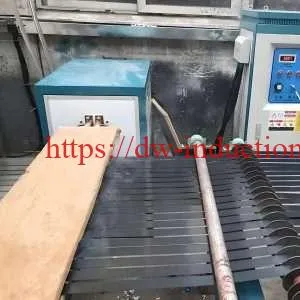
| Equipment | DW-UHF-4.5KW Induction Heater, with a separate water-cooled heating station and a multi-turn induction coil matched to the braid and pin assembly |
| Materials | Stainless steel braid, 2.3 mm outer diameter, and a stainless steel pin |
| Temperature | More than 500 °C (932 °F) |
| Frequency | 300–500 kHz |
The DW-UHF-4.5KW Induction Heater is a compact ultra-high-frequency unit rated at 4.5 kW on single-phase 220 V input, with a water-cooled heating station, and a separate heating station and coil arrangement that keeps the operator working at the front of the bench. The widerultra high frequency induction heating range covers the rest of the UHF equipment classes.
Testing:
Three tests were carried out on the same DW-UHF-4.5KW Induction Heater, working through the problem in the order that explains it best. The braid was 2.3 mm outer diameter stainless steel throughout, and the target was a braid that had been heated past 500 °C (932 °F) and could be trimmed without flaring or unwinding.
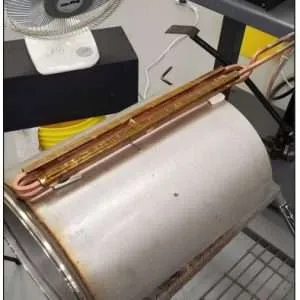
Test 1 – copper insert at the lower frequency setting. The first approach was to place a copper rod inside the braid, both to hold the braid stable and to even out the heating, and to run the heater at the lower end of the 300–500 kHz band. The intent was to stabilise the part and distribute the heat. The result was that the temperature reached was not high enough. The copper drew the heat away from the braid rather than delivering it, and the braid never reached the temperature needed to relax. This insert material was rejected, and the test established the first requirement: the insert must be the same stainless steel as the part, so that it shares the braid’s thermal behaviour instead of acting as a heat sink.
Test 2 – higher frequency, no insert. The second test raised the frequency to the upper end of the 300–500 kHz band and heated the braid on its own, with no insert at all. The result was essentially the same as Test 1. The diagnosis was clear once the heating behaviour was understood: the small heated area of the thread is the reason for the higher thermal radiation back into the coil and the resulting low heating efficiency. A 2.3 mm braid presents very little mass to the coil, and at ultra-high frequency the skin depth in stainless steel is shallow, so the heat is generated in a thin surface layer and a large share of it radiates back into the coil instead of into the part. Raising the frequency alone does not fix this, because the problem is the amount of material in the field, not the depth of current penetration.
Test 3 – higher frequency with a stainless steel pin and a compressed braid. The final test kept the higher frequency setting and changed two things: the insert was changed from copper to a stainless steel pin, and the braid was compressed around that pin so that more mass sat inside the coil. The result was decisive. The braid reached more than 500 °C (932 °F), and the braid ends could be trimmed without flaring or unwinding.
This is the same conclusion the testing arrived at from three different directions, and it is worth stating plainly, because it is the transferable lesson of the whole application: annealing a stainless steel pin is not a substitute for heating the braid, it is the enabling step. The stainless steel pin supplies the mass the coil needs, the compression puts that mass inside the heated zone, and the matching material means the insert and the braid reach temperature together. The [induction heating coil](https://dw-inductionheater.com/product-category/induction-heating-coils) for this application is designed around the braid diameter and the pin, so the coupling and the heated band are fixed by the geometry rather than by operator judgement.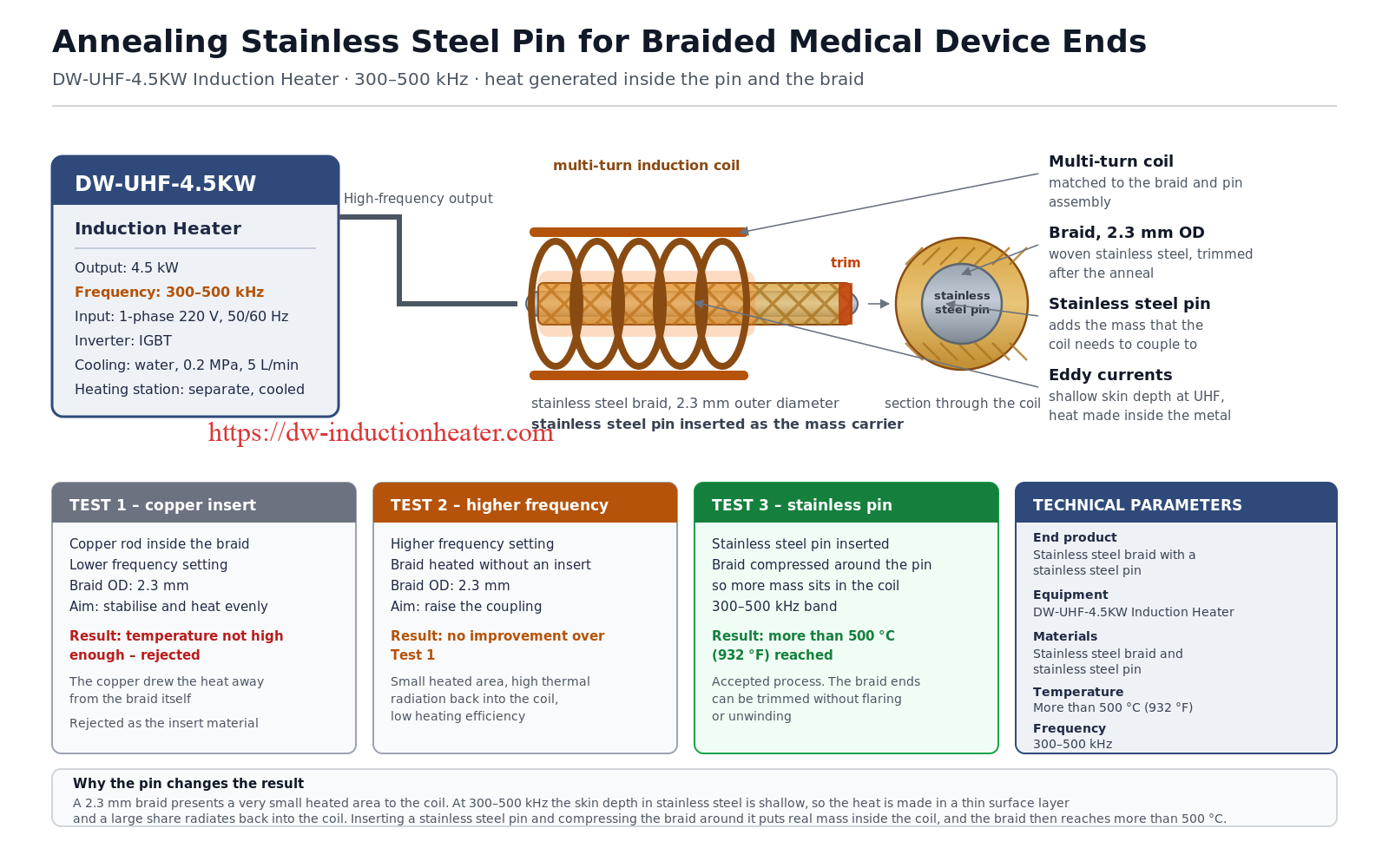
The common problems specific to this application, and the process control that answers each one, are set out below.
| Problem | Possible cause | Recommended solution |
|---|---|---|
| Braid end flares when trimmed | Braid not fully relaxed before cutting, so the filaments spring away | Bring the braid past 500 °C before trimming, so the filaments are locked together when the cut is made |
| Temperature never reached | Insert material is not the same as the workpiece and acts as a heat sink | Use a stainless steel pin, matching the braid, so the insert and the braid heat together |
| Low heating efficiency | Very small heated area, so much of the heat radiates back into the coil | Compress the braid around the pin so that real mass sits inside the coil and the induced current has something to couple to |
| Raising frequency makes no difference | Frequency was treated as the only variable | Frequency sets the depth of current penetration, not the amount of material heated. Address the mass in the coil first |
| Braid moves or lifts inside the coil | Loose braid and pin not held in position | Compress the braid onto the pin and hold the assembly so the position is identical on every cycle |
| Result varies between pieces | Manual positioning and inconsistent compression | Fixed coil position and a repeatable assembly step, so the same thermal cycle is applied to every part |
| Heating station or coil runs hot | Cooling flow reduced or obstructed | Check water flow, pressure and temperature against the published cooling requirements before the run |
Benefits:
| Benefit | Outcome |
|---|---|
| Clean trimming without flaring | The braid ends can be cut in sections without the filaments flaring outward or unwinding |
| Consistent result on every part | A fixed coil position and a repeatable assembly produce the same thermal cycle each time |
| Localized, non-contact heating | Only the section inside the coil is heated, so the rest of the braid is not thermally soaked |
| Fast heat cycle | The assembly is at temperature in seconds, because the heat is generated inside the metal rather than carried to it |
| No flame on the line | No open flame at the station, and no torch-induced oxidation or scorching of the braid |
| Hands-free once running | No operator skill is needed to hold the cycle, so the operation can be automated |
| Compact, bench-capable equipment | A single-phase 220 V unit that can sit at the station rather than needing a dedicated room |
| Low energy consumption | The heat is generated in the workpiece, so the losses that limit a flame or a furnace process are avoided |
For the same class of work on stainless steel components, HLQ has published a reference trial on annealing stainless steel tube for dental tool handles, which reaches its target temperature in a few seconds on the same ultra-high-frequency principle.
summary
The DW-UHF-4.5KW Induction Heater at 300–500 kHz anneals a stainless steel pin and the 2.3 mm stainless steel braid around it to more than 500 °C (932 °F), so that a medical device braid can be terminated and trimmed in sections without the ends flaring or unwinding.
The three tests explain why it works. A copper insert at the lower frequency setting drew the heat away and the braid never reached temperature. Raising the frequency on its own changed nothing, because the diagnosis was not about penetration depth but about mass: a 2.3 mm braid presents a very small heated area to the coil, the skin depth in stainless steel at ultra-high frequency is shallow, and much of the generated heat radiates back into the coil rather than into the part. The answer was to put a stainless steel pin inside the braid and compress the braid around it, so real mass sits inside the coil and the induced current has something to couple to. On that setup the braid passed 500 °C and the trimming problem was solved.
The result is a fast, localized, repeatable and flameless process with no operator skill required on the line, and the key engineering point is worth carrying to any similar part: when induction heating seems to have very little effect on a small component, check how much mass is actually inside the coil before reaching for more power or a different frequency. Annealing stainless steel pin and braid heating with a compressed assembly is a combination of a matching insert and real mass in the field, and that is what turns a low-efficiency heating attempt into a clean, repeatable production step.