
What Is Induction Heating?
Induction heating is a non-contact heating method that uses an alternating electromagnetic field to heat electr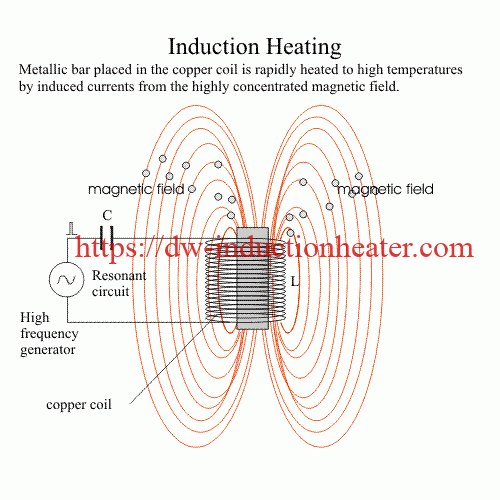 ically conductive materials, especially metals such as steel, stainless steel, copper, brass, aluminum, and cast iron.
Unlike flame heating, resistance furnace heating, or hot air heating, induction heating does not rely on direct contact with a heat source. Instead, heat is generated inside the workpiece itself by electromagnetic induction.
In simple words:
Induction heating uses electricity and magnetism to make metal heat itself.
It is widely used for:
|
Application |
Typical Use |
|---|---|
|
Induction hardening |
Shafts, gears, pins, rails, sprockets |
|
Induction brazing |
Copper tubes, carbide tools, HVAC parts |
|
Induction melting |
Steel, iron, copper, aluminum, precious metals |
|
Induction forging |
Billets, bars, rods, fasteners |
|
Induction annealing |
Wire, strip, tube, stainless steel parts |
|
Shrink fitting |
Bearings, gears, motor rotors |
|
Pipe and vessel heating |
Preheating, PWHT, thermal oil, chemical reactors |
|
Surface heating |
Coating removal, paint stripping, bolt heating |
Basic Working Principle of Induction Heating
Induction heating works through three main steps:
1. Alternating Current Flows Through the Induction Coil
An induction heating power supply converts standard electricity into medium-frequency, high-frequency, or ultra-high-frequency alternating current.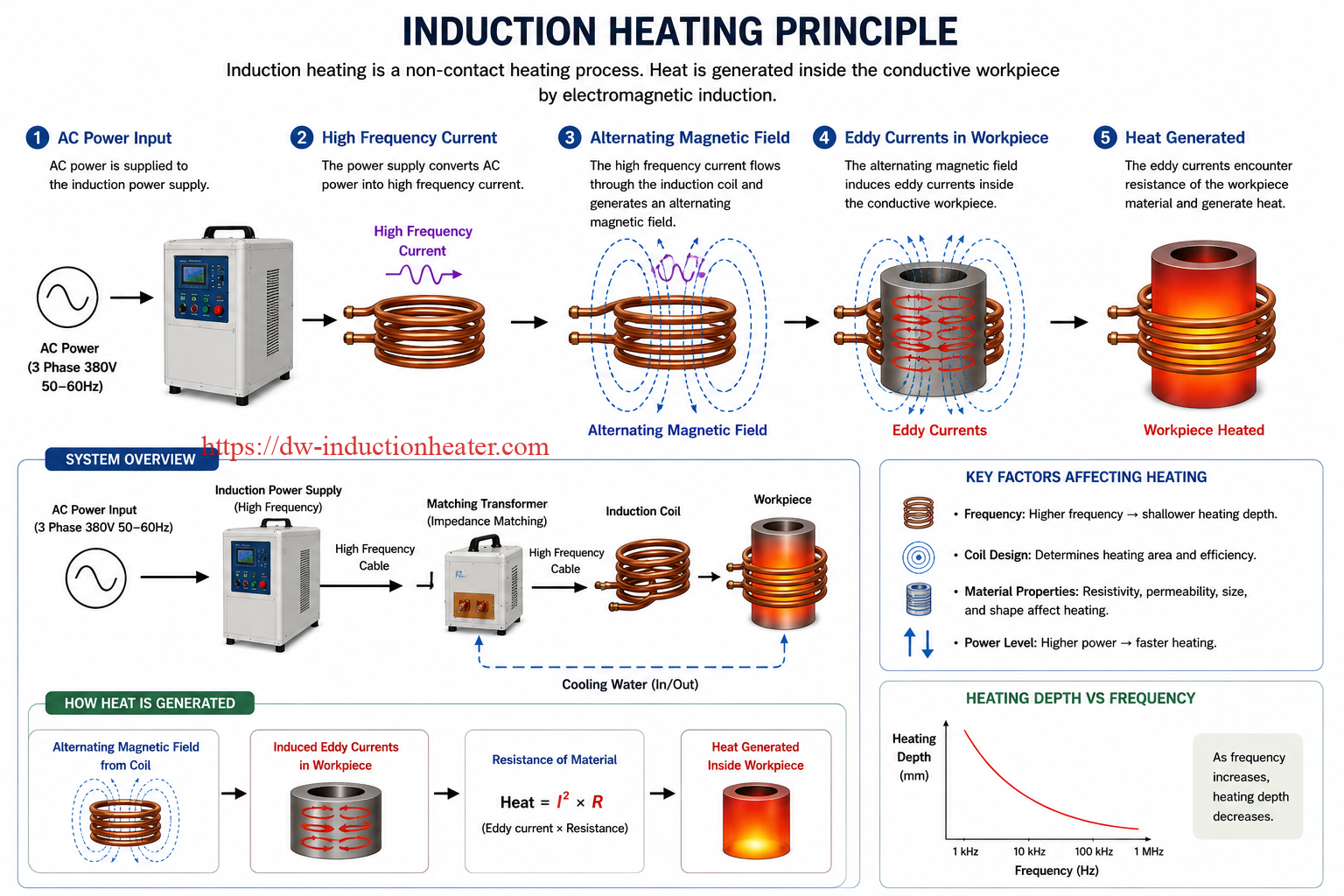
This current flows through a specially designed copper induction coil.
The coil itself does not need to touch the metal workpiece.
2. The Coil Creates an Alternating Magnetic Field
When alternating current flows through the copper coil, it creates a rapidly changing magnetic field around the coil.
The magnetic field changes direction thousands or even hundreds of thousands of times per second, depending on the frequency.
For example:
|
Frequency Type |
Typical Frequency Range |
Common Application |
|---|---|---|
|
KGPS Medium Frequency |
0.1–10 kHz |
Melting furnace, large steel heating |
|
Medium Frequency |
0.2–20 kHz |
Forging, melting, deep heating |
|
Super Audio Frequency |
20–50 kHz |
Medium-depth hardening, brazing |
|
High Frequency |
30–80 kHz |
Surface hardening, brazing |
|
Ultra High Frequency |
50 kHz–2 MHz |
Small parts, thin surface heating |
3. Eddy Currents Are Induced Inside the Metal
When a metal workpiece is placed inside or near the coil, the alternating magnetic field passes through the metal.
This magnetic field induces circulating electrical currents inside the metal. These currents are called eddy currents.
Because metal has electrical resistance, the eddy currents generate heat inside the workpiece.
This is the main heating mechanism of induction heating.
The basic relationship is:
Heat generation increases when induced current and material resistance increase.
In simple form:
Induced current + metal resistance = heat
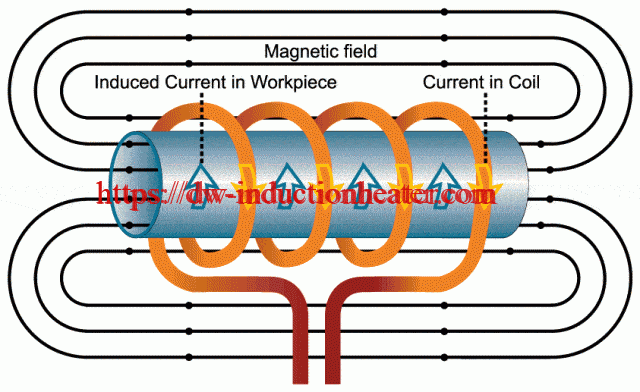
Induction heating is the process of heating an electrically conducting object (usually a metal) by electromagnetic induction, where eddy currents (also called Foucault currents) are generated within the metal and resistance leads to Joule heating of the metal.Induction heating is a form of non-contact heating for conductive materials, when alternating current flows in the induced coil, varying electromagnetic field is set up around the coil, circulating current(induced, current, eddy current) is generated in the workpiece(conductive material), heat is produced as the eddy current flows against the resitivity of the material.
An induction heater (for any process) consists of an induction coil (or electromagnet), through which a high-frequency alternating current (AC) is passed. Heat may also be generated by magnetic hysteresis losses in materials that have significant relative permeability.
The frequency of AC used depends on the object size, material type, coupling (between the work coil and the object to be heated) and the penetration depth.
High Frequency Induction heating is a process which is used to bond, harden or soften metals or other conductive materials. For many modern manufacturing processes, induction heating offers an attractive combination of speed, consistency and control.
Induction heating is a rapid ,clean, non-polluting heating form which can be used to heat metals or change the conductive material’s properties. The coil itself does not get hot and the heating effect is under controlled. The solid state transistor technology has made induction heating much easier,cost-effective heating for applications including soldering andinduction brazing ,induction heat treating, induction melting,induction forging etc.
Two Main Heating Effects in Induction Heating
Induction heating mainly depends on two effects:
1. Eddy Current Heating
Eddy current heating is the most important principle.
When the magnetic field changes rapidly, it creates circular currents inside the metal. These currents flow against the electrical resistance of the material and produce heat.
This effect is similar to how an electric heater gets hot, but in induction heating, the current is generated inside the workpiece itself.
Materials with higher electrical resistance, such as steel and stainless steel, heat efficiently. Materials with lower resistance, such as copper and aluminum, can also be heated, but they usually require higher power or optimized coil design.
2. Hysteresis Heating
For magnetic materials such as carbon steel and cast iron, another heating effect occurs: hysteresis heating.
When the magnetic field repeatedly changes direction, the magnetic domains inside the steel also change direction. This internal magnetic friction produces additional heat.
However, hysteresis heating only works below the material’s Curie temperature.
For steel, the Curie temperature is approximately 770°C. Above this temperature, steel loses most of its magnetic properties, and heating mainly continues by eddy current heating.
Induction Heating Process Diagram
AC Power Supply
      ↓
Frequency Converter / Induction Heating Generator
      ↓
Alternating Current to Copper Coil
      ↓
Alternating Magnetic Field Around Coil
      ↓
Eddy Currents Generated in Metal Workpiece
      ↓
Electrical Resistance Produces Heat
      ↓
Fast, Clean, Controlled Heating
Simple Example: Heating a Steel Shaft
When a steel shaft is placed inside an induction coil:
- The power supply sends high-frequency current to the coil.
- The coil creates an alternating magnetic field.
- The magnetic field penetrates the shaft surface.
- Eddy currents form near the surface of the shaft.
- The surface temperature rises quickly.
- If used for hardening, water or polymer quenching follows immediately.
This is why induction heating is very suitable for shaft surface hardening. It can heat only the surface layer while keeping the core relatively cooler and tougher.
What Is Skin Effect in Induction Heating?
Skin effect means that induced current is concentrated near the surface of the metal.
The higher the frequency, the shallower the heating depth.
The lower the frequency, the deeper the heating penetration.
This is very important for selecting induction heating equipment.
|
Frequency |
Heating Depth |
Typical Application |
|---|---|---|
|
Low frequency |
Deep heating |
Large billets, melting, thick parts |
|
Medium frequency |
Medium-depth heating |
Forging, heat treatment, melting |
|
High frequency |
Shallow surface heating |
Surface hardening, brazing |
|
Ultra-high frequency |
Very shallow heating |
Small precision parts, thin materials |
For example:
|
Workpiece |
Recommended Heating Type |
|---|---|
|
Large steel billet |
Medium frequency induction heating |
|
Gear tooth surface |
High frequency induction hardening |
|
Small copper tube brazing |
High frequency or ultra-high frequency |
|
1 ton iron melting furnace |
KGPS or medium-frequency power supply |
|
Thin wire annealing |
High frequency continuous induction heating |
Main Components of an Induction Heating System
A complete induction heating system usually includes:
|
Component |
Function |
|---|---|
|
Induction power supply |
Converts input electricity into high-frequency AC |
|
Induction coil |
Creates the alternating magnetic field |
|
Workpiece |
The metal part to be heated |
|
Cooling system |
Cools the coil and power supply |
|
Matching transformer |
Matches voltage/current between power supply and coil |
|
Temperature control system |
Controls heating accuracy |
|
Quenching system |
Used for hardening applications |
|
Mechanical handling system |
Feeding, rotating, lifting, scanning, or positioning |
Why the Induction Coil Is Usually Made of Copper
The induction coil is normally made from copper tube because copper has very low electrical resistance and excellent conductivity.
The coil is often water-cooled because high current flows through it during operation.
Common coil types include:
|
Coil Type |
Application |
|---|---|
|
Single-turn coil |
Large parts, low-voltage high-current heating |
|
Multi-turn coil |
Bars, rods, tubes, small parts |
|
Pancake coil |
Flat plates, surface heating |
|
Channel coil |
Strip heating, continuous heating |
|
Internal coil |
Inner hole heating |
|
Flexible cable coil |
Pipe, vessel, reactor, irregular workpieces |
|
Custom-shaped coil |
Gears, molds, special parts |
The coil design strongly affects heating speed, efficiency, uniformity, and power consumption.
Advantages of Induction Heating
Induction heating has many advantages compared with gas heating, resistance heating, and traditional furnace heating.
|
Advantage |
Explanation |
|---|---|
|
Fast heating |
Heat is generated directly inside the metal |
|
High efficiency |
Less heat loss to the surrounding environment |
|
Clean process |
No flame, no smoke, no combustion gas |
|
Precise control |
Power, time, temperature, and heating area can be controlled |
|
Localized heating |
Only selected areas need to be heated |
|
Easy automation |
Suitable for production lines and robotic systems |
|
Better working environment |
Lower ambient heat and less pollution |
|
Repeatable quality |
Stable heating cycle and process control |
|
Energy saving |
Especially effective for continuous production |
Induction Heating vs Traditional Heating
|
Item |
Induction Heating |
Gas Heating |
Resistance Furnace |
|---|---|---|---|
|
Heating method |
Electromagnetic heating inside metal |
Flame heats surface |
Heating elements heat chamber |
|
Heating speed |
Very fast |
Medium |
Slow to medium |
|
Energy efficiency |
High |
Lower |
Medium |
|
Temperature control |
Accurate |
Difficult |
Good but slower |
|
Local heating |
Excellent |
Poor |
Poor |
|
Automation |
Easy |
Medium |
Medium |
|
Pollution |
Clean |
Combustion emissions |
Clean but slower |
|
Best use |
Metal heating, hardening, melting, brazing |
General heating |
Batch heat treatment |
Materials Suitable for Induction Heating
Induction heating works best on electrically conductive materials.
|
Material |
Induction Heating Suitability |
|---|---|
|
Carbon steel |
Excellent |
|
Cast iron |
Excellent |
|
Stainless steel |
Good |
|
Copper |
Good, but needs suitable design |
|
Brass |
Good |
|
Aluminum |
Good, but requires higher current/power |
|
Titanium |
Good |
|
Nickel alloy |
Good |
|
Graphite |
Excellent in some furnace applications |
|
Plastic |
Not directly heated unless combined with metal susceptor |
|
Glass |
Not directly heated unless using conductive coating or susceptor |
Common Industrial Applications
1. Induction Hardening
Induction hardening heats the surface of steel parts quickly, followed by immediate quenching. It improves surface hardness, wear resistance, and fatigue strength.
Typical parts:
- Shafts
- Gears
- Sprockets
- Pins
- Rails
- Crankshafts
- Camshafts
2. Induction Brazing
Induction brazing joins metal parts using a filler metal. It is clean, fast, and repeatable.
Typical applications:
- Copper tube brazing
- Carbide tool brazing
- HVAC pipe joints
- Brass fittings
- Automotive parts
- Heat exchanger components
3. Induction Melting
Induction melting uses electromagnetic energy to melt metal inside a crucible.
Common metals:
- Cast iron
- Steel
- Stainless steel
- Copper
- Brass
- Aluminum
- Gold and silver
Induction melting furnaces are widely used in foundries because they offer fast melting, clean operation, and accurate temperature control.
4. Induction Forging and Billet Heating
Before forging, metal billets must be heated to a proper forming temperature.
Induction billet heating provides:
- Fast heating
- Less oxidation
- Better temperature uniformity
- Easy automatic feeding
- Lower energy waste
Typical applications:
- Steel bar forging
- Fastener production
- Bearing rings
- Automotive parts
- Hand tools
- Copper and brass billet heating
5. Induction Annealing
Induction annealing softens metals, relieves stress, and improves ductility.
Typical applications:
- Stainless steel tube annealing
- Copper wire annealing
- Steel strip annealing
- Weld seam annealing
- Aluminum parts annealing
Key Factors Affecting Induction Heating Performance
|
Factor |
Effect |
|---|---|
|
Power |
Determines heating speed and production capacity |
|
Frequency |
Determines heating depth |
|
Coil design |
Affects efficiency and heating uniformity |
|
Coupling distance |
Smaller gap usually improves efficiency |
|
Material type |
Magnetic and resistive materials heat differently |
|
Workpiece size |
Larger parts require more power and lower frequency |
|
Heating time |
Controls final temperature and heat penetration |
|
Cooling system |
Ensures stable operation |
|
Temperature control |
Prevents overheating or underheating |
How to Select the Right Induction Heating Machine
When choosing an induction heating machine, consider these key points:
|
Selection Item |
Recommendation |
|---|---|
|
Material |
Steel, copper, aluminum, stainless steel, etc. |
|
Workpiece size |
Diameter, length, thickness, weight |
|
Target temperature |
Brazing, forging, melting, hardening, annealing |
|
Required heating time |
Seconds, minutes, or continuous production |
|
Heating depth |
Surface heating or through heating |
|
Production mode |
Manual, semi-automatic, or automatic |
|
Coil type |
Fixed coil, scanning coil, flexible coil, custom coil |
|
Power range |
Based on mass, temperature rise, and cycle time |
|
Frequency range |
Based on required penetration depth |
Typical Power and Frequency Reference Table
|
Application |
Typical Power Range |
Typical Frequency Range |
|---|---|---|
|
Small part brazing |
5–40 kW |
30–300 kHz |
|
Copper tube brazing |
10–80 kW |
30–150 kHz |
|
Shaft surface hardening |
30–300 kW |
10–80 kHz |
|
Gear hardening |
50–500 kW |
3–80 kHz |
|
Steel billet heating |
100–3000 kW |
0.5–10 kHz |
|
Aluminum billet heating |
100–2000 kW |
0.5–20 kHz |
|
Small melting furnace |
15–160 kW |
1–20 kHz |
|
Medium melting furnace |
160–1000 kW |
0.5–10 kHz |
|
Large melting furnace |
1000 kW+ |
0.1–3 kHz |
|
Pipe preheating/PWHT |
30–300 kW |
2–30 kHz |
In One Sentence
Induction heating works by passing alternating current through a copper coil, creating an alternating magnetic field that induces eddy currents inside a metal workpiece, causing the metal to heat rapidly from within.
FAQ: Induction Heating Principle
1. Does the induction coil touch the metal?
No. Induction heating is a non-contact heating method. The coil creates an electromagnetic field, and the metal heats internally.
2. Why does steel heat faster than copper in many induction applications?
Steel has higher electrical resistance and magnetic properties, so it often heats more easily than copper. Copper has very low resistance, so it needs higher current, better coil coupling, or suitable frequency selection.
3. Can induction heating heat non-metal materials?
Most non-metal materials cannot be heated directly by induction. However, they can be heated indirectly using a metal or graphite susceptor.
4. Why is frequency important?
Frequency controls heating depth. High frequency gives shallow surface heating, while low frequency gives deeper heating.
5. Is induction heating energy-saving?
Yes. Because heat is generated directly inside the metal, induction heating usually has higher efficiency and less heat loss than flame or chamber furnace heating.
6. Can induction heating be used for melting?
Yes. Induction melting furnaces are commonly used for iron, steel, stainless steel, copper, brass, aluminum, gold, and silver.
7. What is the difference between induction heating and resistance heating?
Resistance heating uses heating elements to transfer heat to the workpiece. Induction heating generates heat directly inside the conductive workpiece through electromagnetic induction.
8. What industries use induction heating?
It is used in foundries, forging plants, automotive manufacturing, aerospace, metalworking, tool manufacturing, HVAC, electronics, oil and gas, chemical processing, and recycling industries.
9. What is the most important part of an induction heating system?
The induction power supply and induction coil are both critical. The power supply provides the correct power and frequency, while the coil determines heating efficiency and uniformity.
10. Is induction heating safe?
Yes, when properly designed and operated. The system requires correct grounding, water cooling, insulation, shielding, and operator protection.