

Induction Preheat Welding Machine for Steel Rods & Bars | HLQ
Induction preheat welding steel rods applications
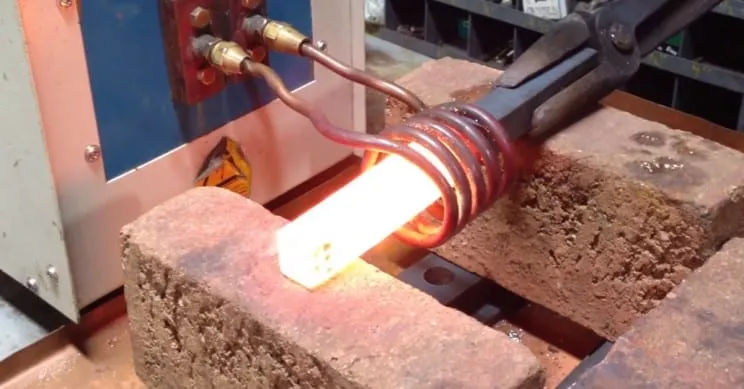
Objective To preheat steel rods to 500 ºF (260 ºC) for a welding application for a major equipment manufacturer
Material: Customer supplied steel pins (varying, on average 2”/51mm)
Temperature: 500 ºF (260 ºC)
Frequency: 100 kHz
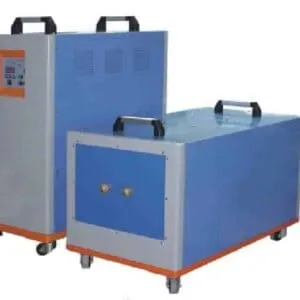
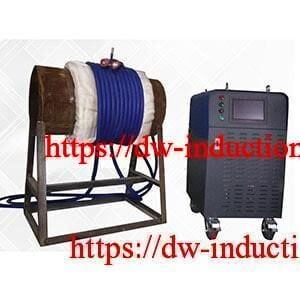
Equipment: DW-HF-45kW 50-150 kHz induction heating system equipped with a remote heat station containing eight 1.0 μF capacitors
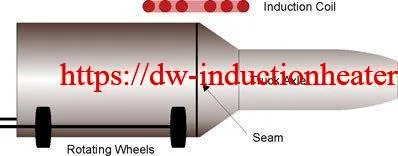
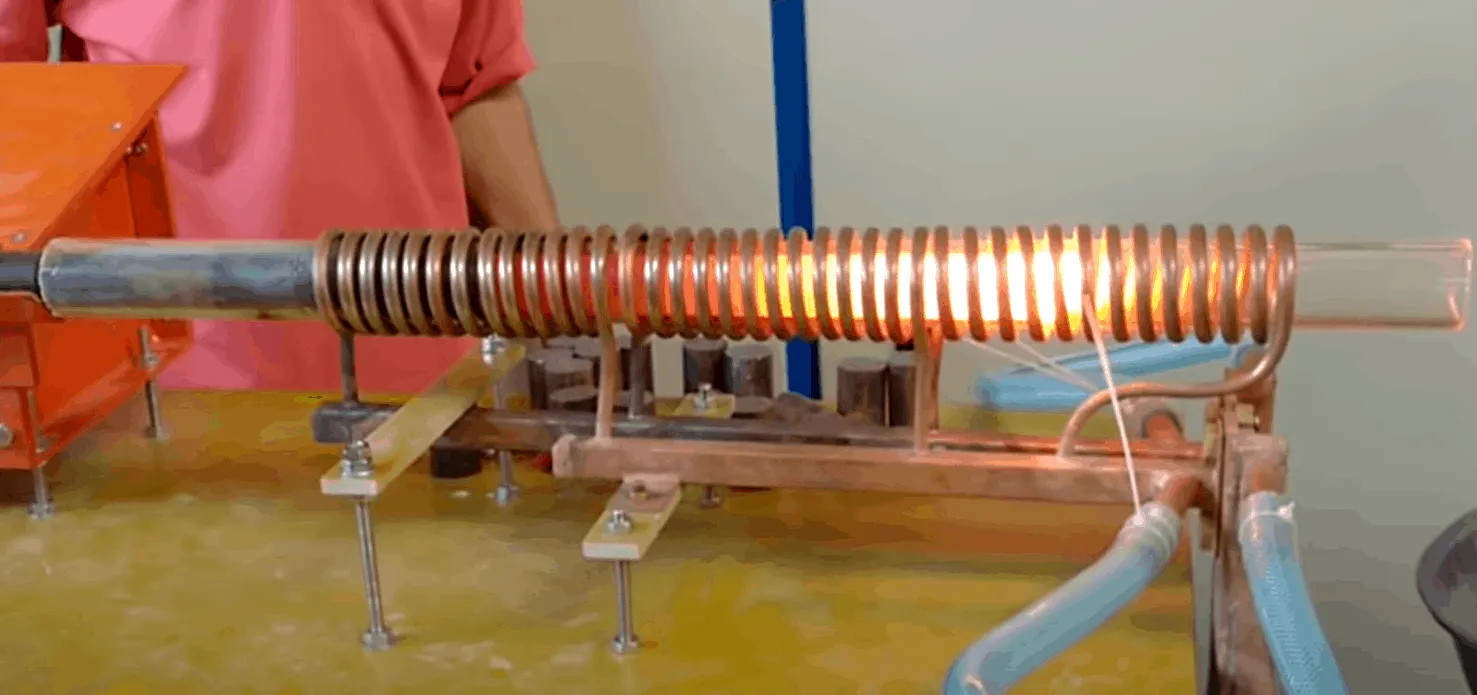
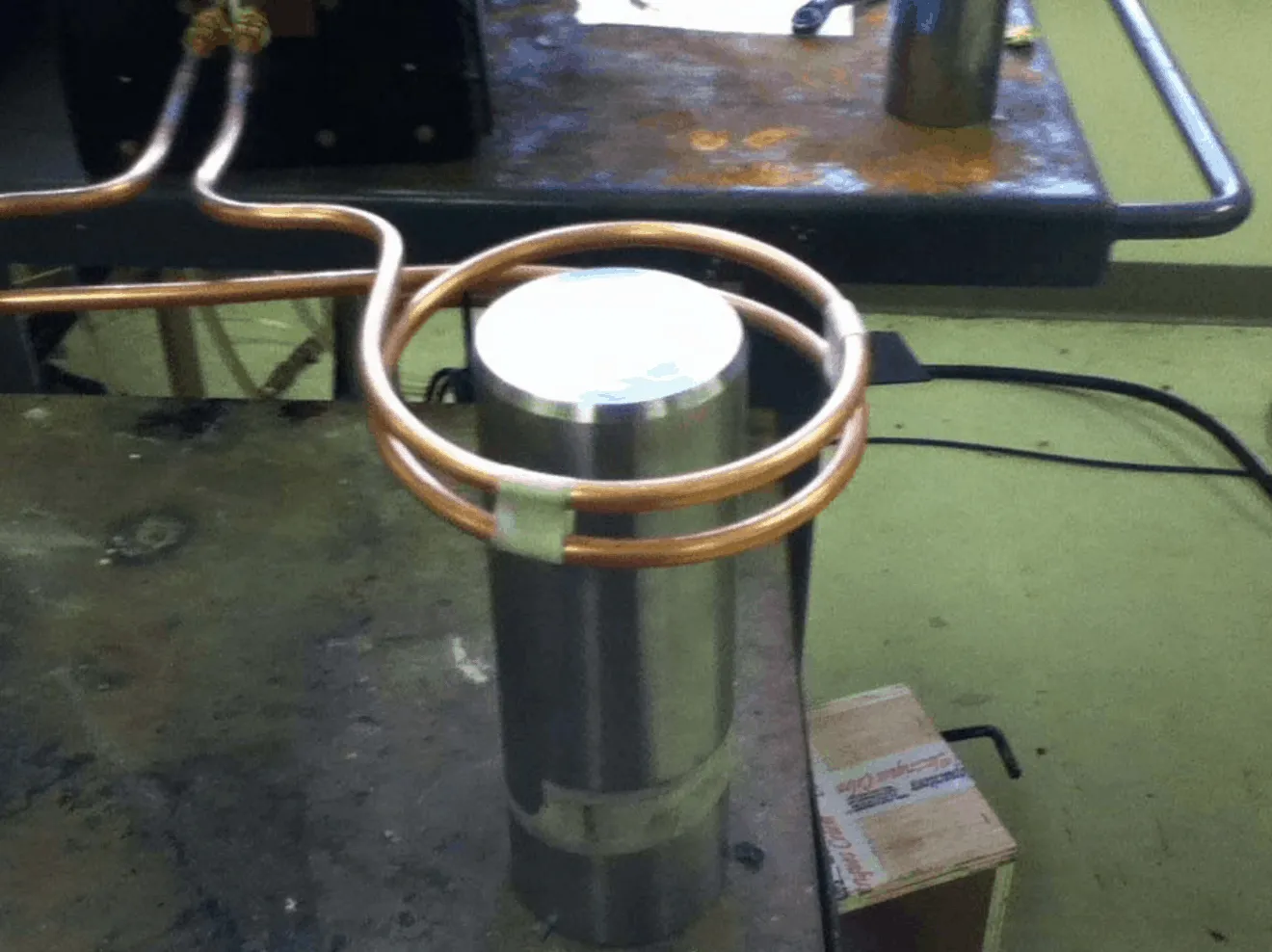
– A multiple position two-turn induction heating coil designed and developed specifically for this application
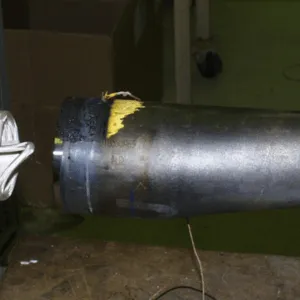
Induction Preheating Process: The steel rod was loaded into the coil, and the heat was turned on. The part reached 600 ºF (316 ºC) within one minute. The power was turned off and the rod was monitored for 30 seconds to ensure the outside layer did not drop below 500 ºF (260 ºC).
Based on the Application Lab’s experiences and testing, the longer the heating time, the less power is required.
Additionally, the longer the heating time, the longer the outside temperature remained above 500 ºF.
In light of that, there are additional possibilities when it comes to power supplies, from a 15kW induction heater with a two-position coil that has a heating time of two minutes, to a 45kW induction heating system with a four-position coil and a heating time of one minute.
Results/Benefits
Precise heating: The customer is looking at switching from flame, as induction can offer more precise, repeatable heating
– Penetration: Induction does a superior job penetrating the pin when compared to a torch, which is critical to
preheating for welding
– Speed: Induction enables fast heating which can boost production compared to torch heating
– Part quality: A torch can make the part brittle, which makes induction advantageous
– Work environment: Induction preheat welding is a safer heating method that introduces less heat into the workplace than a flame does

FAQs
1. What is induction preheating for welding?
Induction preheating for welding uses an alternating electromagnetic field to generate heat directly inside an electrically conductive metal workpiece before welding. For steel rods, bars and pins, induction heating provides rapid and localized preheating without requiring an open flame. It can help establish a controlled weld-preheat temperature before the welding operation begins.
2. Why should steel rods be preheated before welding?
Preheating can reduce the temperature gradient between the weld area and the surrounding steel, slow the cooling rate after welding and help reduce the risk of hydrogen-related cracking in appropriate steels and welding procedures. The required preheat temperature depends on steel grade, carbon equivalent, section thickness, hydrogen level and the applicable welding procedure.
3. What temperature is required for preheating steel before welding?
The required welding preheat temperature varies according to the steel grade, material thickness and welding specification. Many industrial applications use preheat temperatures from approximately 100°C to 300°C or higher, but the correct temperature should always follow the applicable WPS or engineering specification. In the application shown on this page, the target was approximately 260°C (500°F). DW Induction Heater
4. How fast can induction heating preheat a steel rod?
Heating time depends on rod diameter, material, target temperature, induction power, frequency and coil design. In the application shown on this page, an approximately 51 mm steel component reached about 316°C within one minute using a 45 kW high-frequency induction system, before temperature equalization was monitored. DW Induction Heater
5. What size induction heater is required for welding preheat?
The required induction heater power depends on the steel component’s diameter, length, mass, starting temperature, target temperature and required heating time. Small localized welding applications may require only several kilowatts, while larger rods, shafts or multiple components may require 30–100 kW or more. HLQ selects the power and frequency based on the customer’s actual workpiece and production rate.
6. Is induction preheating better than flame preheating for welding?
Induction heating can provide advantages where repeatability, localized heating and automated temperature control are important. Unlike torch heating, there is no open flame, and properly designed induction coils can produce repeatable heating cycles. However, the most appropriate method depends on component geometry, production volume, available electrical power and welding requirements.
7. Can one induction preheating machine heat different steel rod diameters?
Yes. A single induction power supply can often be used with different customized or interchangeable induction coils for multiple steel rod, bar or pin diameters. Coil geometry, coupling distance, heating frequency and power settings should be optimized for each workpiece range to maintain heating efficiency and temperature uniformity.
8. What information is required to select an induction welding preheat system?
To select the correct system, provide the steel grade, rod or bar diameter, heated length, workpiece weight, initial temperature, required preheat temperature, required heating time, number of parts per hour and available electrical supply. If a welding procedure specification is available, the required preheat and interpass temperature should also be provided.