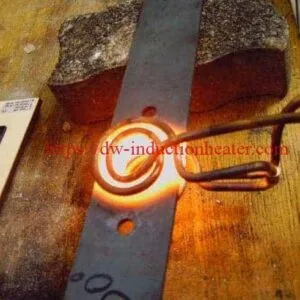


High Frequency Induction Preheat for Threading Parts
What Is Induction Preheating for Threading Parts?
Induction preheating for threading parts is a fast and repeatable process that uses high-frequency electromagnetic energy to heat steel components to a controlled temperature before thread forming, machining or related manufacturing operations.
In this HLQ application, a DW-HF-15kW high-frequency induction heating machine preheated magnetic steel parts to approximately 600°F (316°C) in less than 30 seconds. Four component diameters ranging from 9.525 mm to 38.1 mm were successfully tested, with actual process power ranging from approximately 1.68 kW to 4.74 kW.
Objective
The customer preheats a variety of parts so they can then be threaded. The objective of this test is to preheat each part to 600°F (316°C) in under 30 seconds.
Equipment
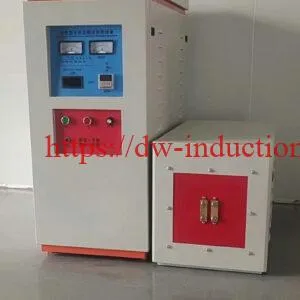
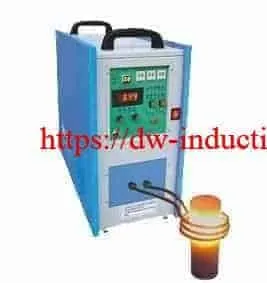
DW-HF-15kw induction heating machine
Materials
Sample parts were provided by the customer. These included:
• Part 1 composed of magnetic steel with 0.375” (9.525mm) OD
• Part 2 composed of magnetic steel with 0.5” (12.7mm) OD
• Part 3 composed of magnetic steel with 0.875” (22.225mm) OD
• Part 4 composed of magnetic steel with 1.5” (38.1mm) OD
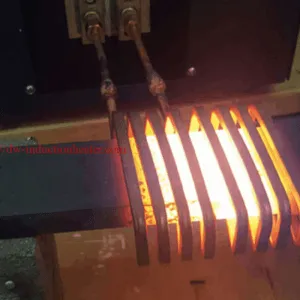
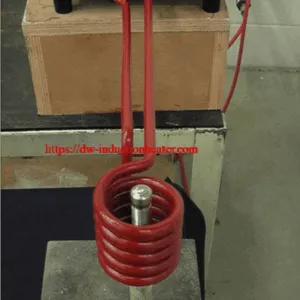
• Two coils were used. Coil 1 for heating part 4 with the 1.5” (38.1mm) OD. All other parts were heated with coil 2.

Key Parameters
Temperature: about 600°F (316°C)
Power:
• Part 1:1.68 kW
• Part 2: 2.6 kW
• Part 3: 4.74 kW
• Part 4: 3.79 Kw
Time: less than 30 seconds

Process:
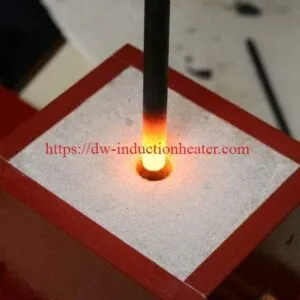
The part was centered in the coil.
The DW-HF-15kw Induction Heating Power Supply was turned on.
Temperature was monitored with an infrared camera and with Tempilaq paint.
All parts were able to be tested using the same equipment settings. No changes were required between heat cycles, other than to swap out the coil for Part 4. This is due to DW-HF-15kw Induction Heating Power Technologies’ flexible design that allows the induction heating system to tune to a wide variety of loads.
Results/Benefits:
Precise control of the time and temperature
Power on demand with rapid heat cycles
Repeatable process, not operator dependent when parts are set in a nest or fixture 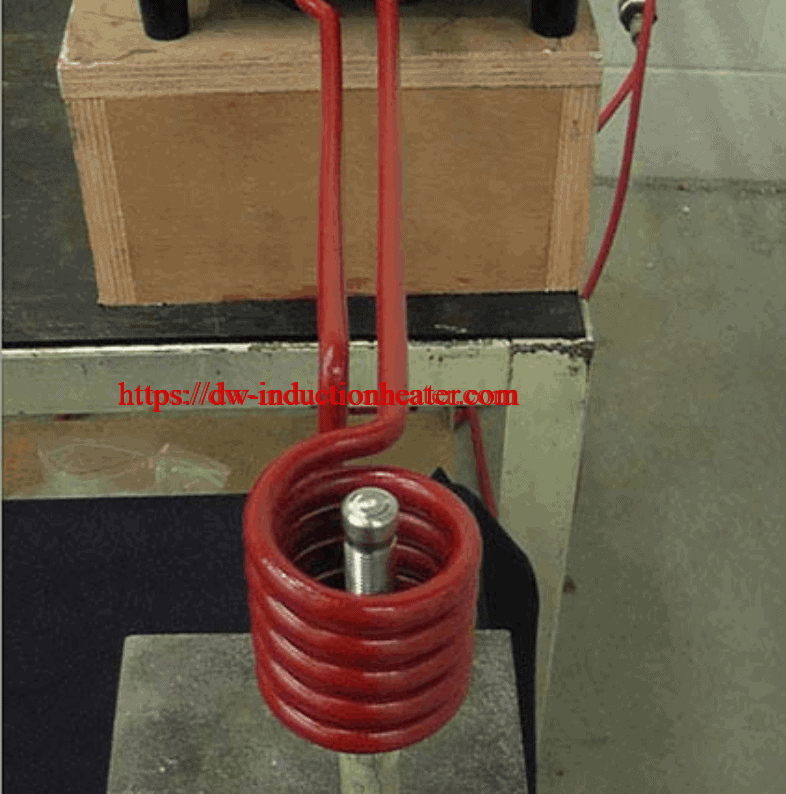
Technical Table – Induction Preheating Before Threading
| Technical Parameter | Specification / Test Data |
|---|---|
| Application | Preheating steel parts before threading |
| Heating Technology | High-frequency induction heating |
| Induction Heating Machine | HLQ DW-HF-15kW |
| Rated Equipment Power | 15 kW |
| Target Temperature | Approx. 600°F / 316°C |
| Required Heating Time | Less than 30 seconds |
| Workpiece Material | Magnetic steel |
| Diameter Range Tested | 9.525–38.1 mm |
| Temperature Monitoring | Infrared camera + Tempilaq paint |
| Workpiece Position | Centered inside induction coil |
| Coil Arrangement | Two coils used for four part sizes |
| Process Control | Power, heating time and coil positioning |
| Production Method | Manual, fixture-assisted or automated |
| Main Benefits | Fast heating, repeatability, precise temperature control |
Individual Test Results
| Part | Steel Part OD | Applied Power | Target Temperature | Heating Time | Coil |
|---|---|---|---|---|---|
| Part 1 | 0.375 in / 9.525 mm | 1.68 kW | 316°C | <30 sec | Coil 2 |
| Part 2 | 0.500 in / 12.7 mm | 2.60 kW | 316°C | <30 sec | Coil 2 |
| Part 3 | 0.875 in / 22.225 mm | 4.74 kW | 316°C | <30 sec | Coil 2 |
| Part 4 | 1.500 in / 38.1 mm | 3.79 kW | 316°C | <30 sec | Coil 1 |
The original test reports that all four parts could be processed with the same induction power-supply settings; only the coil was changed for the largest 38.1 mm component.
Why Use Induction Preheating Before Threading?
Induction heating concentrates energy directly in the steel component instead of heating an oven, furnace or large surrounding area. This enables short, controlled heating cycles and makes it easier to bring every part to a consistent target temperature before the next production operation.
For repetitive manufacturing, the process can standardize:
- heating time
- target temperature
- coil position
- workpiece position
- applied power
- production cycle
The existing HLQ test specifically demonstrated precise time and temperature control, power on demand, rapid heating and repeatability.
FAQs
1. Why preheat steel parts before threading?
Preheating can be used when a manufacturing process requires the workpiece to reach a controlled temperature before threading or thread-forming operations. Induction heating is useful because it heats the component rapidly and locally without heating an entire furnace.
2. What temperature was used for this threading-parts application?
The target temperature in this HLQ application was approximately 600°F (316°C).
The correct production temperature should ultimately be determined by the steel grade and the customer’s specific threading or forming process.
3. How fast can induction heating preheat a steel part?
In the tested application, all four magnetic-steel parts reached the required temperature in less than 30 seconds.
Actual heating time depends on diameter, mass, material, induction power and coil coupling.
4. What size induction heater was used?
The application used an HLQ DW-HF-15kW high-frequency induction heating machine.
Although the machine is rated at 15 kW, the actual applied power in these tests ranged from approximately 1.68 to 4.74 kW.
5. What steel sizes were tested?
Four magnetic-steel component diameters were tested:
9.525 mm, 12.7 mm, 22.225 mm and 38.1 mm.
This demonstrates that one induction heating platform can accommodate a useful range of component sizes when suitable coils are used.
6. Does every part size require a different induction coil?
Not necessarily.
In this test, Parts 1–3 used the same coil, while the largest 38.1 mm OD component used a second coil.
The required coil depends on workpiece diameter, heating length and desired heating pattern.
7. How is temperature monitored during induction preheating?
The original test used both an infrared camera and Tempilaq temperature-indicating paint to verify the workpiece temperature.
For automated production, a pyrometer or closed-loop temperature controller can also be integrated.
8. Can induction preheating for threading be automated?
Yes. The process can be integrated with fixtures, pneumatic loading, PLC controls, pyrometers and automated part handling.
Because heating time and power can be programmed, induction preheating is particularly suitable for repetitive production where consistent part temperature is required.