
Induction Preheating Steel Tube for Welding with Air-Cooled Heater
What Is Induction Preheating for Steel Tube Welding?
Induction preheating steel tube for welding is a controlled heating process that uses electromagnetic energy to raise the weld zone of a steel pipe to the required preheat temperature before welding.
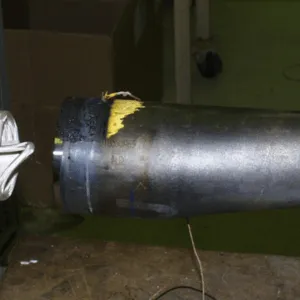
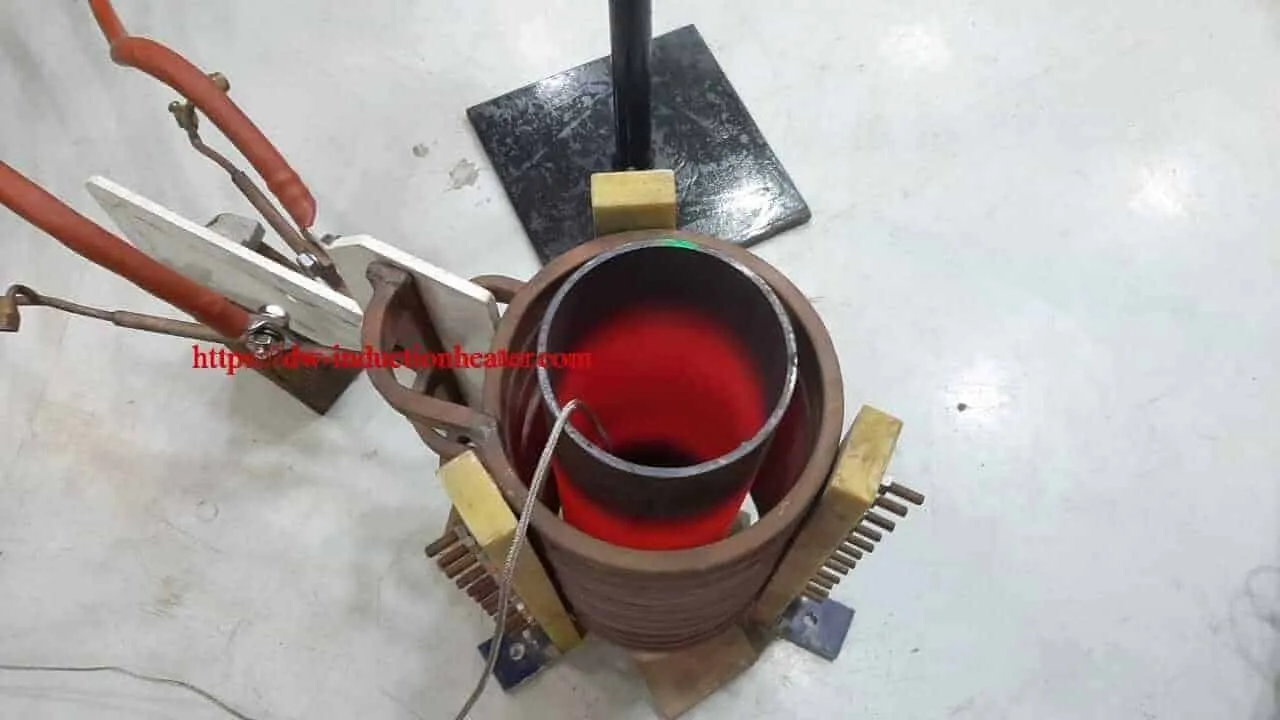
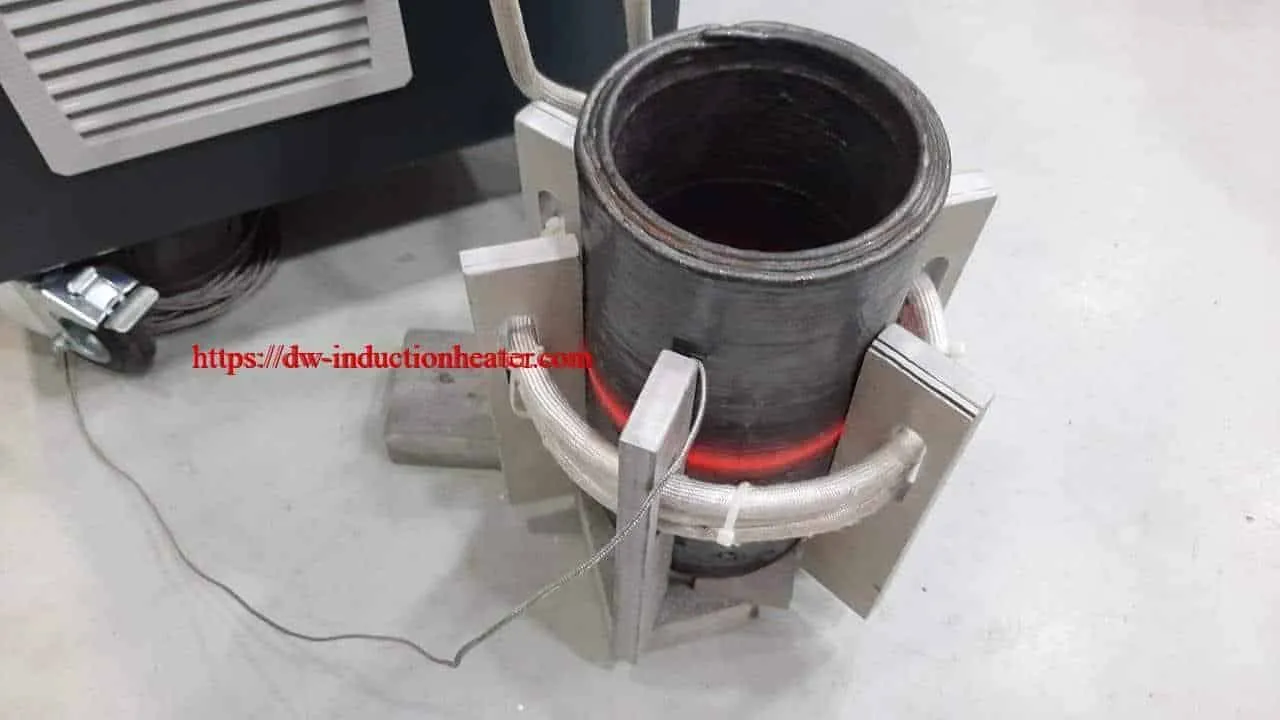
In this HLQ application, an MF-25kW air-cooled induction heating system heats a steel pipe from ambient temperature to approximately 600°C ±10°C in about 300 seconds. The tested pipe is approximately Ø152.4 mm with an 18.26 mm wall thickness, while the heating zone extends approximately 30–45 mm from the weld centerline.
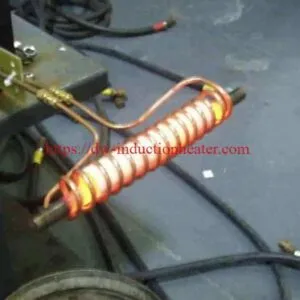
Because both the power supply and induction coil are air cooled, the system can be moved between welding locations without an external water chiller or cooling-water hoses. This makes it especially suitable for pipe welding preheat, fabrication shops, field welding and mobile maintenance applications.
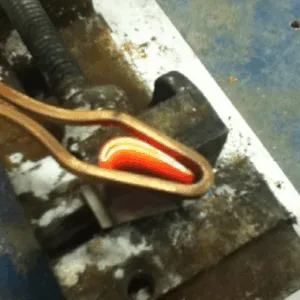
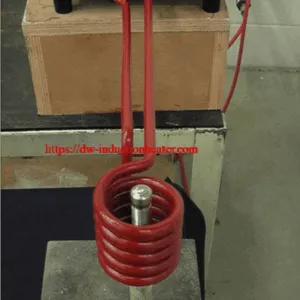
This induction heating application shows the preheating of steel pipe before welding with MF-25kw (25kW) air-cooled power supply and air-cooled coil. Inductively preheating of the pipe section to be welded ensures faster welding time and a better quality of the welding joint.
Industry: Manufacturing
Equipment: MF-25kw air cooled induction heating system
Time: 300 secs.
Temperature: Required from ambient temperature 600 ° C +/- 10 °C (1112° F/ +/- 50°F)
Materials:
Steel pipe
Details for butt-welded steel pipe:
Total length: 300 mm (11.8 inch)
DIA: 152.40 mm (5.9 inch)
Thickness: 18.26 mm (0.71 inch)
Heating length: 30-45 mm from middle (1.1 – 1.7 inch)
Details for butt welded steel plate.
Total size: 300 mm (11.8 inch) X 300 mm (11.8 inch)
Thickness: 10 mm (0.39 inch)
Heating length: 20-30 mm (0.7-1.1 inch) from middle.
Fixture details for butt welded steel pipe:
Material: Mica.
Total Size: 300 mm (11.8 inch) X 60 mm (2.3 inch)
Thickness: 20 mm (0.7 inch)
Withstands temperature of 900 °C (1652°F)
Process:
We are using our MF-25kw air cooled induction heating system which allows to easily move the system and the heating coil to various welding locations, without the need to provide additional water cooling systems or hoses.
Induction heating provides consistent heat throughout the process. The preheat temperatures can be easily measured with temeperature monitoring tools. The induction heating method is very efficient because it minimizes the heat loss that often occurs during other heating methods.

Technical Table – Steel Tube Induction Preheating for Welding
| Technical Parameter | Specification |
|---|---|
| Application | Preheating steel tube before welding |
| Industry | Manufacturing / fabrication |
| Induction Heating System | HLQ MF-25kW air-cooled system |
| Rated Power | 25 kW |
| Cooling Method | Air cooled |
| External Water Chiller | Not required |
| Heating Time | Approx. 300 seconds |
| Target Temperature | 600°C ±10°C |
| Target Temperature °F | Approx. 1112°F ±18°F |
| Workpiece Material | Steel pipe |
| Pipe Length | 300 mm |
| Pipe Outside Diameter | 152.4 mm |
| Pipe Wall Thickness | 18.26 mm |
| Pipe Heating Zone | 30–45 mm from weld centerline |
| Steel Plate Size | 300 × 300 mm |
| Plate Thickness | 10 mm |
| Plate Heating Zone | 20–30 mm from weld centerline |
| Fixture Material | Mica |
| Fixture Size | 300 × 60 × 20 mm |
| Fixture Temperature Resistance | Up to approx. 900°C |
| Temperature Monitoring | Pyrometer / temperature monitoring tools recommended |
| Main Advantage | Mobile air-cooled welding preheat without water hoses |
Why Use Induction Preheating Before Welding?
Induction preheating provides consistent and repeatable heat directly around the weld zone.
Compared with torch or resistance heating, induction heating can offer:
- faster localized heating
- more uniform temperature distribution
- programmable heat input
- reduced heat loss
- easier temperature monitoring
- no direct flame
- improved mobility
- easier automation
- less dependence on operator technique
For this application, the air-cooled configuration is especially valuable because both the generator and induction coil can be moved easily between welding positions without connecting water-cooling hoses.
FAQs
1. Why should steel pipe be preheated before welding?
Preheating reduces the temperature difference between the weld zone and the surrounding base metal.
Depending on steel grade and welding procedure, controlled preheating can help reduce cooling rate, improve weld quality and reduce the risk of hydrogen-related cracking.
2. What temperature was used for this steel tube welding application?
The target temperature in this HLQ application was approximately 600°C ±10°C.
The exact preheat temperature for production welding should always follow the approved welding procedure specification and material requirements.
3. How long does induction preheating take?
For this application, the steel pipe reached the required temperature in approximately 300 seconds, or about 5 minutes.
Actual heating time depends on pipe diameter, wall thickness, steel grade, target temperature and induction power.
4. What size induction heater was used?
The system used was an MF-25kW air-cooled induction heating machine.
A 25kW system is suitable for this tested pipe size and heating requirement, but larger pipes or faster heating cycles may require higher power.
5. Does the induction preheating system require water cooling?
No.
This application uses an air-cooled induction power supply and air-cooled coil, so an external water chiller and cooling-water hoses are not required.
6. What pipe size was tested?
The tested steel pipe had an outside diameter of approximately 152.4 mm, a wall thickness of approximately 18.26 mm, and a total test length of 300 mm.
7. How wide should the welding preheat zone be?
In this application, the pipe was heated approximately 30–45 mm from the weld centerline.
The actual required preheat width should be determined according to pipe thickness, steel grade and the welding procedure specification.
8. Can induction welding preheat be used in field applications?
Yes.
Air-cooled induction systems are particularly suitable for field welding because the heater and coil can be moved easily without a water chiller.
They can be used for pipeline fabrication, repair, maintenance and other welding locations where mobility is important.