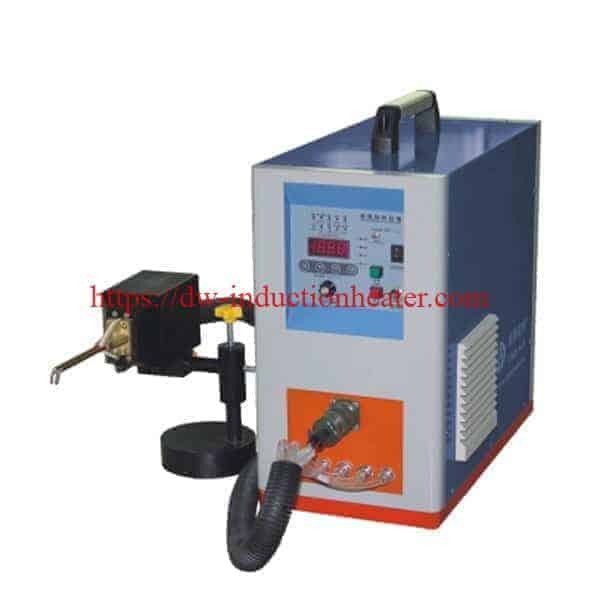
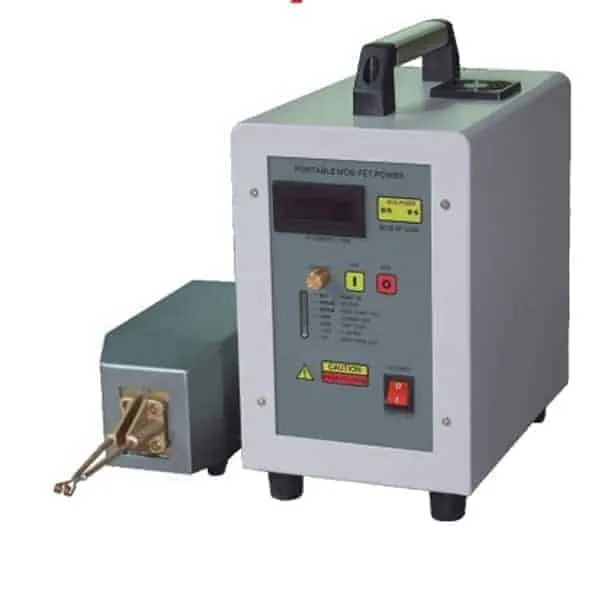
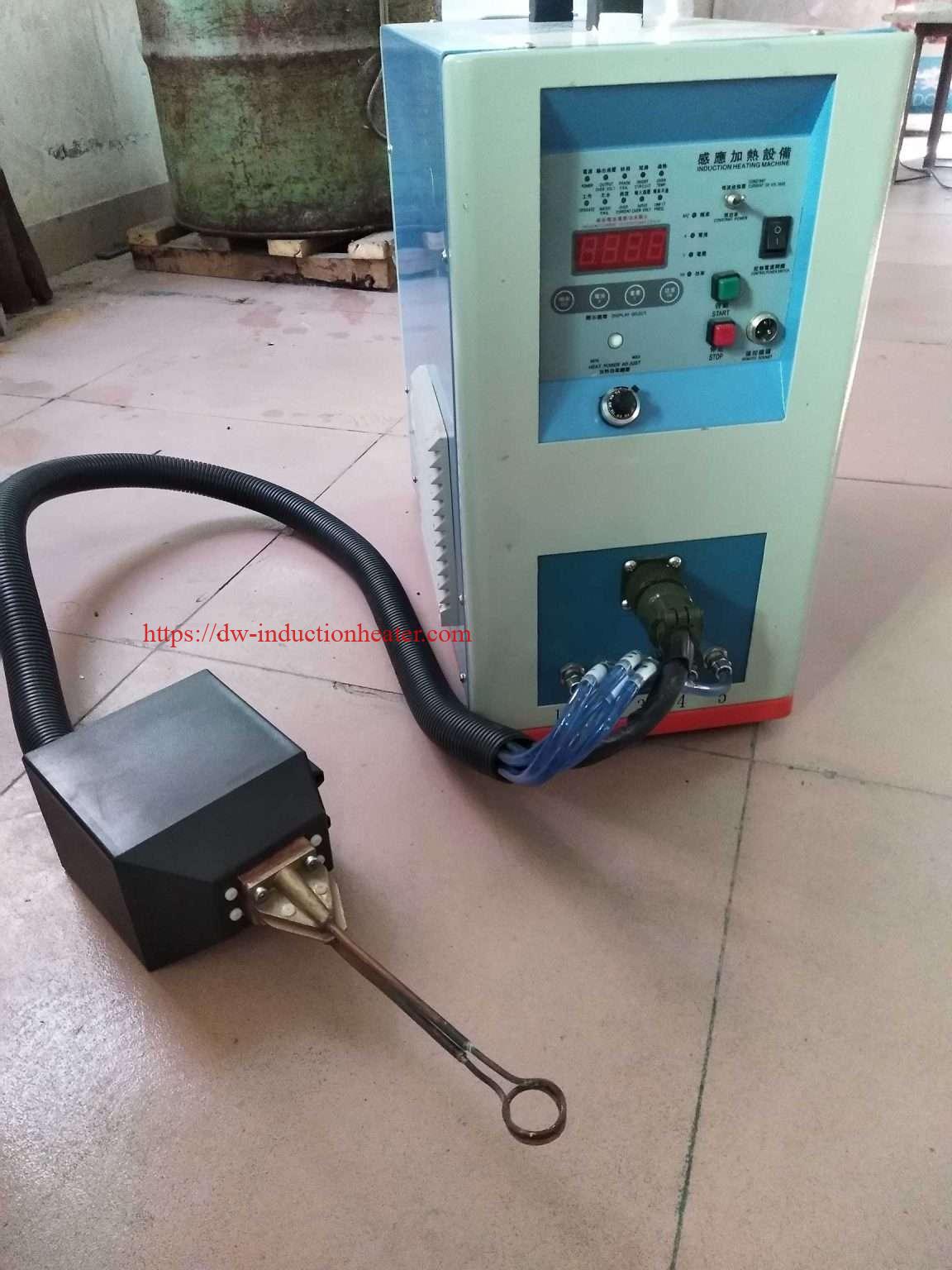

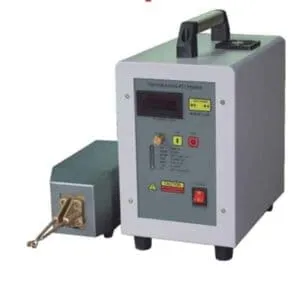

Portable Induction Brazing Heater
Portable Induction Brazing Heater for Small Precision Metal Joints
What Is a Portable Induction Brazing Heater?
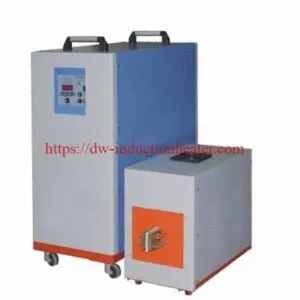
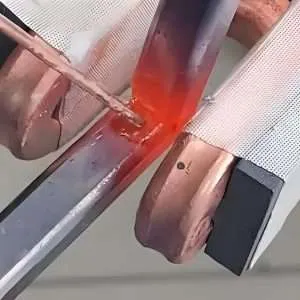
A portable induction brazing heater is a compact high-frequency induction heating system designed to rapidly and selectively heat small metal joints for brazing without using an open flame.
The HLQ DW-UHF-6KW-I uses approximately 4.5 kW output power and an ultra-high operating frequency of approximately 1.1–2.0 MHz, making it especially suitable for small components, thin metal sections, precision joints and localized brazing applications.
Typical applications include:
- Small copper tube joints
- Brass fittings
- Copper electrical connectors
- Small steel components
- Carbide tool tips
- Thin wires
- Small precision assemblies
- Localized repair brazing

Compared with torch brazing, induction brazing provides highly localized, controllable heating and can improve process repeatability when the induction coil, filler metal and joint clearance are correctly designed.
Main Features:
- With high frequency up to 11KHz^2.0MHz the quenching thickness can be controlled lower than 1mm, and very thin and tiny parts can be easily heated.
- IGBT and current inverting technologies have been used; higher reliability and lower maintenance cost.
- 100% duty cycle, continuous working is allowed at maximum power output.
- Constant current or constant power status can be selected accordingly to achieve higher heating efficiency;
- Display of heating power and heating current and oscillating frequency.
- Simple to install , installation can be done by unprofessional person very easily;
- Light weight, small size;
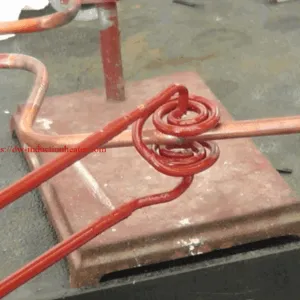
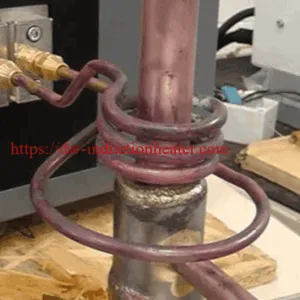
- different shape and size of induction coil can be changed easily to heat different parts.
- Advantages of the model with timer: the power and the operating time of the heating period and the retain period can be preset respectively, to realize a simple heating curve, this model is suggested to use for batch production to improve the repeatability.
Technical Table
Portable Induction Brazing Heater Technical Specifications
| Parameter | Specification |
|---|---|
| Product | Portable Induction Brazing Heater |
| Model | HLQ DW-UHF-6KW-I |
| Heating Technology | Ultra-high-frequency induction heating |
| Application | Precision brazing / localized heating |
| Input Voltage | Single-phase 220V |
| Input Frequency | 50–60 Hz |
| Output Power | Approx. 4.5 kW |
| Oscillation Frequency | 1100–2000 kHz |
| Frequency Equivalent | 1.1–2.0 MHz |
| Input Current | Approx. 5–20 A |
| Duty Cycle | 100% |
| Generator Weight | Approx. 21 kg |
| Main Unit Size | Approx. 330 × 310 × 155 mm |
| Heating Head Size | Approx. 125 × 60 × 95 mm |
| Heating Mode | Localized induction heating |
| Control Modes | Constant-current / constant-power |
| Timer Control | Heating and holding time programmable |
| Coil | Interchangeable custom copper induction coil |
| Suitable Parts | Small and thin metal components |
| Typical Materials | Copper, brass, carbon steel, stainless steel, carbide |
| Typical Brazing Applications | Tubes, connectors, fittings, tools, electrical components |
| Main Advantage | Very fast, concentrated precision heating |
Main applications:
- heat treatment of gear and shaft.
- heating of wire smaller than 1mm
- floating melt for institute or college research and so on.
- surface quenching.
Why Use 1.1–2.0 MHz for Precision Brazing?
The frequency of an induction brazing system strongly affects how the electromagnetic energy is distributed in the workpiece.
At approximately:
1.1–2.0 MHz
the heating effect becomes highly concentrated near the surface of small conductive components.
This makes the system particularly suitable for:
- Small-diameter parts
- Thin-wall tubing
- Fine copper components
- Small brazing joints
- Short heating zones
- Precision localized heating
For larger, heavier components, a lower-frequency and higher-power induction brazing machine is normally more suitable.
Therefore, this page should not be positioned as a universal brazing system for every workpiece size.
Its strongest SEO position is:
Portable ultra-high-frequency brazing heater for small precision metal joints.
How Does Portable Induction Brazing Work?
The induction power supply converts 220V AC electricity into ultra-high-frequency alternating current.
The high-frequency current passes through a custom copper induction coil and produces a rapidly changing electromagnetic field.
When the metal joint is positioned inside or close to the coil:
High-Frequency Current → Magnetic Field → Eddy Current → Localized Heating → Filler Melting → Brazed Joint
The base metals normally remain solid during brazing.
Instead, the filler alloy reaches its brazing temperature and flows into the joint clearance through capillary action.
After the power is switched off, the joint cools and the filler solidifies to form the completed brazed connection.
Key Advantages
The DW-UHF-6KW-I portable induction brazing heater is particularly suitable for applications where precision is more important than very high heating power.
Main advantages include:
- Flame-free localized heating
- Compact portable design
- Fast response
- High-frequency precision heating
- Programmable heating time
- Repeatable process parameters
- Replaceable induction coils
- 100% duty-cycle capability
- Reduced surrounding heat exposure
- Suitable for small and thin components


FAQs
1. What is a portable induction brazing heater?
A portable induction brazing heater is a compact induction heating system used to heat the joint area of conductive metals until brazing filler metal melts and flows into the joint.
Unlike torch brazing, it does not require an open flame directly on the workpiece.
It is particularly useful for small, precise and repeatable brazing applications.
2. What is the power of the DW-UHF-6KW-I brazing heater?
The DW-UHF-6KW-I has an output power of approximately:
4.5 kW
It is designed primarily for smaller components and localized heating rather than large, high-mass assemblies.
3. What frequency does the portable induction brazing heater use?
The operating frequency is approximately:
1100–2000 kHz
or:
1.1–2.0 MHz
This ultra-high frequency is particularly suitable for small workpieces, thin sections and precision brazing applications.
4. What materials can be brazed?
Depending on joint design and filler alloy, the system can be used with conductive materials such as:
- Copper
- Brass
- Carbon steel
- Stainless steel
- Carbide
- Selected dissimilar-metal combinations
The actual heating response depends on electrical conductivity, magnetic permeability, geometry and coil coupling.
5. Can it be used for copper tube brazing?
Yes, particularly for relatively small copper tubes and localized copper joints.
Because copper has very high electrical and thermal conductivity, correct coil design is especially important.
For large-diameter copper tubes or heavy brass fittings, a higher-power induction brazing system may be required.
6. Is induction brazing faster than flame brazing?
It can be significantly faster for suitable small joints because the energy is generated directly in the workpiece rather than transferred from an external flame.
However, actual brazing time depends on:
- Part mass
- Material
- Joint size
- Filler alloy
- Coil geometry
- Coupling distance
- Starting temperature
Therefore, brazing cycle time should be verified through sample testing.
7. Can different induction coils be used?
Yes.
Interchangeable induction coils are one of the major advantages of this system.
Custom coil configurations can include:
- Single-turn coils
- Multi-turn helical coils
- U-shaped coils
- Hairpin coils
- Pancake coils
- Split coils
The coil should be designed specifically around the brazing joint geometry.
8. Can this machine work continuously?
Yes.
The equipment is designed for a 100% duty cycle, allowing continuous operation at the rated operating condition when the cooling and operating requirements are correctly maintained.
For batch production, timer-controlled heating and holding stages can also improve brazing repeatability.