



RF Brazing Copper System
30kW RF Induction Brazing Copper System for Copper Pipes, Tubes and Metal Joints
What Is an RF Induction Brazing Copper System?
An RF induction brazing copper system is a high-frequency electromagnetic heating machine designed for rapid, precise, and repeatable brazing of copper pipes, copper tubes, brass fittings, electrical connectors, and other metal components.
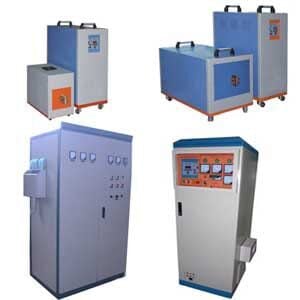
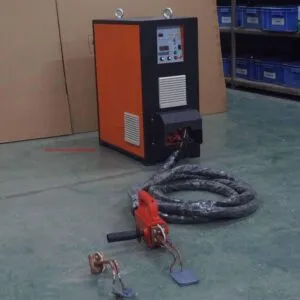
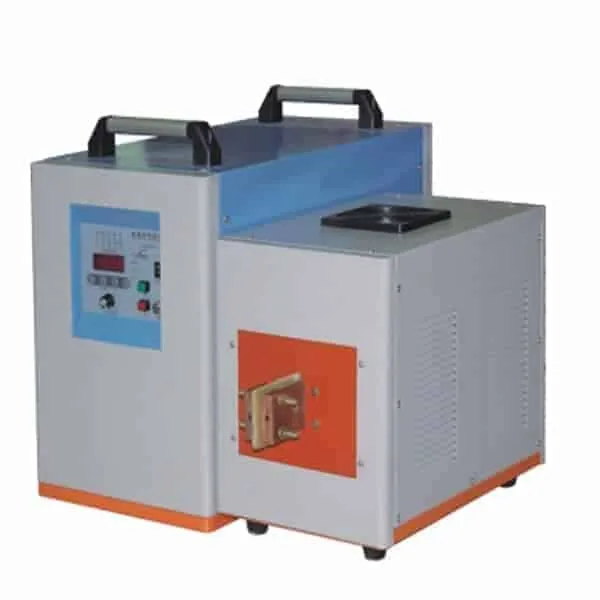
The HLQ DW-UHF-30KW RF Induction Brazing System delivers 30kW of rated output power with an operating frequency range of 50–200kHz, making it suitable for localized industrial brazing and precision metal joining applications.
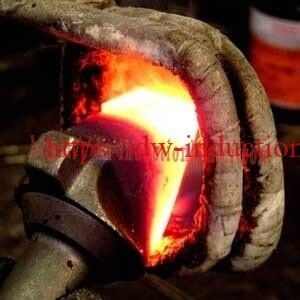
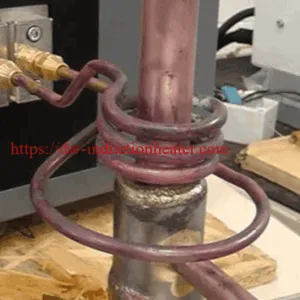
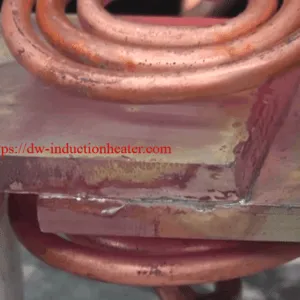
Unlike traditional flame brazing, RF induction brazing generates heat directly within electrically conductive workpieces through electromagnetic induction. A suitable brazing filler metal melts and flows into the joint by capillary action, producing a metallurgical bond without melting the copper base materials.
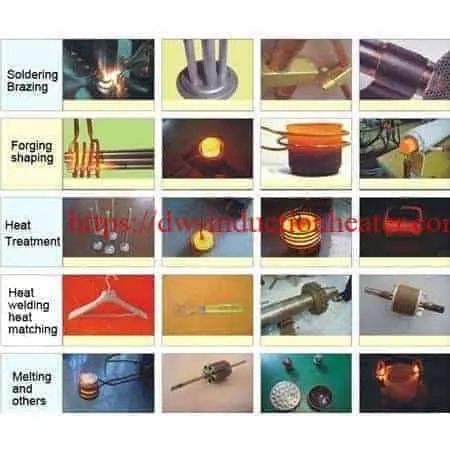
Typical applications include:
- Copper-to-copper induction brazing
- Copper pipe and tube brazing
- Copper-to-brass fitting brazing
- HVAC and refrigeration copper tube joints
- Copper electrical connector brazing
- Copper busbar and terminal brazing
- Heat exchanger tube brazing
- Copper-to-stainless-steel brazing
- Precision metal component brazing
Manufactured by HLQ Induction Equipment Co., Ltd., the 30kW RF brazing system features IGBT inverter technology, adjustable output power, and application-specific induction coils.
It is designed for manufacturers seeking controlled heating, repeatable brazing processes, reduced reliance on open flames, and easier integration into industrial production lines.
Technical Specifications — 30kW RF Brazing Copper System
Technical Parameters
| Technical Parameter | Specification |
|---|---|
| Product Name | RF Induction Brazing Copper System |
| Manufacturer | HLQ Induction Equipment Co., Ltd. |
| Model | DW-UHF-30KW |
| Rated Output Power | 30 kW |
| Operating Frequency | 50–200 kHz |
| Input Voltage | 380V ±10% |
| Input Power Supply | Three-Phase AC |
| Input Frequency | 50/60 Hz |
| Maximum Input Current | 45 A |
| Inverter Technology | IGBT Solid-State Inverter |
| Heating Principle | Electromagnetic Induction |
| Operating Modes | Constant Current / Constant Power |
| Rated Duty Cycle | 100% under specified operating and cooling conditions |
| Cooling Method | Water Cooling |
| Cooling Water Pressure | >0.2 MPa |
| Published Cooling Water Flow | 5 L/min |
| Main Unit Dimensions | 590 × 300 × 530 mm |
| Heating Head Dimensions | 520 × 255 × 380 mm |
| Published Weight | 55 kg |
| Brazing Temperature | Determined by filler alloy and joint requirements |
| Induction Coil | Customized Copper Induction Coil |
| Suitable Materials | Copper, Brass, Steel, Stainless Steel and Compatible Metal Assemblies |
| Primary Applications | Copper Brazing, Copper Tube Brazing, Metal Joining |
| Additional Applications | Precision Heating, Small Component Annealing and Hardening |
| Automation | Optional Customized Integration |
| Installation | Industrial Workshop / Manufacturing Production Line |
Engineering Note: The 5 L/min cooling-water figure is the published specification and should be verified for the complete system and cooling circuit under continuous 30kW operation. The operating frequency should also be confirmed against the actual machine configuration.
Recommended RF Induction Brazing Applications
| Brazing Application | Workpiece Materials | Typical Brazing Temperature | Recommended Process |
|---|---|---|---|
| Copper Pipe Brazing | Copper to Copper | 650–850°C | RF Induction Brazing |
| Copper Tube to Brass Fitting | Copper to Brass | 650–800°C | High-Frequency Induction Brazing |
| HVAC Copper Tube Brazing | Copper Tubes and Fittings | 650–850°C | Localized Induction Brazing |
| Copper Electrical Connectors | Copper to Copper | 650–850°C | Precision Induction Brazing |
| Copper Busbar Brazing | Copper Bars and Terminals | 650–850°C | Customized Induction Brazing |
| Heat Exchanger Brazing | Copper Tubes and Fittings | 650–850°C | Controlled Induction Brazing |
| Copper to Stainless Steel | Copper to Stainless Steel | 650–850°C | Silver Alloy Induction Brazing |
| Precision Metal Parts | Copper, Brass and Steel | Application-Dependent | RF Induction Brazing |
Temperature ranges are indicative engineering examples, not guaranteed machine settings. The appropriate temperature depends on filler-metal liquidus, base-material compatibility, joint geometry, atmosphere, and production requirements.
Key Advantages of RF Induction Brazing Copper
Fast and Efficient Copper Brazing
RF induction brazing delivers controlled electromagnetic energy to the brazing area, allowing rapid heating of copper joints without requiring the entire assembly to be heated.
Precise Temperature Control
Adjustable induction power and heating time enable repeatable thermal cycles. With suitable temperature monitoring, manufacturers can control brazing conditions for consistent joint formation.
High-Quality Brazed Joints
Proper induction coil design helps distribute heat around the joint, promoting uniform filler-metal flow and reliable metallurgical bonding.
Reduced Oxidation and Cleaner Processing
Localized heating can reduce unnecessary thermal exposure. Suitable fluxes or controlled atmospheres help manage oxidation during brazing.
Energy-Efficient Industrial Heating
Energy is supplied primarily during the heating cycle, reducing the need for continuously operating open-flame heating equipment.
Customized Induction Coil Design
HLQ provides customized induction coils for copper tubes, copper busbars, electrical connectors, heat exchanger components, and complex metal assemblies.
FAQs
FAQ 1: What is RF induction brazing copper?
RF induction brazing copper is a metal joining process that uses high-frequency electromagnetic induction to heat copper components and melt a brazing filler metal.
The molten filler flows into the joint through capillary action and forms a metallurgical bond after cooling.
Unlike welding, induction brazing does not require melting the copper base metal.
This technology is widely applicable to copper pipes, electrical connectors, HVAC tubing, heat exchangers, and precision industrial metal assemblies.
FAQ 2: What frequency is best for induction brazing copper?
The recommended frequency depends on copper component dimensions, joint configuration, required heating depth, and induction coil geometry.
High-frequency induction systems operating from tens to hundreds of kilohertz are commonly used for localized copper brazing.
The HLQ DW-UHF-30KW RF Induction Brazing System has a published operating frequency range of 50–200kHz.
Smaller copper tubes and compact joints often benefit from higher-frequency localized heating, while larger copper assemblies may require lower frequencies or alternative coil arrangements.
The final frequency should be established through application testing.
FAQ 3: Can a 30kW induction brazing machine braze copper pipes and brass fittings?
Yes. A properly configured 30kW induction brazing machine can be suitable for joining copper pipes to brass fittings.
The heating system must be selected according to pipe diameter, wall thickness, fitting dimensions, brazing filler metal, and required production cycle.
Silver-based brazing alloys are commonly used for certain copper-to-brass connections, often with an appropriate brazing flux or protective atmosphere.
A customized induction coil helps control heating around the joint and promotes consistent filler-metal flow.
FAQ 4: What temperature is required for induction brazing copper?
Copper induction brazing temperatures commonly fall within approximately 650–850°C, depending on the brazing filler alloy and application.
For example, some copper-phosphorus brazing alloys used in copper-to-copper connections require temperatures within this general range.
Silver brazing alloys used for copper-to-brass or copper-to-stainless-steel joints may have different melting and working-temperature requirements.
The correct brazing temperature should be selected according to the filler-metal manufacturer’s recommendations.
The copper base metal normally remains solid during the brazing process.
FAQ 5: What are the advantages of induction brazing compared with torch brazing?
Induction brazing provides several advantages over conventional flame brazing.
These include localized heating, electronic power control, repeatable heating cycles, reduced dependence on manual torch positioning, and easier integration into automated production equipment.
Induction heating also eliminates the need for an open flame at the workpiece.
For high-volume manufacturing, controlled induction brazing can help improve process consistency and reduce variations between operators.
Actual productivity and energy savings depend on the specific process and equipment configuration.
FAQ 6: Can RF induction brazing be used for HVAC copper tubing and heat exchangers?
Yes. RF induction brazing is suitable for many HVAC copper tubing and heat exchanger applications.
Typical examples include copper-to-copper tube connections, copper-to-brass fittings, refrigeration tubing, and copper heat exchanger components.
The induction coil must provide adequate access and sufficiently uniform heating around the brazing joint.
For refrigeration and HVAC systems, proper joint preparation, suitable filler selection, and oxidation control are essential.
Nitrogen purging may be required during brazing to limit internal oxide formation in refrigeration tubing.
FAQ 7: Does induction brazing copper require flux?
Flux requirements depend on the materials being joined, filler-metal composition, and brazing atmosphere.
Copper-to-copper joints using suitable phosphorus-containing filler metals can often be brazed without additional flux.
However, copper-to-brass, copper-to-steel, and copper-to-stainless-steel joints generally require a suitable flux or controlled atmosphere unless a specifically qualified flux-free process is used.
The selection of brazing filler metal and flux directly affects joint quality, oxidation behavior, and production reliability.
FAQ 8: How do I choose the right RF induction brazing system for copper?
Selecting an RF induction brazing machine requires evaluating the workpiece materials, copper tube diameter, joint dimensions, required brazing temperature, production rate, and available electrical supply.
Small copper joints may require relatively low heating power, while larger copper busbars or high-throughput production applications may require higher output power.
The HLQ DW-UHF-30KW induction brazing system is a potential solution for industrial copper brazing applications requiring customized high-frequency heating.
HLQ Induction Equipment Co., Ltd. can assist with selecting suitable output power, operating frequency, induction coil design, and process-control configurations based on customer requirements.