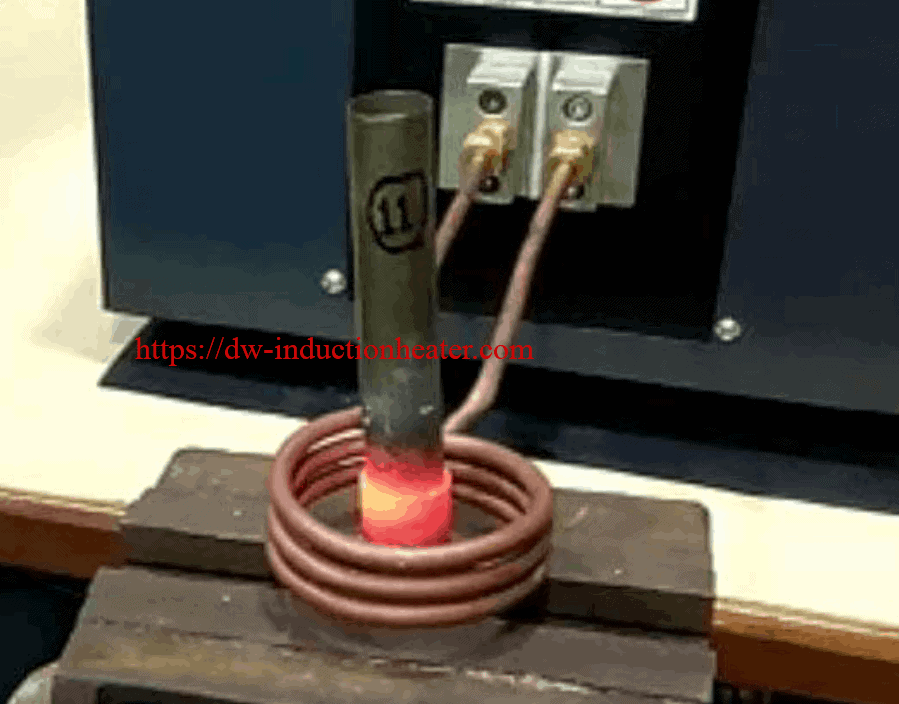
Induction Brazing Pipe-to-Pipe End Lap Joints
What Is Induction Brazing for Pipe-to-Pipe End Joints?
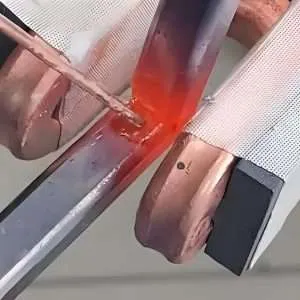
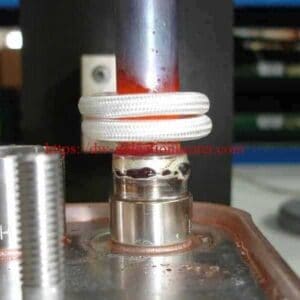
Induction brazing pipe-to-pipe end joints is a fast, localized joining process that uses high-frequency electromagnetic energy to heat the overlapping pipe ends until the brazing filler metal melts and flows through the joint by capillary action.
Objective
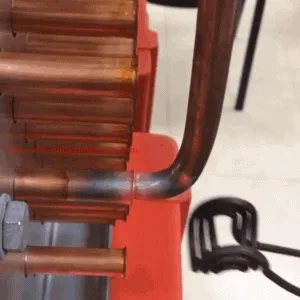
Induction brazing pipe to pipe end assembly connection.

Materials
Tube length varies from 39.3″ (1m) to 236.2″ (6 m).
Equipment:
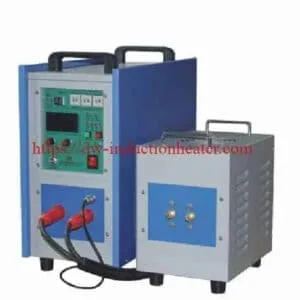
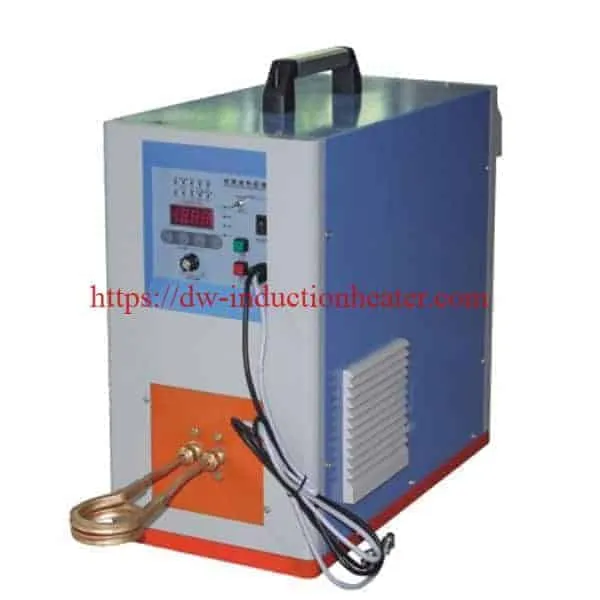
DW-UHF-10KW induction brazing machine
Key Parameters
Temperature: Around 1382°F (750°C)
Time: 1 minute to 30 seconds average
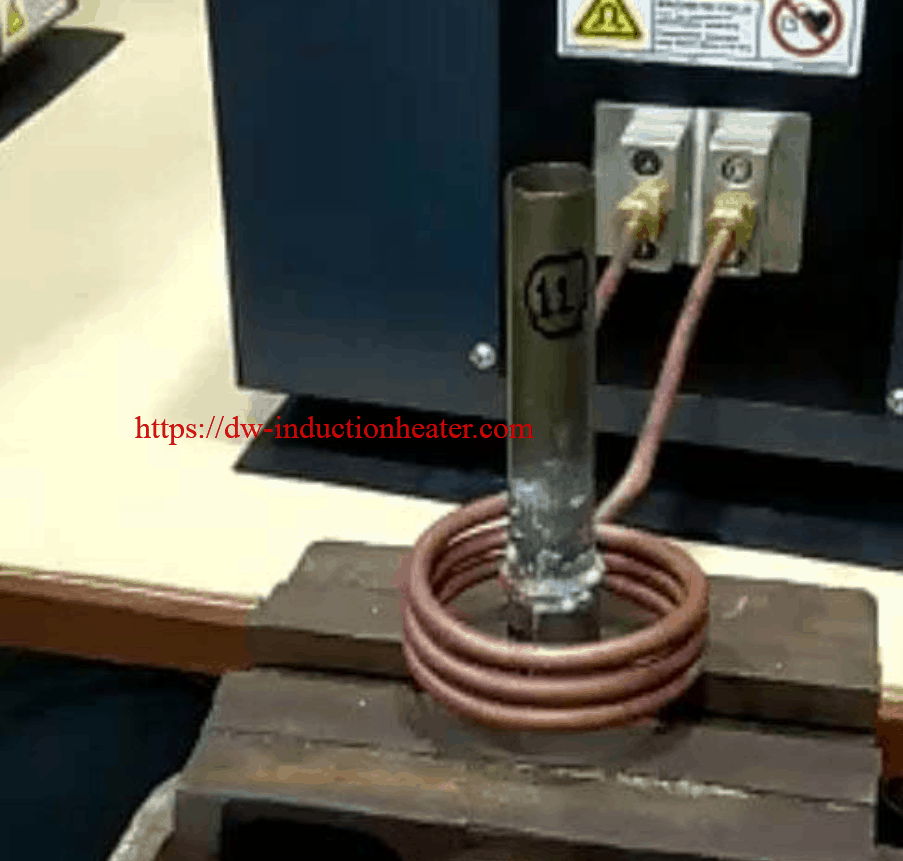
Results and Conclusions:
The tube end length varies from present 1.57″ to 3.94″ (40mm to 100 mm) and the perforated tube length varies from 3.28ft to 19.685ft (1m to 6 m). The lap Joint length may reach up to maximum 0.28″ (7 mm) in the future.
Quality requirements: Lap joint, all holes, joint line at the inside end of lap and joint line on OD of the tubes should get completely suffused with brazing filler.
The joint has physical strength requirements also.
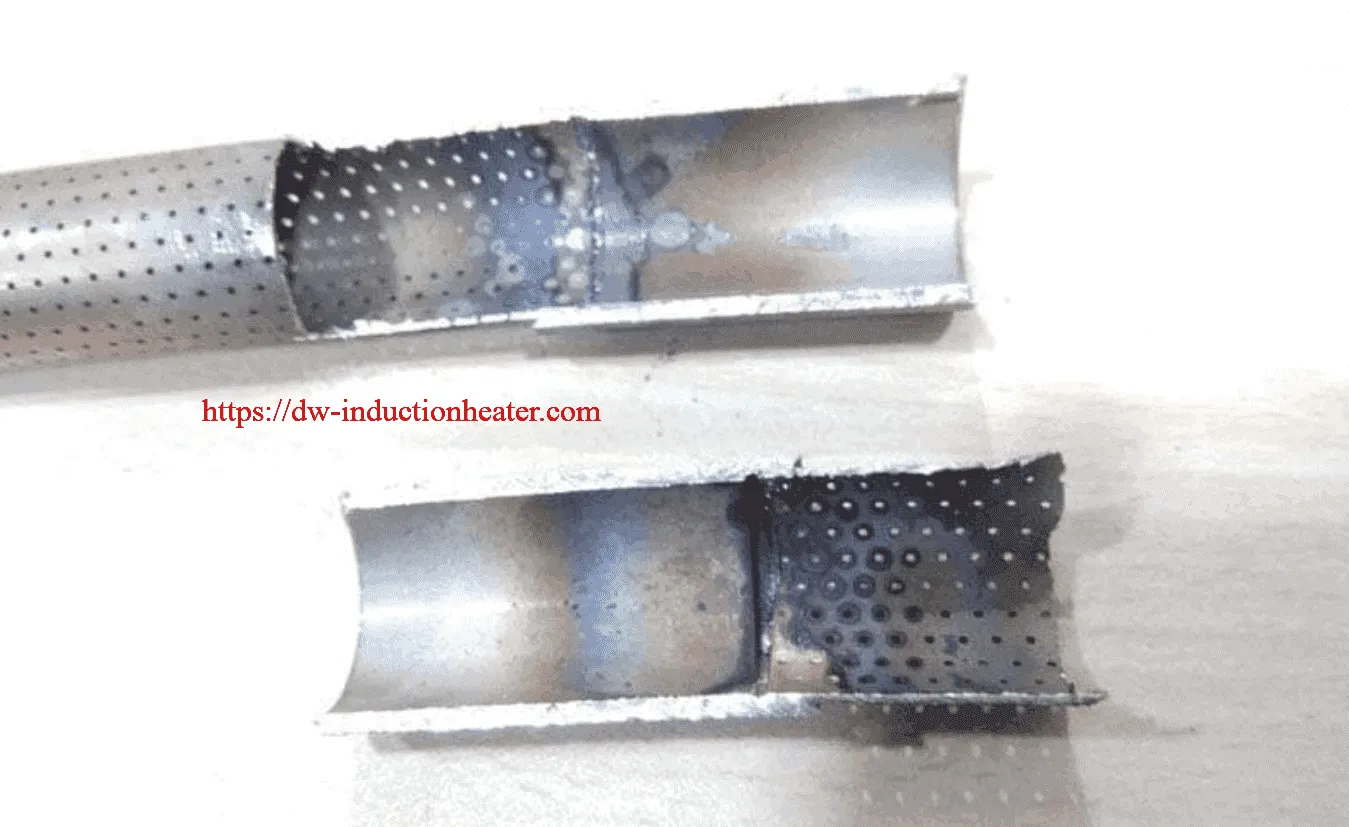
You will suggest us the final parameters as well as flux and filler metal requirement for proper brazed joint & fixtures, if any.Final tube outer dias will reach upto 1.97″ (50 mm). The length will not differ much. Perforated tube thickness may reach up to 0.079″ (2 mm) maximum.


Technical Table – Pipe-to-Pipe Induction Brazing
| Technical Parameter | Specification / Application Data |
|---|---|
| Application | Induction brazing pipe-to-pipe end connection |
| Joint Type | Overlap / lap joint |
| Induction Brazing Machine | HLQ DW-UHF-10kW |
| Rated Power | 10 kW |
| Target Temperature | Approx. 750°C / 1382°F |
| Typical Heating Time | Approx. 30–60 seconds |
| Tube Length | Approx. 1–6 m |
| Pipe-End Length | Approx. 40–100 mm |
| Maximum Pipe OD | Approx. 50 mm |
| Maximum Wall Thickness | Approx. 2 mm |
| Maximum Lap Length | Approx. 7 mm |
| Heating Method | High-frequency localized induction heating |
| Brazing Alloy | Selected according to base metal and joint requirement |
| Flux | Selected according to filler alloy and material |
| Induction Coil | Custom-designed around pipe diameter and lap geometry |
| Joint Quality Requirement | Complete filler-metal coverage around joint line |
| Mechanical Requirement | Strong, uniform brazed connection |
| Process Control | Power, heating time and coil position |
| Automation Capability | Manual, semi-automatic or automatic |
| Typical Applications | Pipe assemblies, tubular components, industrial tubing |
Why Use Induction Heating for Pipe-to-Pipe Brazing?
Induction heating concentrates energy around the overlapping pipe ends rather than heating the full tube. This is especially useful when the workpiece is several meters long.
A properly designed induction coil generates an electromagnetic field around the lap joint. The pipe ends rapidly reach brazing temperature, allowing molten filler metal to flow through the joint clearance by capillary action.
For production applications, parameters such as heating time, applied power, coil position and filler quantity can be standardized, helping improve repeatability and reduce operator dependence.
FAQs
1. Can pipe-to-pipe joints be brazed with induction heating?
Yes. Pipe-to-pipe lap joints can be brazed efficiently using induction heating. The induction coil concentrates heat around the overlapping section until the brazing filler alloy melts and flows through the interface.
This method is suitable for many industrial tube and pipe assemblies.
2. What temperature is required for induction brazing pipe ends?
The required temperature depends on the filler alloy and base materials.
For this application, the target temperature is approximately 750°C (1382°F).
Production temperature should always be selected according to the brazing-alloy specification rather than using one universal temperature.
3. How long does induction brazing a pipe joint take?
Heating time depends on pipe diameter, wall thickness, joint mass, lap length and coil design.
In this case, the typical heating time is approximately 30–60 seconds per joint.
4. What size pipe can a 10kW induction brazing machine handle?
For the application described on this page, pipe outside diameter may reach approximately 50 mm, with wall thickness up to about 2 mm.
Actual capacity depends on material, cycle time and induction coupling.
5. What lap length is suitable for pipe-to-pipe brazing?
The referenced application allows lap lengths up to approximately 7 mm.
The optimum lap length depends on pipe diameter, required mechanical strength, brazing alloy and joint design.
6. Why is joint clearance important in induction brazing?
Brazing relies on capillary action.
If the clearance is too large, filler-metal flow and joint strength may be reduced. If it is too tight, the filler alloy may not penetrate the entire overlap.
For this reason, joint clearance should be designed around the filler alloy and the operating temperature.
7. Is induction brazing better than torch brazing for long pipes?
For repetitive production, induction brazing offers several advantages:
- Localized heating
- Repeatable heating cycles
- Programmable power
- Reduced heat exposure
- No direct flame
- Easier automation
- Lower operator dependence
This is particularly useful for pipes several meters long because only the connection zone needs to be heated.
8. Can pipe-to-pipe induction brazing be automated?
Yes.
An automated system can include PLC control, automatic coil positioning, pneumatic fixtures, filler-metal placement, temperature monitoring and robotic handling.
This makes induction brazing suitable for repeat industrial tube and pipe production.