
Induction Heating For Hot Forming Process
What Is Induction Heating for Hot Forming?
Induction heating for hot forming is a rapid, localized metal-heating process that uses an alternating electromagnetic field to raise a workpiece to its forming or forging temperature before mechanical deformation.
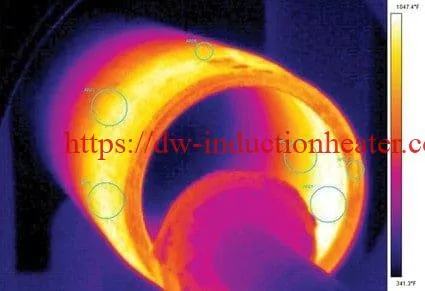
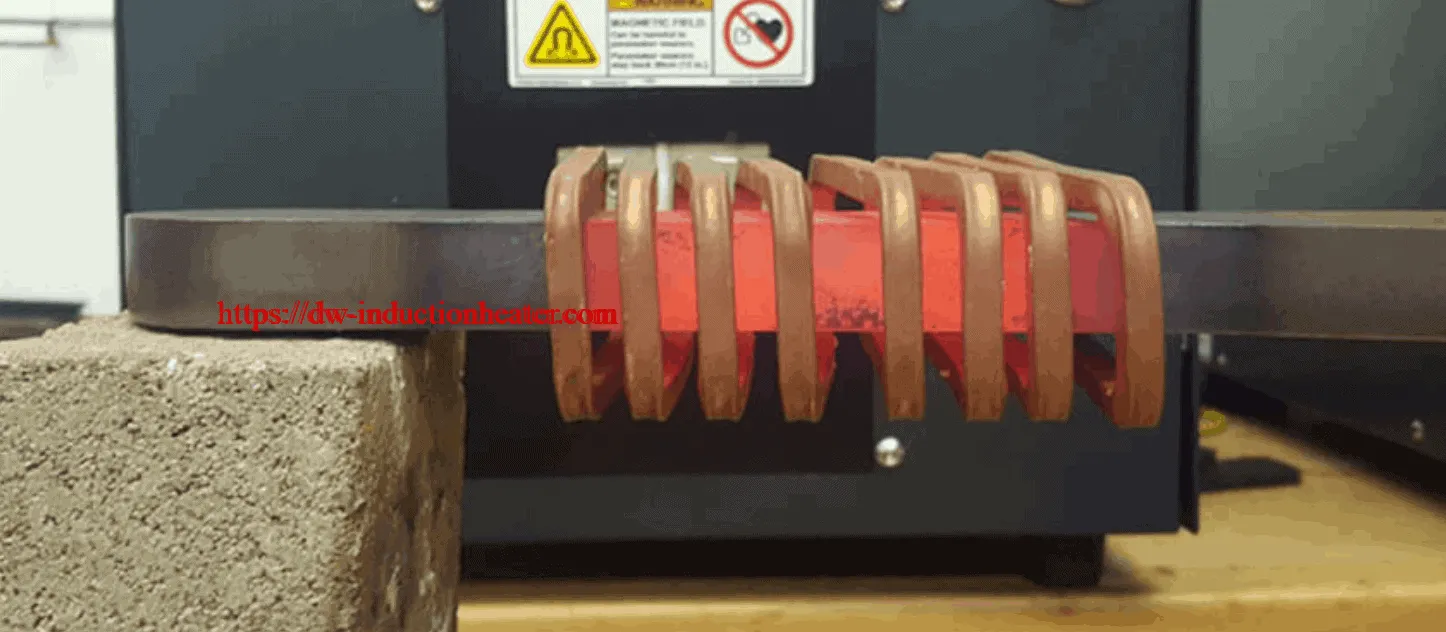
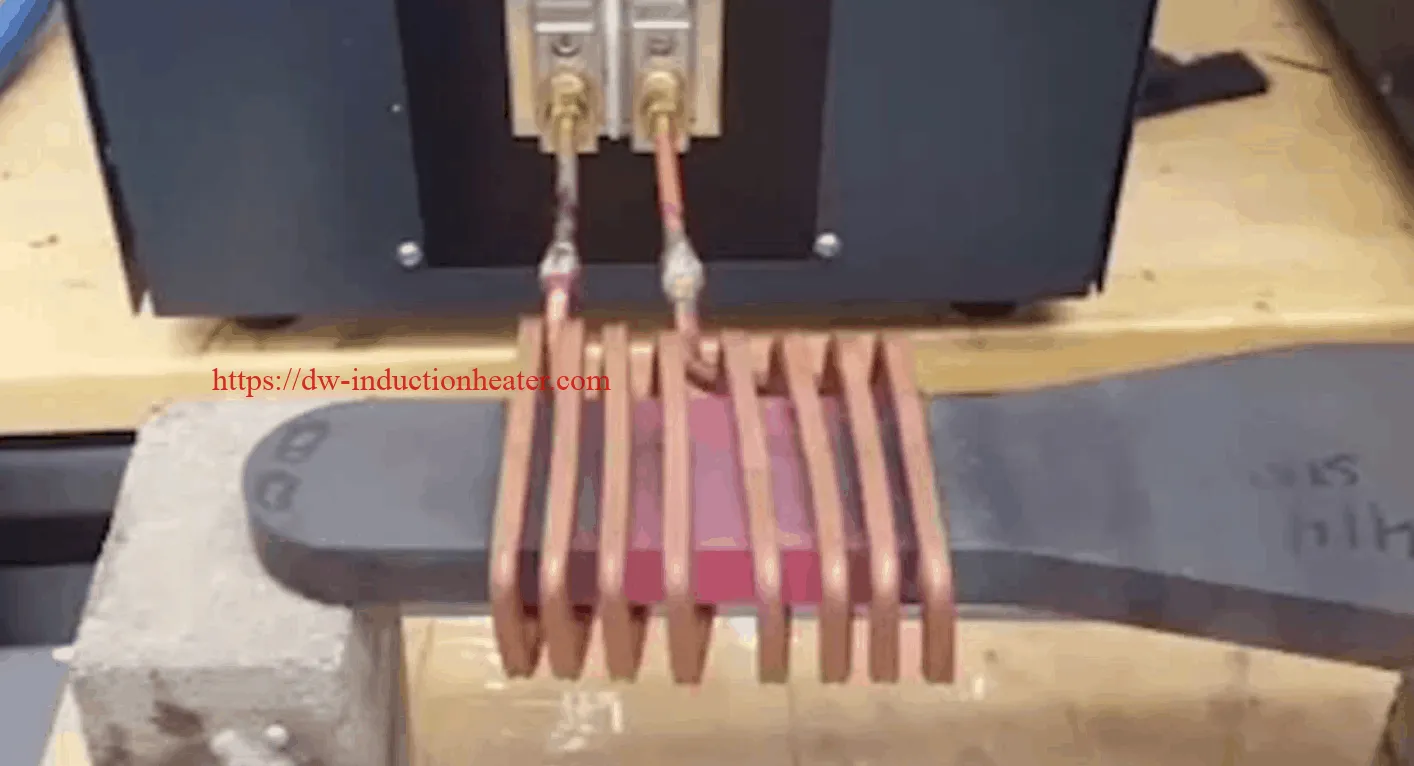
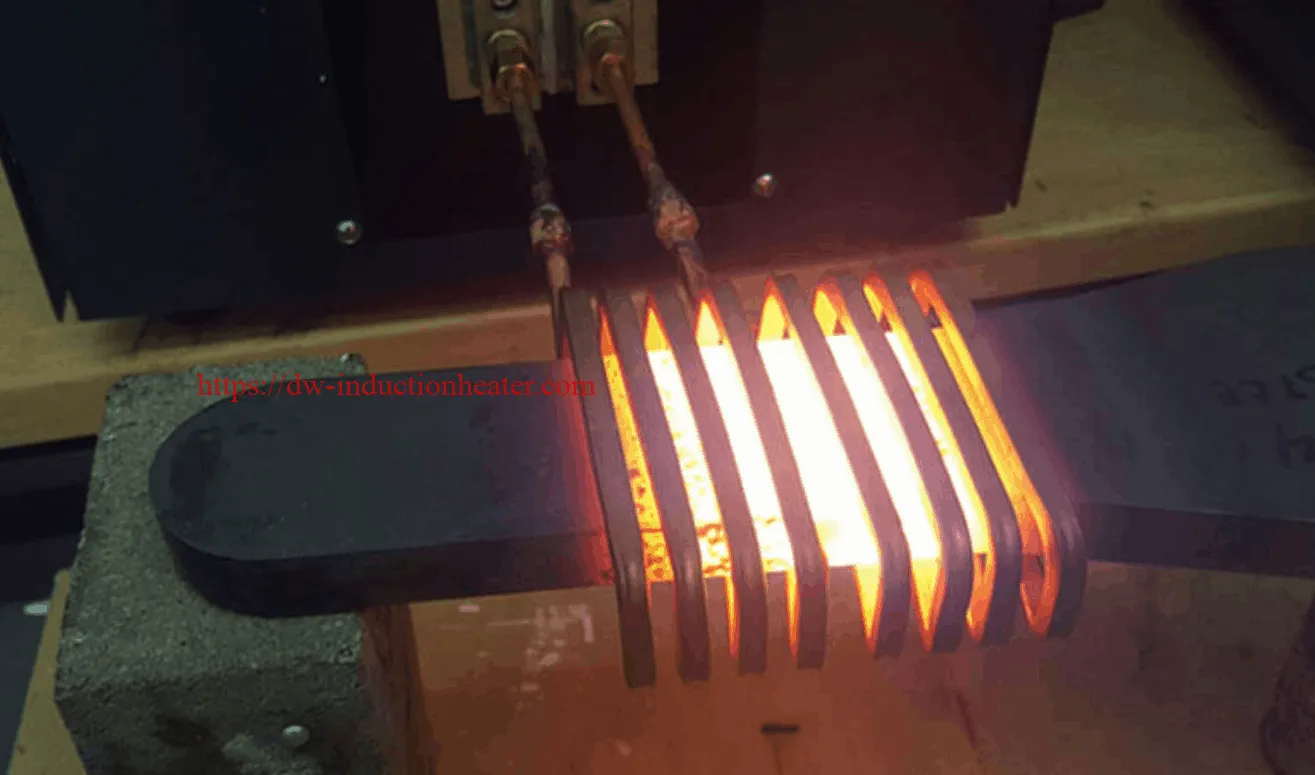
In this HLQ application, a DW-MF-15kW medium-frequency induction hot forming machine heated the required workpiece zone to approximately 1600–1800°F (871–982°C) in about 4 minutes. Applied process power increased from approximately 5.54 kW during the initial heating stage to about 9.85 kW at the high-temperature stage, producing relatively uniform heating across an approximately 4-inch / 102 mm heating zone.
Objective
Heat part to approximately 1600-1800°F (871-982°C) in under 5 minutes with 10 kW machine. This test will show induction heating will replace torch heating and take less time than current torch process.
Equipment
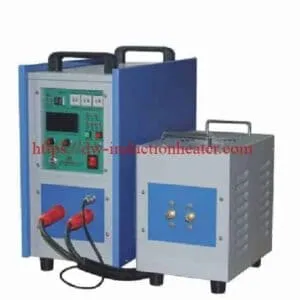
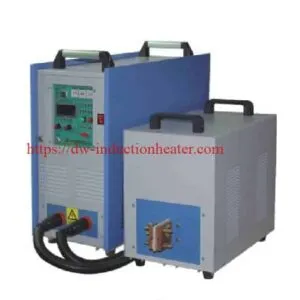
DW-MF-15kw induction hot forming machine

Materials
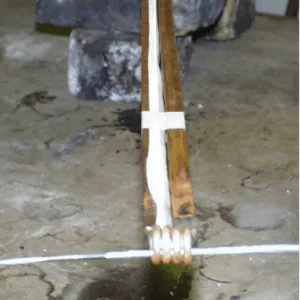
• Copper tube
• Aluminum form
• Compression fittings
Key Parameters
Power: 5.54 kW cold/ 9.85 kW post curie
Temperature: 1600-1800°F (871-982°C)
Time: 4 minutes

Process:
- Position part into coil and center the part 2. Start power cycle and heat for 4 minutes to reach approximately 1800°F (982°C).
Results/Benefits:
Part heated to temperature fairly even across 4 inch heat zone in 4 minutes.
Technical Table – Induction Hot Forming Process
| Technical Parameter | Application / Test Data |
|---|---|
| Application | Induction heating before hot forming |
| Process Category | Hot forming / forging preheating |
| Induction Heating Machine | HLQ DW-MF-15kW |
| Rated Equipment Power | 15 kW |
| Initial Applied Power | Approx. 5.54 kW |
| High-Temperature Applied Power | Approx. 9.85 kW |
| Target Temperature | 1600–1800°F / 871–982°C |
| Typical Heating Time | Approx. 4 minutes |
| Required Cycle | Under 5 minutes |
| Heated Zone Length | Approx. 4 in / 102 mm |
| Heating Method | Medium-frequency induction heating |
| Induction Coil | Custom coil matched to component geometry |
| Heating Pattern | Localized circumferential / forming-zone heating |
| Process Control | Power, time, coil position and temperature |
| Existing Benchmark | Replacement for torch heating |
| Temperature Monitoring | Pyrometer recommended for production |
| Automation Capability | Manual, semi-automatic or fully automatic |
| Typical Applications | Hot forming, forging, heading, bending, upsetting |
| Main Benefit | Fast, repeatable and localized high-temperature heating |
Why Use Induction Heating for Hot Forming?
In hot-forming applications, the metal must reach a sufficiently high and uniform temperature before deformation. If the workpiece is too cold, forming loads increase and cracking can occur; excessive or uneven heating can also reduce process consistency.
Induction heating concentrates electromagnetic energy directly into the required forming zone. The operator or PLC can control:
power + heating time + coil position + temperature + heated length
This makes induction especially suitable for repetitive production where every component should enter the forming press at approximately the same temperature.
In the current case, the approximately 4-inch heating zone reached the required forming temperature in about four minutes, meeting the original goal of completing the cycle in under five minutes.
FAQs
1. What is induction heating for hot forming?
Induction hot forming uses electromagnetic heating to raise a metal component to a controlled forming temperature before operations such as forging, bending, heading or upsetting.
Because heat is generated directly in the workpiece, the process can be faster and more localized than torch or furnace heating.
2. What temperature is required for induction hot forming?
The required temperature depends on the metal and forming operation.
In this application, the target was approximately 1600–1800°F (871–982°C).
For production equipment, the correct target temperature should always be selected according to the actual alloy grade.
3. How long does induction heating take before hot forming?
Heating time depends on component mass, material, target temperature, coil design and available power.
In this HLQ test, the target forming temperature was reached in approximately 4 minutes, within the required maximum cycle of five minutes.
4. What size induction heater was used for this hot-forming application?
The test used an HLQ DW-MF-15kW induction hot forming machine.
Actual process power reached approximately 9.85 kW during the high-temperature part of the cycle.
5. How large was the heated area?
The workpiece was heated relatively uniformly across an approximately 4-inch / 102 mm heating zone.
The heated length can be changed through induction-coil design and workpiece positioning.
6. Is induction heating better than torch heating for hot forming?
For repetitive industrial production, induction heating can offer significant advantages:
- Precise localized heating
- Repeatable cycle times
- Programmable power
- No direct flame
- Lower operator dependence
- Reduced heating of unnecessary areas
- Easier automation
- More consistent forming temperature
The original purpose of this test was specifically to evaluate induction as a faster replacement for the existing torch-heating process.
7. What induction coil is used for hot forming?
The coil should be custom-designed around the component diameter, forming zone length and required heating pattern.
Single-turn, multi-turn, channel and scanning coils can all be used depending on part geometry.
For this application, a custom coil was used to create an approximately 4-inch heated zone.
8. Can induction hot forming be automated?
Yes.
An automated induction hot-forming system can include:
- Automatic loading
- PLC-controlled heating cycles
- Pyrometer temperature feedback
- Servo feeding
- Automatic coil positioning
- Forging or forming press synchronization
- Robot loading/unloading
- Recipe storage
This makes induction heating particularly suitable for high-volume forging and hot-forming production.