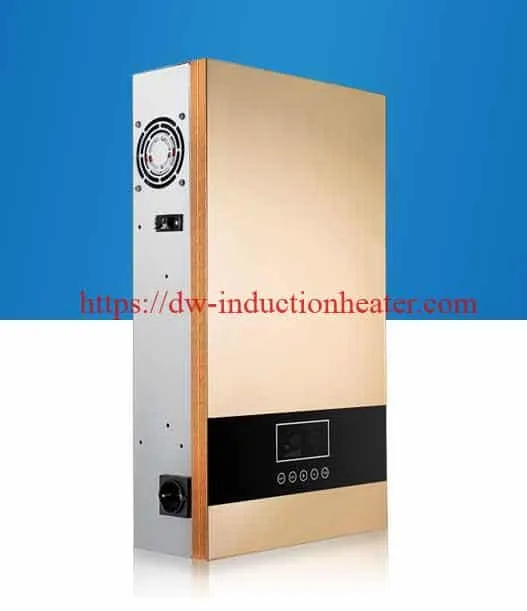
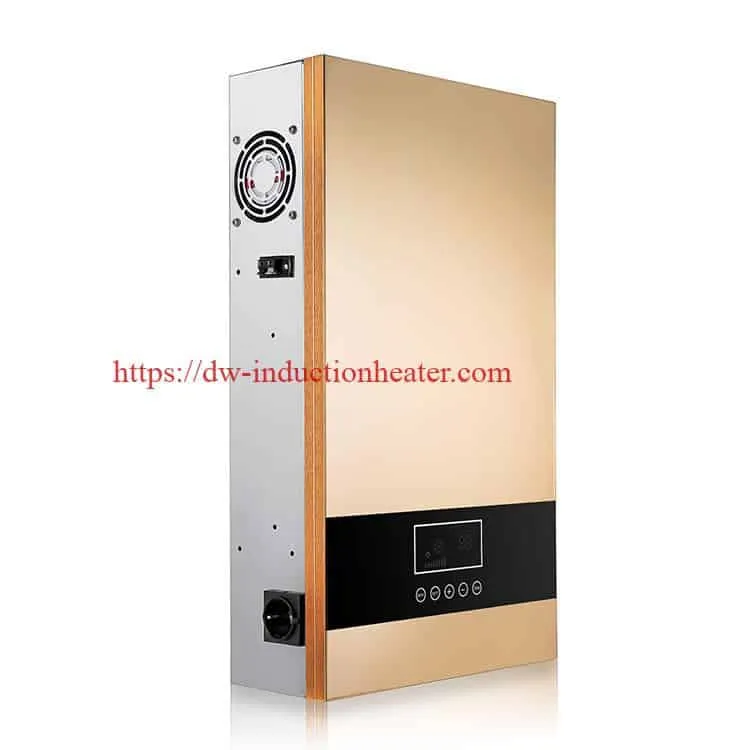


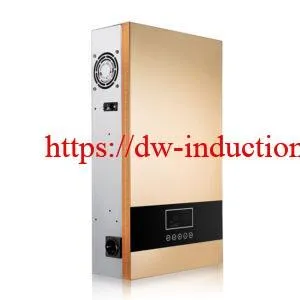
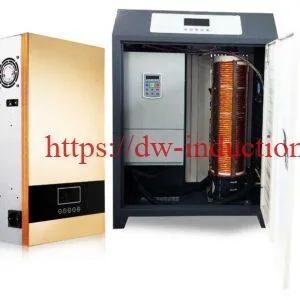


induction water boiler
Induction Water Boiler & Electromagnetic Hot Water Heating System
Quick Answer: An induction water boiler is an electric hot-water heating system that uses electromagnetic induction to generate heat directly in a conductive metal heat exchanger. The heat is then transferred to circulating water for space heating, domestic hot water or industrial process heating. Unlike gas-fired boilers, an induction boiler does not require combustion, a burner or a flue-gas exhaust system.
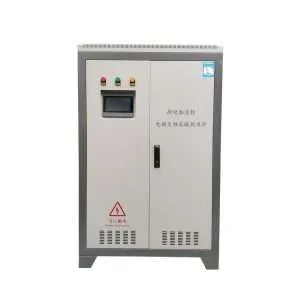
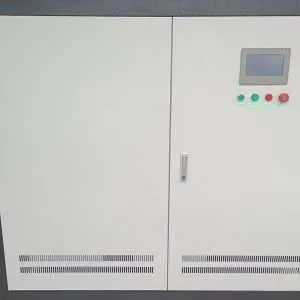
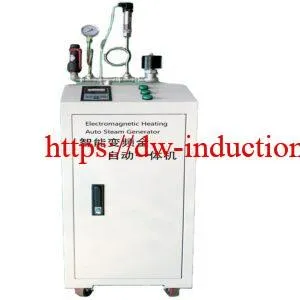
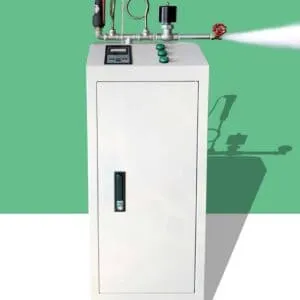
HLQ electromagnetic induction water boilers are available in multiple power ratings for residential, commercial and industrial water-heating applications. Systems can be configured according to heating load, water volume, required outlet temperature, circulation flow rate, operating pressure and electrical supply.
Magnetic induction water boilers are popular choice for hoseholds where gas is not available.
They are an efficient choice for heating up your home, a great benefit of having an induction water boiler to heat your home is that it doesn’t release any gases into the atmosphere.
Induction Water Boiler with Induction Heating
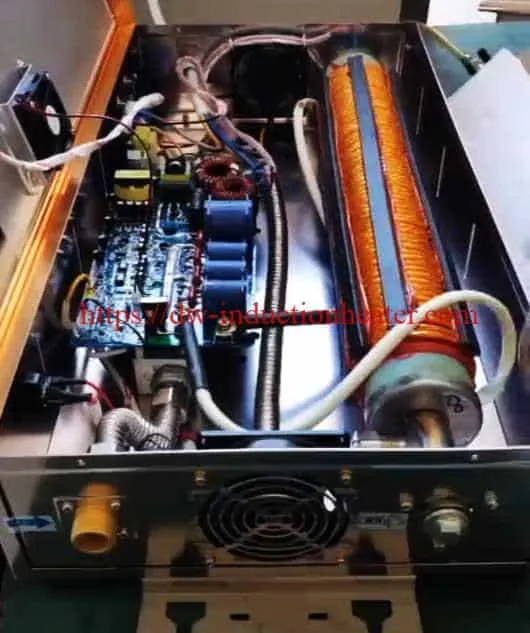
The magnetic induction boiler works by means of an induction coil, which creates a variable magnetic field using current of 50 Hz frequency. The metal maze system, which intensifies the heat exchange, is heated by means of magnetic reversal and practically without loss transfers the released energy to the heat carrier.
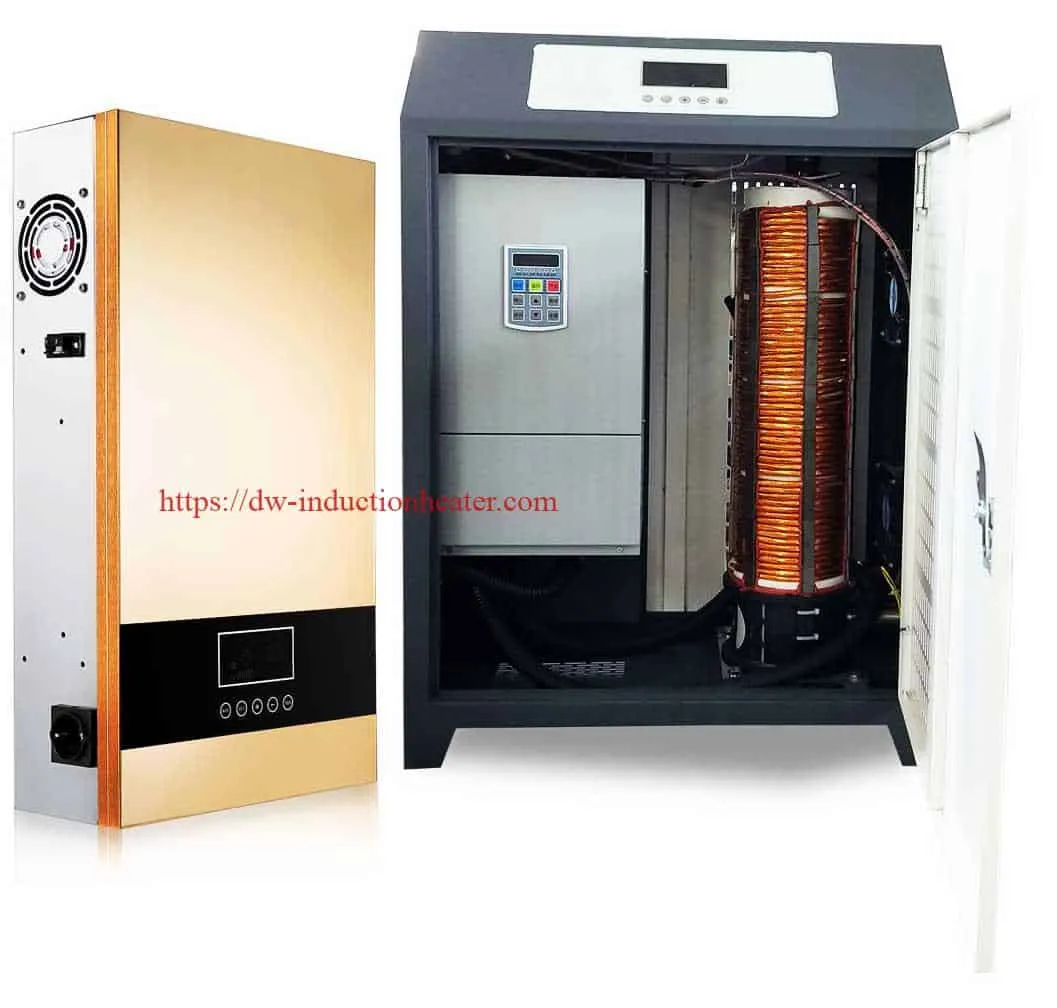
Internal structure


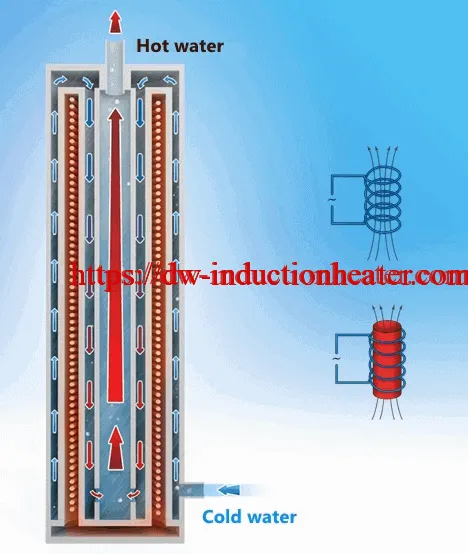
 The principles of induction heating


The mode of induction heating is easily illustrated using an inductor with a magnetic field, which is changed together with the current strength change. The field is closed inside the coil and the intensity depends on the current strength and the number of coil turns.
Induction heating
When placing a metal object inside the coil there will arise eddy currents, which as a result of electric resistance of metal will cause heating of the surface. Heating effect increases with the field intensity increase and depends on the material properties and the size of the coil.
In the boiler there is used an induction coil, which in addition to consumption is also a generator, as its conductor is allocated in the variable magnetic field that causes generation of reactive power. During the process of recovery, the active current, consumed from the network is very slight, and the reactive current closed in the loop is strong enough, which enables boilers SAV to use the extra power produced in the oscillating circuit and to reduce energy consumption.

The advantages of induction boilers
- • Stable high level of efficiency 99% which does not decrease during the period of operation
- • In many cases the transition to induction electric heating reduces the operating costs by an average of 30%
- • Noise and vibration free
- • Maximum scale protection
- • Complete absence of detachable connections in the construction, which eliminates the possibility of leakage
- • Operating current frequency: 50 Hz
- • Does not require highly skilled personnel for installation and maintenance
- • High power factor = 0,98 (almost all energy consumed from the network goes to the creation of heat)
- • Induction heater is characterized by a high degree of electrical and fire safety: the heating element (mazes of pipes) has no electrical connection with the inductor. The maximum temperature on the surface of the heater exceeds the temperature of the heat carrier by not more than 10-30 °C (for heaters working in heating and hot water supply systems)
- • There are no items subject to mechanical wear, no moving parts and high-loaded parts and devices
- • Service life of induction heaters is more than 30 years (when used for heating of buildings)
- • Compatibility with other heating systems
- • Do not require a separate installation room
- • Induction heating makes possible the use of various liquid heat carriers (water, oil, antifreeze) without prior technological preparation
- • Completely self-contained, require no preventive works during the heating season and low-season
Fields of installation application
The versatility of induction boiler operating at industrial current frequency makes possible to use them in various industries in an effective and profitable way
- • Standalone (decentralized) heating;
- • Combined (bivalent) heating;
- • Redundancy of heat supply sources;
- • Hot water supply;
- • Maintaining of the temperature in technologic processes, both in flow and chamber reactors;
- • Adjustment of heating processes using unstable renewable energy sources (RES) and low-grade local fuels;
- • Automated heat supply with distant (remote) control.


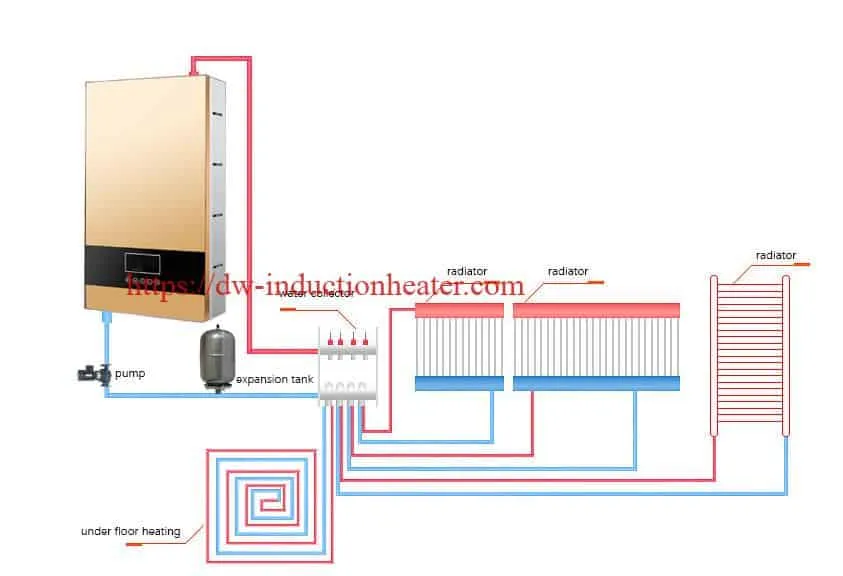
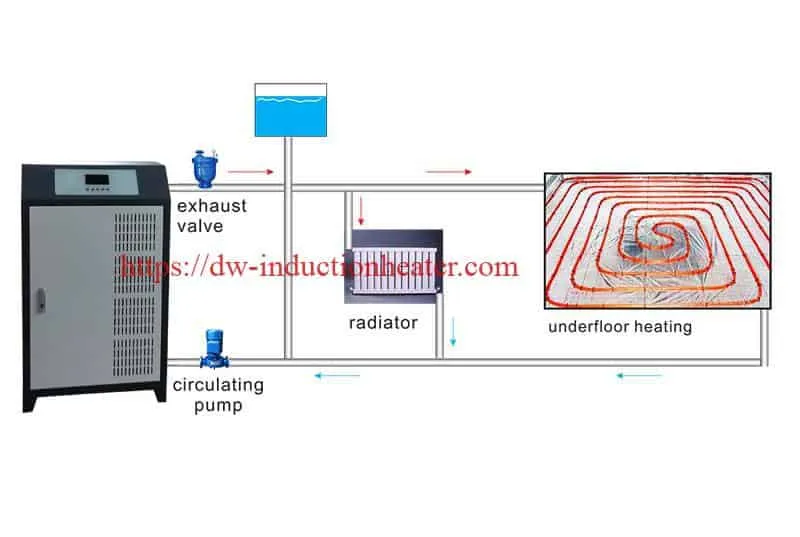
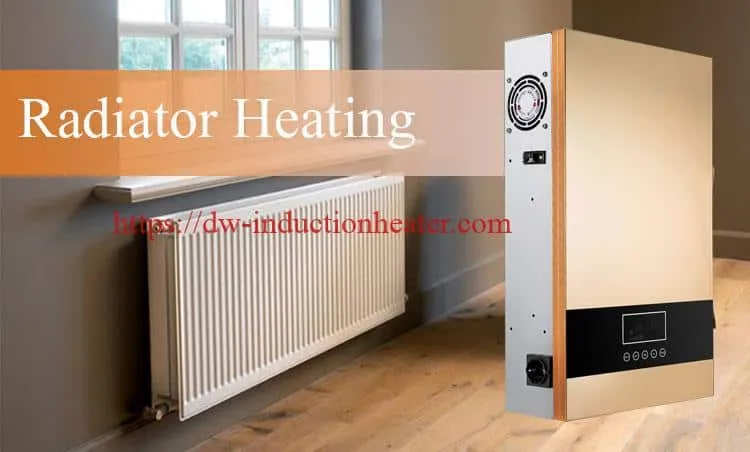 Parameters
| Model No. | Input Voltage | Rated Power | Heating Area | Dimensions/Weight |
|---|---|---|---|---|
| HLQ-CNL-6 | AC220V | 6KW | 40-80m2 | 620*350*145mm / 13kg |
| HLQ-CNL-8 | AC220V/380V | 8KW | 60-100m2 | 620*350*145mm / 13kg |
| HLQ-CNL-10 | AC220V/380V | 10KW | 80-120m2 | 620*350*145mm / 14kg |
| HLQ-CNL-12 | AC380V | 12KW | 100-150m2 | 620*350*145mm / 14kg |
| HLQ-CNL-15 | AC380V | 15KW | 120-200m2 | 620*350*145mm / 15kg |
| HLQ-CNL-20 | AC380V | 20KW | 180-260m2 | 750*450*950mm / 45kg |
| HLQ-CNL-25 | AC380V | 25KW | 220-300m2 | 750*450*950mm / 45kg |
| HLQ-CNL-30 | AC380V | 30KW | 250-360m2 | 750*450*950mm / 50kg |

Frequently Asked Questions About Induction Water Boilers
What is an induction water boiler?
An induction water boiler is an electric heating system that uses electromagnetic induction to heat a conductive metal heat exchanger, which then transfers heat to circulating water.
Does an induction boiler heat water directly?
The induction field primarily heats the conductive metal heating body or heat exchanger. The water absorbs thermal energy as it circulates through or around the heated section.
Does an induction water boiler require gas?
No. An induction boiler operates using electricity and does not require natural gas, LPG or another combustion fuel.
Does an induction boiler need a chimney?
No combustion takes place, so a conventional flue or chimney for combustion gases is not required.
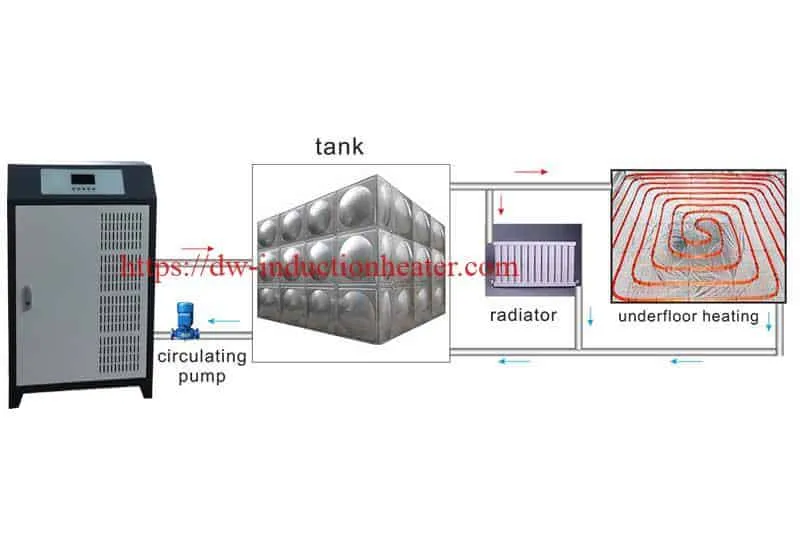
Can an induction boiler be used for underfloor heating?
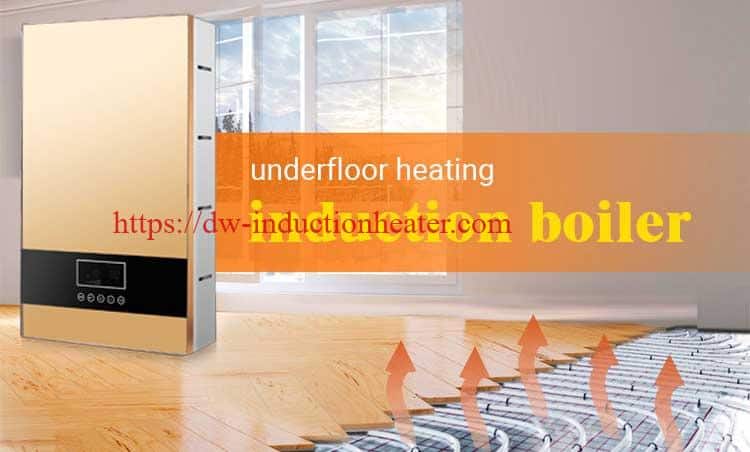
Yes. It can supply heated water to a properly designed hydronic floor-heating circuit when the required temperature, circulation flow and controls are matched to the system.
Can an induction boiler provide domestic hot water?
Yes. It can be integrated with a suitable storage tank or heat exchanger to provide hot water, subject to the required heating capacity and water demand.
What size induction boiler do I need?
Required power depends on heating load, water volume, inlet and target temperature, required heating time, heat loss and local climate conditions.
Can an induction water boiler be used for industrial heating?
Yes. Larger electromagnetic induction water-heating systems can be designed for industrial process water, tanks, circulating heating loops and heat-exchanger applications.