
Induction Heating Inner of Steel Liners
Induction Heating Inner of Steel Liners to Remove Aluminium Casings
Quick Answer
Induction heating inner of steel liners heats each liner from inside its bore, so the aluminium casing around it can be pressed off and recycled.
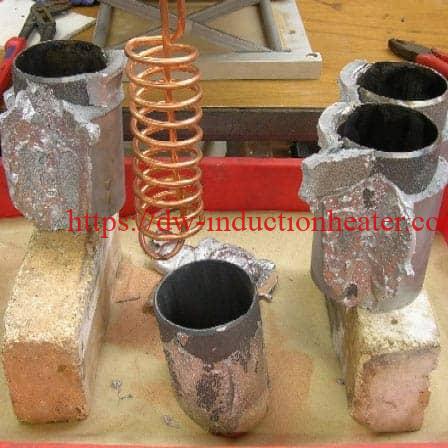
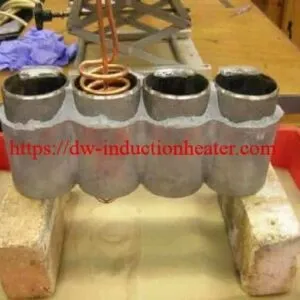
In this HLQ case, a 10-turn internal solenoid (bore) coil heated steel liners of 80 mm ID × 190 mm (3.1 × 7.5 in) to 650 °C (1202 °F) in about two minutes. The coil was powered by a DW-HF-25kW induction heating system at 60 kHz, with one 2.6 µF capacitor in the remote workhead. Pressure applied to the outer aluminium skin then loosened it from the steel. A four-position coil can heat 4 liners at the same time. The aluminium casing is recycled and reused, which reduces scrap and cuts costs.

What is Induction Heating the Inner of Steel Liners?
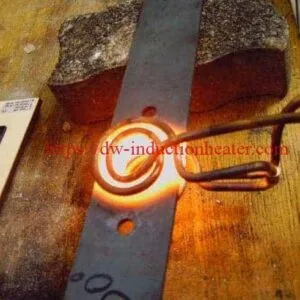
A coil inserted into the bore induces eddy currents in the steel liner and heats it directly from the inside. Once the liner is hot, pressure on the surrounding aluminium casing separates it from the steel, so both metals can be recovered.
| Item | HLQ case data |
|---|---|
| Objective | Heat the steel liners of an engine casting to remove the aluminium casing |
| Material | Steel liners, 80 mm ID × 190 mm (3.1 × 7.5 in) |
| Temperature | 650 °C (1202 °F) |
| Frequency | 60 kHz |
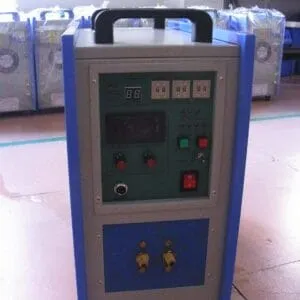
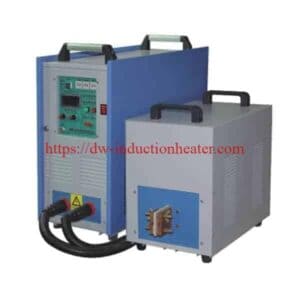
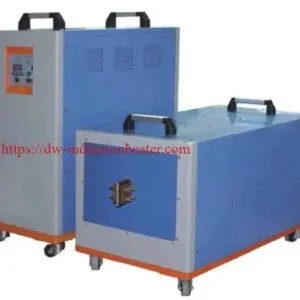
| Equipment | DW-HF-25kW induction heating system with a remote workhead containing one 2.6 µF capacitor, plus a coil designed for this application |
| Coil | 10-turn internal solenoid (bore) coil; a four-position coil can heat 4 liners at once |
| Process | Liner heated to 650 °C in about two minutes; pressure applied to the outer aluminium skin to loosen it from the steel |
Key Applications

| Application | Purpose | HLQ reference |
|---|---|---|
| Removing aluminium casings from steel liners | Recover and recycle the aluminium | This case |
| Heat dismounting of fitted parts | Thermal expansion for removal | what is induction heat dismounting |
| Disassembly of couplings, bearings, rotors and motors | Maintenance and repair | induction disassembly machine for couplings, bearings, rotors and motors |
| On-site disassembly | Portable heating | portable induction disassembly heater |
| Shrink fitting (the reverse process) | Assembly by thermal expansion | what is induction shrink fitting |
Suitable Materials
| Material | Role | Notes |
|---|---|---|
| Steel liners | Heated part | 80 mm ID × 190 mm; heated to 650 °C |
| Aluminium casing | Removed part | Loosened by pressure, then recycled and reused |
Working Principle

- The DW-HF-25kW drives the remote workhead (1 × 2.6 µF) and the 10-turn bore coil at 60 kHz.
- The coil sits inside the liner, so eddy currents heat the steel liner directly.
- The liner reaches 650 °C (1202 °F) in about two minutes.
- Pressure on the outer aluminium skin loosens it from the steel.
More: induction heating coil design and induction heating for dismounting couplings.
Technical Specifications
| Parameter | Value |
|---|---|
| Liner inner diameter | 80 mm (3.1 in) |
| Liner length | 190 mm (7.5 in) |
| Liner material | Steel |
| Casing material | Aluminium |
| Temperature | 650 °C (1202 °F) |
| Heating time | About 2 minutes |
| Frequency | 60 kHz |
| Power supply | DW-HF-25kW |
| Workhead | Remote, 1 × 2.6 µF |
| Coil | 10-turn internal solenoid (bore); four-position option |
Recommended Model Selection
DW-HF-25KW (HLQ published data)
| Item | Value |
|---|---|
| Input | 3-phase 380 V, 50/60 Hz |
| Maximum oscillating power | 25 kVA |
| Frequency | 30–80 kHz |
| Duty cycle | 100% at 30 °C |
| Cooling | Water cooling |
| Main unit / extension unit | 550 × 240 × 485 mm / 340 × 205 × 340 mm |
| Weight | 55 kg |
Full details: DW-HF-25kW high frequency induction heating equipment.
DW-HF series (3-phase 380 V)
| Model | Power | Input current |
|---|---|---|
| DW-HF-25KW | 25 kVA | 23 A |
| DW-HF-35KW | 35 kVA | 51 A |
| DW-HF-45KW | 45 kVA | 68 A |
| DW-HF-60KW | 60 kVA | 105 A |
| DW-HF-80KW | 80 kVA | 130 A |
| DW-HF-90KW | 90 kVA | 160 A |
| DW-HF-120KW | 120 kVA | 200 A |
| DW-HF-160KW | 160 kVA | 260 A |
Heating 4 liners at once with a four-position coil may call for a larger model. All models: HLQ induction heating device models.
Process Workflow

| Step | Action |
|---|---|
| 1 | Place the casing with its liners on supports |
| 2 | Insert the 10-turn bore coil into a liner |
| 3 | Heat for about 2 minutes to 650 °C (1202 °F) |
| 4 | Apply pressure to the outer aluminium skin |
| 5 | The aluminium loosens from the steel |
| 6 | The aluminium is recycled; the steel liner is removed |
| 7 | Next liner, or 4 at once with a four-position coil |
Station layout

Common Problems and Solutions
| Problem | Cause | Solution |
|---|---|---|
| Aluminium will not release | Liner not hot enough | Heat the liner to 650 °C before applying pressure |
| Uneven heating along the liner | Coil off-centre in the bore | Centre the 10-turn bore coil inside the liner |
| Low throughput | One liner per cycle | Four-position coil heats 4 liners at once |
| Aluminium scrapped | Destructive removal methods | Clean separation lets the aluminium be recycled and reused |
Engineering Selection Guide
| Factor | What to confirm | Why it matters |
|---|---|---|
| Liner size | ID and length (80 × 190 mm in the case) | Bore coil size and turns |
| Number of bores | Liners per casting | Single or multi-position coil |
| Temperature | For example, 650 °C | Power and time |
| Cycle time | For example, about 2 minutes | Power rating |
| Removal method | Pressure tool or press | Station layout |
| Utilities | 3-phase 380 V; cooling water | Installation |
Advantages and Limitations
| Advantages | Limitations |
|---|---|
| Precise, direct heat disengages the aluminium quickly and cleanly | The bore coil must fit the liner ID |
| The aluminium is recycled and reused | Pressure must be applied to release the casing |
| Less scrap, lower cost | More liners per cycle need more power |
| Four liners can be heated at once | Cooling water is required |
Why Choose HLQ?
| Strength | Evidence |
|---|---|
| Internal bore coils | 10-turn solenoid and four-position designs |
| Disassembly experience | Liners, couplings, bearings, rotors |
| Recycling benefit | Clean aluminium recovery |
| DW-HF series | 25–160 kVA |
| Fast cycle | About 2 minutes per liner |
10 Core FAQs
1. What is heated in this application?
The steel liners of an engine casting, from inside the bore.
2. Why heat the liners?
To remove the aluminium casing so it can be recycled and reused.
3. What size are the liners?
80 mm ID × 190 mm (3.1 × 7.5 in).
4. What temperature is used?
650 °C (1202 °F).
5. How long does heating take?
About two minutes per liner.
6. Which equipment was used?
A DW-HF-25kW induction heating system at 60 kHz, with a remote workhead containing one 2.6 µF capacitor.
7. Which coil was used?
A 10-turn internal solenoid (bore) coil.
8. How is the aluminium removed?
Pressure is applied to the outer aluminium skin to loosen it from the hot steel liner.
9. Can several liners be heated at once?
Yes. A four-position coil can heat 4 liners simultaneously.
10. What is needed for a quotation?
The liner ID, length and material, the casting drawing and number of bores, the liners per cycle, and the available supply.