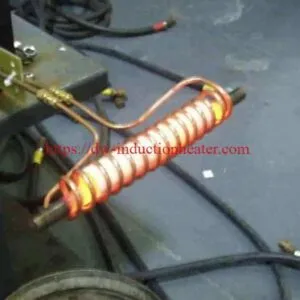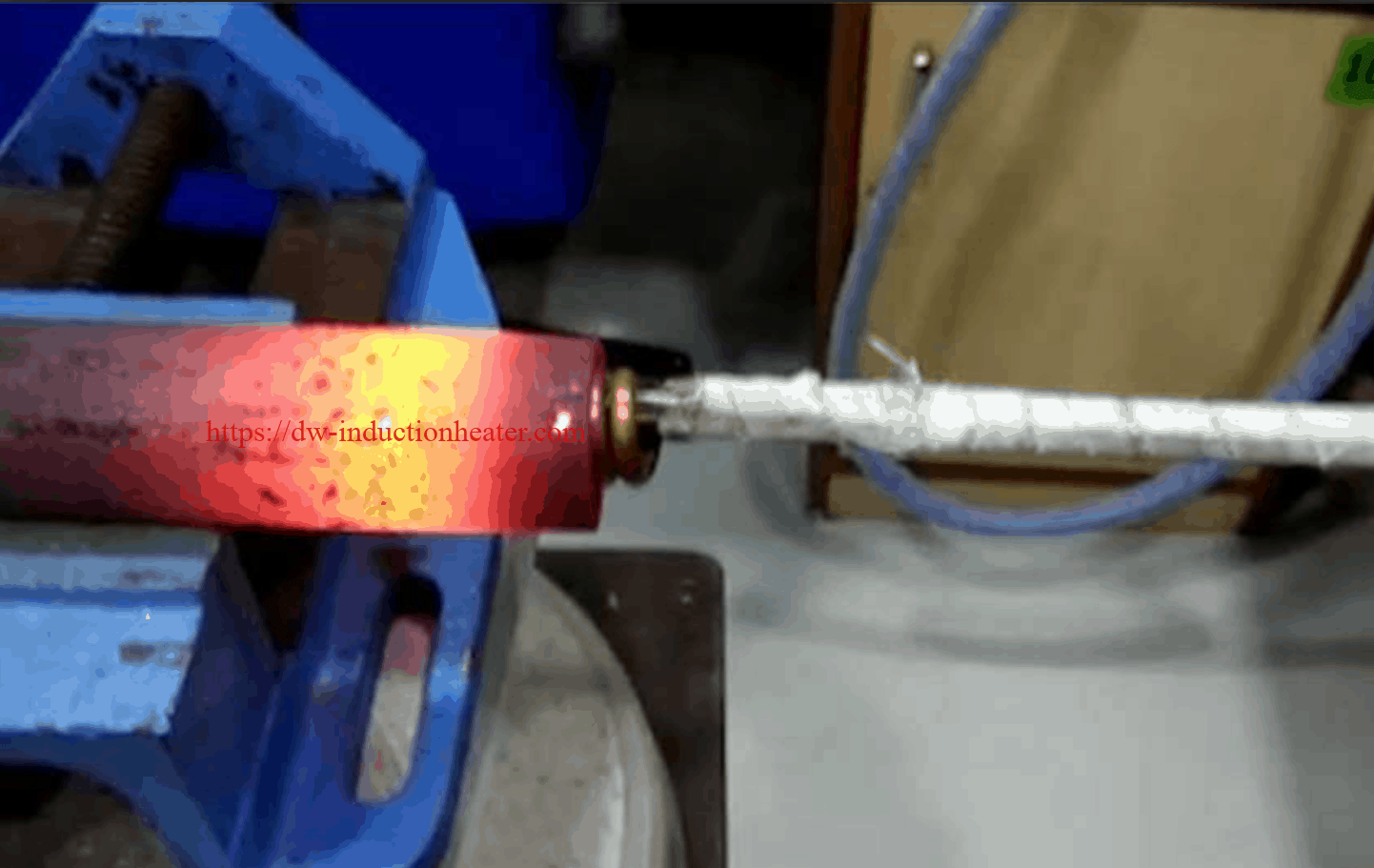

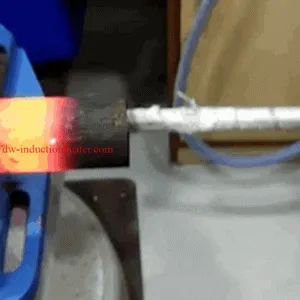
induction heating bore of steel pipe
What Is Induction Bore Heating for Steel Pipe?
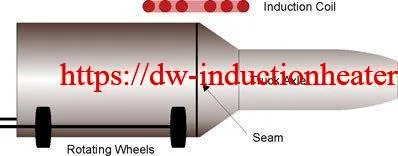
Induction bore heating uses a specially designed internal-diameter (ID) induction coil positioned inside a steel pipe to generate localized heat directly around the inner bore surface.
Objective
Bore heating a steel pipe with ID coil to 2012˚F (1100˚C) at a rate of 0.16” (4 mm) per second.
Recommended Equipment
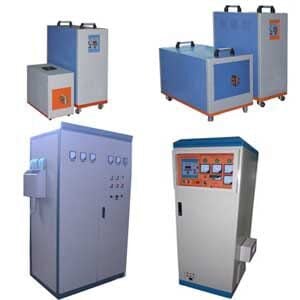
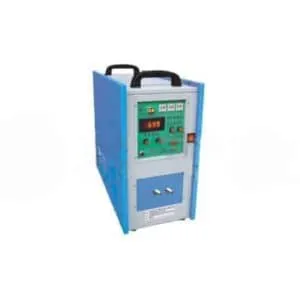
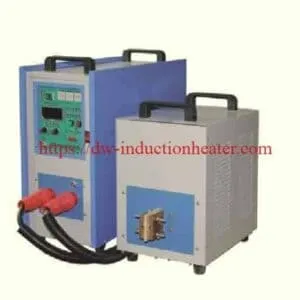
The recommended equipment for this application is the DW-HF-15kw induction heating power supply with a remote heat station.

Materials
11.8” (300 mm) steel pipe; part to be heated: 1.97” (50 mm) OD, thickness 0.16” (4 mm)
Key Parameters
Power: Up to 10 kW
Temperature: 2012˚F (1100˚C)
Time: 0.16” (4 mm) per second

Technical Table – Steel Pipe Bore Induction Heating
| Technical Parameter | Application Data |
|---|---|
| Application | Internal bore heating of steel pipe |
| Heating Method | High-frequency induction heating |
| Induction Heating System | HLQ DW-HF-15kW |
| Heating Station | Remote heat station |
| Applied Process Power | Up to approx. 10 kW |
| Target Temperature | Approx. 2012°F / 1100°C |
| Heating Progression Rate | Approx. 0.16 in/s / 4 mm/s |
| Main Workpiece | Steel pipe |
| Pipe Size | Approx. 11.8 in / 300 mm |
| Local Heated Section OD | Approx. 1.97 in / 50 mm |
| Material Thickness | Approx. 0.16 in / 4 mm |
| Coil Type | Internal-diameter / ID induction coil |
| Heating Location | Inner bore / internal pipe surface |
| Heating Pattern | Localized circumferential heating |
| Coil Movement | Stationary or scanning depending on production design |
| Temperature Control | Pyrometer / thermocouple recommended |
| Cooling | Designed according to process and coil requirements |
| Automation Capability | Manual, semi-automatic or automated scanning |
| Main Advantage | Direct localized heating of inaccessible internal surfaces |
How Does Internal Bore Induction Heating Work?
A conventional external induction coil surrounds the outside of a workpiece. For bore induction heating, the coil is instead positioned inside the pipe or cylindrical component.
High-frequency alternating current flows through the copper induction coil and generates an alternating electromagnetic field. This field induces eddy currents in the nearby steel bore surface, converting electrical energy directly into heat.
Because the coil is positioned close to the internal wall, energy can be concentrated on the bore without unnecessarily heating the entire pipe cross-section.
For long or cylindrical components, the coil or workpiece can also be moved axially to create a controlled scanning heating pattern.
Why Use an Internal ID Induction Coil?
An ID induction coil is useful when the engineering objective specifically concerns the internal surface.
Typical advantages include:
- Direct bore-surface heating
- Highly localized thermal zone
- Rapid temperature rise
- Reduced heating of the complete component
- Repeatable heating pattern
- Precise control of axial heating position
- Easy integration with scanning systems
- No direct flame
- Suitable for automation
The existing test demonstrates heating to approximately 1100°C at about 4 mm/s, showing that even relatively high bore temperatures can be achieved with localized induction energy.
FAQs
1. Can the inside bore of a steel pipe be heated by induction?
Yes. The inside diameter of a steel pipe can be heated using an internal or ID induction coil.
The coil is positioned inside the bore so the electromagnetic field couples directly with the inner steel surface.
This allows localized internal heating without requiring the complete pipe to be heated.
2. What temperature can induction bore heating reach?
The achievable temperature depends on power, frequency, pipe dimensions, coil design and scanning speed.
In this HLQ application, the steel pipe bore was heated to approximately 2012°F (1100°C).
3. What induction heating machine is used for steel pipe bore heating?
The current application uses an HLQ DW-HF-15kW high-frequency induction heating power supply with a remote heating station.
Applied process power was up to approximately 10kW.
4. How fast can a steel pipe bore be heated?
The target heating progression in this application was approximately:
0.16 in/s or 4 mm/s.
Actual production speed depends on target temperature, bore diameter, wall thickness, coil coupling and available power.
5. What type of induction coil is used for internal bore heating?
A specially designed internal-diameter (ID) induction coil is used.
The coil diameter, conductor shape, number of turns and coil-to-wall clearance must be matched to the pipe bore geometry.
For scanning applications, the coil can be moved axially through the pipe while maintaining a controlled distance from the internal surface.
6. Can bore induction heating be used for hardening?
Yes.
Internal induction heating can be used as part of a bore-hardening process when the steel grade, heating temperature, scanning speed and quench system are designed appropriately.
A bore-hardening system normally also requires controlled quenching immediately after heating to produce the desired hardness profile.
7. What are the applications of internal pipe induction heating?
Typical applications can include:
- Internal bore hardening
- Pipe bore preheating
- Thermal expansion for assembly
- Internal surface heat treatment
- Localized stress-relief processes
- Internal coating preparation
- Shrink-fitting operations
- Controlled cylindrical-part heating
The exact system configuration depends on the required thermal process.
8. Can steel pipe bore heating be automated?
Yes.
An automated system can include:
- Servo-controlled coil scanning
- PLC control
- Pyrometer temperature feedback
- Programmable power profiles
- Automatic part positioning
- Water-cooled ID coils
- Automatic quench systems
- Recipe storage
This is particularly useful when multiple identical pipes or cylindrical parts require a repeatable bore-heating profile.