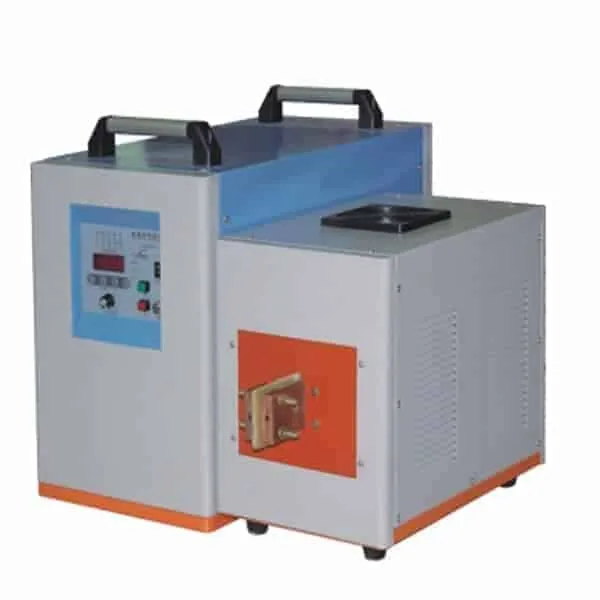
High Frequency Brazing Equipment
20kW High Frequency Induction Brazing Equipment for Precision Metal Joining
What Is High Frequency Induction Brazing Equipment?
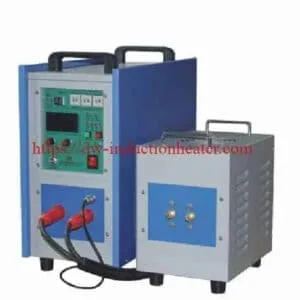
High frequency induction brazing equipment is an industrial electromagnetic heating system designed to join metal components using controlled, localized heating and brazing filler metals.
The HLQ DW-UHF-20KW High Frequency Induction Brazing Machine features a 20kW output capacity and an operating frequency range of 50–250kHz. It is engineered for precision brazing, soldering, and localized heating of small metal components.
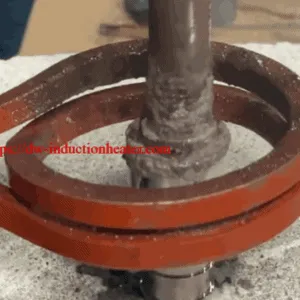
The equipment uses advanced IGBT inverter technology to generate high-frequency alternating magnetic fields. These fields induce electrical currents within conductive metal workpieces, producing rapid, localized heating without direct flame contact.
This technology is particularly suitable for brazing carbide cutting tools, diamond saw blade segments, stainless steel components, copper and brass fittings, precision mechanical parts, and jewelry.
Key Applications:
- High frequency induction brazing of metal components
- Copper and brass induction brazing
- Carbide cutting tool brazing
- Diamond saw blade segment brazing
- Stainless steel precision brazing
- Jewelry and watch component brazing
- Small mechanical component joining
- Induction soldering of electrical connections
- Localized metal heating and annealing
Manufactured by HLQ Induction Equipment Co., Ltd., the DW-UHF-20KW induction brazing system is designed for industrial manufacturers seeking repeatable brazing quality, efficient localized heating, and reliable operation.
Technical Specifications — DW-UHF-20KW
High Frequency Induction Brazing Machine Technical Parameters
| Parameter | Specification |
|---|---|
| Product Name | High Frequency Induction Brazing Equipment |
| Manufacturer | HLQ Induction Equipment Co., Ltd. |
| Model | DW-UHF-20KW |
| Equipment Type | Ultra High Frequency Induction Brazing Machine |
| Rated Output Power | 20kW |
| Operating Frequency | 50–250kHz |
| Input Voltage | 3-Phase AC 380V ±10% |
| Input Frequency | 50/60Hz |
| Input Current | 3–30A |
| Power Technology | IGBT Inverter |
| Heating Principle | Electromagnetic Induction |
| Control Modes | Constant Current / Constant Power |
| Duty Cycle | 100% under specified operating and cooling conditions |
| Cooling System | Water Cooling |
| Cooling Water Pressure | >0.2MPa |
| Cooling Water Flow | 5L/min |
| Main Unit Dimensions | 590 × 300 × 530mm |
| Heating Head Dimensions | 520 × 255 × 380mm |
| Published Weight | 55kg |
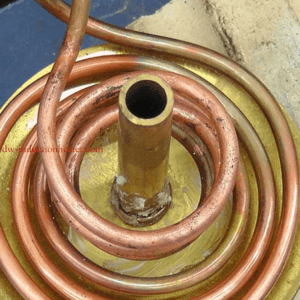
| Induction Coil | Customized According to Application |
| Primary Application | Precision Induction Brazing |
| Additional Applications | Soldering, Localized Heating, Annealing, Small-Part Hardening |
| Suitable Workpieces | Copper, Brass, Steel, Stainless Steel, Carbide Assemblies |
| Production Integration | Manual or Customized Automation |
| Installation | Industrial Workshop / Manufacturing Line |
Engineering Note: The 55kg value is the published equipment weight and should be confirmed for the complete supplied configuration. Power supply compatibility, coil design, and cooling requirements should be verified before ordering.
Recommended Brazing Applications
| Brazing Application | Workpiece Materials | Brazing Method | Key Consideration |
|---|---|---|---|
| Copper Pipe Brazing | Copper to Copper | Induction Brazing | Joint clearance and filler selection |
| Copper to Brass Brazing | Copper and Brass | High Frequency Brazing | Balanced joint heating |
| Carbide Tool Brazing | Tungsten Carbide and Steel | Precision Induction Brazing | Avoid excessive thermal stress |
| Diamond Blade Brazing | Steel Core and Diamond Segments | Localized Induction Brazing | Protect temperature-sensitive cutting segments |
| Stainless Steel Brazing | Stainless Steel Components | High Frequency Induction Heating | Oxidation control and suitable filler |
| Jewelry Brazing | Gold, Silver and Other Suitable Alloys | Precision Induction Brazing | Accurate heat input |
| Electrical Contact Brazing | Copper-Based Assemblies | Induction Brazing | Electrical conductivity and joint integrity |
| Precision Mechanical Brazing | Steel and Alloy Components | Localized Induction Brazing | Repeatable joint quality |
Note: The listed applications are potential process configurations. Actual feasibility depends on workpiece dimensions, material properties, filler metal, joint design, and induction coil geometry.

Key Advantages of High Frequency Induction Brazing Equipment
Rapid and Localized Heating
High-frequency induction heating concentrates energy within the required heating area, reducing unnecessary thermal exposure to surrounding components.
High Precision Brazing
Electronic power control enables repeatable heating conditions, making induction brazing suitable for precision metal joining applications.
Reduced Oxidation
Compared with uncontrolled open-flame heating, appropriately controlled induction heating can reduce unnecessary thermal exposure. Flux, shielding gas, or a controlled atmosphere may still be necessary.
Consistent Brazing Quality
Repeatable heating cycles help manufacturers maintain consistent process conditions when coil positioning, joint preparation, and filler metal application are properly controlled.
Energy-Efficient Metal Joining
Induction heating transfers energy directly into electrically conductive workpieces, helping reduce unnecessary heating of the surrounding environment.
Suitable for Industrial Automation
The system can be integrated into customized production arrangements using fixtures, positioning mechanisms, and process controls.
Customized Induction Coils
HLQ offers application-specific induction coil designs for different workpiece dimensions, joint geometries, and production requirements.
FAQs
FAQ 1: What is high frequency induction brazing equipment?
High frequency induction brazing equipment is an electromagnetic heating system used to join metal components using brazing filler metals.
The equipment generates a high-frequency alternating magnetic field that induces electrical currents within conductive workpieces, producing rapid and localized heating.
Unlike conventional fusion welding, brazing does not require melting the base metals. Instead, a filler metal melts and flows into the joint through capillary action.
The HLQ DW-UHF-20KW induction brazing machine provides 20kW of rated output power and operates at frequencies between 50kHz and 250kHz.
FAQ 2: What are the advantages of high frequency induction brazing compared with flame brazing?
High frequency induction brazing offers several potential advantages over conventional flame brazing.
These include faster localized heating, repeatable process control, reduced direct flame exposure, and easier integration with automated manufacturing equipment.
Induction brazing is particularly useful for precision metal components where consistent joint heating and controlled thermal exposure are important.
However, successful brazing still requires correct filler metal selection, joint preparation, suitable heating conditions, and appropriate flux or atmospheric protection.
FAQ 3: Can high frequency induction brazing equipment braze copper and brass pipes?
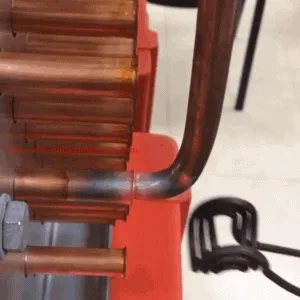
Yes. High frequency induction brazing machines can be used to braze copper-to-copper and copper-to-brass joints.
These applications are common in HVAC manufacturing, refrigeration components, heat exchangers, and industrial piping assemblies.
Induction heating provides localized thermal energy around the joint, allowing the brazing filler metal to melt and flow into the clearance between components.
The recommended machine power and operating frequency depend on pipe diameter, wall thickness, joint configuration, filler alloy, and required production speed.
FAQ 4: What frequency is best for induction brazing?
The recommended induction brazing frequency depends on the workpiece dimensions, electrical properties, joint geometry, and heating requirements.
Higher operating frequencies are generally more suitable for smaller workpieces and localized heating applications.
Lower frequencies may be more appropriate for larger components requiring greater electromagnetic penetration.
The HLQ DW-UHF-20KW High Frequency Brazing Equipment operates within a 50–250kHz frequency range.
The actual operating frequency and heating performance depend on the machine configuration and electrical characteristics of the induction coil and workpiece.
FAQ 5: Can a 20kW induction brazing machine braze carbide cutting tools?
Yes. A 20kW induction brazing machine can be suitable for brazing tungsten carbide cutting tips to steel tool bodies.
Common applications include carbide saw blades, cutting tools, drill components, and industrial tooling assemblies.
The brazing process requires careful control of joint temperature, heating uniformity, and cooling conditions to minimize thermal stress.
Appropriate silver-based or copper-based brazing filler alloys may be selected depending on the materials, joint design, and operating conditions.
FAQ 6: What materials can be joined using high frequency induction brazing?
High frequency induction brazing can join many conductive metals and compatible metal combinations.
Common materials include copper, brass, carbon steel, stainless steel, and steel-to-tungsten-carbide assemblies.
Applications may also include suitable precious-metal components and precision mechanical parts.
The compatibility of dissimilar metals depends on filler metal composition, joint clearance, wetting characteristics, service temperature, and thermal expansion differences.
Not every material combination can be brazed successfully using the same heating parameters.
FAQ 7: What is the difference between induction brazing and induction soldering?
Both induction brazing and induction soldering use electromagnetic induction to heat metal joints.
The primary difference is the liquidus temperature of the filler metal.
Induction brazing uses filler metals with liquidus temperatures above 450°C, while induction soldering uses filler metals with liquidus temperatures at or below 450°C.
Both processes join components without intentionally melting the base metals.
Induction brazing is commonly used for industrial metal assemblies requiring relatively high joint strength and temperature resistance, while induction soldering is widely used for electrical and electronic connections.
FAQ 8: How do I select the correct high frequency induction brazing machine?
Selecting the correct high frequency induction brazing equipment requires evaluating the workpiece materials, dimensions, joint configuration, required brazing temperature, and production capacity.
The manufacturer should also consider the brazing filler alloy, heating cycle, cooling system, automation requirements, and available electrical supply.
For small and medium-sized precision brazing applications, a 20kW high-frequency induction brazing machine may provide an appropriate starting point.
HLQ Induction Equipment Co., Ltd. provides customized induction brazing solutions, including induction power supplies, application-specific coils, and technical assistance for industrial metal joining processes.