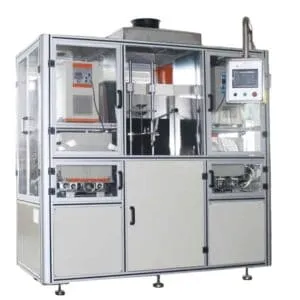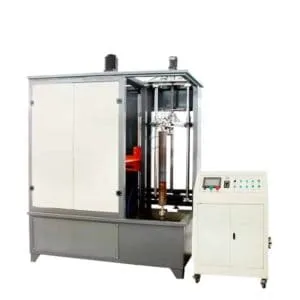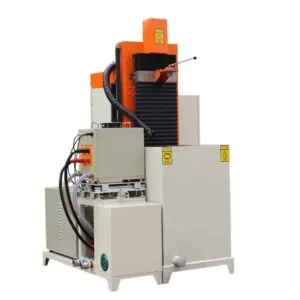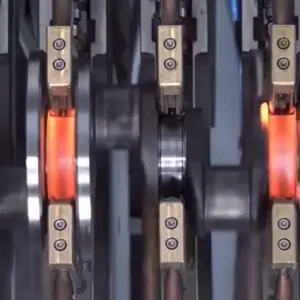
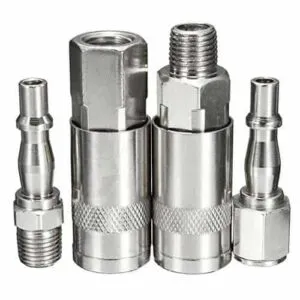


Induction surface hardening steel fitting
Induction Surface Hardening steel fitting to 1600 ºF (871 ºC) for a hardening application
Induction Surface Hardening Steel Fittings
Quick Answer: What Is Induction Surface Hardening for Steel Fittings?
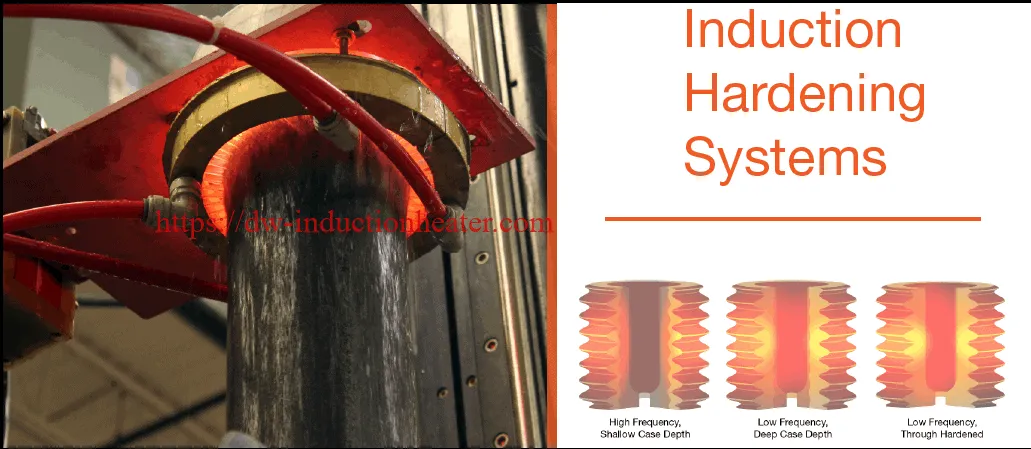
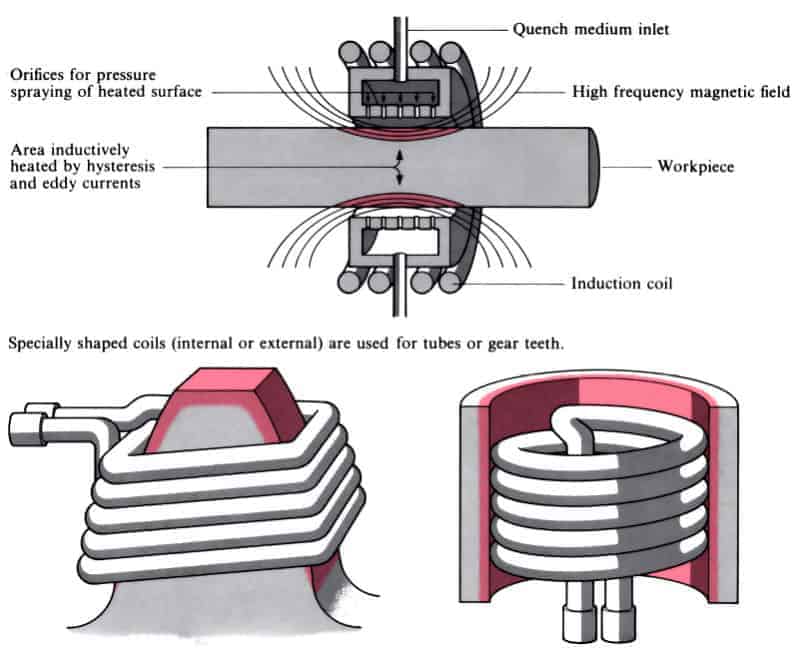
Induction surface hardening of steel fittings is a localized heat-treatment process that rapidly heats the surface of a steel component to its austenitizing temperature using a high-frequency electromagnetic field, followed immediately by quenching to create a hard, wear-resistant surface while retaining a tougher core.
Induction Surface hardening steel fitting for a machined parts manufacturer is usually carried out by induction heating.The main technical parameters are surface hardness,local hardness and effective hardened layer depth.
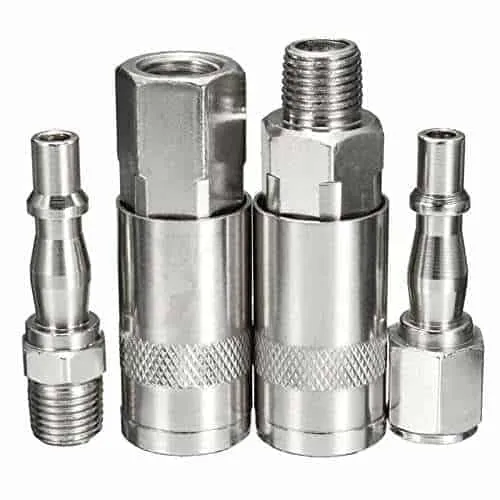
Material : Steel fittings (0.75”/19mm diameter)
Temperature: 1600 ºF (871 ºC)
Frequency: 368 kHz
Equipment:
–DW-UHF-10kW induction heating system equipped with a remote heat station containing two 1.0 μF capacitors
-A three-turn pancake helical induction heating coil designed and developed specifically for this application
The induction heating coil design enabled the part to be raised into the heating coil from the bottom. The design was also made to ensure it will work well within the customer’s current setup. Initial testing took place with temperature-indicating paints to evaluate the uniformity of the heating pattern and the heating speed. With a good heating pattern achieved, samples were processed at time intervals of 1.0, 1.25 and 1.5 seconds. The samples were dropped into a water quench following heating to conclude the hardening process.

Results/Benefits
Speed: The fitting was heated in well under two seconds
Efficiency: Induction uses less energy than competitive heating methods
Footprint/Design: Induction heating can be implemented while taking up modest floor space, plus the coil design fits within the customer’s operational arrangement
FAQ – Induction Surface Hardening Steel Fittings
1. What is induction surface hardening?
Induction surface hardening is a heat-treatment process that selectively heats the surface layer of a steel component using electromagnetic induction and then rapidly quenches it.
The objective is to create a hard, wear-resistant surface while preserving a tougher and more ductile core.
2. What steel materials are suitable for induction hardening?
Induction hardening is particularly suitable for medium-carbon and alloy steels that contain enough carbon to form martensite during quenching.
Common examples can include:
- AISI 1045
- C45
- 40Cr
- AISI 4140
- 42CrMo4
- AISI 4340
- Selected bearing steels
Low-carbon steels such as AISI 1018 generally do not achieve high conventional martensitic surface hardness without carburizing or another carbon-enrichment treatment.
3. What temperature is required to induction harden steel fittings?
The exact temperature depends on the steel grade.
For many medium-carbon and alloy steels, a typical induction hardening temperature is approximately 800–950°C.
In the existing HLQ 19 mm steel-fitting application, the fitting is heated to approximately 871°C (1600°F).
4. How quickly can a steel fitting be induction hardened?
Small steel fittings can be heated extremely quickly.
In the current HLQ application, heating trials were carried out at approximately:
- 1.0 second
- 1.25 seconds
- 1.5 seconds
The component reached the required heating condition in well under two seconds before quenching.
Actual cycle time depends on workpiece mass, material, power, frequency, coil design and required hardened depth.
5. What hardness can induction hardening achieve?
The achievable hardness depends mainly on:
- Steel carbon content
- Alloy composition
- Initial microstructure
- Austenitizing temperature
- Heating time
- Quench rate
- Tempering treatment
Suitable medium-carbon and alloy steels commonly achieve approximately 50–65 HRC, but the required hardness must be confirmed for each application.
6. What case depth can induction hardening achieve?
Effective hardened depth can range from less than 1 mm to several millimeters.
For general industrial induction hardening, approximately 0.3–6 mm is a common engineering range, although deeper cases are possible using lower frequencies and higher power.
HLQ’s broader hardening-machine range covers shallow high-frequency cases as well as deeper medium-frequency applications.