Steam Boilers With Magnetic Induction Heating
Top Steam Boilers With Magnetic Induction Heating From HLQ
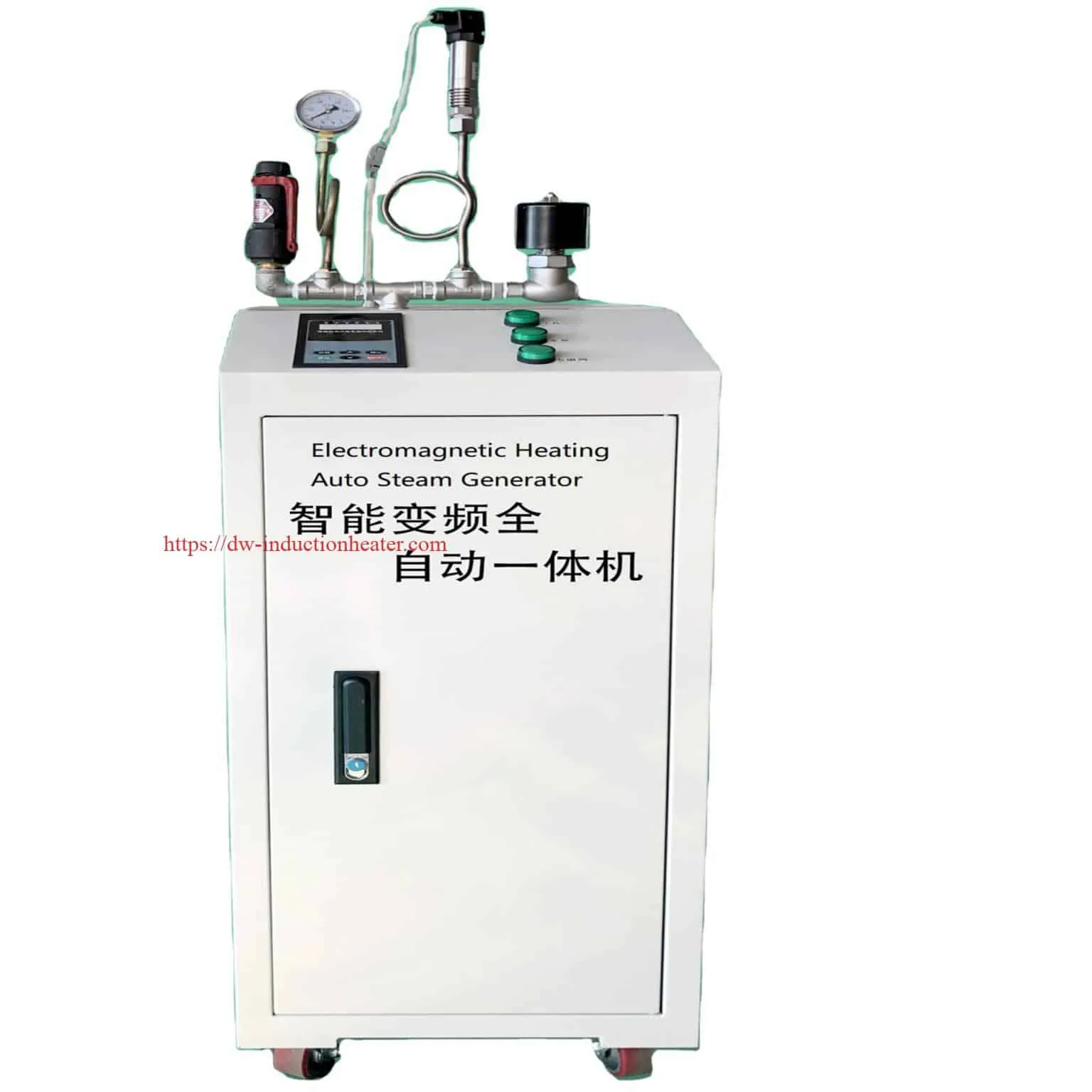
Quick Answer: An induction steam boiler, also known as an electromagnetic induction steam generator, uses electromagnetic induction to generate heat directly inside a conductive metallic heating chamber. Water absorbs this thermal energy and is converted into steam. HLQ industrial induction steam boilers are available from 10 kW to 720 kW, with listed steam capacities from 14 kg/h to 1000 kg/h at a rated steam pressure of 0.7 MPa and rated steam temperature of 165°C.
HLQ Induction Equipment Co., Ltd. manufactures industrial induction steam generators and induction heating boilers for food processing, chemical production, sterilization, laundry, textile processing, packaging, industrial cleaning, reactors and other applications requiring a controllable source of process steam.
Unlike gas, diesel, coal or conventional combustion boilers, electromagnetic induction steam generators use electricity to produce heat without combustion at the point of use. The metallic heating chamber becomes the heat source, allowing rapid thermal response, automatic pressure control and integration with PLC-based industrial automation.
This equipment is particularly suitable for industrial plants looking for an electric steam-generation solution with compact installation, electronic power regulation and no local combustion exhaust.
What Is an Induction Steam Boiler?
An induction steam boiler is an electrically powered steam-generation system that applies the principle of electromagnetic induction to heat a conductive metal heating chamber.
When alternating current flows through an induction coil, it creates a rapidly changing magnetic field. The magnetic field induces electrical currents, commonly called eddy currents, within the conductive heating body.
The electrical resistance of the metal converts these induced currents into heat. As a result, thermal energy is generated directly in the metallic heating chamber instead of relying on an externally heated electric resistance element or combustion flame.
Water supplied to the chamber absorbs the generated heat and is converted into steam. Steam pressure, temperature and water level can then be monitored and regulated by the automatic control system.
How Does an Electromagnetic Induction Steam Generator Work?
The working process of an electromagnetic induction steam boiler can be summarized as:
Electrical Power → Power Conversion → Induction Coil → Electromagnetic Field → Metal Heating Chamber → Water Heating → Steam Generation
- Electrical input: Industrial three-phase electricity is supplied to the induction heating system.
- Power conversion: The electronic power system converts the incoming electrical supply into the frequency required by the induction coil.
- Magnetic field generation: Alternating current flowing through the induction coil creates a changing electromagnetic field.
- Direct metallic heating: Eddy currents are induced inside the conductive heating chamber and electrical energy is converted into thermal energy.
- Automatic feedwater: Water is introduced into the steam-generation chamber according to operating conditions.
- Steam production: Heat from the metallic chamber is transferred to the water until steam is generated.
- Automatic control: Pressure, temperature, water level and electrical operating conditions are continuously monitored.
Induction Steam Boiler Key Technical Specifications
| Parameter | Specification |
|---|---|
| Equipment Type | Industrial Induction Steam Boiler / Steam Generator |
| Heating Technology | Electromagnetic induction heating |
| Rated Power Range | 10–720 kW |
| Listed Steam Capacity | 14–1000 kg/h |
| Rated Steam Pressure | 0.7 MPa |
| Rated Steam Temperature | 165°C |
| Listed Thermal Efficiency | 97% under rated conditions |
| Standard Input | 380 V / 50 Hz / 3 Phase |
| Control Method | Automatic electronic / PLC control |
| Water Supply | Automatic feedwater |
| Steam Operation | Continuous or demand-based operation |
| Installation | Indoor industrial installation |
| Custom Electrical Supply | Available according to project requirements |
Note: Actual steam output depends on feedwater temperature, operating pressure, steam quality, water quality, ambient conditions and system load. Final machine selection should be based on actual process requirements rather than nominal boiler power alone.
HLQ Induction Steam Boiler Models: 10–720 kW
The following table summarizes the main operating parameters of HLQ electromagnetic induction steam generators.
| Model | Power (kW) | Steam Output (kg/h) | Current (A) | Steam Pressure (MPa) | Steam Temperature (°C) | Efficiency (%) |
|---|---|---|---|---|---|---|
| HLQ-10 | 10 | 14 | 15 | 0.7 | 165 | 97 |
| HLQ-20 | 20 | 28 | 30 | 0.7 | 165 | 97 |
| HLQ-30 | 30 | 40 | 45 | 0.7 | 165 | 97 |
| HLQ-40 | 40 | 55 | 60 | 0.7 | 165 | 97 |
| HLQ-50 | 50 | 70 | 75 | 0.7 | 165 | 97 |
| HLQ-60 | 60 | 85 | 90 | 0.7 | 165 | 97 |
| HLQ-80 | 80 | 110 | 120 | 0.7 | 165 | 97 |
| HLQ-100 | 100 | 140 | 150 | 0.7 | 165 | 97 |
| HLQ-120 | 120 | 165 | 180 | 0.7 | 165 | 97 |
| HLQ-160 | 160 | 220 | 240 | 0.7 | 165 | 97 |
| HLQ-240 | 240 | 330 | 360 | 0.7 | 165 | 97 |
| HLQ-320 | 320 | 450 | 480 | 0.7 | 165 | 97 |
| HLQ-360 | 360 | 500 | 540 | 0.7 | 165 | 97 |
| HLQ-480 | 480 | 670 | 720 | 0.7 | 165 | 97 |
| HLQ-640 | 640 | 900 | 960 | 0.7 | 165 | 97 |
| HLQ-720 | 720 | 1000 | 1080 | 0.7 | 165 | 97 |
Electrical Connections, Steam Connections and Dimensions
| Model | Input Cable (mm²)* | Steam Outlet | Safety Valve | Water Inlet | Drain | Dimensions (mm) |
|---|---|---|---|---|---|---|
| HLQ-10 | 2.5 | DN20 | DN20 | DN15 | DN15 | 450 × 750 × 1000 |
| HLQ-20 | 6 | DN20 | DN20 | DN15 | DN15 | 450 × 750 × 1000 |
| HLQ-30 | 10 | DN20 | DN20 | DN15 | DN15 | 650 × 950 × 1200 |
| HLQ-40 | 16 | DN20 | DN20 | DN15 | DN15 | 780 × 950 × 1470 |
| HLQ-50 | 25 | DN20 | DN20 | DN15 | DN15 | 780 × 950 × 1470 |
| HLQ-60 | 25 | DN20 | DN20 | DN15 | DN15 | 780 × 950 × 1470 |
| HLQ-80 | 35 | DN25 | DN20 | DN15 | DN15 | 680 × 1020 × 1780 |
| HLQ-100 | 50 | DN25 | DN20 | DN25 | DN15 | 1150 × 1000 × 1730 |
| HLQ-120 | 70 | DN25 | DN20 | DN25 | DN15 | 1150 × 1000 × 1730 |
| HLQ-160 | 95 | DN25 | DN20 | DN25 | DN15 | 1150 × 1000 × 1880 |
| HLQ-240 | 185 | DN40 | DN20 | DN40 | DN15 | 1470 × 940 × 2130 |
| HLQ-320 | 300 | DN50 | DN20 | DN50 | DN15 | 1470 × 940 × 2130 |
| HLQ-360 | 400 | DN50 | DN20 | DN50 | DN15 | 2500 × 940 × 2130 |
| HLQ-480 | 600 | DN50 | DN20 | DN50 | DN15 | 3150 × 950 × 2130 |
| HLQ-640 | 800 | DN50 | DN20 | DN50 | DN15 | 2500 × 950 × 2130 |
| HLQ-720 | 900 | DN50 | DN20 | DN50 | DN15 | 3150 × 950 × 2130 |
* Input cable cross-section is reference product data. Final conductor size, number of parallel cables and protection devices must be determined according to local electrical codes, conductor material, installation method, cable length, ambient temperature, voltage drop and allowable current.
Internal Structure of the Electromagnetic Induction Steam Boiler
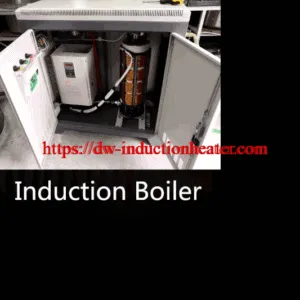
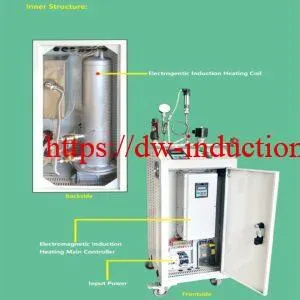
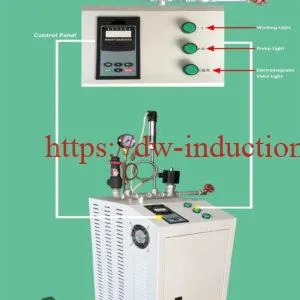
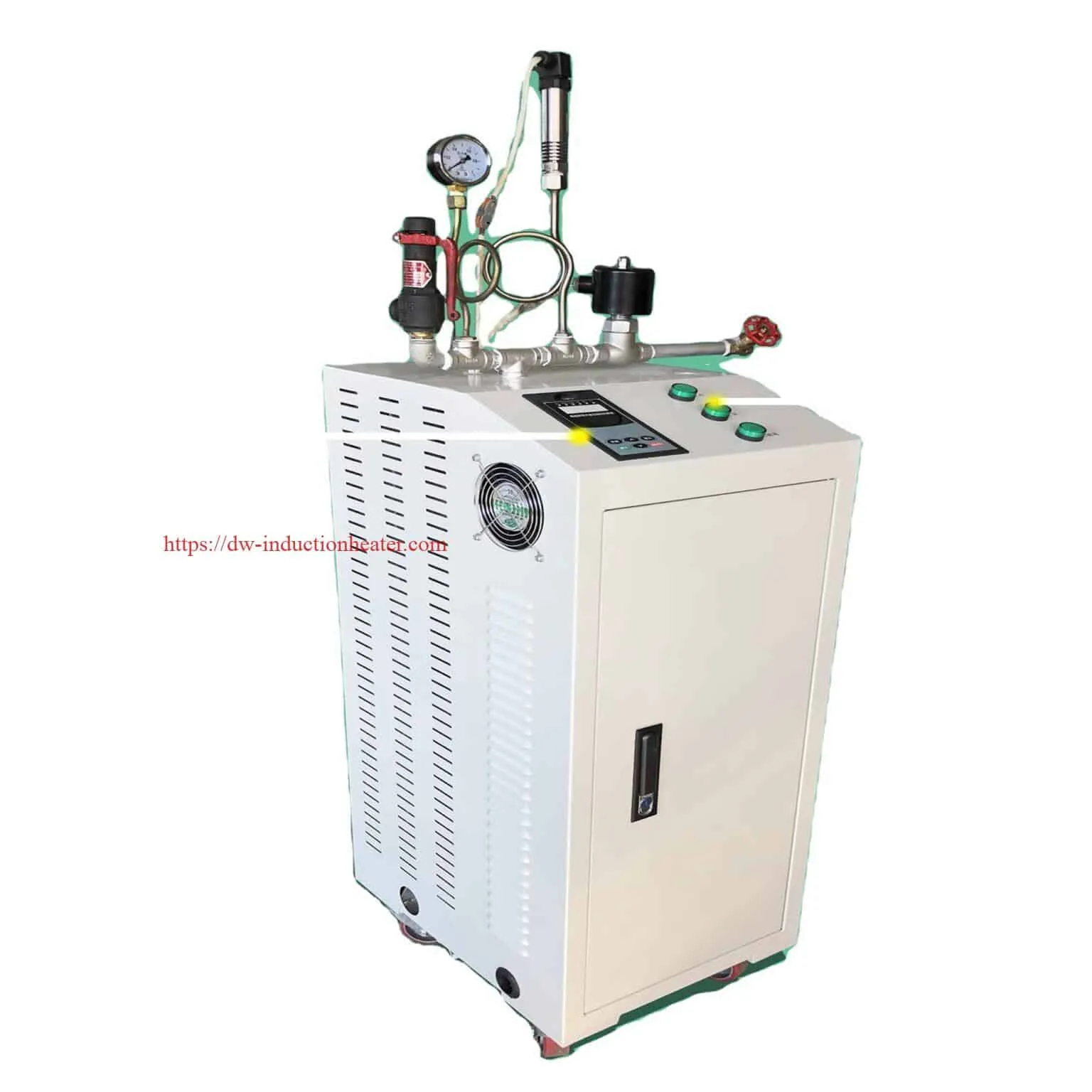
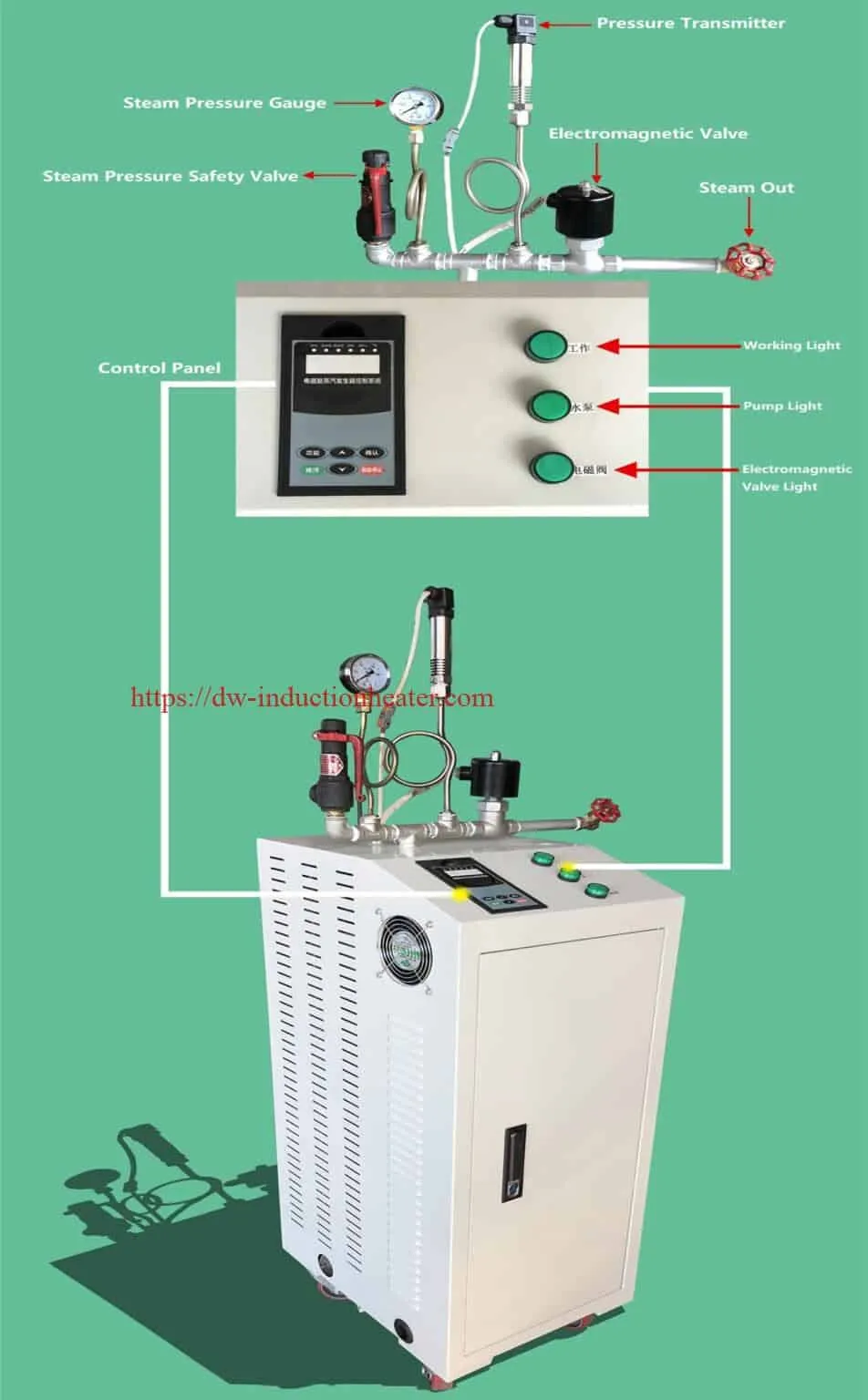
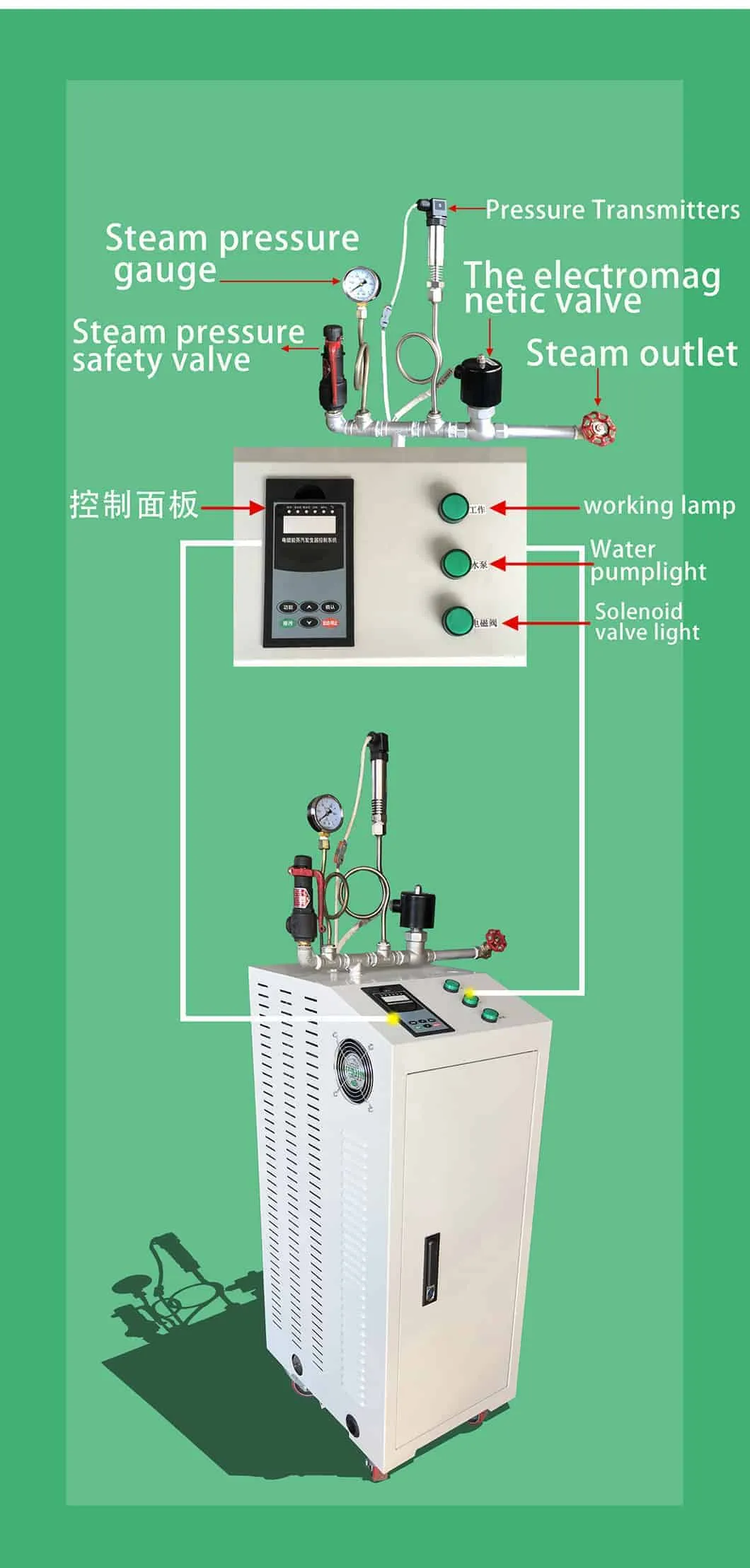
The core of the steam generator consists of an electromagnetic induction heating system, metallic steam-generation chamber, electronic power controller, automatic water-feed components, steam pressure monitoring devices and safety protection components.
The induction heating controller supplies controlled alternating electrical energy to the induction coil. The coil creates the magnetic field needed to heat the metallic steam chamber without a combustion flame.

Main Components of an Industrial Induction Steam Generator
| Component | Main Function |
|---|---|
| Induction Power Controller | Converts and regulates electrical power supplied to the induction heating coil |
| Induction Heating Coil | Produces the alternating electromagnetic field |
| Metal Heating Chamber | Generates heat through induced eddy currents and transfers heat to water |
| Automatic Feedwater Pump | Supplies water according to operating demand |
| Water-Level Control | Maintains appropriate operating water level |
| Pressure Transmitter | Measures steam pressure for automatic regulation |
| Pressure Gauge | Provides direct pressure indication |
| Safety Relief Valve | Provides mechanical over-pressure protection |
| Electromagnetic Valve | Controls water or steam flow according to system design |
| Control Panel | Provides operating status, settings and fault indication |
Automatic Steam Pressure and Water-Level Control
Industrial steam generation requires the simultaneous control of water level, steam pressure, temperature and electrical operating conditions.
HLQ induction steam boilers can integrate automatic electronic control to regulate power output according to actual steam demand.
Typical monitored and protected conditions include:
- Steam pressure monitoring
- Steam temperature monitoring
- High water-level detection
- Low water-level protection
- Automatic feedwater control
- Heating operating status
- Over-temperature protection
- Over-pressure protection
- Electrical overload protection
- Phase-loss protection
- Abnormal water-supply protection
- Emergency shutdown
As steam pressure approaches the required set point, the electronic controller can reduce heating output. When steam consumption increases and pressure drops, power can be increased again to meet process demand.
Why Use an Induction Steam Boiler?
1. Direct Electromagnetic Heating
The heating chamber is heated directly by electromagnetic induction. Energy is converted into heat inside the conductive metal rather than depending on a combustion flame heating an external boiler surface.
2. Rapid Thermal Response
Induction heating responds quickly to changes in electrical power. This makes it suitable for industrial applications where steam demand changes during production.
3. No Local Fuel Combustion
An induction steam generator operates using electricity and does not require natural gas, LPG, diesel, coal or fuel-oil combustion at the steam generator.
4. Electronic Power Regulation
The induction power supply can be regulated electronically according to pressure and steam-demand feedback.
5. Compact Installation
Because there is no conventional burner or combustion chamber, induction steam generators can provide a compact alternative for suitable industrial applications.
6. Continuous Steam Generation
Automatic water replenishment allows continuous steam production when the steam generator is properly sized for the required process load.
7. Reduced Combustion-System Maintenance
There are no burners, ignition systems or fuel-delivery components at the induction heating unit. Maintenance therefore focuses mainly on the electrical system, feedwater system, pressure system and scale management.
8. Easy Integration with Industrial Automation
Electronic heating control can be integrated with PLC, HMI and other factory automation systems where required.
Induction Steam Boiler vs Resistance, Gas and Fuel Boilers
| Feature | Induction Steam Boiler | Resistance Electric Boiler | Gas Boiler | Fuel / Coal Boiler |
|---|---|---|---|---|
| Energy Source | Electricity | Electricity | Gas / LPG | Fuel / Coal |
| Heating Principle | Electromagnetic induction | Resistance element | Combustion | Combustion |
| Heat Generation | Inside conductive metal body | Inside resistance element | Combustion flame | Combustion flame |
| Open Flame at Unit | No | No | Yes | Yes |
| Flue-Gas Exhaust | Not required for induction heating | Not required | Required | Required |
| Power Control | Electronic modulation | Electronic / staged | Burner modulation | System dependent |
| Start-Up Response | Fast | Fast | System dependent | Generally slower |
| Local Combustion Emissions | None | None | Present | Present |
| Maintenance Focus | Electrical, water and pressure systems | Elements, water and pressure systems | Burner, fuel, exhaust and pressure systems | Fuel, combustion, ash/exhaust and pressure systems |
The best steam-generation technology depends on local electricity prices, fuel costs, steam consumption, required operating hours, available plant utilities, emissions requirements and applicable boiler regulations.
How to Select the Correct Induction Steam Generator
The most important selection parameter is required steam output in kg/h. Equipment should not be selected only according to electrical power.
| Steam Demand | Recommended Model Range | Typical Applications |
|---|---|---|
| 14–85 kg/h | HLQ-10 to HLQ-60 | Laboratory, small sterilization, food equipment, small cleaning processes |
| 110–220 kg/h | HLQ-80 to HLQ-160 | Food production, laundry, packaging, washing, small process lines |
| 330–500 kg/h | HLQ-240 to HLQ-360 | Industrial process heating, chemical processing, sterilization and production lines |
| 670–1000 kg/h | HLQ-480 to HLQ-720 | Large industrial production processes and higher-demand steam systems |
Information Required for Steam Generator Selection
For accurate equipment selection, provide the following process information:
- Required steam output: kg/h
- Minimum, normal and maximum steam consumption
- Required steam pressure: MPa or bar
- Required steam temperature: °C
- Feedwater temperature: °C
- Feedwater quality
- Continuous or intermittent steam demand
- Operating hours per day
- Available electrical voltage
- Electrical frequency: 50 Hz or 60 Hz
- Three-phase electrical capacity
- Application or process equipment
- Installation country
- Applicable pressure-equipment standard
How Is Required Steam Boiler Power Calculated?
The theoretical heating requirement depends on the mass flow of steam and the enthalpy difference between incoming feedwater and outlet steam.
P = ṁ × (hsteam − hwater) ÷ η
Where:
- P = required thermal/electrical power
- ṁ = steam mass flow
- hsteam = steam specific enthalpy
- hwater = feedwater specific enthalpy
- η = overall system efficiency
This is why the same electrical power can produce different practical steam capacities when feedwater temperature or steam pressure changes.
Why Feedwater Temperature Is Important
Feedwater temperature directly affects the energy required to produce steam.
Cold water must first be heated from its inlet temperature to saturation temperature before evaporation occurs. If hot condensate return or preheated feedwater is used, less additional energy is required to generate the same quantity of steam.
For accurate steam-boiler sizing, always provide the actual feedwater temperature.
Steam Pressure and Steam Temperature
The standard models on this page list a rated steam pressure of 0.7 MPa and a rated steam temperature of approximately 165°C.
Steam saturation temperature changes with pressure. Therefore, if the application requires a different pressure, both steam output and required heating power should be recalculated.
If the process requires steam significantly hotter than saturated steam, HLQ also supplies an induction steam superheater for producing high-temperature superheated steam.
Saturated Steam vs Superheated Steam
| Item | Induction Steam Boiler | Induction Steam Superheater |
|---|---|---|
| Main Function | Generate steam from water | Increase the temperature of existing steam |
| Input Medium | Feedwater | Saturated or lower-temperature steam |
| Typical Product | Process steam | High-temperature superheated steam |
| Typical Applications | Cooking, washing, sterilization, process heating | Drying, chemical processing, high-temperature thermal processes |
A combined system can use an induction steam generator to produce saturated steam and a downstream electromagnetic induction steam superheater when higher outlet temperature is required.
Industrial Applications of Induction Steam Boilers
Food Processing
- Steam cooking
- Food sterilization
- Tofu production
- Steam boxes
- Jacketed cooking kettles
- Packaging equipment
- Cleaning and sanitation
Chemical and Biochemical Processing
- Chemical reactor heating
- Fermentation vessels
- Jacketed reactors
- Mixing tanks
- Emulsification equipment
- Process steam heating
Laundry and Textile Industry
- Industrial ironing
- Commercial laundry equipment
- Textile processing
- Steam pressing
- Dry-cleaning support equipment
Sterilization
- Sterilization tanks
- Autoclave steam supply
- Laboratory sterilization
- Equipment sanitation
- Process-vessel cleaning
Packaging and Manufacturing
- Steam shrink processes
- Industrial cleaning
- Packaging machinery
- Process moisture control
- Production-line heating


Water Quality and Scale Control
Water quality is a critical factor in the reliability and service life of any industrial steam generator.
Calcium, magnesium and other dissolved minerals in untreated water can form deposits during repeated heating and evaporation. Scale creates an insulating layer on the heat-transfer surface and can reduce heat-transfer performance.
Depending on local feedwater quality, a steam boiler installation may require:
- Water softening
- Mechanical filtration
- Reverse-osmosis treatment
- Regular blowdown
- Periodic cleaning
- Water-quality monitoring
- Condensate return treatment
For continuous industrial operation, water-treatment requirements should be determined from an actual feedwater analysis.
Safety Protection of an Industrial Steam Generator
Industrial steam equipment should incorporate multiple independent protection systems. Typical protection may include:
- Low-water protection
- High-water detection
- Over-pressure protection
- Mechanical safety relief valve
- Pressure transmitter
- Over-temperature protection
- Electrical overload protection
- Phase-loss protection
- Grounding protection
- Automatic fault alarm
- Emergency stop
Important: Steam generators may be classified as boilers or pressure equipment according to local laws. Pressure-vessel codes, safety inspections, electrical standards and certification requirements should be confirmed for the destination country before final system design.
Electrical Supply Requirements
The standard parameter table on this page is based on 380 V / 50 Hz. For international projects, other electrical supplies can be evaluated according to customer requirements.
Typical industrial power supplies may include:
- 380 V / 50 Hz / 3 Phase
- 400 V / 50 Hz / 3 Phase
- 415 V / 50 Hz / 3 Phase
- 440 V / 60 Hz / 3 Phase
- 460 V / 60 Hz / 3 Phase
- 480 V / 60 Hz / 3 Phase
For large systems such as 320 kW, 480 kW, 640 kW or 720 kW induction steam boilers, available transformer capacity, switchgear, cable capacity and plant maximum demand should be checked during engineering.
Installation Requirements
A typical installation requires:
- Adequate three-phase electrical power
- Electrical circuit protection
- Proper protective grounding
- Treated feedwater connection
- Steam outlet piping
- Pressure-rated valves and fittings
- Safety-valve discharge piping
- Drain and blowdown piping
- Maintenance access around the machine
The steam piping system should be designed according to required steam flow, pressure drop, pipe length and process demand.
Induction Steam Generator vs Induction Hot Water Boiler
An induction steam boiler is designed to generate steam. If the process requires only hot water rather than steam, an induction water boiler may be a more suitable solution.
| Application | Recommended Equipment |
|---|---|
| Industrial process steam | Induction Steam Boiler |
| Sterilization steam | Induction Steam Generator |
| Hot water production | Induction Water Boiler |
| 200°C–600+°C steam heating | Induction Steam Superheater |
| High-temperature indirect process heating | Induction Thermal Oil Heater |
Other Industrial Induction Fluid Heating Solutions
In addition to steam generation, HLQ provides several electromagnetic heating systems for different thermal processes.
- Induction Steam Generator – industrial steam-generation equipment and related steam-heating systems.
- Induction Heating Boiler – electromagnetic electric boilers for industrial heating applications.
- Induction Steam Superheater – designed to heat saturated steam to high-temperature superheated steam.
- Induction Water Boiler – electromagnetic induction heating for industrial and commercial hot-water systems.
- Induction Thermal Oil Heater – high-temperature indirect heating using thermal fluid as the heat-transfer medium.
- Induction Thermal Fluid Pipeline Heater – induction heating for flowing liquids, oils and industrial process fluids.
Why Choose HLQ Induction Steam Boilers?
HLQ develops industrial induction heating equipment for customized thermal processes rather than selecting a machine based only on nominal power.
For steam-generation projects, equipment selection can be based on:
- Required steam flow
- Steam pressure
- Steam temperature
- Feedwater temperature
- Operating duty cycle
- Available electrical power
- Installation country
- Industrial application
HLQ can provide induction heating power electronics, electromagnetic heating components, automatic control, feedwater control and complete equipment integration according to project requirements.
Frequently Asked Questions About Induction Steam Boilers
What is an induction steam boiler?
An induction steam boiler is an electric steam generator that uses electromagnetic induction to generate heat directly in a conductive metallic heating chamber. Water absorbs heat from the chamber and is converted into steam.
What is an electromagnetic induction steam generator?
It is another name for a steam generator that uses an alternating electromagnetic field to heat a conductive metal body instead of using a combustion flame or conventional immersed resistance element as the primary heating method.
How much steam can an HLQ induction steam boiler produce?
The standard models listed on this page range from approximately 14 kg/h to 1000 kg/h, depending on installed power and operating conditions.
What induction steam boiler power range is available?
The models listed on this page range from 10 kW to 720 kW.
What is the rated steam pressure?
The standard product data shown here lists a rated steam pressure of 0.7 MPa.
What is the rated steam temperature?
The listed rated steam temperature is approximately 165°C.
Can an induction steam generator operate continuously?
Yes. When the system is correctly sized and supplied with suitable feedwater and electrical power, automatic water replenishment allows continuous steam production according to process demand.
Can an induction steam boiler replace a gas boiler?
It can replace gas steam generation in many applications where adequate electrical capacity is available. Economic suitability depends on electricity prices, gas prices, operating hours, steam load and existing plant infrastructure.
Does an induction steam generator require a chimney?
The electromagnetic induction heating process does not burn fuel and therefore does not produce combustion flue gas requiring a conventional boiler chimney at the heating unit.
Does an induction steam generator use electric resistance heating elements?
Its primary heating principle is electromagnetic induction. The conductive metallic heating chamber generates heat through induced electrical currents.
Does water quality affect steam boiler performance?
Yes. Poor-quality feedwater can cause mineral deposits and scale on heat-transfer surfaces. Suitable water treatment is strongly recommended.
How do I choose the correct induction steam generator?
Start with the required steam output in kg/h, operating pressure, feedwater temperature, operating hours and electrical supply. These parameters allow the required heating power to be calculated more accurately.
Can HLQ supply 60 Hz induction steam boilers?
The standard table lists 380 V / 50 Hz, but electrical configurations for 60 Hz industrial markets can be evaluated according to the customer’s voltage and project requirements.
Can the system produce superheated steam?
The equipment on this page is primarily intended for steam generation. For much higher steam temperatures, an induction steam superheater can be added downstream.
What is the difference between saturated steam and superheated steam?
Saturated steam exists at the saturation temperature corresponding to its pressure. Superheated steam has been heated above the saturation temperature at that pressure. Different industrial processes require different steam conditions.
What information is needed for a quotation?
Please provide required steam output, steam pressure, steam temperature, feedwater temperature, operating hours, application and available electrical voltage, frequency and phase.
Request an Induction Steam Boiler Quotation
For accurate model selection and quotation, please send the following information:
| Required Information | Customer Data |
|---|---|
| Required Steam Output | _____ kg/h |
| Required Steam Pressure | _____ MPa / bar |
| Required Steam Temperature | _____ °C |
| Feedwater Temperature | _____ °C |
| Operating Hours | _____ hours/day |
| Electrical Supply | _____ V / _____ Hz / 3 Phase |
| Application | ____________________ |
| Installation Country | ____________________ |
Energy saving rate of electromagnetic induction steam generator:
Because the iron container heats itself, the heat conversion rate is particularly high, which can reach more than 95%; the working principle of electromagnetic steam generator is that when some water enters the container, it will be heated into steam Drain, to ensure a fixed way of replenishing water, there will be continuous steam utilization.
Product Description
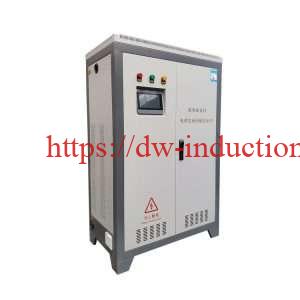
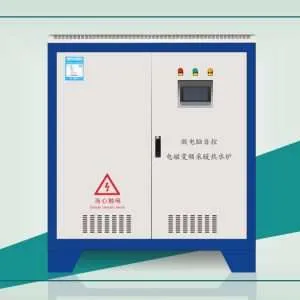
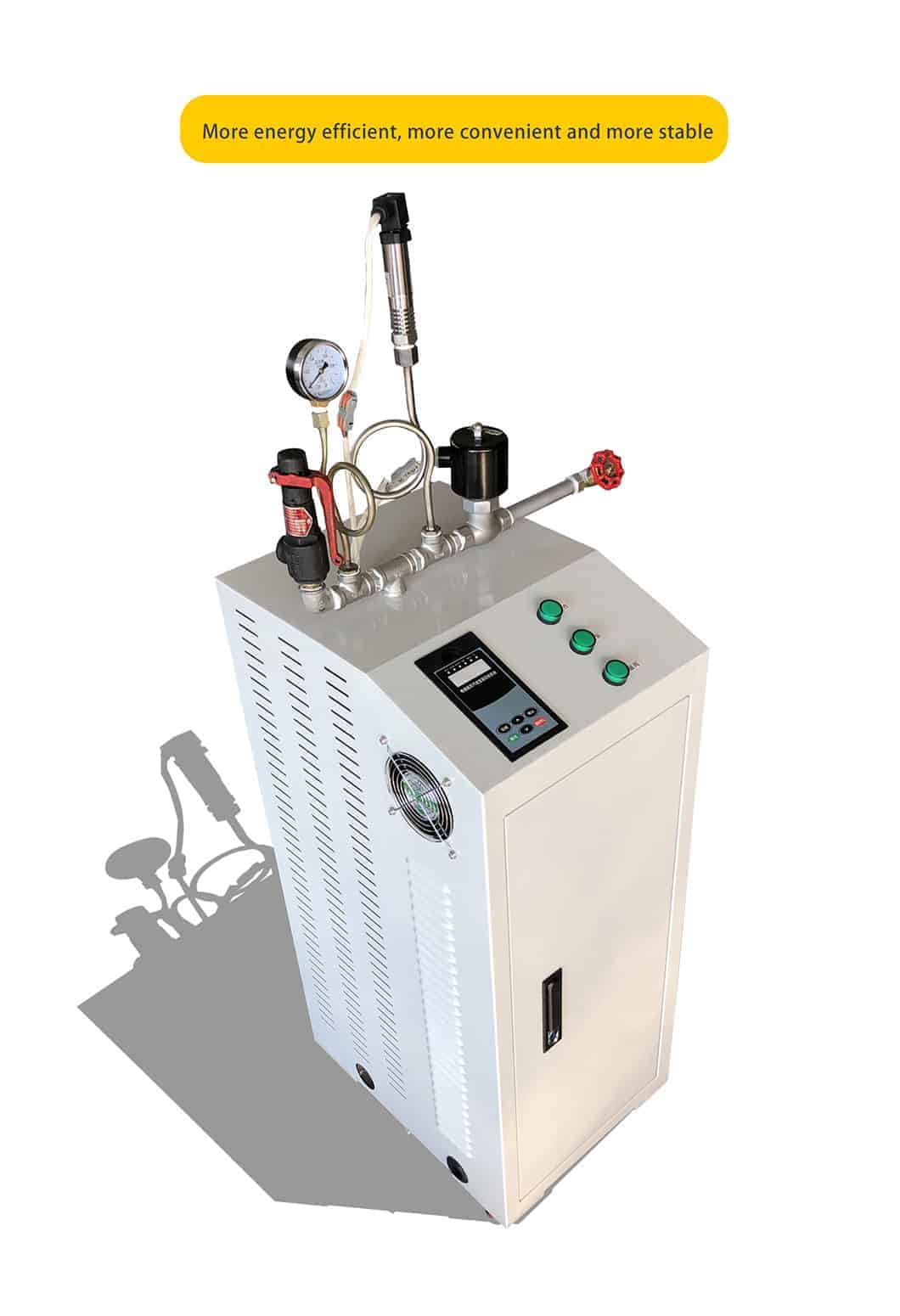
Industrial quality high pressure steamist boiler pure steam generator from china manufacturers
1) LCD Full-Automatically Intelligent Electronic Control System
2) High-quality Core Component——Electromagnetic induction heater
3) High-quality Components and Parts——Famous Brand Delixi Electrical Appliance
4) Multiple Safety Interlock Protection
5) Scientific Design and Attractive Appearance
6) Easy and Rapid Installation
7) Magnetic induction coil heat up boiling water Generate steam – Is Much More Eco-Friendly and Economical
8) Wide Application Range
| Item content / model | Rated power
(KW) |
Rated steam temperature
(℃) |
Rated current
(A)
|
Rated steam pressure
(mpa)
|
Evaporation
(kg/h) |
Thermal efficiency
(%)
|
Input voltage
(V/HZ) |
Cross section of input power cord
(MM2)
|
Steam outlet diameter
|
Relief valve diameter | Inlet diameter | Drainage diameter | Overall dimensions
(mm)
|
| HLQ-10 | 10 | 165 | 15 | 0.7 | 14 | 97 | 380/50HZ | 2.5 | DN20 | DN20 | DN15 | DN15 | 450*750*1000 |
| HLQ-20 | 20 | 165 | 30 | 0.7 | 28 | 97 | 380/50HZ | 6 | DN20 | DN20 | DN15 | DN15 | 450*750*1000 |
| HLQ-30 | 30 | 165 | 45 | 0.7 | 40 | 97 | 380/50HZ | 10 | DN20 | DN20 | DN15 | DN15 | 650*950*1200 |
| HLQ-40 | 40 | 165 | 60 | 0.7 | 55 | 97 | 380/50HZ | 16 | DN20 | DN20 | DN15 | DN15 | 780*950*1470 |
| HLQ-50 | 50 | 165 | 75 | 0.7 | 70 | 97 | 380/50HZ | 25 | DN20 | DN20 | DN15 | DN15 | 780*950*1470 |
| HLQ-60 | 60 | 165 | 90 | 0.7 | 85 | 97 | 380/50HZ | 25 | DN20 | DN20 | DN15 | DN15 | 780*950*1470 |
| HLQ-80 | 80 | 165 | 120 | 0.7 | 110 | 97 | 380/50HZ | 35 | DN25 | DN20 | DN15 | DN15 | 680*1020*1780 |
| HLQ-100 | 100 | 165 | 150 | 0.7 | 140 | 97 | 380/50HZ | 50 | DN25 | DN20 | DN25 | DN15 | 1150*1000*1730 |
| HLQ-120 | 120 | 165 | 180 | 0.7 | 165 | 97 | 380/50HZ | 70 | DN25 | DN20 | DN25 | DN15 | 1150*1000*1730 |
| HLQ-160 | 160 | 165 | 240 | 0.7 | 220 | 97 | 380/50HZ | 95 | DN25 | DN20 | DN25 | DN15 | 1150*1000*1880 |
| HLQ-240 | 240 | 165 | 360 | 0.7 | 330 | 97 | 380/50HZ | 185 | DN40 | DN20 | DN40 | DN15 | 1470*940*2130 |
| HLQ-320 | 320 | 165 | 480 | 0.7 | 450 | 97 | 380/50HZ | 300 | DN50 | DN20 | DN50 | DN15 | 1470*940*2130 |
| HLQ-360 | 360 | 165 | 540 | 0.7 | 500 | 97 | 380/50HZ | 400 | DN50 | DN20 | DN50 | DN15 | 2500*940*2130 |
| HLQ-480 | 480 | 165 | 720 | 0.7 | 670 | 97 | 380/50HZ | 600 | DN50 | DN20 | DN50 | DN15 | 3150*950*2130 |
| HLQ-640 | 640 | 165 | 960 | 0.7 | 900 | 97 | 380/50HZ | 800 | DN50 | DN20 | DN50 | DN15 | 2500*950*2130 |
| HLQ-720 | 720 | 165 | 1080 | 0.7 | 1000 | 97 | 380/50HZ | 900 | DN50 | DN20 | DN50 | DN15 | 3150*950*2130 |
Advantages & Features of Electromagnetic Induction Heating System:
-Save electricity 30%~80%, especially for big power machine.
– No influence on working environment: high frequency heating system has heat energy utilization rate of 90%+.
– Heating fast, accurate temperature control
– Can work for a long time in harsh environments
– High frequency heating system make heating power bigger compare to traditional resistance wire heating.
– No unsafe factors compare to traditional heating: temperature on surface of material container about 50°C~80°C.
Features of Induction Steam Boiler:
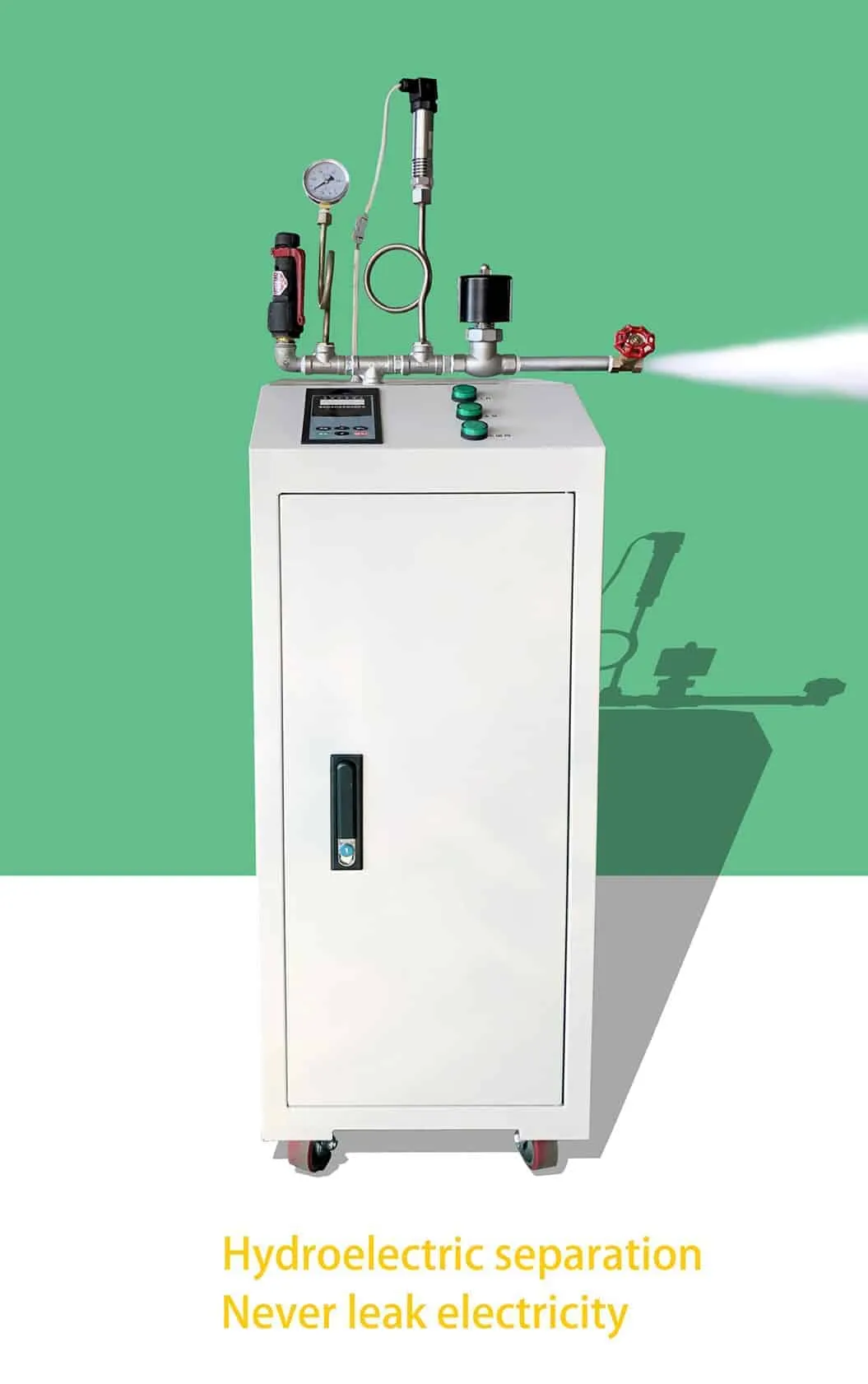
1) LCD Full-Automatically Intelligent Electronic Control System
2) High-quality Core Component——Electromagnetic induction heater
3) High-quality Components and Parts——Famous Brand Electrical Appliance
4) Multiple Safety Interlock Protection
5) Scientific Design and Attractive Appearance
6) Easy and Rapid Installation
7) Magnetic induction coil heat up boiling water Generate steam – Is Much More Eco-Friendly and Economical
8) Wide Application Range
| Comparison of Different Types of Steam Generators | ||||
| Steam Generator Type | Gas Steam Generator | Resistance Wire Steam Generator | Coal Steam Generator | Electromagnetic Heating Steam Generator |
| Energy Used | Gas by Fire | Resistance Wire by Electricity | Coal by Fire | Electromagnetic Heating by Electricity |
| Heat Exchange Rate | 85% | 88% | 75% | 96% |
| Need Someone on Duty | Yes | No | Yes | No |
| Temperature Control Accuracy | ±8℃ | ±6℃ | ±15℃ | ±3℃ |
| Heating Speed | Slow | Quick | Slow | Very quick |
| Working Environment | A little pollution after fired | Clean | pollution | Clean |
| Production Risk Index | Risk of gas leakage, complicated pipelines | Risk of electricity leakage pipe inner wall easy be scaling | Risk of high temperature, heavy pollution | No risk of leakage, water & electricity separated completely |
| Operational Performance | Complicated | Simple | Complicated | Simple |