

Induction Melting Aluminum
Induction Melting Aluminum for Laboratories and Small-Batch Casting
Quick Answer
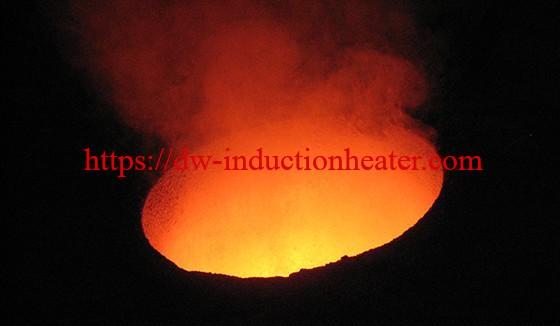
Induction melting aluminum uses a medium-frequency current in a water-cooled copper coil to induce eddy currents in the aluminum charge and in the conductive crucible. The aluminum melts without an open flame. Pure aluminum melts at about 660 °C, and production melts are usually held at 680–760 °C.
For small batches, HLQ selection data recommends:
- Laboratory melting: 15–30 kW at 10–20 kHz
- Small sample casting: 25–60 kW at 8–20 kHz
- 50–100 kg workshop batches: 60–120 kW at 4–10 kHz
Graphite or SiC-graphite crucibles are used, and the furnace is fixed or tilted by hand, gearbox or hydraulics.
What is Induction Melting Aluminum?
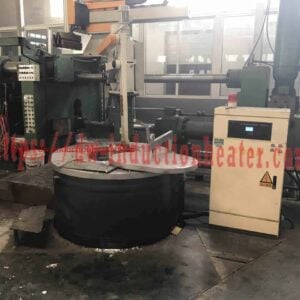
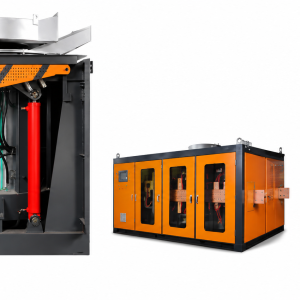
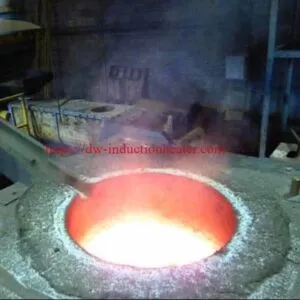
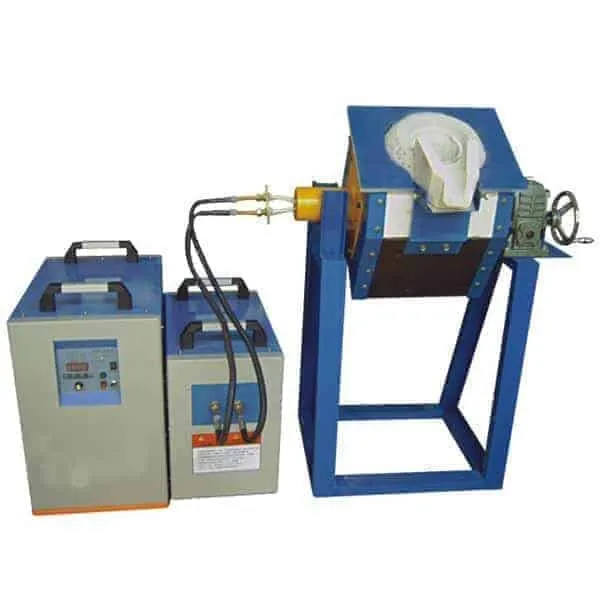
Induction melting aluminum is an electric melting process. The system consists of a medium-frequency induction power supply, a water-cooled coil, a furnace body with a graphite or refractory crucible, insulation, a tilting frame, cooling water and a control cabinet.
This page covers small-batch melting: laboratories, sample casting and workshop furnaces up to about 150 kg. For the full 5–5,000 kg range, see the induction aluminum melting furnace page.
| Furnace configuration | Typical use |
|---|---|
| Fixed crucible furnace | Small batches with manual ladling |
| Manual or gearbox tilting furnace | Small-to-medium pouring |
| Hydraulic tilting furnace | Larger batches, safer and smoother pouring |

Key Applications
| Application | Material | Recommended power | Frequency |
|---|---|---|---|
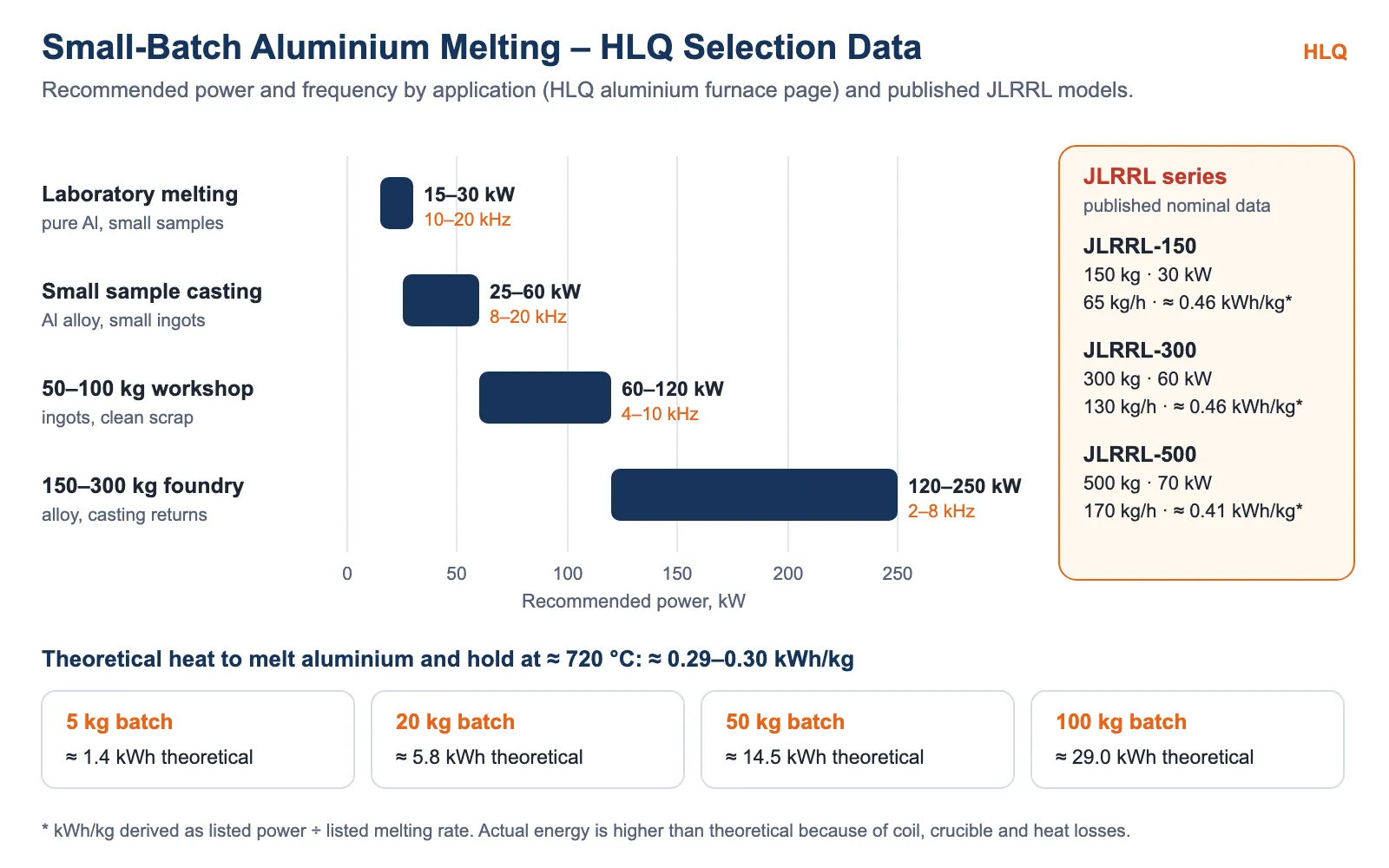
| Laboratory aluminum melting | Pure aluminum, small alloy samples | 15–30 kW | 10–20 kHz |
| Small jewelry or sample casting | Aluminum alloy, small ingots | 25–60 kW | 8–20 kHz |
| 50–100 kg workshop melting | Aluminum ingots, clean scrap | 60–120 kW | 4–10 kHz |
| 150–300 kg foundry furnace | Aluminum alloy, casting returns | 120–250 kW | 2–8 kHz |
Typical users are universities, R&D centers, trial production workshops, sample casting, die-casting returns and small foundries.

Suitable Materials
| Material | Suitability | Engineering notes |
|---|---|---|
| Pure aluminum | Excellent | Easy to melt, good fluidity |
| Aluminum ingots | Excellent | Stable melting and predictable composition |
| Al-Si casting alloy | Excellent | Die casting, automotive parts, general casting |
| Al-Mg alloy | Good | Temperature control and fluxing reduce oxidation and burning loss |
| Al-Cu alloy | Good | Temperature uniformity and mixing matter |
| Aluminum alloy scrap | Good | Sort by alloy grade |
| Aluminum cans | Conditional | Thin and coated; clean, dry and charge carefully |
| Aluminum chips | Conditional | Dry and compacted; remove oil, water and cutting fluid |
Named alloys include ADC12, A356, 6061 and 7075.
Working Principle
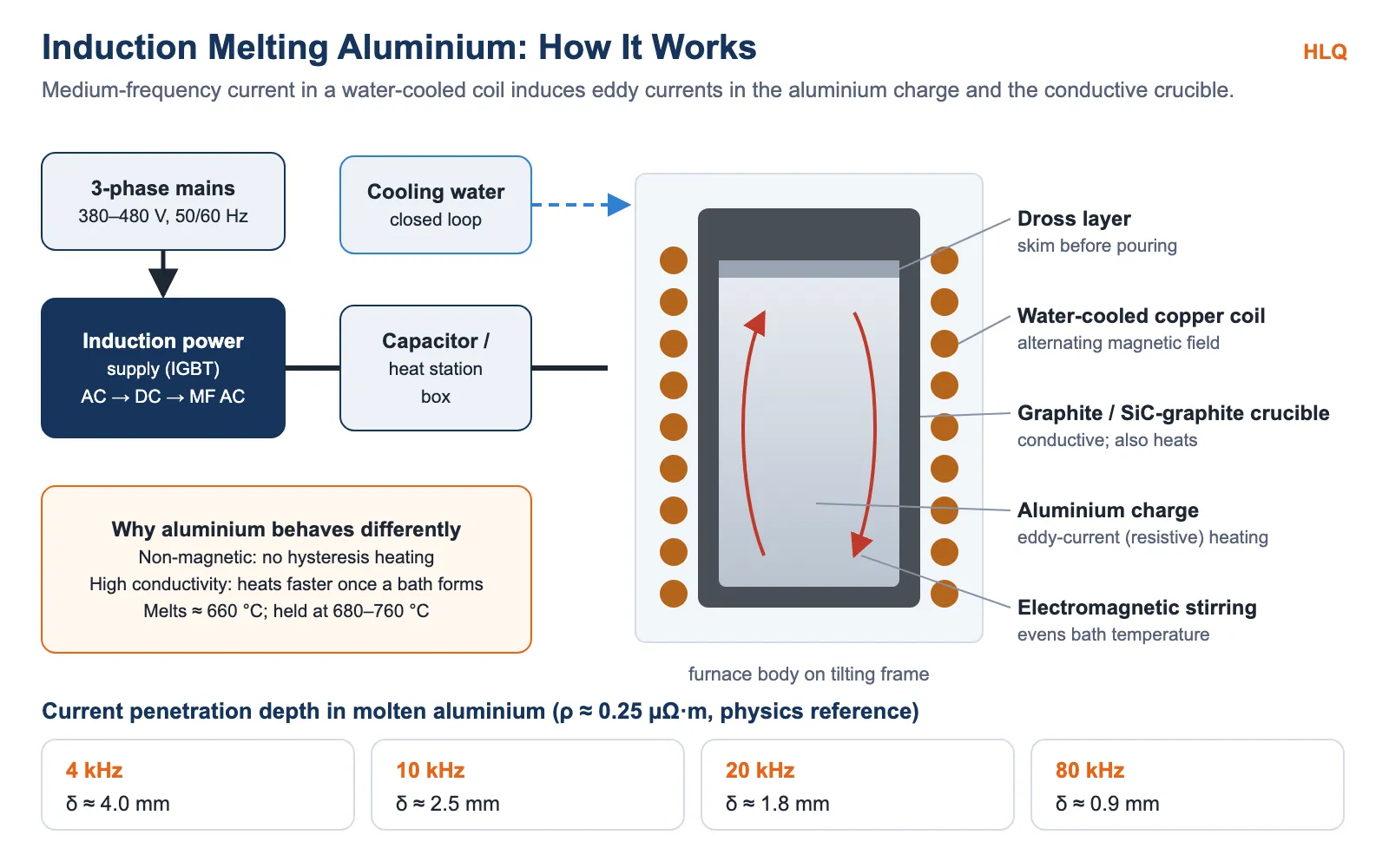
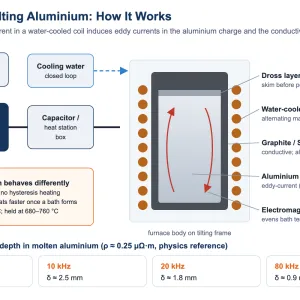
- Power input: The induction power supply converts mains electricity into medium-frequency AC.
- Magnetic field: The water-cooled copper coil produces an alternating magnetic field.
- Eddy currents: Currents are induced in the aluminum charge and the conductive crucible.
- Resistive heating: The material’s electrical resistance turns the induced current into heat.
- Melting: The solid charge collapses into a molten bath.
- Stirring: Electromagnetic stirring evens out the bath temperature.
- Holding: Power is reduced to keep the pouring temperature.
- Pouring: The furnace is tilted to pour into a ladle or mould.
Aluminum is non-magnetic, so there is no hysteresis heating as there is in steel. Its high thermal conductivity makes heat transfer faster once the first molten bath has formed. Background: how an induction heater works.
Current penetration depth in molten aluminum (physics reference)
| Frequency | 4 kHz | 10 kHz | 20 kHz | 80 kHz |
|---|---|---|---|---|
| Depth δ | ≈ 4.0 mm | ≈ 2.5 mm | ≈ 1.8 mm | ≈ 0.9 mm |
Calculated with δ = 503·√(ρ / (µr·f)), ρ ≈ 0.25 µΩ·m (molten aluminum), µr = 1.
Technical Specifications
| Parameter | Specification | Notes |
|---|---|---|
| Melting temperature | About 660 °C for pure aluminum; usual operating range 680–760 °C | Depends on alloy and casting process |
| Small-batch power | 15–120 kW (laboratory to 100 kg) | Set by batch weight and melting time |
| Small-batch frequency | 4–20 kHz | Lower frequency for larger batches |
| Crucible | Graphite, silicon-carbide graphite or refractory-lined | Chosen by capacity, alloy and service life |
| Induction coil | Water-cooled copper coil | Insulated, with cooling-water interlock |
| Tilting | Manual, gearbox or hydraulic | Hydraulic for safer pouring |
| Cooling | Closed-loop cooling tower or industrial chiller | For coil, power supply and capacitors |
| Temperature measurement | Thermocouple, immersion probe or infrared pyrometer | Immersion measurement is common for molten aluminum |
| Control | Manual, timer, PLC or HMI | Automation improves repeatability |
| Power supply input | 3-phase 380 / 415 / 440 / 480 V, 50/60 Hz | Customised to country and factory |
| Protection | Over-current, over-voltage, water shortage, phase loss, overheating, emergency stop | — |
Theoretical heat demand
| Batch | 5 kg | 20 kg | 50 kg | 100 kg |
|---|---|---|---|---|
| Theoretical heat to melt and hold at ≈ 720 °C (≈ 0.29 kWh/kg) | ≈ 1.4 kWh | ≈ 5.8 kWh | ≈ 14.5 kWh | ≈ 29 kWh |
Physical values: sensible heat plus latent heat. Actual energy use is higher because of coil, crucible and heat losses.

Recommended Model Selection
JLRRL induction aluminum melting furnaces (published nominal data)
| Model | Batch | Power | Melting rate | Max. temperature | Crucible ID × H | External size |
|---|---|---|---|---|---|---|
| JLRRL-150 | 150 kg | 30 kW | 65 kg/h | 850 °C | 42 × 67 cm | 1240 × 1210 × 980 mm |
| JLRRL-300 | 300 kg | 60 kW | 130 kg/h | 850 °C | 53 × 65 cm | 1400 × 1370 × 980 mm |
| JLRRL-500 | 500 kg | 70 kW | 170 kg/h | 850 °C | 63 × 72 cm | 1570 × 1540 × 1080 mm |
Details: JLRRL induction aluminum melting furnace.
Batch capacity is not melting rate. JLRRL-150 holds 150 kg but is rated at 65 kg/h with 30 kW. The 120–250 kW recommended for 150–300 kg furnaces is aimed at much faster batch melting. Choose by the kg/h you need, not by crucible size alone.

Process Workflow
| Step | Action | Control point |
|---|---|---|
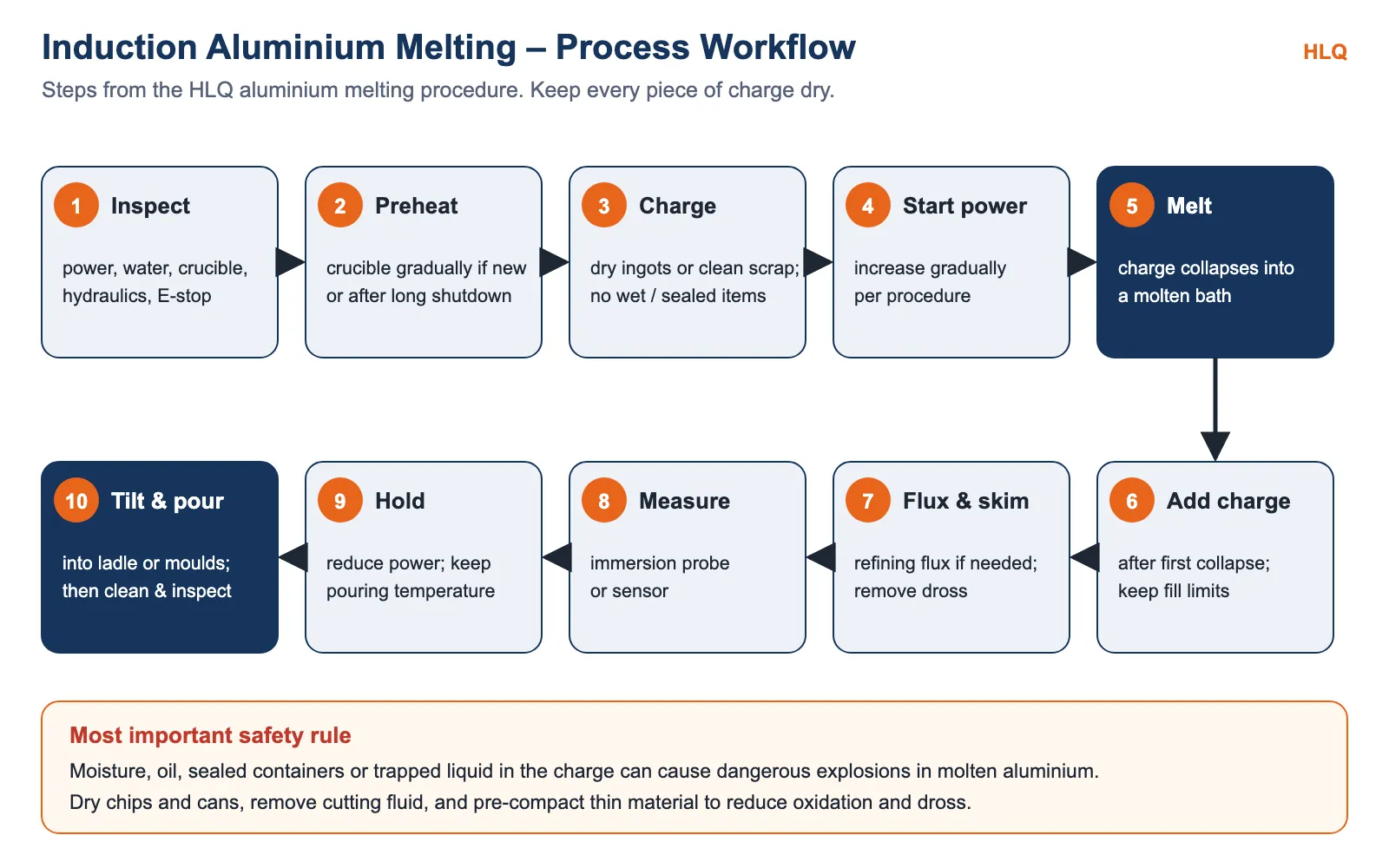
| 1 | Inspect the power supply, cooling water, crucible, hydraulics and emergency stop | Water flow and alarms |
| 2 | Preheat the crucible gradually (new crucible or after a long shutdown) | Avoid thermal shock |
| 3 | Charge dry ingots or clean scrap | No wet, oily or sealed items |
| 4 | Increase power gradually | Follow the operating procedure |
| 5 | Melt until the charge collapses into a bath | — |
| 6 | Add more charge after the first collapse | Respect safe fill limits |
| 7 | Apply refining flux if required and remove dross | Melt cleanliness |
| 8 | Measure the temperature | Immersion probe or sensor |
| 9 | Reduce power and hold at the pouring temperature | Avoid overheating |
| 10 | Tilt and pour; clean and inspect the crucible | Smooth pouring |
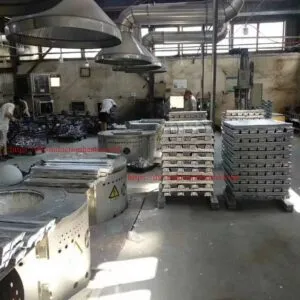
Workshop layout
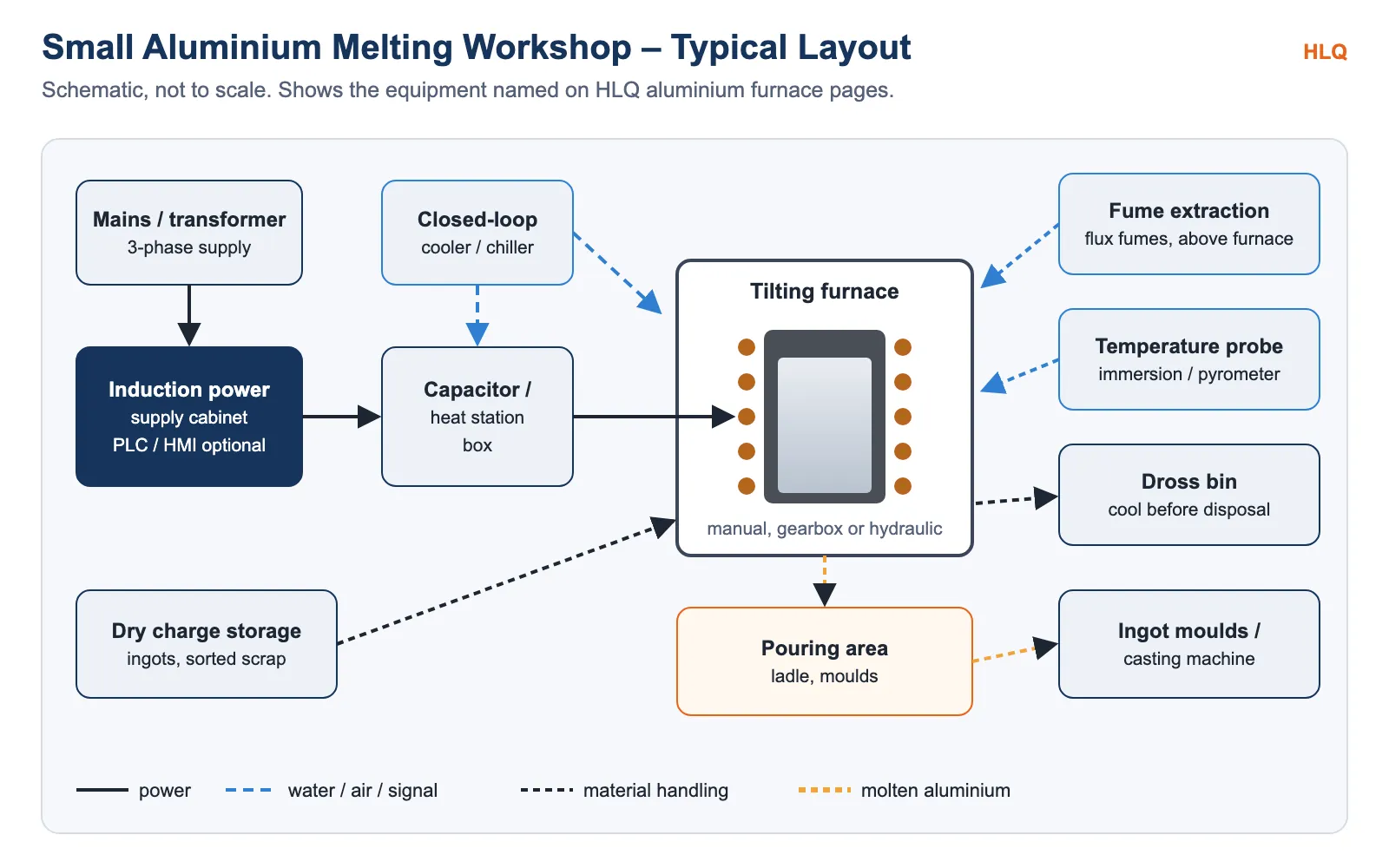
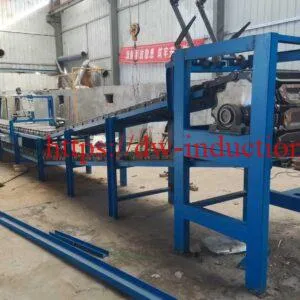
For automated ingot production, see the aluminum ingot induction melting production line.
Common Problems and Solutions
| Problem | Possible cause | Solution |
|---|---|---|
| Melting is too slow | Power too low, charge too large, poor crucible or low coupling | Increase power, optimise charge size, check the crucible, confirm capacity |
| Excessive dross | Overheating, dirty scrap, thin cans, excessive stirring, long holding | Control temperature, clean and sort scrap, reduce holding time, use flux |
| Crucible cracks | Thermal shock, poor preheating, impact, wrong crucible | Preheat gradually, do not drop charge, select the correct crucible |
| Coil overheating | Insufficient cooling water, scale, pump failure, high inlet temperature | Check flow, clean the circuit, maintain the pump, use closed-loop cooling |
| Unstable temperature | Poor measurement, unstable power, uneven charging, heat loss | Use a reliable probe, stabilise power, improve insulation, standardise charging |
| Contamination | Mixed scrap, dirty charge, wrong flux, damaged crucible, tools | Sort materials, clean the charge, use dedicated tools, maintain the crucible |
| Tilting is not smooth | Air in hydraulics, cylinder leak, misalignment, overload | Bleed the system, check seals, align the shaft, avoid overfilling |
Engineering Selection Guide
| Factor | What to confirm | Recommendation |
|---|---|---|
| Capacity | Batch weight and kg/h | A 150 kg furnace is not 150 kg/h; size power for the hourly rate |
| Power | Heat to melt and superheat, plus losses and holding | Theoretical ≈ 0.29 kWh/kg; add a design margin |
| Frequency | Batch and crucible size | 10–20 kHz for laboratory size; 4–10 kHz for 50–100 kg |
| Furnace structure | Pouring method | Fixed for ladling; manual tilting for small pours; hydraulic for larger batches |
| Crucible | Grade and life | Use a suitable graphite grade; low-quality crucibles may crack or contaminate the melt |
| Factory supply | Transformer, cable, voltage | Confirm before ordering |
| Cooling | Closed tower or chiller | Avoids scale and unstable water temperature |
| Safety | Dry charging, PPE, ventilation | Include emergency stop, spill protection and flux-fume ventilation |
For larger batches, see the hydraulic tilting induction furnace. For other metals, see the induction melting furnace overview.
Advantages and Limitations
| Advantages | Limitations |
|---|---|
| No open flame, less smoke, better workshop environment | Higher initial investment than a simple gas furnace |
| Lower oxidation and dross than flame heating when operated correctly | Needs sufficient transformer and supply capacity |
| Electronic power control keeps the temperature stable | The coil and power supply need cooling water |
| Electromagnetic stirring evens temperature and composition | Graphite crucible life must be managed |
| Easy to automate with PLC and HMI | Wet, oily or contaminated scrap causes safety and quality problems |
| Tilting allows smoother pouring | Mixed alloy scrap gives unstable composition; operators need training |
Why Choose HLQ?
| Strength | What it means |
|---|---|
| Engineering-based selection | Chosen by alloy, kg/h, melting time, power supply and pouring method, not batch weight alone |
| Fixed or tilting furnaces | Manual, gearbox or hydraulic tilting |
| Crucible options | Graphite, SiC-graphite or refractory |
| Protected power supply | Over-current, over-voltage, water shortage, phase loss, overheating, emergency stop |
| Published model data | JLRRL-150 / 300 / 500 batch, power, melting rate and crucible size |
| Line support | Cooling water, temperature measurement, fume collection, ladles, ingot moulds |
10 Core FAQs
1. Can induction heating melt aluminum?
Yes. Aluminum is conductive, so eddy currents heat it. It is non-magnetic, so there is no hysteresis heating.
2. What temperature is needed?
Pure aluminum melts at about 660 °C. Production melts are usually held at 680–760 °C, depending on the alloy and process.
3. How much power does a small furnace need?
15–30 kW for laboratory melting, 25–60 kW for small sample casting and 60–120 kW for 50–100 kg workshop batches.
4. Which frequency is used?
About 10–20 kHz for laboratory size, 8–20 kHz for small sample casting and 4–10 kHz for 50–100 kg batches.
5. How much energy does aluminum need?
About 0.29 kWh/kg in theory to melt and hold at around 720 °C. Actual use is higher because of losses.
6. Which crucible should I use?
A graphite, silicon-carbide graphite or refractory crucible, chosen by capacity, alloy, temperature and service life.
7. Can cans and chips be melted?
Yes, if they are cleaned, dried and preferably compacted. Thin, coated material produces more dross than ingots.
8. Why must the charge be dry?
Moisture, oil, sealed containers or trapped liquid can cause dangerous explosions in molten aluminum.
9. Does the furnace need cooling water?
Yes. The coil, capacitors and power supply need stable cooling. A closed-loop system is recommended.
10. How can dross be reduced?
Use a clean, dry charge, avoid overheating, shorten holding time, control stirring, skim properly and flux when needed.