
Induction Heating in Oil & Gas Industry
Table of Contents
-
- Executive Summary
- Quick Answer
- The State of Induction Heating in Oil & Gas Industry in 2026
- Key Applications in Oil & Gas Industry
- Industry-Specific Engineering Constraints
- Equipment Selection Matrix
- Case Studies from Oil & Gas Industry
- Common Engineering Mistakes
- Industry Standards and Certifications
- Total Cost of Ownership Calculation
- Implementation Roadmap for Oil & Gas Projects
- Future Trends
- FAQ
This guide is for oil and gas engineers, EPC contractors, and procurement specialists evaluating induction heating for various applications. It explains equipment selection, industry constraints, and lifecycle cost comparison against traditional heating methods. Induction heating is increasingly replacing open-flame systems where electrification, safety, and precise heat control provide economic value. 
Quick Answer
The oil and gas industry uses induction heating for rapid and safe heating of conductive materials. Applications include pipeline weld preheating, viscosity reduction, and offshore maintenance. Induction heating reduces downtime, enhances safety, and supports electrification targets. It provides an attractive payback when it replaces traditional flame heating methods.
The State of Induction Heating in Oil & Gas Industry in 2026
The oil and gas industry faces pressure to improve energy efficiency and safety. Induction heating has emerged as a viable engineering option for specific high-value heating tasks, supplementing traditional heating methods.
Traditional methods like gas-fired heaters and steam jackets can be inefficient and risky. Induction heating generates heat directly in conductive materials, addressing many challenges by providing localized, efficient, and controllable heating. 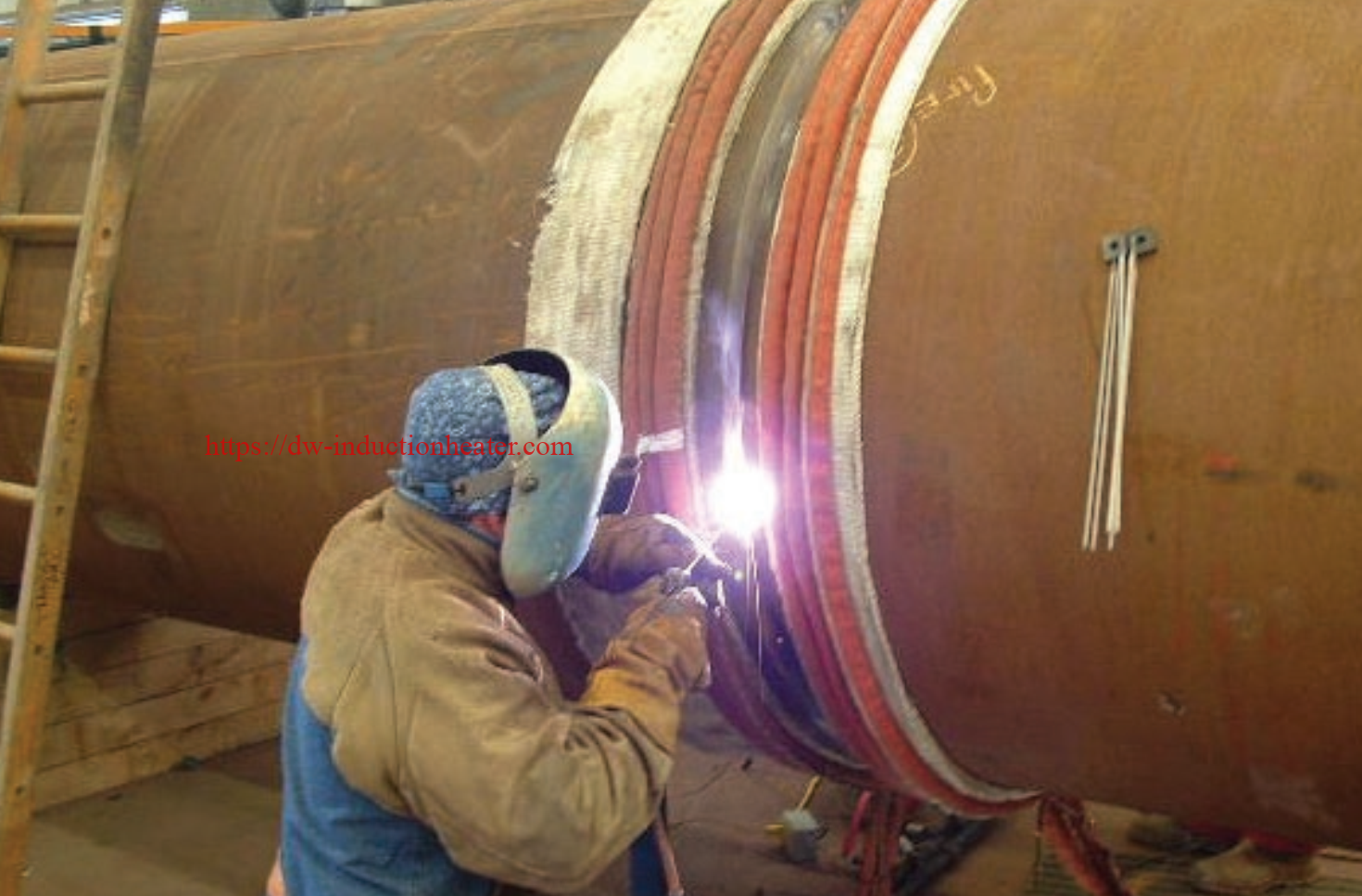
By 2026, the need for electrification and decarbonization will drive the adoption of induction heating. This method minimizes dependence on open flames, especially for maintenance tasks requiring precise heat control.
Induction heating is ideal for metallic components prevalent in oil and gas facilities. It efficiently heats conductive materials when properly engineered with respect to coil design and insulation.
Induction heating selection should consider process physics rather than marketing claims. It delivers swift, efficient, and clean heating when the conditions are right.
Key Applications in Oil & Gas Industry
1. Pipeline Weld Preheating
Pipeline weld preheating is essential before welding to minimize hydrogen cracking and enhance weld quality. Induction heating streamlines this process, especially for large pipelines, ensuring consistent temperature control with minimal setup.
2. Pipeline Post Weld Heat Treatment, PWHT
Induction PWHT offers a controllable heating solution that minimizes setup complexity and enhances uniformity compared to traditional methods.
3. Heavy Oil Pipeline Viscosity Reduction
Induction heating can effectively reduce the viscosity of heavy crude oil, facilitating smoother flow and preventing blockages in pipelines.
4. Wax and Hydrate Prevention
Induction heating addresses wax deposition and hydrate formation, improving flow assurance in critical pipeline sections with precise temperature management.
5. Induction Heating for Reactor Vessels and Process Tanks
Induction heating can efficiently heat reactor vessels, allowing for precise temperature control without the drawbacks of traditional heating methods.
6. Induction Thermal Oil Heating
Thermal oil systems benefit from induction heating, offering a clean and efficient heating method that is particularly useful when traditional heating is restricted.
7. Induction Coating Removal for Pipelines and Steel Structures
Induction coating removal offers controlled heating to weaken the coating’s bond to the metal, reducing labor and avoiding open flames during maintenance operations.
8. Flange, Valve, and Fitting Heating
Induction heating assists the heating of flanges and valves, reducing the risk of damage to sensitive components while ensuring effective assembly or disassembly.
9. Offshore and Field Maintenance Heating
Induction heating offers portable solutions for offshore and field maintenance, enhancing safety and efficiency in challenging environments.
10. Heat Exchanger Tube and Component Heating
Induction heating supports effective maintenance for heat exchangers, enabling localized heating without affecting the entire assembly.
Industry-Specific Engineering Constraints
| Constraint | Oil & Gas Requirement | Engineering Impact on Induction Heating | Recommended Practice |
|---|---|---|---|
| Hazardous Area Zoning | Many facilities include classified areas with flammable gas or vapor risk. | Standard induction power supplies may not be installed inside hazardous zones without suitable protection. | Place power cabinet in safe area where possible; use approved enclosures, permits, gas testing, grounding, and site-specific safety review. |
| Hot Work Control | Maintenance heating may require hot-work permits, fire watch, and risk assessment. | Induction reduces open flame but still creates hot surfaces and ignition risks. | Treat induction heating as controlled hot work unless site rules classify otherwise; monitor surface temperature and surrounding materials. |
| Material Compatibility | Common materials include carbon steel, low-alloy steel, stainless steel, duplex stainless, Inconel, and coated pipes. | Material affects heating rate, frequency selection, magnetic response, and temperature limits. | Confirm material grade, wall thickness, coating, and metallurgical limits before power selection. |
| Operating Temperature Range | Applications range from 60°C viscosity reduction to 650°C PWHT or higher for special process heating. | Insulation, sensor type, cable rating, and control program must match temperature range. | Use thermocouple feedback, suitable insulation, controlled ramp rate, and over-temperature protection. |
| Pressure Boundary Integrity | Pipes and vessels are pressure-containing equipment. | Overheating can affect mechanical properties, coatings, seals, or weld quality. | Follow approved heat treatment procedures, code requirements, and engineering review. |
| Coating and Insulation Systems | Oil and gas pipes may have anti-corrosion coatings, insulation, fireproofing, or composite layers. | Induction may heat the steel below coatings; excessive heat can damage coating or produce fumes. | Identify coating type and maximum allowable temperature before heating. |
| Throughput Requirements | Shutdown windows and maintenance periods are often short. | Heating equipment must deliver required temperature within planned time. | Calculate heat load, use adequate power, and prepare setup tools before shutdown. |
| Documentation | Welding, PWHT, and plant maintenance require records. | Manual heating without records may fail compliance review. | Use PLC/HMI data logging, temperature charting, and procedure-based operation. |
| Electrical Infrastructure | Remote fields may have limited power supply. | High-power induction systems need stable voltage, grounding, and cooling. | Confirm transformer capacity, generator compatibility, cable length, and cooling water availability. |
| Environmental Conditions | Offshore, desert, arctic, and humid environments may affect equipment. | Power electronics and coils require protection from water, dust, salt, and vibration. | Use industrial enclosures, rugged connectors, weather protection, and preventive maintenance. |
Equipment Selection Matrix
| Oil & Gas Application | Recommended HLQ Product | Typical Power Range | Typical Frequency | Key Specification | Engineering Notes |
|---|---|---|---|---|---|
| Pipeline weld preheating | Induction PWHT Machine with flexible heating cable | 30–300 kW | Medium frequency, application-dependent | Flexible cable, insulation blanket, thermocouple control | Best for circumferential heating of pipe weld zones. |
| Pipeline PWHT | Induction PWHT Machine | 60–500 kW+ | Low to medium frequency | Programmable ramp, soak, cooling, multi-point thermocouples | Must follow approved welding and heat treatment procedures. |
| Heavy oil pipeline heating | Induction Heating Oil Pipeline System | 50–1000 kW depending on pipe size and heat load | Medium frequency | Flexible coil or fixed coil, pipe insulation, temperature feedback | Power depends on oil flow, pipe diameter, target temperature, and heat loss. |
| Wax/hydrate prevention | Localized Induction Pipeline Heating System | 20–300 kW | Medium frequency | Local heating zone, controlled surface temperature | Should be integrated with insulation and flow assurance strategy. |
| Reactor vessel heating | Induction Reactor Heating System | 50–1000 kW+ | Medium frequency | Thermal insulation on vessel shell, flexible induction cable outside insulation | Works best on conductive steel or stainless steel vessels. |
| Thermal oil process heating | Induction Thermal Oil Heater | 30–2000 kW | Medium frequency | Conductive heating tube, pump circulation, PLC temperature control | Suitable for electric process heat and fuel-free heating zones. |
| Coating removal | Induction Coating Removal Heater | 10–100 kW | Medium to high frequency | Handheld or scanning coil, temperature monitoring | Requires fume control and coating temperature limit review. |
| Flange and valve heating | Portable Induction Heating System | 10–150 kW | Application-dependent | Custom coil or flexible cable | Useful for assembly, disassembly, and shrink-fit heating. |
| Heat exchanger component brazing | Induction Brazing Machine | 10–120 kW | High frequency for small joints, medium frequency for larger parts | Custom brazing coil, fixture, filler control | Suitable for workshop manufacturing and repair components. |
| Hot air or drying process | Electromagnetic Induction Hot Air Generator | 50–2000 kW+ | Medium frequency | 310S heating tube, insulation, flexible cable, air blower | Used where hot air is needed for drying or process heating. |
Case Studies from Oil & Gas Industry
Case Study 1: Induction PWHT for Large-Diameter Pipeline Welds
Problem: A pipeline contractor needed to perform post weld heat treatment on large-diameter carbon steel pipeline welds during a limited shutdown window. Cer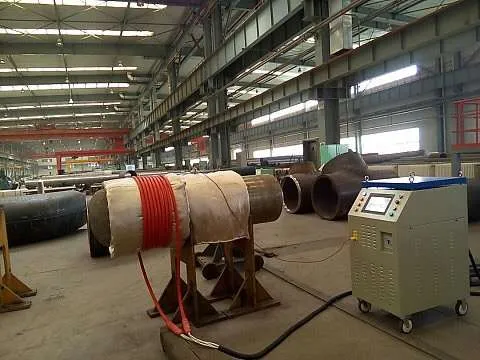 amic resistance heating required long setup time and uneven contact in several field conditions.
Solution: A medium-frequency induction PWHT system was configured with flexible induction heating cable, high-temperature insulation blankets, multi-point thermocouples, and PLC-controlled heating programs. The cable was wrapped around the weld band, and the temperature cycle followed the approved heat treatment procedure.
Measurable Results: Setup time was reduced, temperature uniformity around the weld circumference improved, and the contractor obtained more consistent temperature records. The system also reduced operator dependence because ramp, soak, and cooling stages were controlled automatically.
Case Study 2: Heavy Oil Transfer Line Heating
Problem: A heavy oil transfer line suffered high viscosity during low-temperature operation. Pump load increased, and start-up after shutdown was difficult. Conventional trace heating could not provide enough rapid thermal response at the critical section.
Solution: A localized induction pipeline heating system was installed around the carbon steel pipe section near the pump inlet. Thermal insulation was applied over the heated zone, and temperature sensors monitored pipe wall temperature. The system heated the pipe wall, transferring heat into the heavy oil to reduce viscosity.
Measurable Results: Start-up time improved, pressure drop was reduced, and pump inlet flow became more stable. The system was most effective when combined with insulation and controlled heating rather than continuous overheating.
Case Study 3: Induction Reactor Heating for Petrochemical Processing
Problem: A petrochemical processing vessel required controlled heating for a viscous oil-based material. The existing heating method had slow response and high heat loss around the vessel surface.
Solution: An induction reactor heating system was designed using thermal insulation wrapped on the carbon steel vessel shell and flexible induction cable wound outside the insulation. The PLC controller managed temperature ramp and holding stages with thermocouple feedback.
Measurable Results: Heating response improved, external heat loss decreased, and the process temperature became easier to stabilize. The customer also benefited from cleaner electric heating and reduced dependence on fuel-fired auxiliary heaters.
Case Study 4: Pipeline Coating Removal Before Repair
Problem: A maintenance team needed to remove aged anti-corrosion coating from a steel pipeline section before inspection and repair. Manual grinding was slow and created dust, while flame heating generated uncontrolled smoke and coating damage.
Solution: A portable induction coating removal heater was used to heat the steel substrate below the coating. Once the coating bond weakened, operators removed the coating mechanically with scrapers. Fume extraction and surface temperature control were applied.
Measurable Results: Coating removal became faster and more controlled. The process reduced mechanical labor and avoided direct open-flame burning of the coating.
Case Study 5: Induction Thermal Oil Heater for Electric Process Heating
Problem: A plant required a compact electric heat source for thermal oil circulation in an area where fuel-fired heating was not preferred. The system needed quick response and stable outlet temperature.
Solution: An induction thermal oil heater was configured with a conductive heating tube, circulation pump, temperature feedback, and PLC control. The heater was sized according to thermal oil flow rate, target outlet temperature, and heat loss.
Measurable Results: The system provided clean electric heating, reduced fuel-handling complexity, and improved temperature control. Its modular layout made it easier to install near the process user.
Common Engineering Mistakes
| Engineering Mistake | Why It Happens | Project Risk | How to Avoid It |
|---|---|---|---|
| Selecting power only by pipe diameter | Diameter is visible, but heat load also depends on wall thickness, material, temperature rise, insulation, and time. | Underpowered system or excessive heating time. | Calculate total heat load using pipe mass, fluid mass, target temperature, heating time, and losses. |
| Ignoring insulation quality | Engineers focus on power supply but underestimate heat loss. | Energy waste, slow heating, unstable temperature. | Use suitable insulation thickness and install it correctly around the heating zone. |
| Using the wrong frequency | Frequency selection is misunderstood as a standard value. | Surface overheating, poor penetration, low efficiency. | Select frequency based on material, wall thickness, heating depth, and coil geometry. |
| Placing sensors in unrepresentative locations | Thermocouples are installed where convenient, not where temperature matters. | False temperature readings and poor control. | Use multi-point thermocouples and define control points according to the heat treatment procedure. |
| Assuming induction is always safe because there is no flame | Induction is often marketed as flameless. | Hot surface ignition risk, damaged coatings, unsafe operation in hazardous zones. | Perform site safety review, hazardous area assessment, and hot-work permitting. |
| Ignoring coating temperature limits | The metal is the heating target, but coatings are close to the heat source. | Coating damage, smoke, toxic fumes, or failed corrosion protection. | Identify coating type and allowable temperature before applying induction heat. |
| Not checking electrical infrastructure | Mechanical engineers may specify heating demand without checking power supply. | Voltage instability, generator overload, nuisance trips. | Confirm voltage, phase, transformer capacity, grounding, generator rating, and cable length. |
| Designing coil layout too late | Equipment selection focuses on power supply first. | Poor access, weak coupling, uneven heating. | Design coil or flexible cable arrangement at the same time as power and insulation selection. |
| Underestimating cooling requirements | Cooling is treated as auxiliary equipment. | Coil overheating, cable damage, production stoppage. | Size cooling system for continuous duty, water quality, ambient temperature, and pressure drop. |
| Not documenting heating cycles | Manual heating is treated as a craft operation. | Compliance gaps and quality disputes. | Use data logging, temperature charts, and procedure-based records. |
Industry Standards and Certifications
Oil and gas induction heating projects may be influenced by welding codes, pressure vessel rules, pipeline standards, corrosion requirements, hazardous area rules, and customer-specific procedures. The exact standard depends on country, operator, project scope, and equipment application. The following standards are commonly relevant in oil and gas heating projects.
| Standard / Framework | Relevant Area | Why It Matters for Induction Heating |
|---|---|---|
| ASME Section IX | Welding and brazing procedure qualification | Relevant when induction heating is used for weld preheating, PWHT, or brazing procedure support. |
| ASME Section VIII | Pressure vessels | Important when heating reactor vessels, pressure vessels, or process containers. |
| API 1104 | Pipeline welding | Relevant for pipeline weld preheating, welding qualification, and field heat treatment procedures. |
| API 650 | Welded tanks for oil storage | Relevant when induction heating is used around storage tank fabrication or repair. |
| API 570 | Piping inspection code | Relevant to in-service piping inspection, repair, and maintenance heating. |
| NACE / AMPP Standards | Corrosion control and protective coatings | Important when induction heating may affect coatings, corrosion protection, or surface preparation. |
| NORSOK Standards | Offshore oil and gas engineering | Relevant for offshore equipment, materials, welding, and safety practices. |
| IECEx / ATEX | Explosive atmosphere equipment | Relevant when equipment is used near hazardous areas or classified zones. |
| ISO 9001 | Quality management | Supports supplier qualification and manufacturing quality control. |
| Site-Specific Hot Work Procedures | Plant safety and maintenance | Often determines whether induction heating can be used and under what controls. |
For pharmaceutical or GMP-related process heating, GMP and 21 CFR Part 11 may matter for data logging and validated control systems. These are not typical oil and gas standards, but they become relevant in hybrid chemical or regulated process environments where temperature data integrity and electronic records are required.
Total Cost of Ownership Calculation
A total cost of ownership comparison should include equipment cost, installation cost, energy cost, maintenance cost, downtime cost, labor cost, safety cost, and process quality impact. For oil and gas projects, downtime often dominates the economics. A heating system that reduces shutdown time can create more value than one that only saves energy.
Example: 10-Year TCO Comparison for Pipeline PWHT Work
| Cost Item | Induction PWHT System | Ceramic Resistance Heating | Gas / Flame-Based Heating | Engineering Comment |
|---|---|---|---|---|
| Initial equipment cost | Higher | Medium | Low to medium | Induction has higher upfront cost but stronger control and repeatability. |
| Setup labor | Lower to medium | Medium to high | Medium | Flexible induction cable can reduce setup time in repetitive jobs. |
| Heating time | Fast | Medium | Variable | Induction response is strong when coupling and insulation are correct. |
| Temperature control | High | Medium to high | Low to medium | Induction with PLC and thermocouples supports repeatable temperature profiles. |
| Energy efficiency | High for local metal heating | Medium | Lower for uncontrolled field heating | Actual efficiency depends on insulation and procedure. |
| Maintenance | Medium | Medium | Low equipment cost but more safety controls | Induction requires cooling system and power electronics maintenance. |
| Safety management | Controlled hot surface, no direct flame | Hot electrical elements | Open flame risk | Induction may reduce but not eliminate hot-work controls. |
| Documentation | Strong with data logging | Available with controllers | Often manual | Documentation is critical for weld heat treatment compliance. |
| Downtime impact | Often lowest | Medium | Variable | Faster setup and controlled heating can reduce shutdown time. |
Simple 10-Year TCO Framework
| Formula Item | Calculation Method | Notes |
|---|---|---|
| Capital Cost | Equipment + accessories + installation | Include power supply, coil, cooling, sensors, insulation, fixtures. |
| Energy Cost | Power consumption × operating hours × electricity/fuel price | Use actual duty cycle, not rated power only. |
| Labor Cost | Setup labor + operating labor + supervision | Induction can reduce manual flame heating skill variation. |
| Maintenance Cost | Parts + service + downtime for repair | Include coils, cables, cooling pumps, sensors. |
| Downtime Cost | Lost production value × downtime hours | Often the largest economic factor in oil and gas. |
| Quality / Rework Cost | Rejected work + rework labor + inspection delay | Better heating control can reduce rework. |
| Safety / Permit Cost | Fire watch + risk control + compliance procedures | Induction can reduce open-flame exposure but still needs safety review. |
A practical TCO conclusion is that induction heating is usually most attractive when the project involves repeated heating cycles, expensive downtime, difficult flame permits, high labor variation, strict documentation, or high energy losses from indirect heating. It is less attractive for one-time low-value heating tasks where equipment access, power supply, and setup cost outweigh the benefits.
Implementation Roadmap for Oil & Gas Projects
- Define the Heating Objective: Identify whether the project is preheating, PWHT, viscosity reduction, coating removal, vessel heating, thermal oil heating, or component assembly.
- Collect Engineering Data: Gather material grade, wall thickness, diameter, fluid type, flow rate, target temperature, heating time, site voltage, layout, and safety zone information.
- Calculate Heat Load: Include metal mass, fluid mass, temperature rise, heat losses, insulation quality, and required heating time.
- Select Frequency and Coil Type: Choose flexible cable, split coil, fixed coil, scanning coil, or custom induction head according to geometry and heating depth.
- Design Insulation and Sensors: Specify insulation material, thickness, thermocouple locations, pyrometer positions, and over-temperature limits.
- Review Safety Requirements: Check hazardous area classification, hot-work rules, coating risk, grounding, EMC, and operator protection.
- Prepare Procedure and Test Plan: Create heating program, ramp rate, soak temperature, acceptance criteria, and data recording method.
- Run Trial Heating: Verify temperature uniformity, heating time, power response, cooling system stability, and operator workflow.
- Optimize Production or Field Workflow: Adjust power, cable turns, insulation, sensor locations, and operating sequence.
- Document and Standardize: Record final procedure, drawings, control settings, inspection results, and maintenance requirements.
Future Trends
1. Electrification of Oil & Gas Process Heat
As operators evaluate lower-carbon process heat options, electric heating technologies are receiving more attention. Induction heating is especially relevant where the target is metallic and localized heat is needed. It will not replace every fired heater, but it can replace or supplement flame-based and indirect heating in many maintenance and process heating applications.
2. More Modular Heating Systems
Oil and gas projects increasingly require modular, containerized, or skid-mounted systems. Induction thermal oil heaters, induction hot air generators, and pipeline heating modules can be designed as packaged units with power supply, cooling, controls, and safety systems integrated into one platform.
3. Better Digital Control and Data Logging
Future induction systems will increasingly include PLC recipes, cloud-connected maintenance records, temperature trend data, and digital quality documentation. This is valuable for welding, PWHT, field maintenance, and regulated plant procedures.
4. Growth in Flow Assurance Heating
Localized induction heating may become more common as part of flow assurance strategies for heavy oil, waxy crude, hydrate-prone lines, and critical pipeline sections. Integration with sensors, insulation, and automated controls will be important.
5. Increased Use in Coating Removal and Maintenance
Induction coating removal is likely to expand where operators want faster surface preparation, less manual grinding, and reduced open flame exposure. The main challenge will be coating identification, fume control, and safe temperature management.
6. Integration with Renewable Electricity
As industrial sites add renewable power, energy storage, and electric process infrastructure, induction heating can become part of a broader electrification strategy. Its fast response makes it suitable for controlled electric heating loads where grid capacity is available.
FAQ
1. What is induction heating in the oil and gas industry?
Induction heating in the oil and gas industry is the use of electromagnetic induction to heat conductive metal pipes, vessels, welds, fittings, tanks, and process heating surfaces. It is used for pipeline preheating, PWHT, viscosity reduction, coating removal, reactor heating, and thermal oil heating.
2. Why is induction heating useful for pipeline welding?
Induction heating provides fast and uniform circumferential heating around the pipe weld zone. It helps control preheat and PWHT temperature, reduces operator variation, and can provide documented heating cycles through thermocouple feedback and PLC control.
3. Can induction heating reduce heavy oil viscosity?
Yes. When induction heating is applied to a carbon steel pipeline or metallic heating section, heat transfers from the pipe wall into heavy oil. Raising the oil temperature can reduce viscosity and improve flow, especially at pump inlets, transfer lines, or localized problem sections.
4. Is induction heating safe in hazardous areas?
Induction heating can reduce open-flame exposure, but it still creates hot surfaces and electrical equipment risks. Hazardous area zoning, hot-work permits, gas testing, grounding, equipment placement, and site safety rules must be reviewed before use.
5. What equipment is used for induction PWHT?
A typical induction PWHT system includes an induction power supply, flexible heating cable or coil, insulation blanket, thermocouples, temperature controller, cooling system, and data logging system. The heating cycle is programmed according to the approved heat treatment procedure.
6. Can induction heating replace steam jacket heating for reactors?
In some applications, yes. Induction heating can heat conductive reactor shells externally and provide fast electric heating with good control. However, suitability depends on vessel material, wall thickness, target temperature, process fluid, agitation, insulation, and safety requirements.
7. What materials can be heated by induction in oil and gas applications?
Common materials include carbon steel, low-alloy steel, stainless steel, duplex stainless steel, alloy steel, and selected nickel alloys. Heating response depends on electrical conductivity, magnetic permeability, wall thickness, and selected frequency.
8. Does induction heating work through insulation?
Yes, electromagnetic fields can pass through non-conductive insulation materials and induce heat in the metal underneath. This is useful for reactor heating and pipeline heating where insulation reduces heat loss while the coil remains outside the insulation layer.
9. What power range is typical for oil and gas induction heating?
Small maintenance heating may use 10–50 kW. Pipeline preheating and PWHT often use 30–500 kW. Large pipeline heating, thermal oil heating, or reactor heating systems may require several hundred kilowatts to 2000 kW or more depending on heat load.
10. How is induction heating controlled?
Control methods include manual power adjustment, timer control, PLC programs, thermocouple feedback, infrared temperature monitoring, ramp/soak/cooling recipes, and multi-zone temperature control. Critical oil and gas work should use feedback and documentation.
11. Can induction heating remove pipeline coatings?
Yes. Induction coating removal heats the steel substrate under the coating, weakening the bond between coating and metal. The coating can then be scraped away. Temperature monitoring and fume control are important because coatings can degrade or release fumes.
12. Is induction heating more efficient than gas heating?
For localized metal heating, induction heating can be more efficient because heat is generated directly in the metal target rather than heating surrounding air or a large furnace chamber. Actual efficiency depends on insulation, coil design, power matching, and operating procedure.
13. What information is needed to design an oil and gas induction heating system?
Engineers need material grade, wall thickness, pipe or vessel size, target temperature, initial temperature, heating time, fluid type, flow rate if applicable, insulation condition, power supply availability, hazardous area information, and required standards or procedures.
14. Can induction heating be used offshore?
Yes, but offshore use requires rugged equipment, corrosion protection, electrical safety review, cooling planning, hazardous area assessment, lifting/handling design, and compliance with operator procedures. Portable induction systems are often used for maintenance heating and weld heat treatment.
15. What is the main limitation of induction heating in oil and gas?
The main limitation is that induction heating works best on conductive metal targets with suitable coil access. It also requires electrical power, cooling, safety review, and proper frequency/coil design. It is not always the best choice for non-metallic materials or very large distributed heating loads.